Sight word recognition Building Vocabulary Worksheets for Ages 4-9
15 filtered results
-
From - To
Enhance your child's reading skills with our "Sight Word Recognition Building Vocabulary Worksheets" designed for ages 4-9. These engaging resources help young learners effortlessly recognize high-frequency sight words, a crucial step in developing reading fluency and comprehension. Each worksheet is crafted to provide a fun, interactive learning experience, featuring a variety of activities such as matching, coloring, and fill-in-the-blank exercises. By practicing sight words consistently, children will expand their vocabulary and gain confidence in their reading abilities. Empower your child's literacy journey today with our thoughtfully designed worksheets, ensuring a solid foundation for their future academic success!
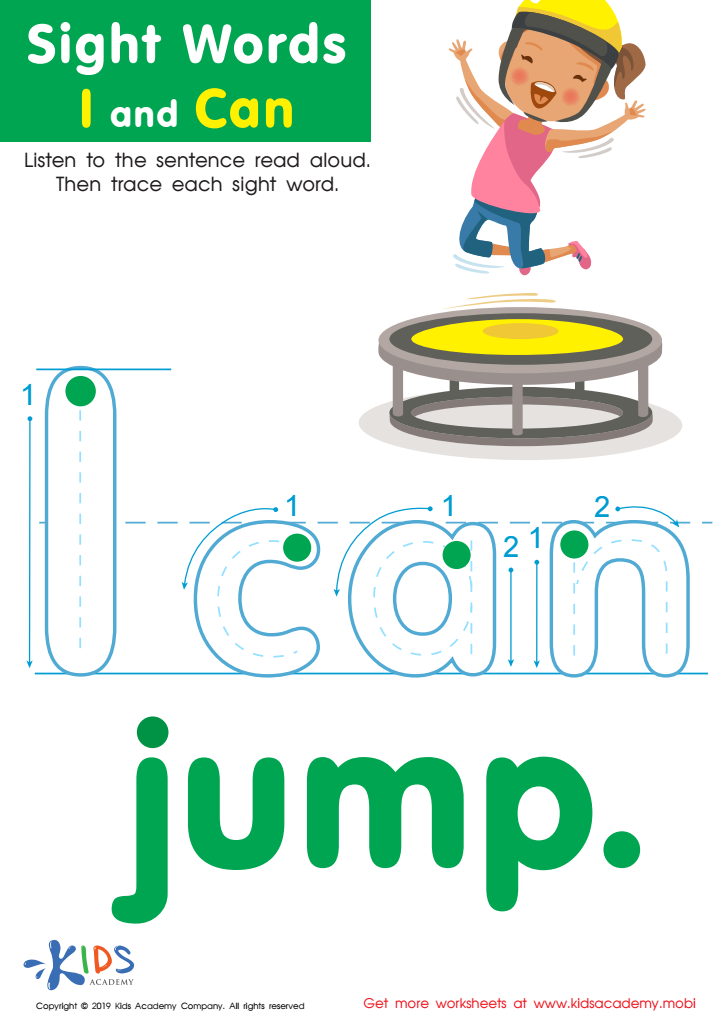
Sight Words I Can Worksheet
 Assign to My Students











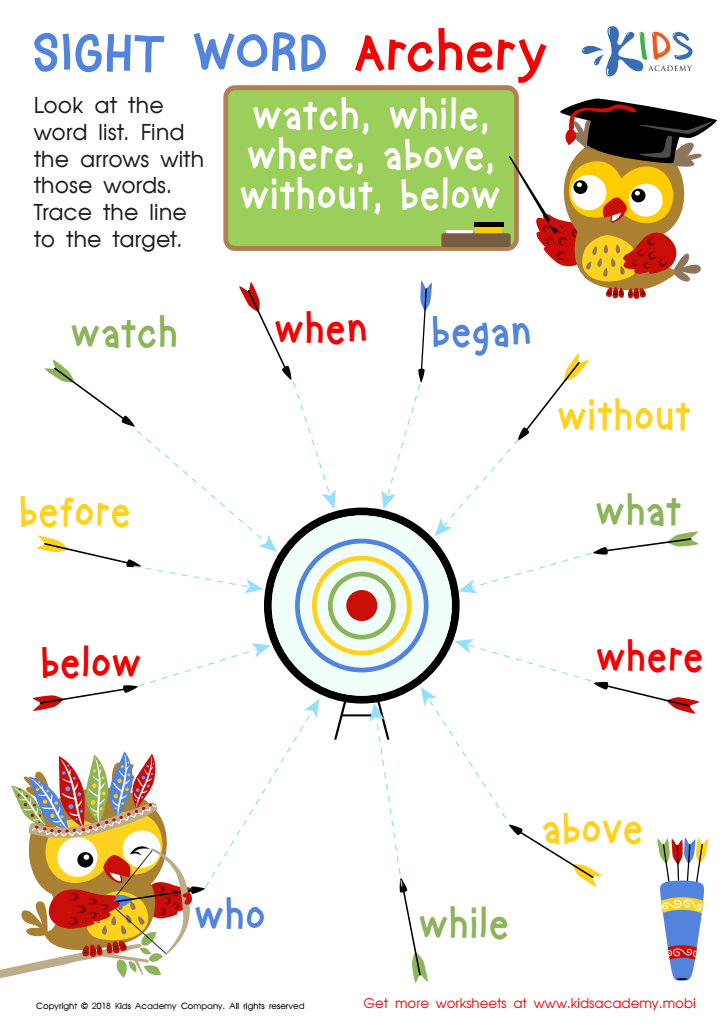
Sight Word Archery Worksheet
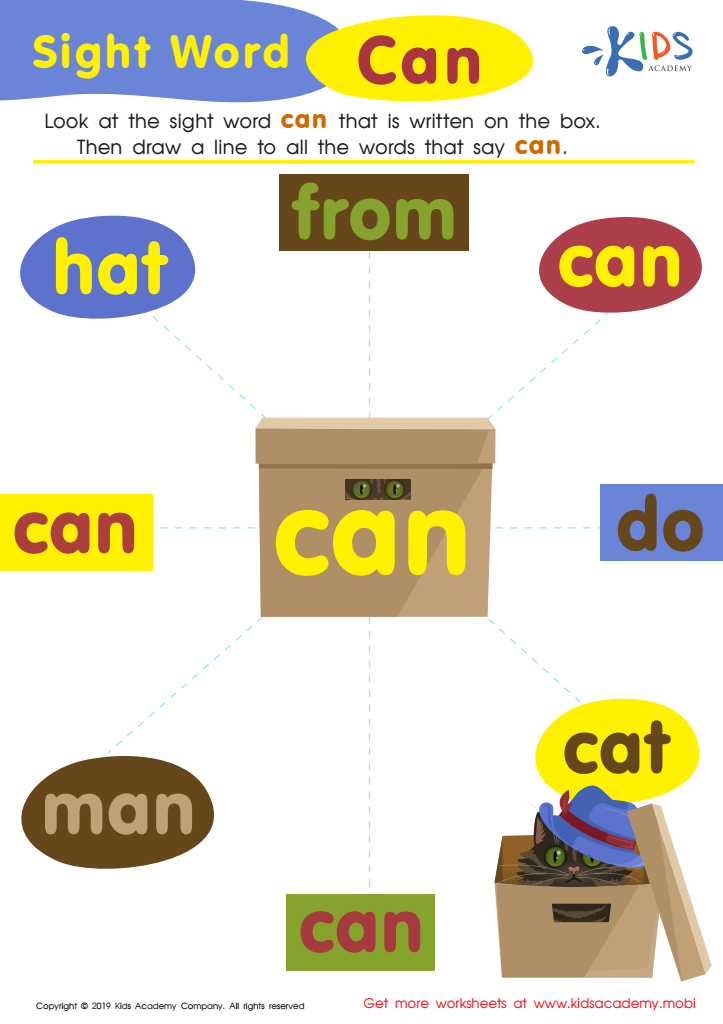
Sight Word Can Worksheet
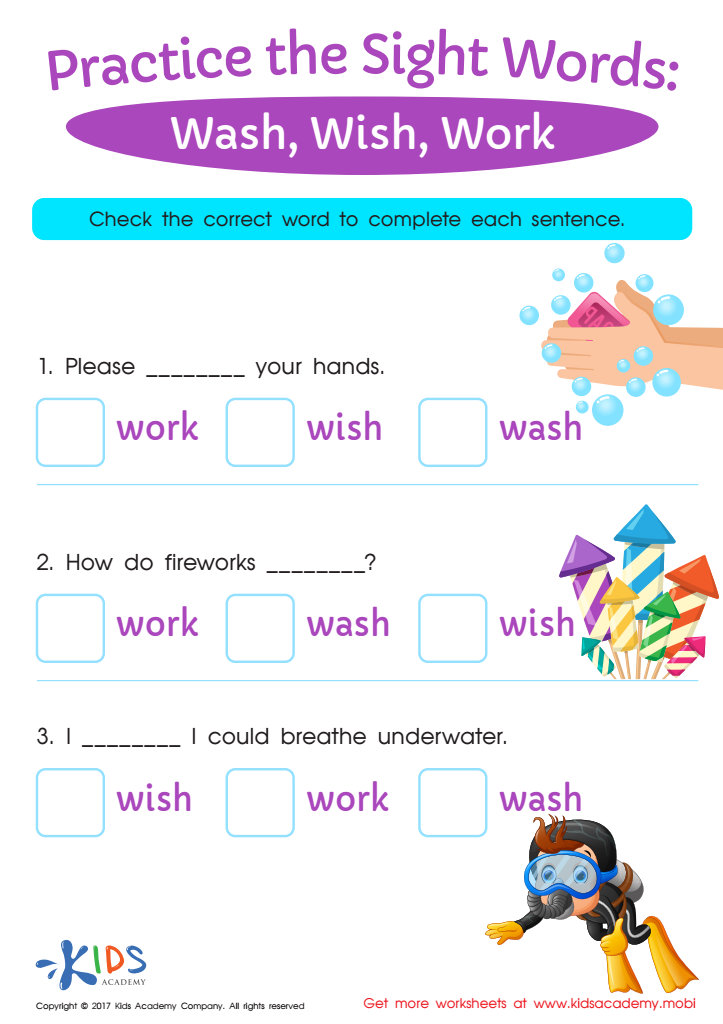
Wash, Wish, Work Sight Words Worksheet
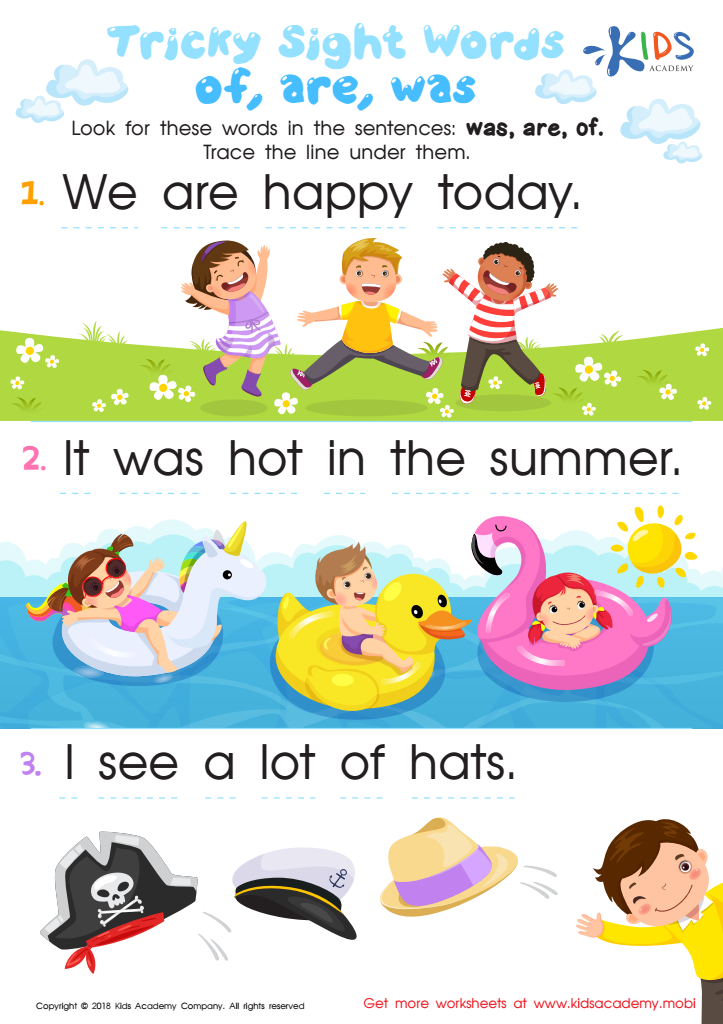
Tricky Sight Words Worksheet
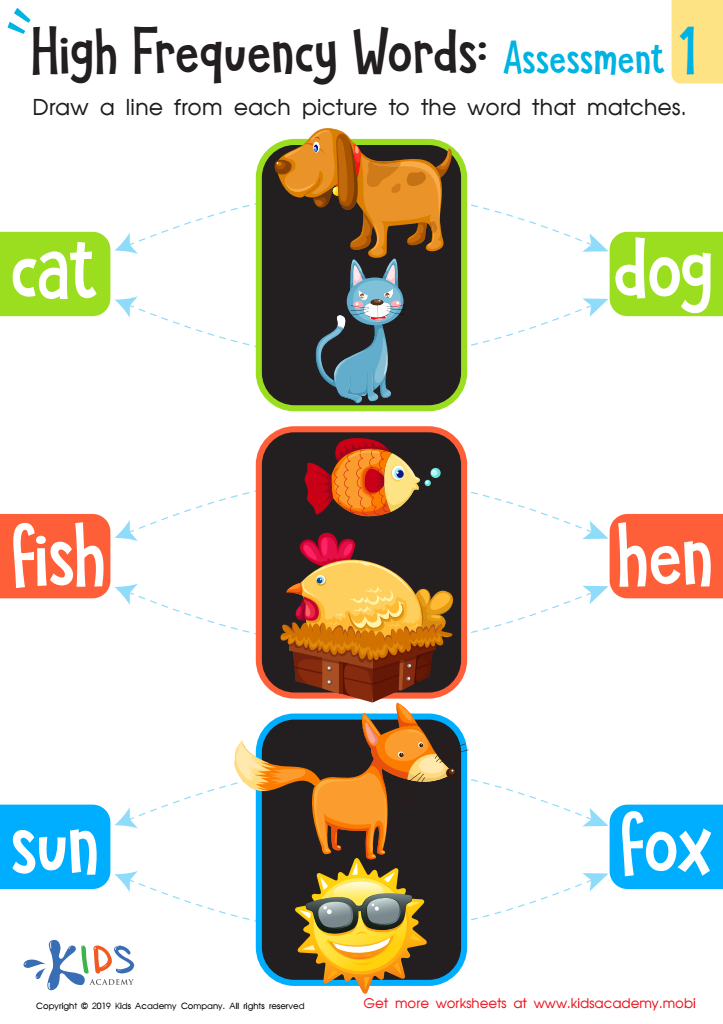
High Frequency Words: Assessment 1 Worksheet
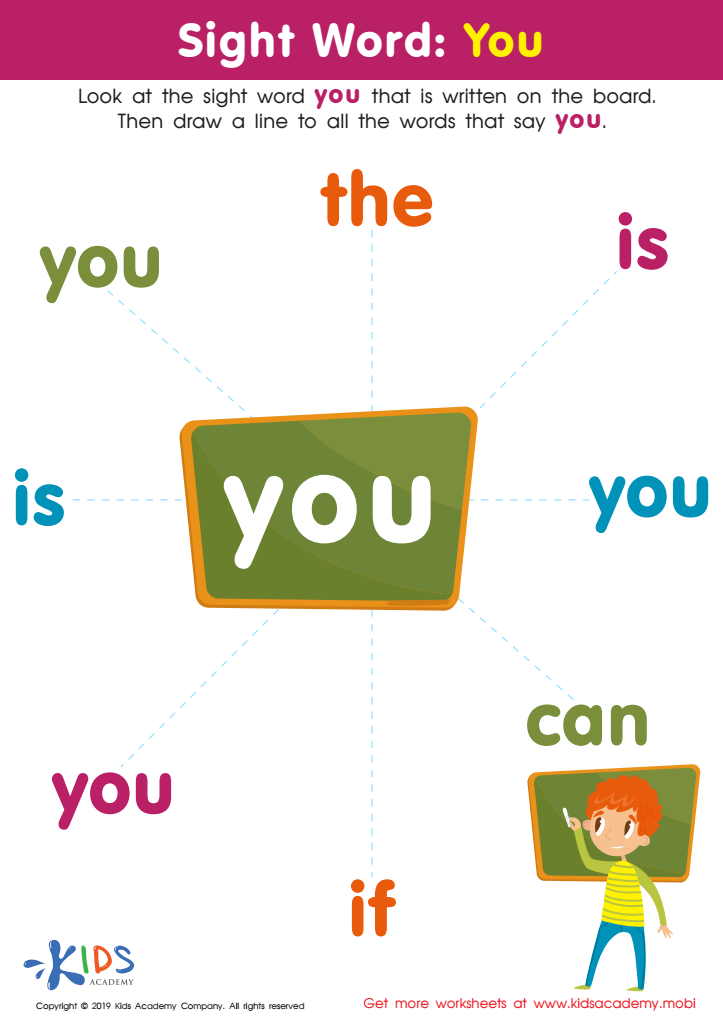
Sight Word You Worksheet
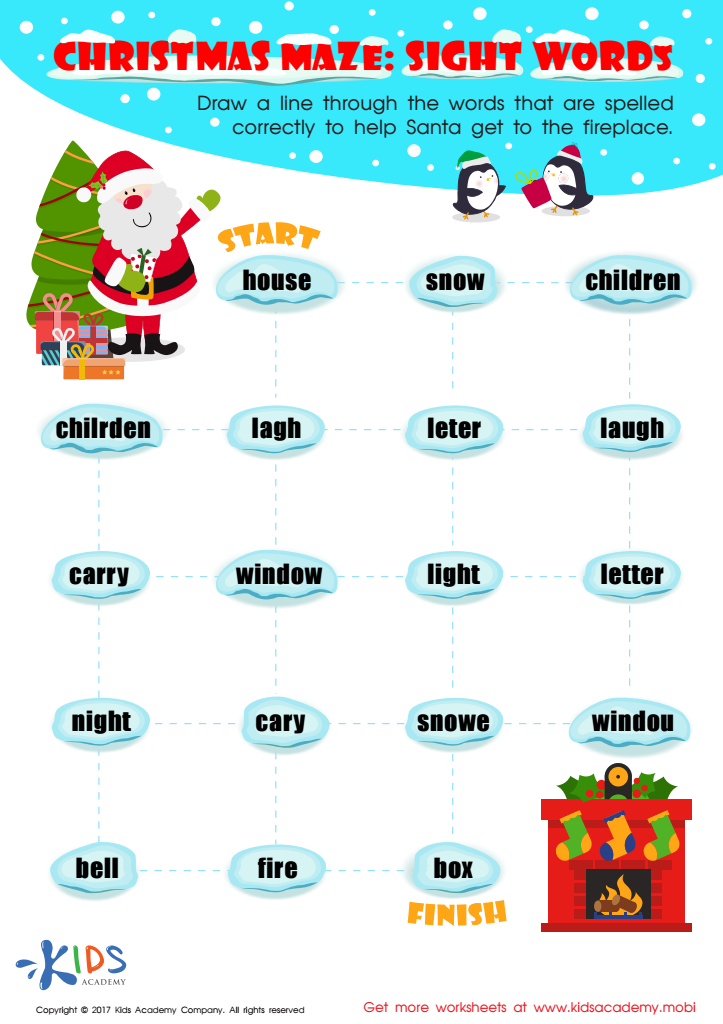
Sight Words Christmas Maze Printable
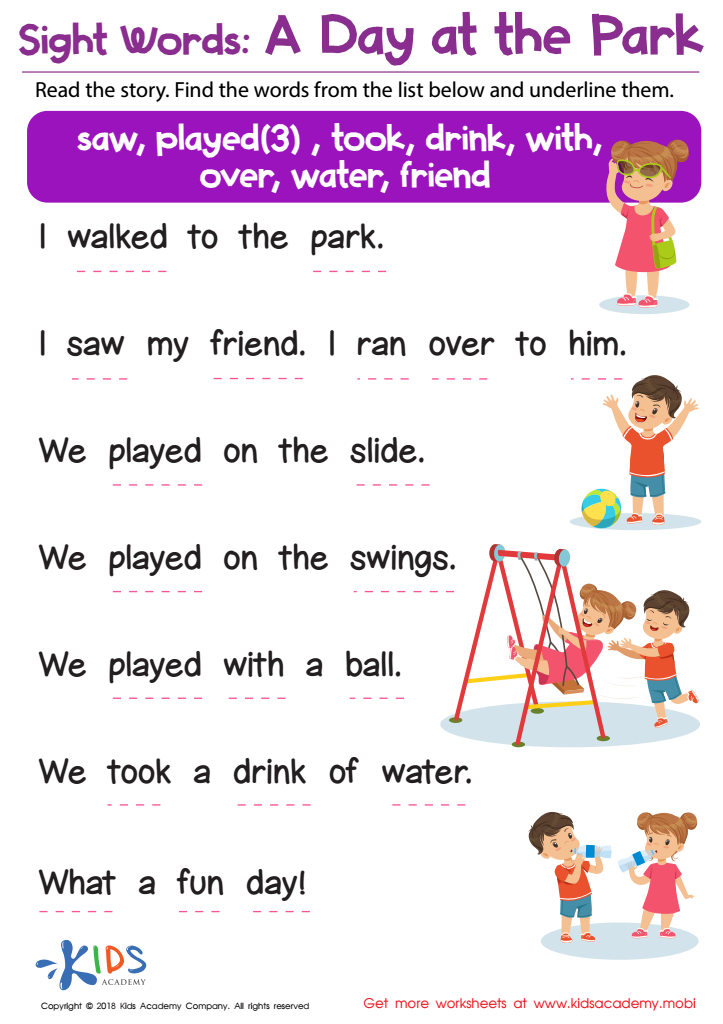
Sight Words: A Day at the Park Worksheet
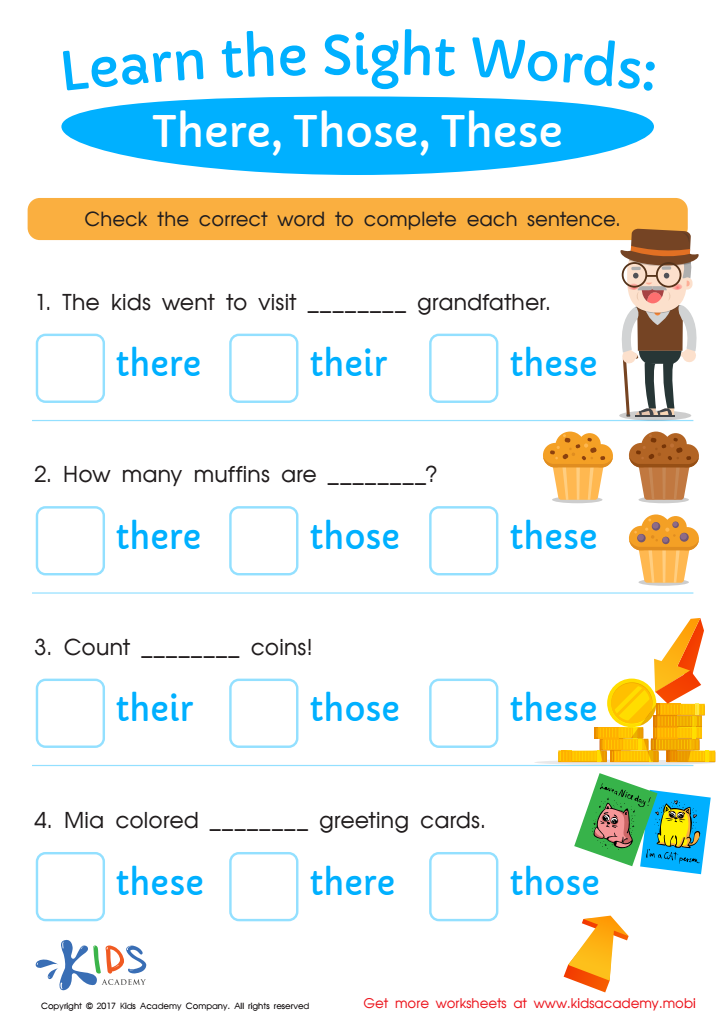
There, Those and These Sight Words Worksheet
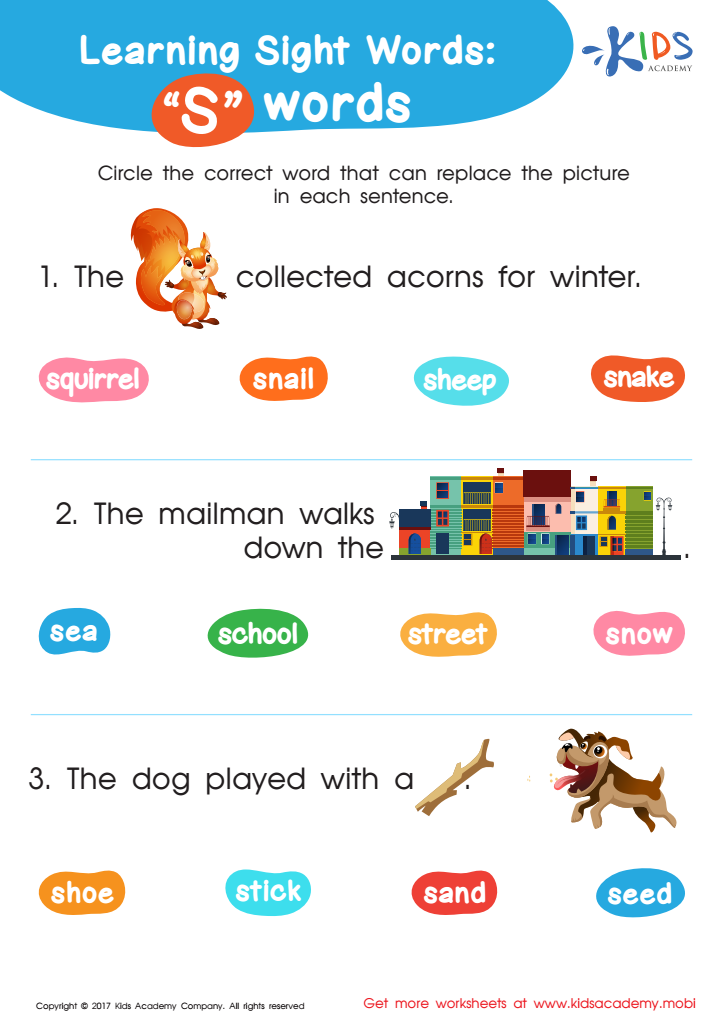
S Words Sight Words Worksheet
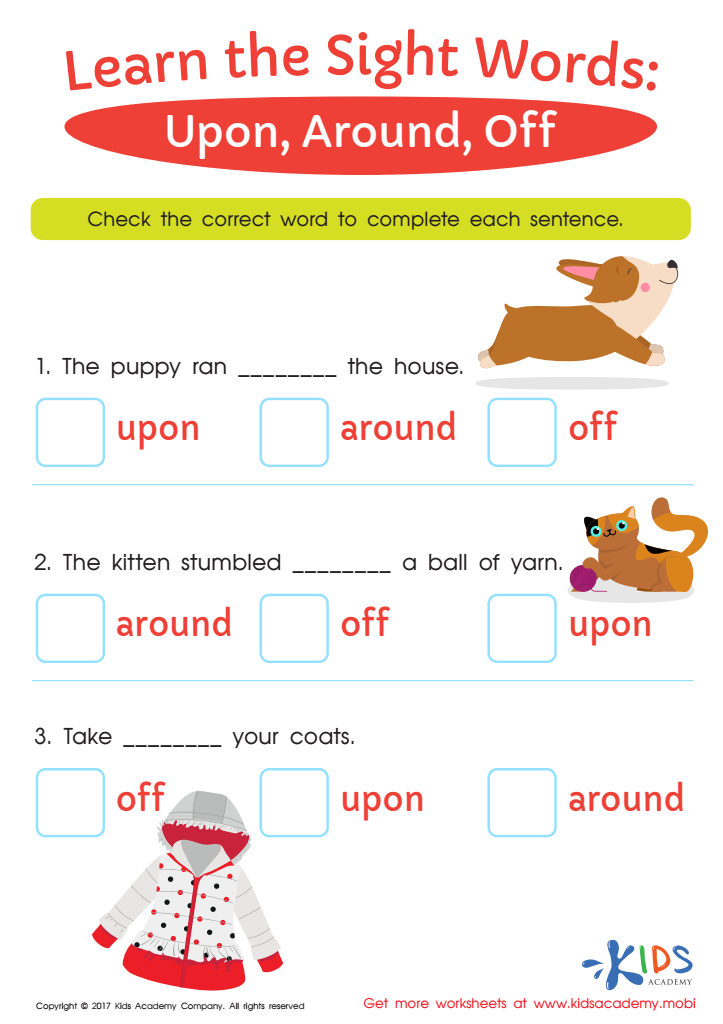
Upon, Around, Off Sight Words Worksheet
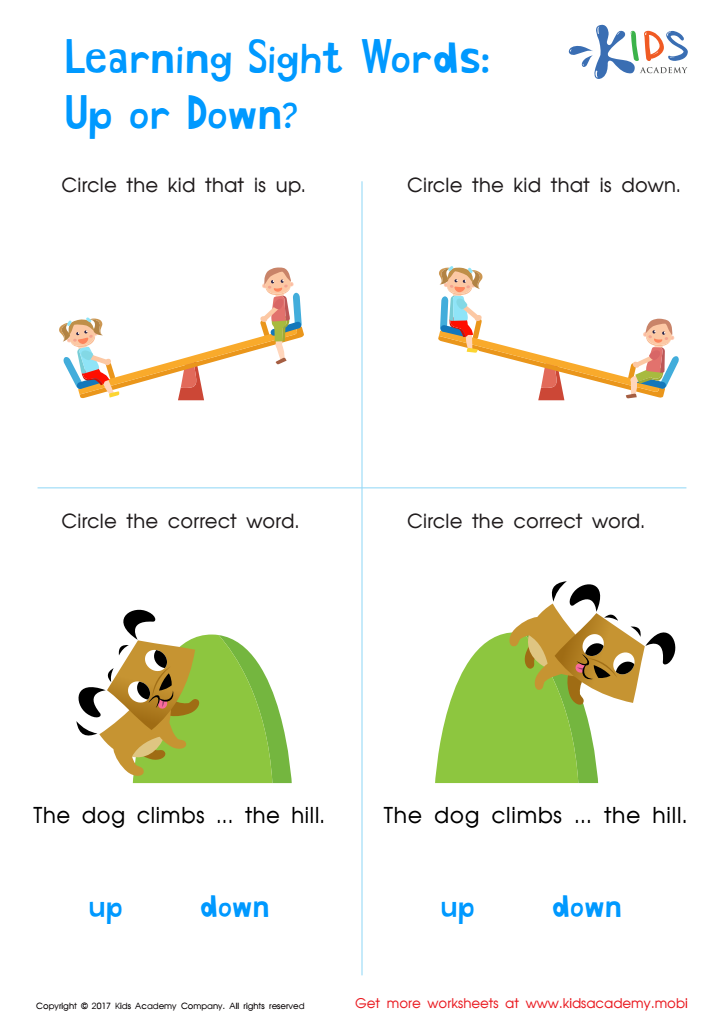
Up or Down Printable Sight Words Worksheet
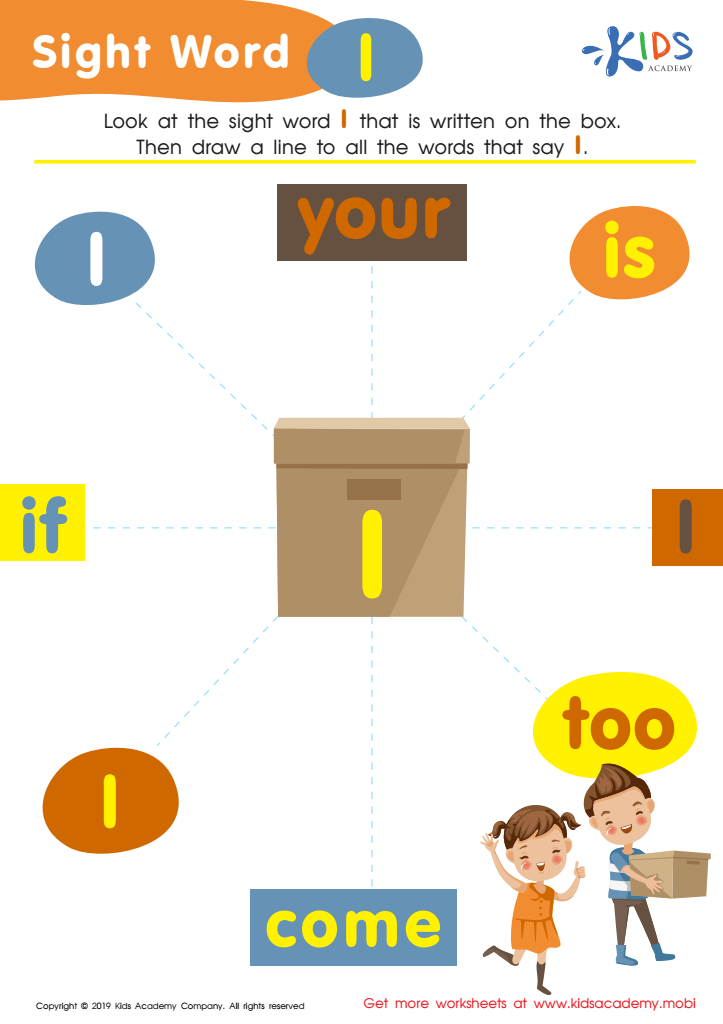
Sight Word I Worksheet
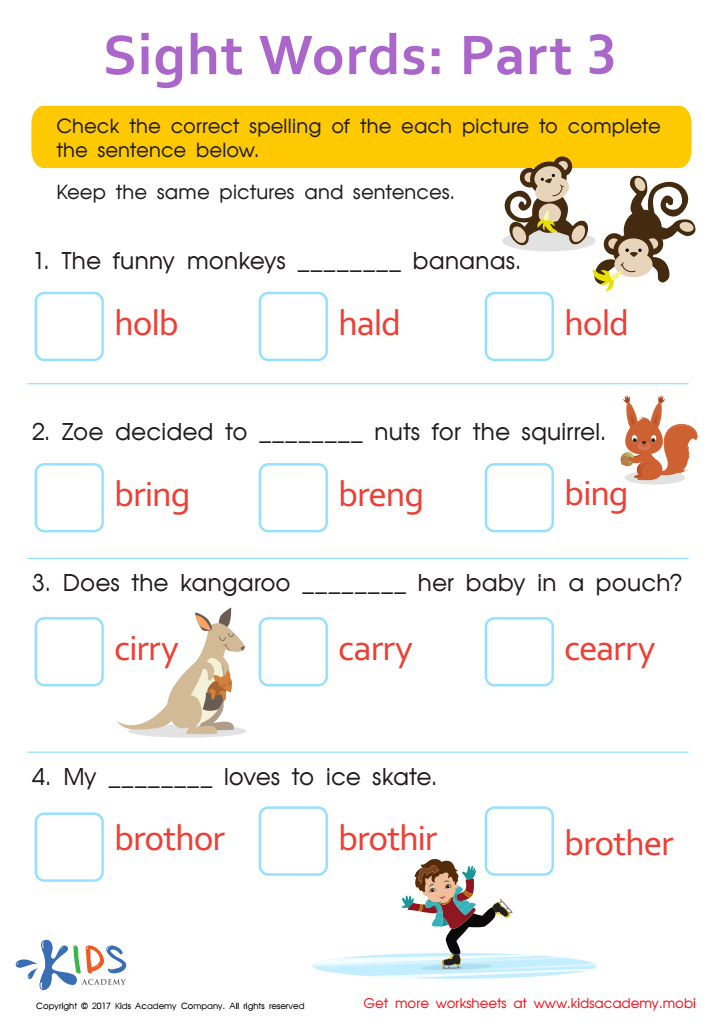
Hold, Bring, Carry, Brother Sight Words Worksheet








Sight word recognition and vocabulary building are crucial components of early literacy for children aged 4-9. During these formative years, children develop foundational skills that will shape their reading abilities and overall academic success. Sight words are high-frequency words that children encounter frequently in text. Mastering these words allows children to read more fluently and with greater comprehension, reducing their cognitive load as they decode new texts.
Teachers and parents should care about promoting sight word recognition because it facilitates confidence and motivation in young readers. When children can easily recognize common words, they can focus on comprehending stories rather than stumbling over individual words. Additionally, a rich vocabulary enhances a child's ability to express themselves and understand the world around them. It fosters critical thinking and imagination, allowing children to engage with diverse texts and conversations.
Furthermore, building vocabulary at an early age lays the groundwork for future academic achievement. A strong vocabulary helps with subject matter understanding and can positively influence standardized test performance later on. By prioritizing sight word recognition and vocabulary building, parents and teachers provide children with essential tools for lifelong learning and literacy engagement.








