
Understanding context Building Vocabulary Worksheets for Ages 4-9
4 filtered results
Difficulty Level
Grade
Age
-
From - To
Subject
Activity
Standards
Discover our "Understanding Context Building Vocabulary Worksheets" tailored for children aged 4-9! These engaging worksheets are designed to help young learners grasp the importance of context clues in expanding their vocabulary. Through fun activities and exercises, children will enhance their reading comprehension and word recognition skills. Our resources focus on real-life scenarios and relatable examples, making learning enjoyable and effective. Parents and educators can easily incorporate these worksheets into their teaching, promoting a love for language and literacy. Equip your child with essential vocabulary skills today and pave the way for their academic success! Explore our worksheets to unlock their potential!
Favorites
With answer key
Interactive
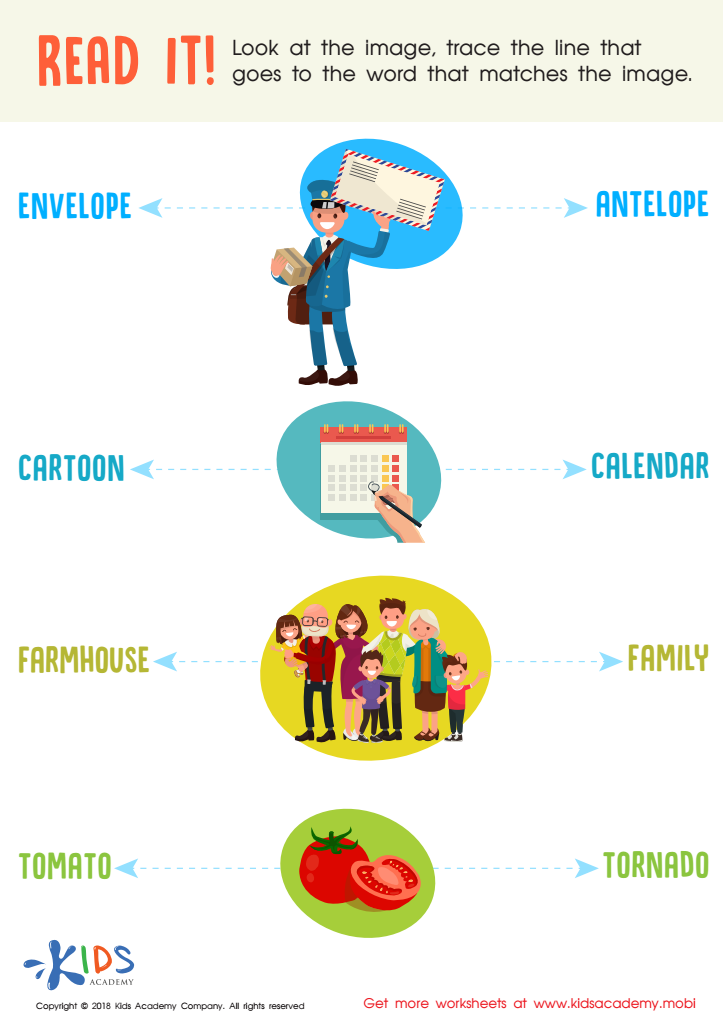
Read It! Worksheet
Point to each image on this worksheet, asking your child what it is. Read the 2 options then help your child trace the line to the correct word. It'll keep them engaged and provide visual stimulation.
 Assign to My Students
Read It! Worksheet
Worksheet











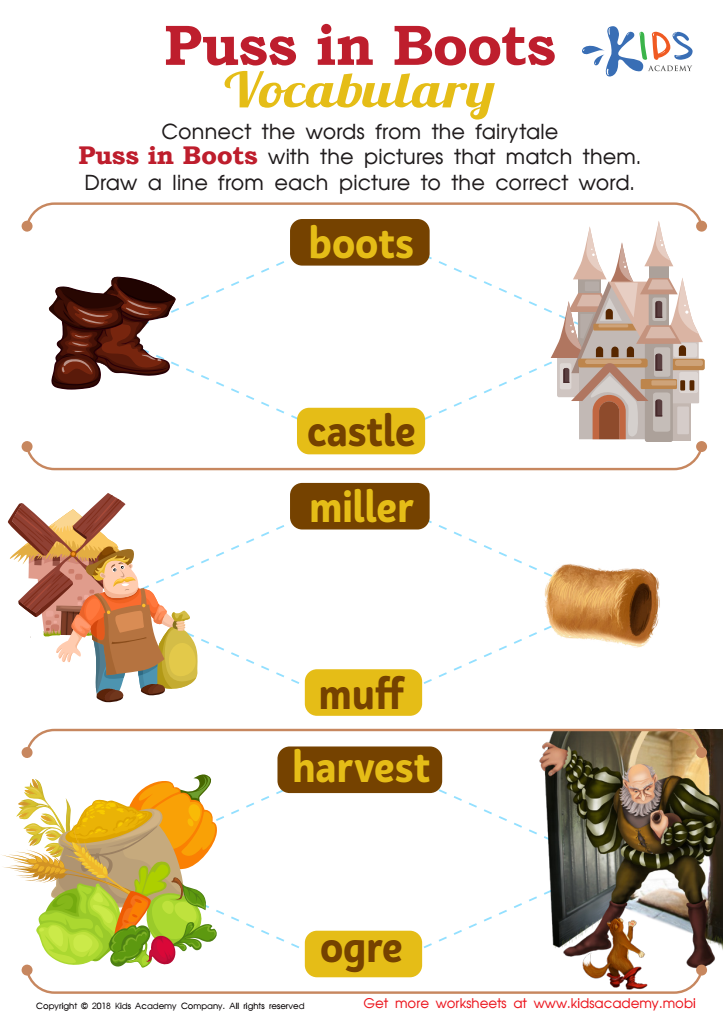
Puss in Boots Vocabulary Worksheet
Let your kids enjoy story-telling while learning at the same time. Help them learn from the fairytale, Puss in Boots, by connecting words from the worksheet with the matching pictures. Ask them to draw a line between each picture and corresponding word to build their vocabulary.
Puss in Boots Vocabulary Worksheet
Worksheet
Join Kids Academy for Free
Who is primarily going to use this learning content?




.jpg)



Understanding context and building vocabulary are crucial for children aged 4-9 because they form the foundation for successful communication, reading comprehension, and critical thinking skills. During these formative years, children are rapidly expanding their experiences and learning new language skills. When parents and teachers engage children in discussions about the context of words—how meaning changes depending on the situation—they help them develop a deeper understanding of language. This, in turn, enhances their ability to express ideas clearly and understand others.
Building vocabulary is essential not only for academic success but also for emotional and social development. A robust vocabulary allows children to articulate their thoughts, feelings, and experiences, fostering better relationships with peers and adults. Moreover, a strong vocabulary aids in reading comprehension; the more words children can recognize and use, the easier it becomes for them to understand the material they encounter.
Parents and teachers can support children in this journey by providing rich language experiences—through storytelling, interactive discussions, and immersive reading environments. By caring about and actively promoting context and vocabulary development, adults play a pivotal role in nurturing confident, competent communicators equipped for future learning challenges.








