Character recognition Reading Worksheets for Ages 4-9
4 filtered results
-
From - To
Explore our engaging Character Recognition Reading Worksheets, specially designed for children aged 4-9. These worksheets foster essential skills in identifying letters and characters, laying a strong foundation for early literacy. Through fun and interactive exercises, kids will enhance their visual recognition, develop comprehension, and boost their confidence as they learn to read. Our collection features colorful illustrations and captivating activities that capture children's attention, making the learning process enjoyable. Perfect for classroom or home use, these worksheets will support your child's reading journey with a focus on character recognition and overall reading proficiency. Start nurturing a love for reading today!
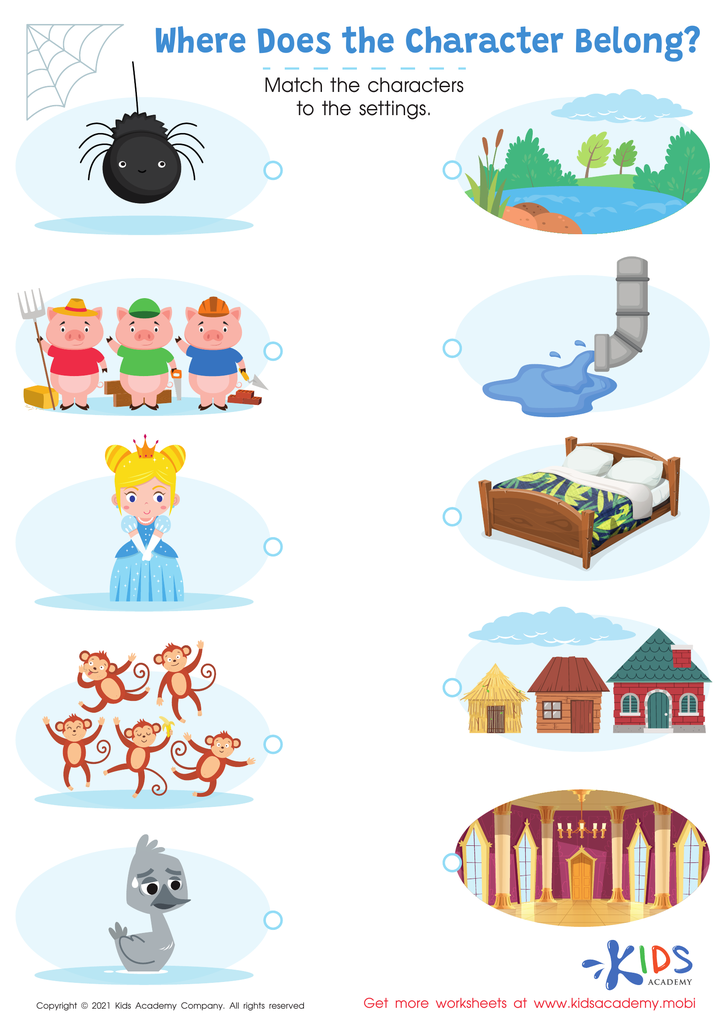
Where Does the Character Belong? Worksheet
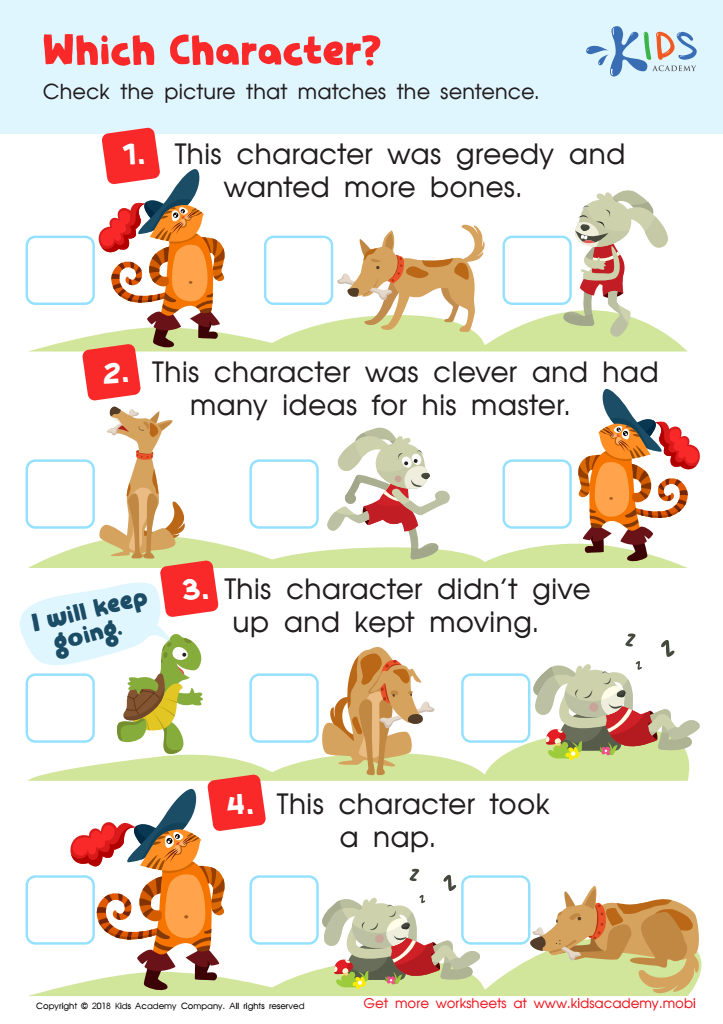
Which Character Worksheet
 Assign to My Students
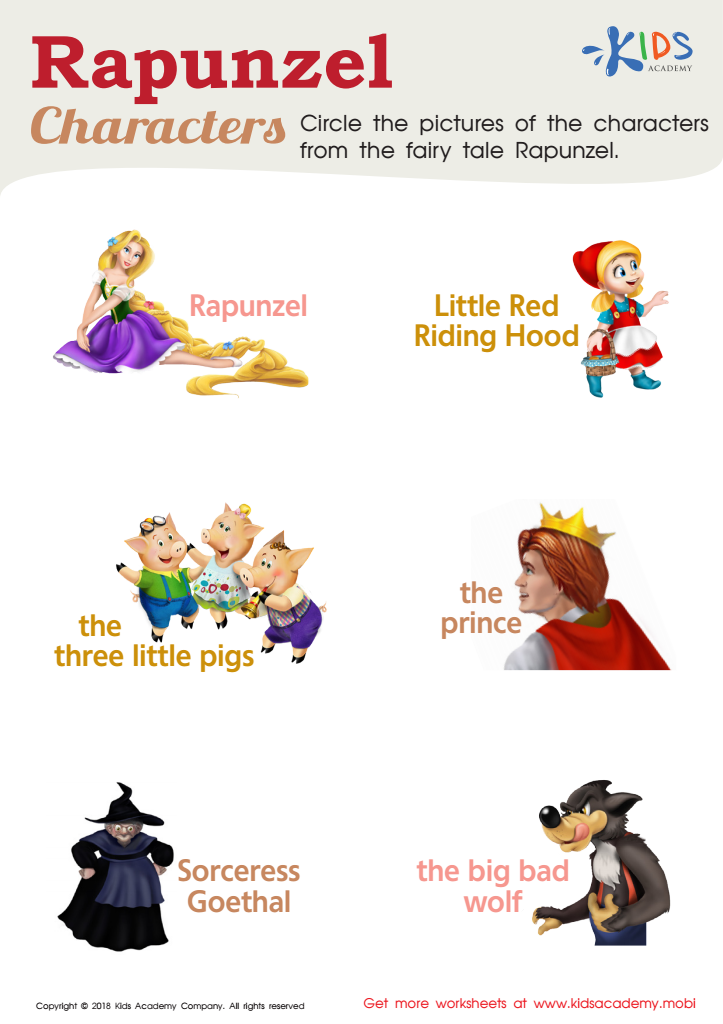
Rapunzel Characters Worksheet
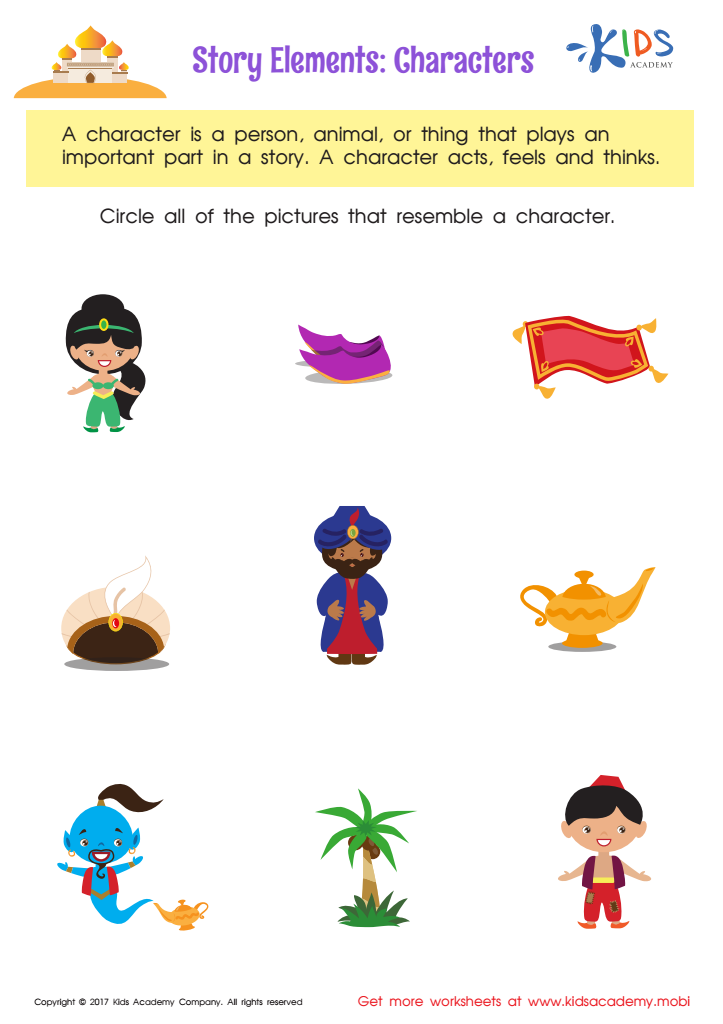
Story Elements Printable








Character recognition reading is crucial for children aged 4-9 because it lays the foundation for their literacy skills. During this formative stage, children are introduced to the building blocks of reading, which include recognizing letters, understanding their sounds, and identifying characters in texts. Mastering character recognition not only helps kids decode words but also enhances their vocabulary and comprehension skills.
When children can recognize characters quickly, they develop confidence in their reading abilities, which encourages them to explore more complex texts. This sense of achievement motivates ongoing engagement in reading, fostering a lifelong love for literature. Furthermore, character recognition plays a significant role in phonemic awareness, vital for spelling and writing.
Parents and teachers should prioritize character recognition because its impact extends beyond reading proficiency. It supports cognitive development, critical thinking, and social-emotional growth through storytelling and discussions about characters and plots. By nurturing these skills at an early age, adults empower children to thrive academically and socially, equipping them with essential competencies for future learning endeavors. Ultimately, fostering character recognition in young learners has lasting benefits that pave the way for successful communication and critical literacy in later years.








