Grammar skills improvement Reading Worksheets for Ages 4-9
5 filtered results
-
From - To
Enhance your child's grammar skills with our engaging reading worksheets, specifically designed for ages 4-9! These interactive resources provide fun and educational activities that make learning grammar enjoyable. Each worksheet focuses on essential grammar concepts, helping young learners improve their reading comprehension and writing abilities. With colorful illustrations and age-appropriate exercises, children will develop a strong foundation in grammar while fostering a love for reading. Our worksheets are perfect for homeschoolers, classroom use, or additional practice at home. Empower your child to become a confident reader and communicator with our captivating grammar skills improvement worksheets today!
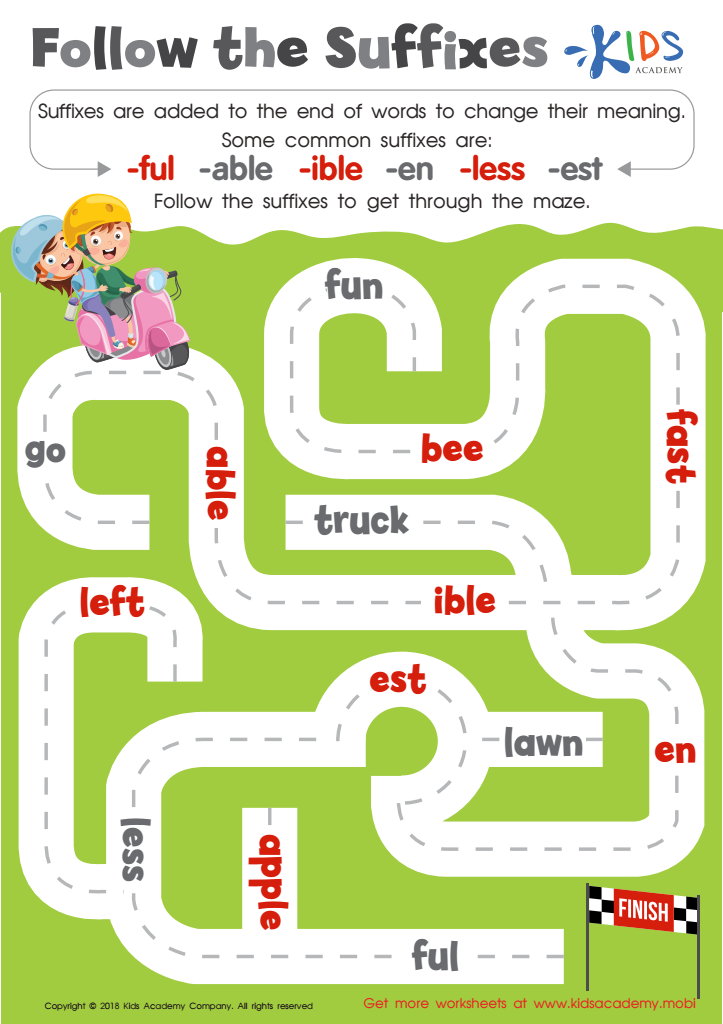
Reading: Follow the Suffixes Worksheet
 Assign to My Students
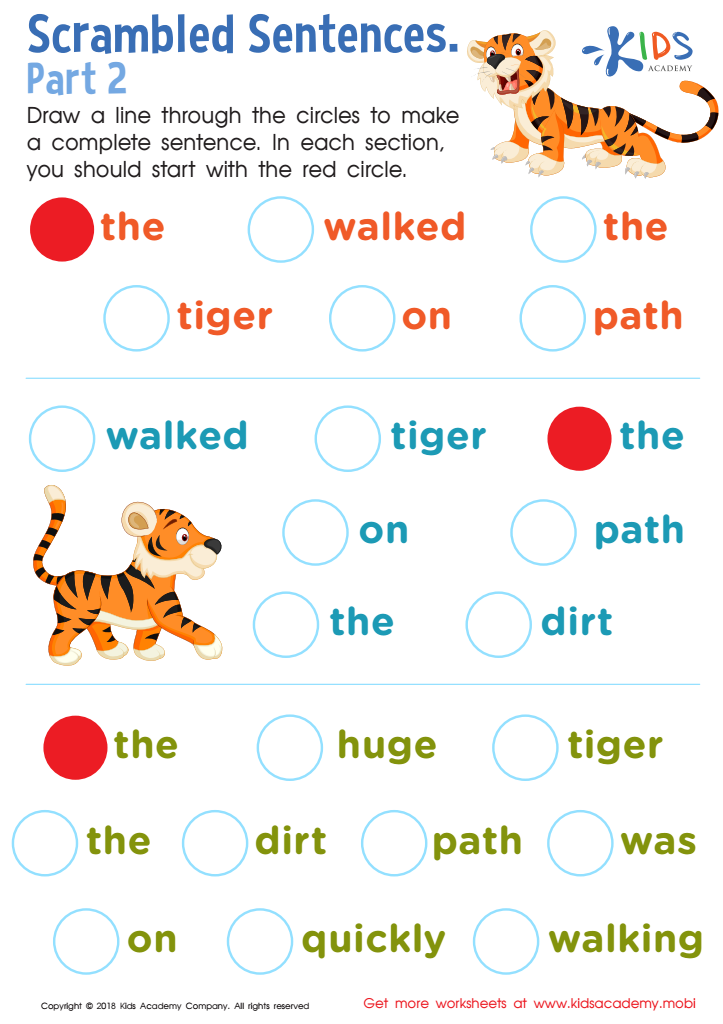
Scrambled Sentences Part 2 Worksheet
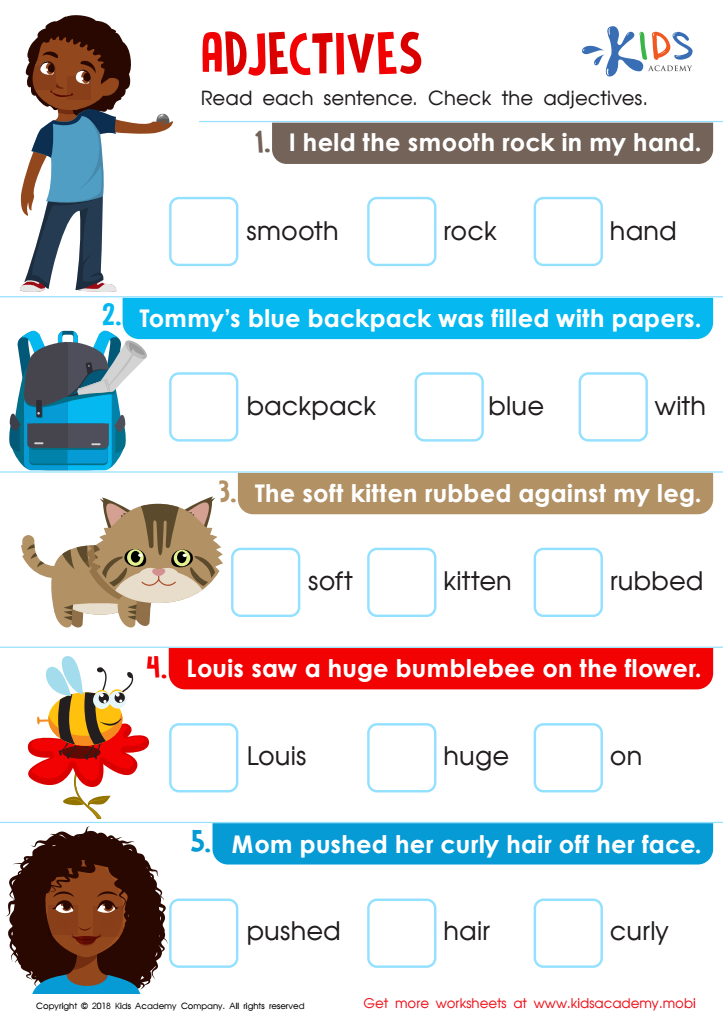
Adjectives Worksheet
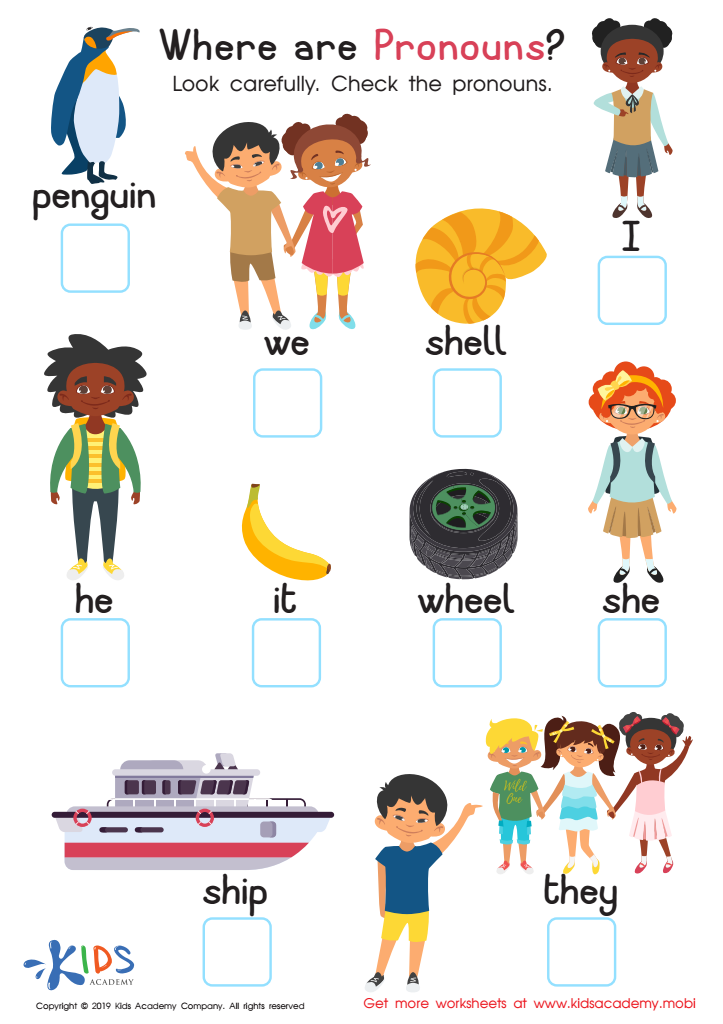
Where Are Pronouns? Worksheet
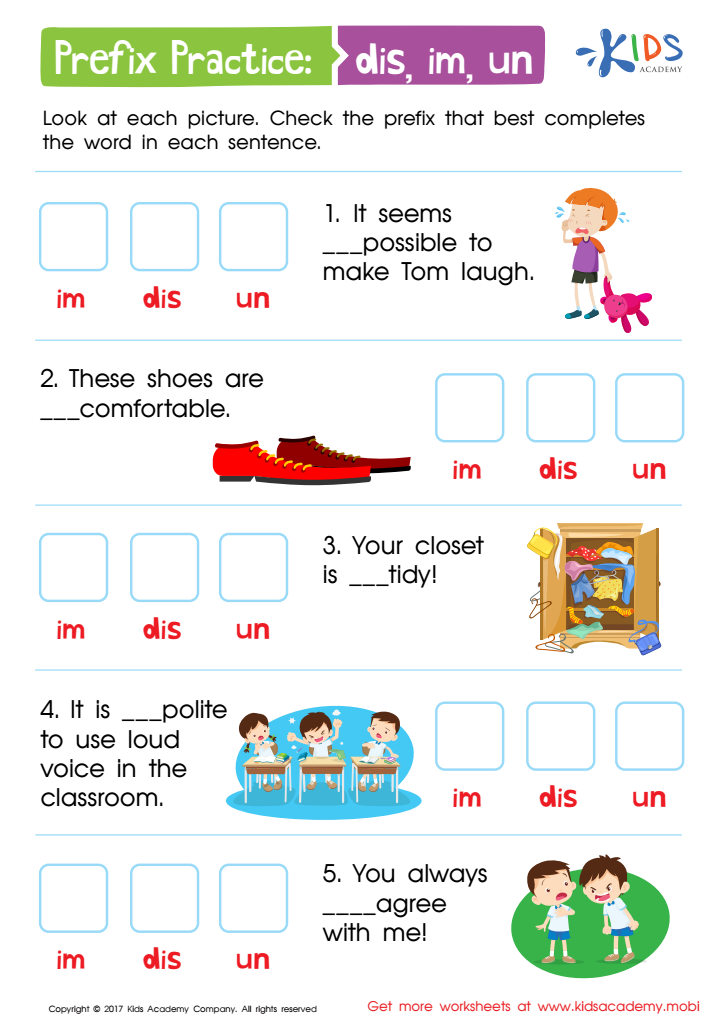
Prefix Practice Worksheet: DIS, IM, UM








Parents and teachers should prioritize grammar skills improvement in reading for children aged 4-9 because foundational literacy is crucial for long-term academic success. Mastering grammar enhances a child’s ability to comprehend and produce meaningful language. As they develop grammatical awareness, children's reading fluency improves, enabling them to decode texts accurately. This fluency fosters a love for reading, as children become more confident and engaged with stories.
Additionally, understanding grammar allows children to express their thoughts clearly and creatively. When they learn the rules of language, they can construct sentences that convey their ideas effectively, facilitating better communication with peers and adults. This skill is not only vital for academic tasks but also for social interactions.
Grammar skills also support critical thinking. Comprehension often involves analyzing sentence structure, making inferences, and grasping nuances in language. By enhancing grammar capabilities early on, children are equipped to tackle complex texts in higher grades, ensuring a smoother transition into more challenging material.
In conclusion, nurturing grammar skills in early readers creates a robust linguistic foundation that drives their confidence, communication, and cognitive development, ultimately benefiting their personal and academic lives. This investment in their early education pays dividends as they grow.








