
Rhyming skills Reading Worksheets for Ages 4-9
7 filtered results
Difficulty Level
Grade
Age
-
From - To
Subject
Activity
Standards
Enhance your child's reading journey with our Rhyming Skills Worksheets designed for ages 4-9! These engaging printable worksheets focus on developing critical phonemic awareness through fun activities that make learning to rhyme enjoyable. By exploring various rhyming words and exercises, children will boost their vocabulary, improve pronunciation, and enhance their reading fluency. Our carefully crafted worksheets cater to different skill levels, ensuring that every child can participate and grow. Perfect for homeschool or classroom settings, these resources lay a strong foundation for literacy while igniting a love for reading. Start their rhyming adventure today and watch them thrive!
Favorites
With answer key
Interactive
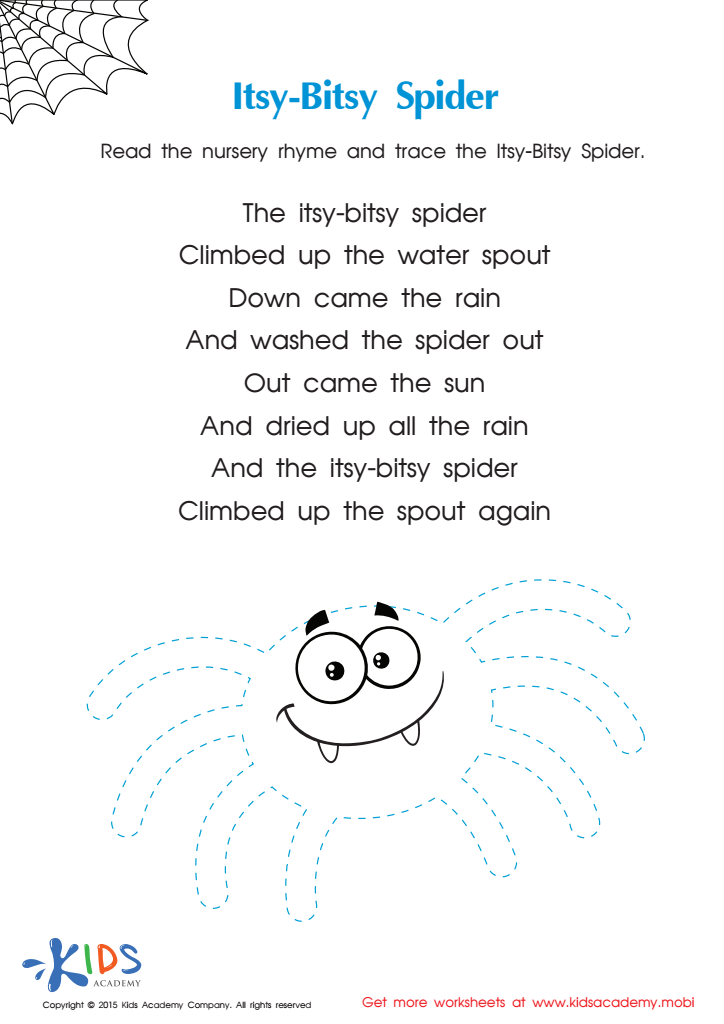
Itsy Bitsy Spider Nursery Rhyme PDF Worksheet
Introduce your child to the classic nursery rhyme with this worksheet. They'll learn the song, develop their motor skills, and find and count the letters 'A'. Pick up your crayons and add some color to the missing spider!
 Assign to My Students
Itsy Bitsy Spider Nursery Rhyme PDF Worksheet
Worksheet
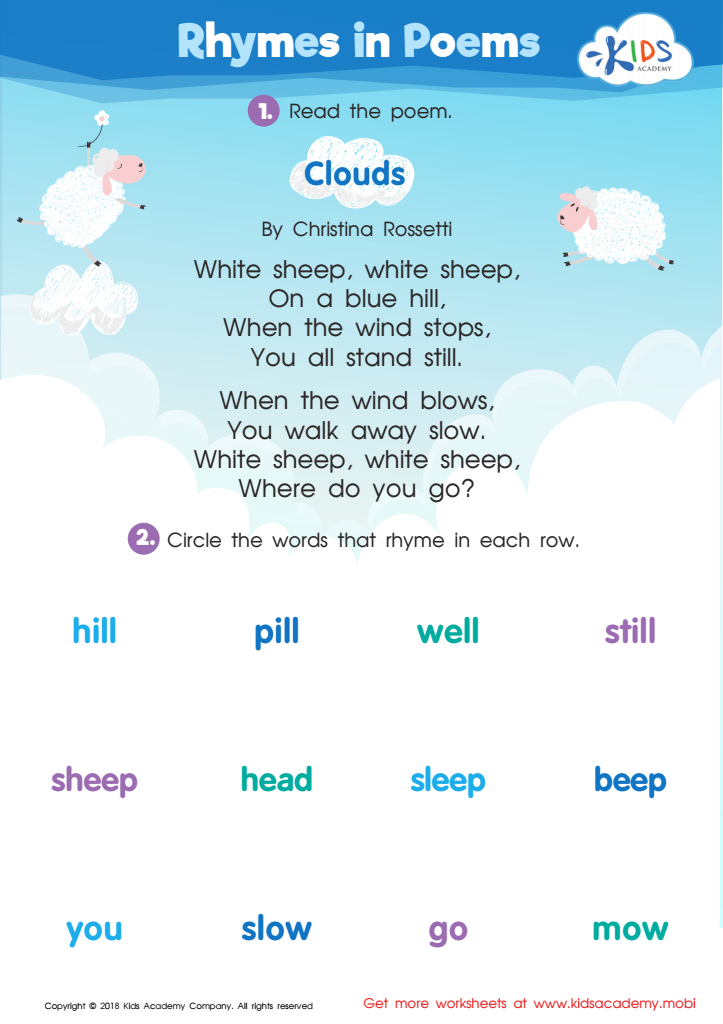
Rhymes in Poems Worksheet
Poems are lovely works of literature; some with rhymes, and some without. This poem for kids is full of rhymes and tells the tale of a sheep. Read it aloud to your kids, then help them circle the rhyming words.
Rhymes in Poems Worksheet
Worksheet
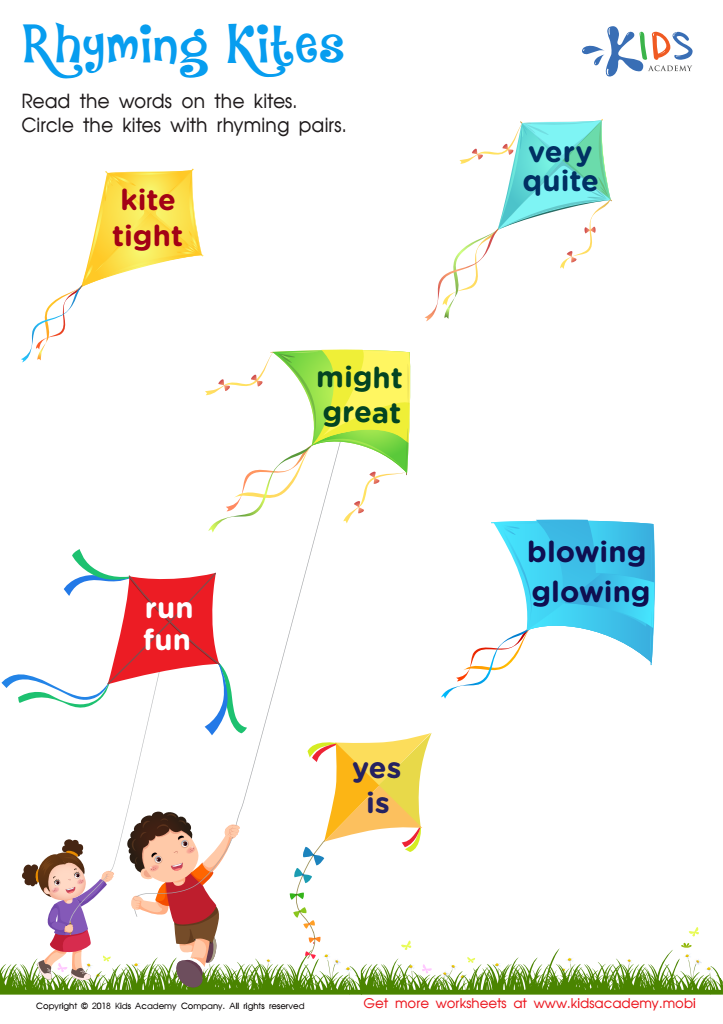
Rhyming Kites Worksheet
On a spring day, fly a kite! Kids Academy has a rhyming worksheet to boost your child's skills. Read the pairs of words aloud. Circle the kites if they rhyme, leave them blank if they don't. Listen carefully and find all the rhyming word pairs to complete this sheet!
Rhyming Kites Worksheet
Worksheet
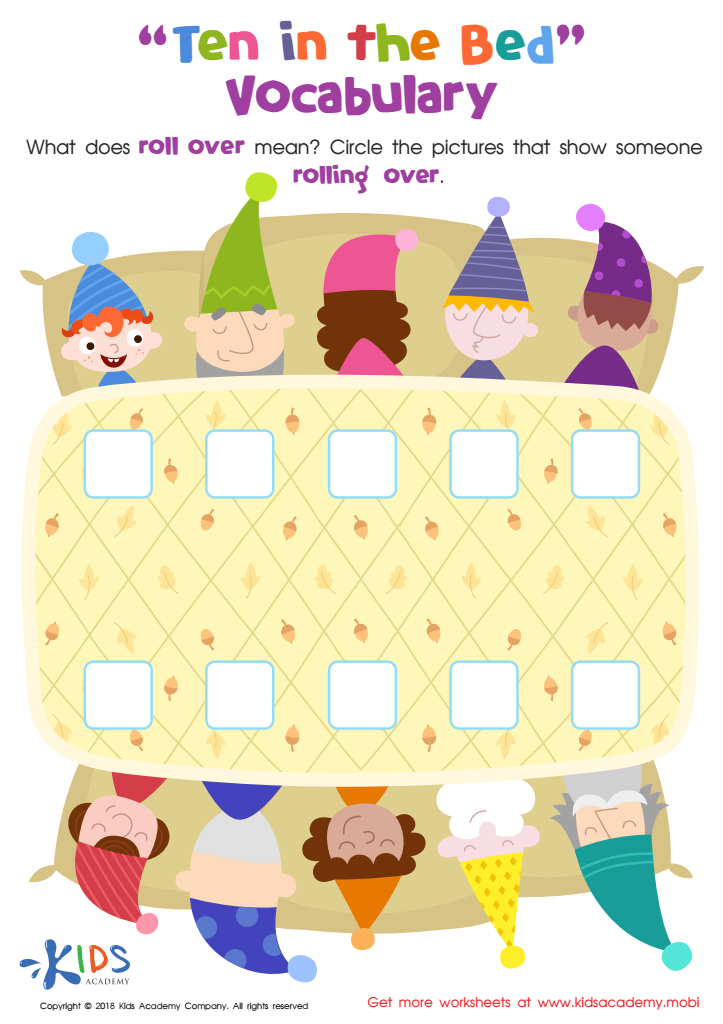
Ten in the Bed: Vocabulary Worksheet
It's essential for emerging readers to be proficient in positional and directional words. This worksheet uses cheerful faces to help students identify who has "rolled over". Knowing these words is an essential part of reading and writing for pre-K and Kindergarteners. It also helps them to follow directions and use precise language.
Ten in the Bed: Vocabulary Worksheet
Worksheet
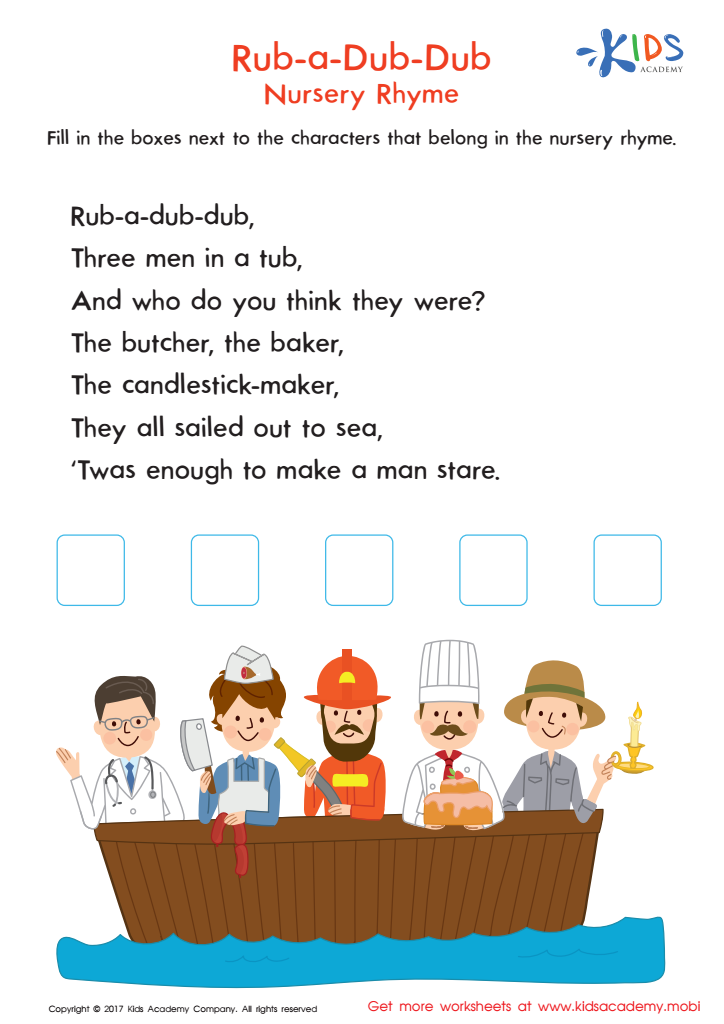
Rub a Dub Dub Printable
Delight your child and foster early reading skills with this printable nursery rhyme, Rub a Dub Dub! Let your little reader select the three men in the tub and practice important reading comprehension skills.
Rub a Dub Dub Printable
Worksheet
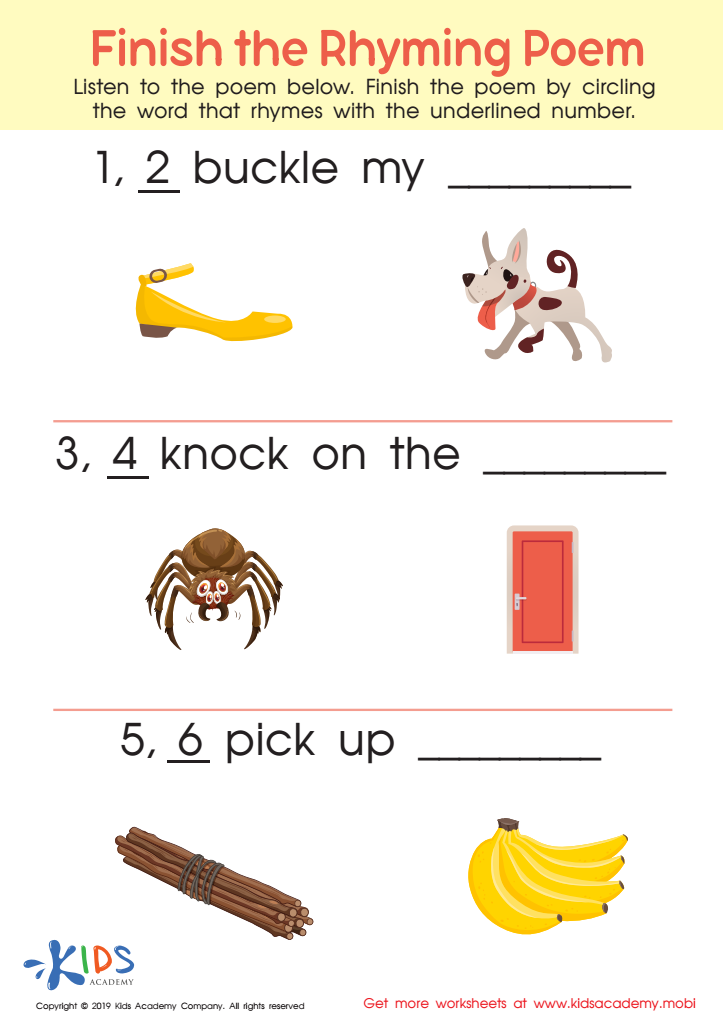
Finish Rhyming Poem Worksheet
Poems are a great way to express emotions and spark imagination. Does your child enjoy poetry and even have their own creations? If so, they'll love this worksheet. It's a great way to develop their rhyming skills. Challenge them to find and circle the words that rhyme with the ones underlined.
Finish Rhyming Poem Worksheet
Worksheet
Join Kids Academy for Free
Who is primarily going to use this learning content?








Rhyming skills are foundational in early literacy development and play a crucial role in reading readiness for children aged 4 to 9. Understanding and recognizing rhyme helps children develop phonemic awareness, the ability to hear, identify, and manipulate sounds in words, which is essential for decoding and encoding skills necessary for reading.
When children engage with rhymes, they learn to recognize patterns in language, understand how sounds work together, and develop auditory discrimination. This skill supports their ability to sound out words as they start to read independently. Moreover, rhyming activities, such as nursery rhymes and rhyming games, make learning enjoyable and foster a love for language and reading.
Teachers and parents can use rhyming to enhance vocabulary skills too. The playful use of rhythmic language can help children memorize and differentiate words, leading to richer language development.
Additionally, early exposure to rhyme contributes to overall cognitive skills, such as memory and critical thinking. Encouraging rhyming boosts not only reading skills but also confidence in language use, paving the way for greater academic success. Ultimately, prioritizing rhyming in early literacy instruction supports a holistic approach to teaching children to read and enjoy literature.








