
Shape identification Reading Worksheets for Ages 4-9
5 filtered results
Difficulty Level
Grade
Age
-
From - To
Subject
Activity
Standards
Discover engaging Shape Identification Reading Worksheets tailored for children aged 4-9! These interactive worksheets combine fun activities with essential learning, helping young minds recognize and identify various shapes effortlessly. Crafted by educational experts, these resources support visual learning, enhance reading skills, and improve cognitive development through shape-related exercises. Perfect for preschoolers and early graders, our worksheets cater to different learning styles, ensuring each child grasps basic geometry concepts playfully and effectively. Ideal for both classroom and home use, these printable materials make shape learning enjoyable and impactful. Motivate your child’s learning journey today at Kids Academy!
Favorites
With answer key
Interactive
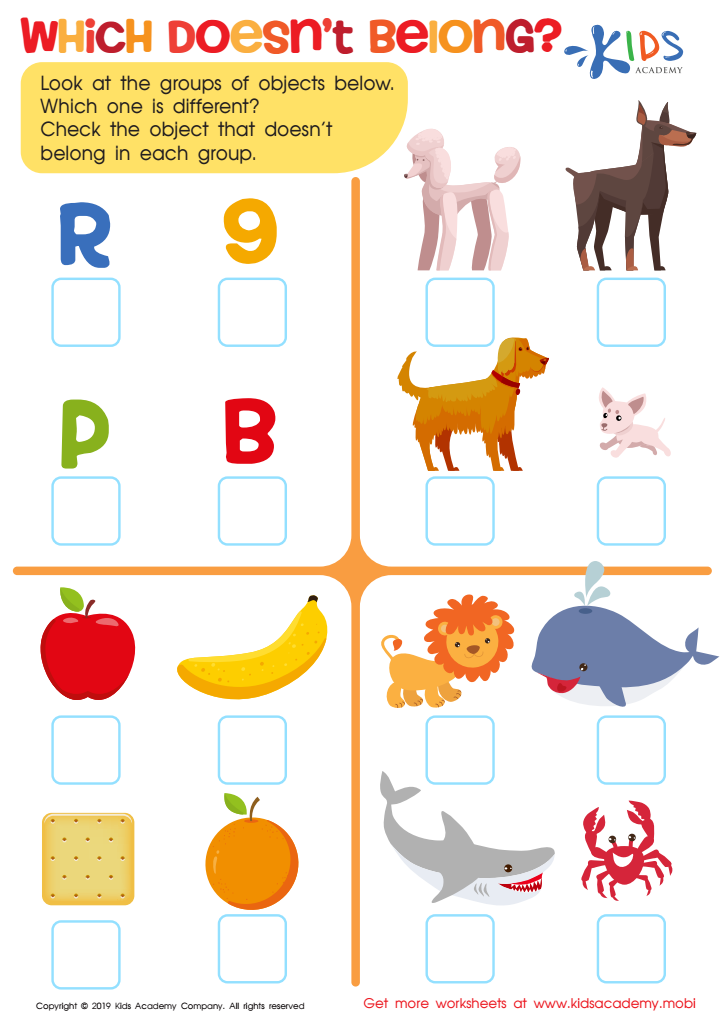
Which Doesn't Belong? Worksheet
This engaging worksheet helps preschoolers recognize similar and different attributes of common words, using brightly-colored pictures. They analyze the items in each category and check off what is different. For extra practice, have them explain their reasoning verbally! Sorting and classifying are important skills to learn.
 Assign to My Students
Which Doesn't Belong? Worksheet
Worksheet
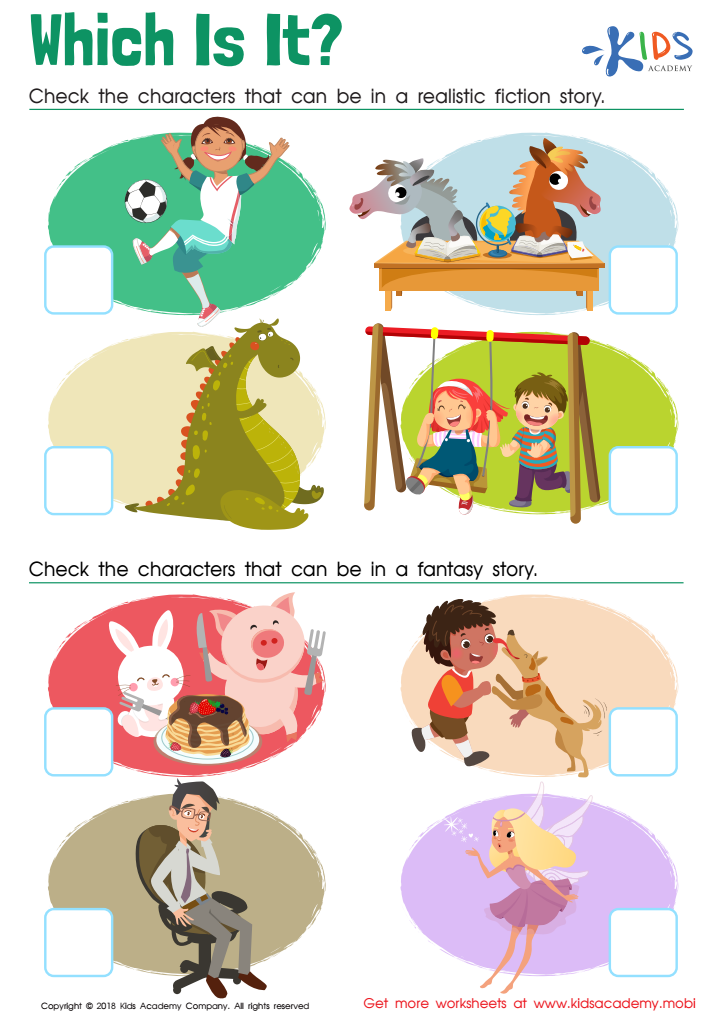
Which Is It? Worksheet
This colorful worksheet helps young readers identify elements of fact and fiction using fun picture clues. They can check off characters who exist in realistic fiction stories, which makes learning the difference between the two genres fun and engaging.
Which Is It? Worksheet
Worksheet
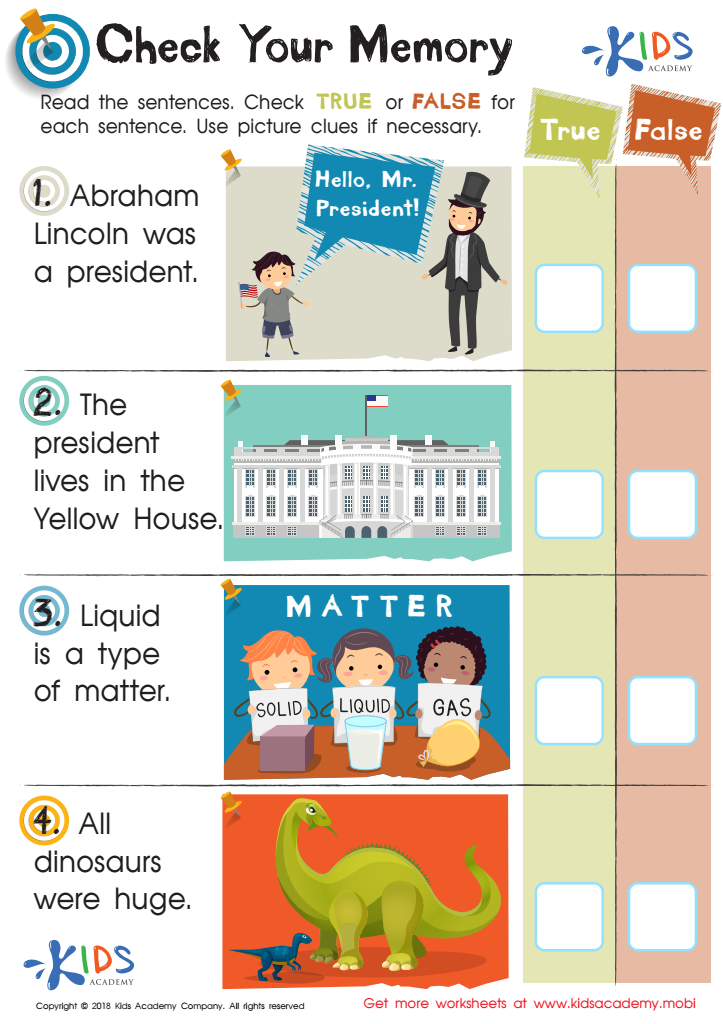
Check Memory Worksheet
Assisting your kids with their homework and using worksheets is a great way for them to learn. The vibrant visuals in this printout can help stimulate the mind and motivate your child. Have them read the sentences and then point to the associated images. Afterwards, ask them to state True or False for each sentence. If they are still uncertain, offer them the picture clues to assist further.
Check Memory Worksheet
Worksheet
Join Kids Academy for Free
Who is primarily going to use this learning content?








Shape identification is a crucial foundational skill for children aged 4-9 as it serves as a building block for more advanced learning and development. Parents and teachers should prioritize this skill for several reasons.
Firstly, recognizing and differentiating shapes aids cognitive development by enhancing spatial awareness and visual discrimination. These skills are vital for understanding more complex concepts in subjects like mathematics, where children need to grasp the properties of geometric figures, symmetry, and spatial reasoning.
Secondly, shape identification supports early literacy. Many letters and numbers are based on basic geometric shapes, so familiarizing children with shapes helps them more readily learn to read and write. For instance, the letter "O" is an oval or circle, and the letter "D" incorporates a half-circle.
Additionally, knowing how to identify shapes enhances problem-solving abilities and critical thinking. It helps children categorize and organize information, which gives them strategies to tackle problems more systematically.
From a social aspect, engaging children in shape identification activities often requires cooperation and communication, which helps improve their social and language skills.
Ultimately, fostering shape identification is not just about learning shapes. It's about providing young children with tools that contribute to their academic success and overall intellectual development. Both parents and teachers play key roles in creating an environment conducive to this essential learning.








