Understanding directions Reading Worksheets for Ages 4-9
3 filtered results
-
From - To
Enhance your child's reading comprehension with our "Understanding Directions" reading worksheets tailored for ages 4-9. These engaging activities are designed to strengthen crucial skills in following written directions, helping young learners grasp essential concepts while having fun. Each worksheet presents clear, age-appropriate tasks that encourage critical thinking and improve attention to detail. With illustrated examples and interactive exercises, children will enhance their ability to interpret instructions effectively. Our comprehensive resource fosters independence in learning, setting a strong foundation for future academic success. Explore our collection today and empower your child to confidently navigate written directions!
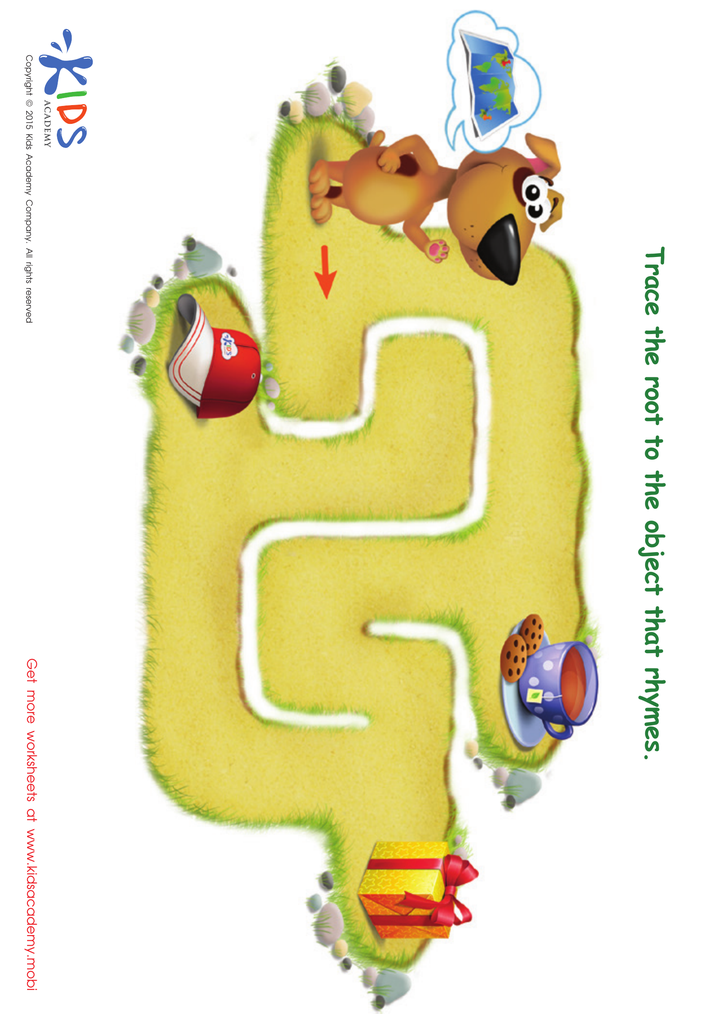
Map Rhyming Words Worksheet
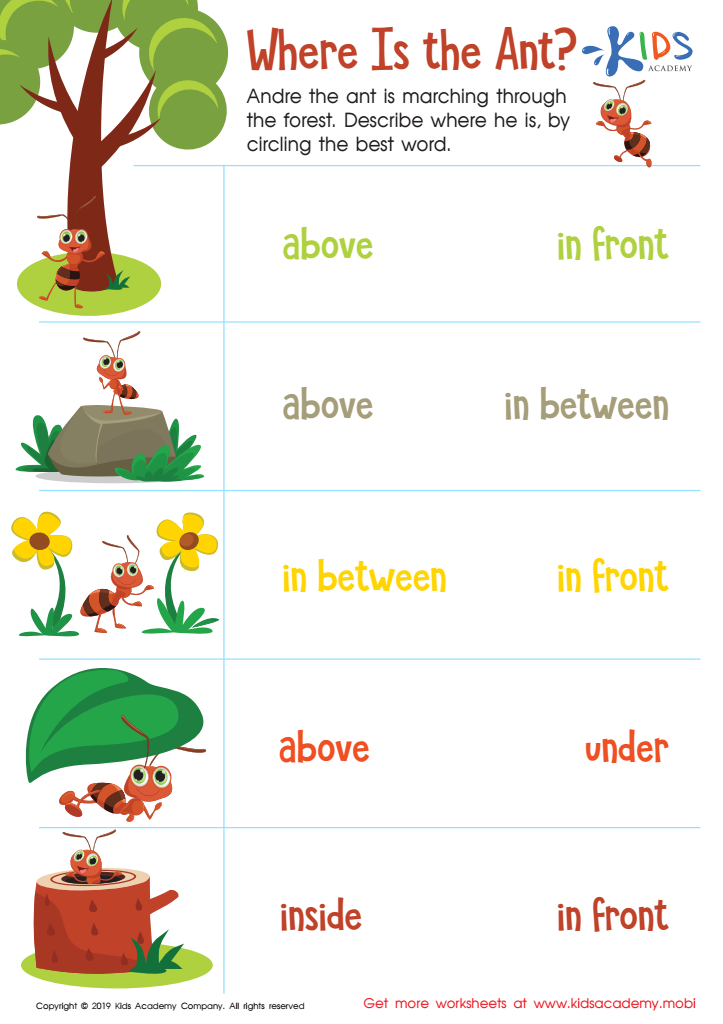
Where Is the Ant? Worksheet
 Assign to My Students
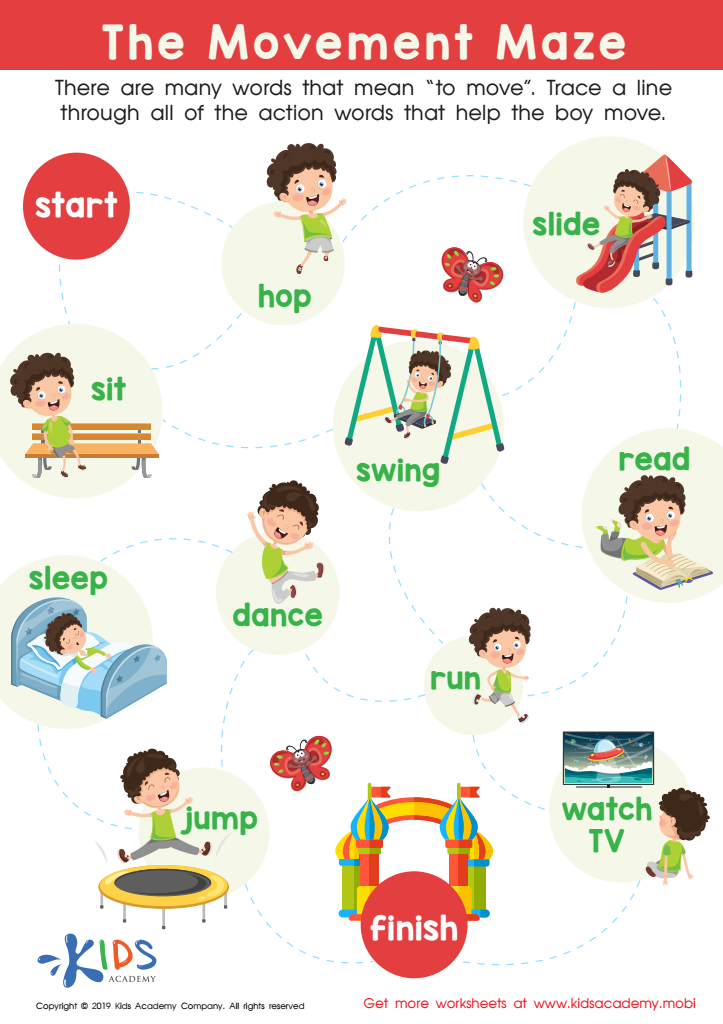
The Movement Maze Worksheet





Understanding directions is a critical skill for children aged 4-9, as it lays the foundation for effective communication and decision-making. At this developmental stage, children are rapidly acquiring language and comprehension skills, making it essential for parents and teachers to foster an environment that emphasizes the importance of following directions.
First, strong directional understanding enhances cognitive development. When children learn to process and follow instructions, they enhance their ability to think critically and solve problems independently. It helps them navigate various academic tasks, from simple activities to more complex assignments.
Moreover, mastering direction-following cultivates essential life skills. Children learn how to interpret verbal and written cues, which are crucial for everyday activities, whether at home, school, or in community settings. These skills aid in their ability to participate in group activities, work productively in teams, and eventually tackle real-world challenges.
For parents and teachers, supporting children in direction comprehension promotes their overall confidence and autonomy. When kids feel capable of following directions successfully, they tend to engage more in learning and explore new challenges imaginatively. Therefore, prioritizing directional understanding is vital for fostering both academic and personal growth in young learners.








