Understanding prepositions Reading Worksheets for Ages 4-9
6 filtered results
-
From - To
Discover engaging and interactive worksheets designed to help children ages 4-9 master the concept of prepositions! Our "Understanding Prepositions" reading worksheets provide a fun way for young learners to build essential language skills. Each worksheet features age-appropriate activities that encourage students to identify, understand, and use prepositions in various contexts. With vibrant illustrations and clear instructions, these resources promote both independent learning and group collaboration. Perfect for classroom use or at-home practice, these worksheets aim to strengthen grammatical understanding and enhance reading comprehension. Unlock your child's potential and make learning enjoyable with our prepositions reading worksheets today!
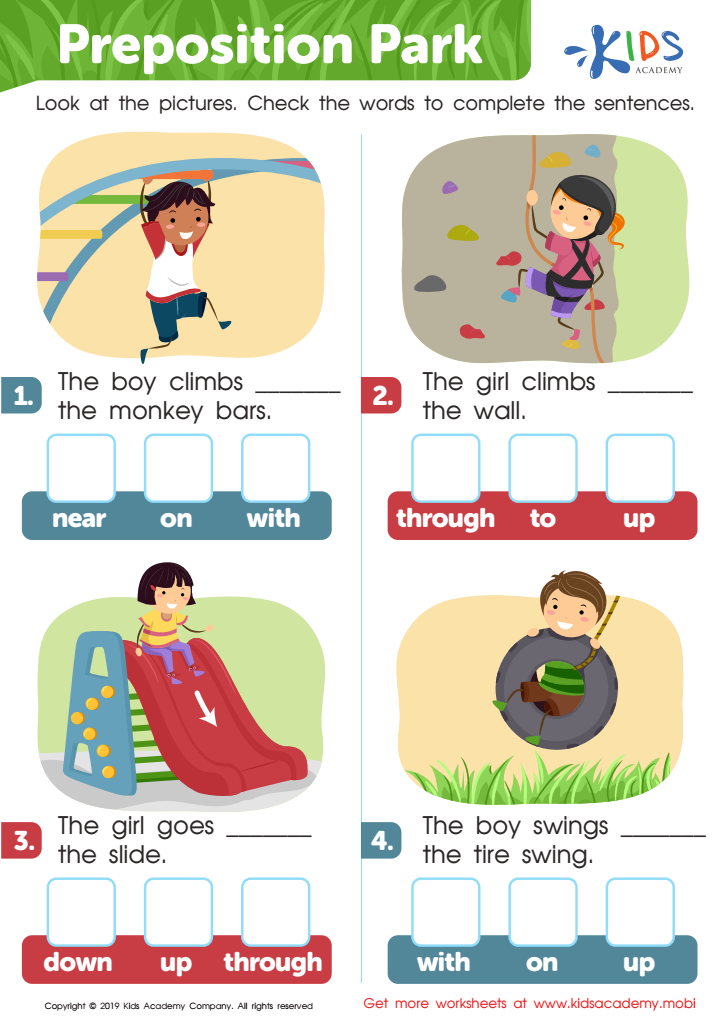
Preposition Park Worksheet
 Assign to My Students
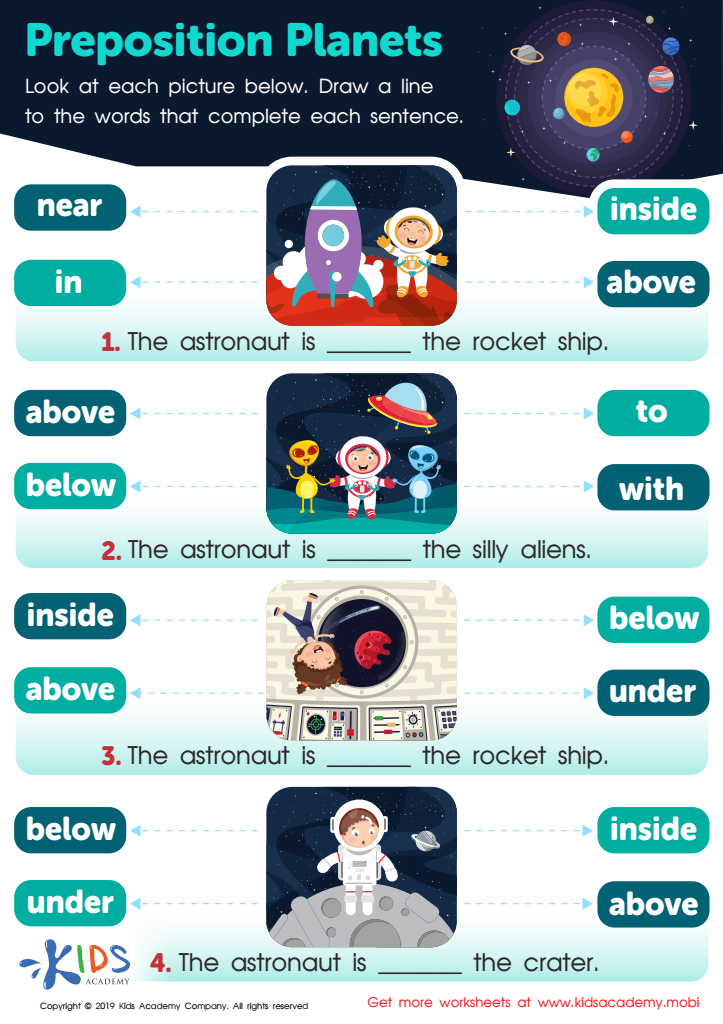
Preposition Planets Worksheet
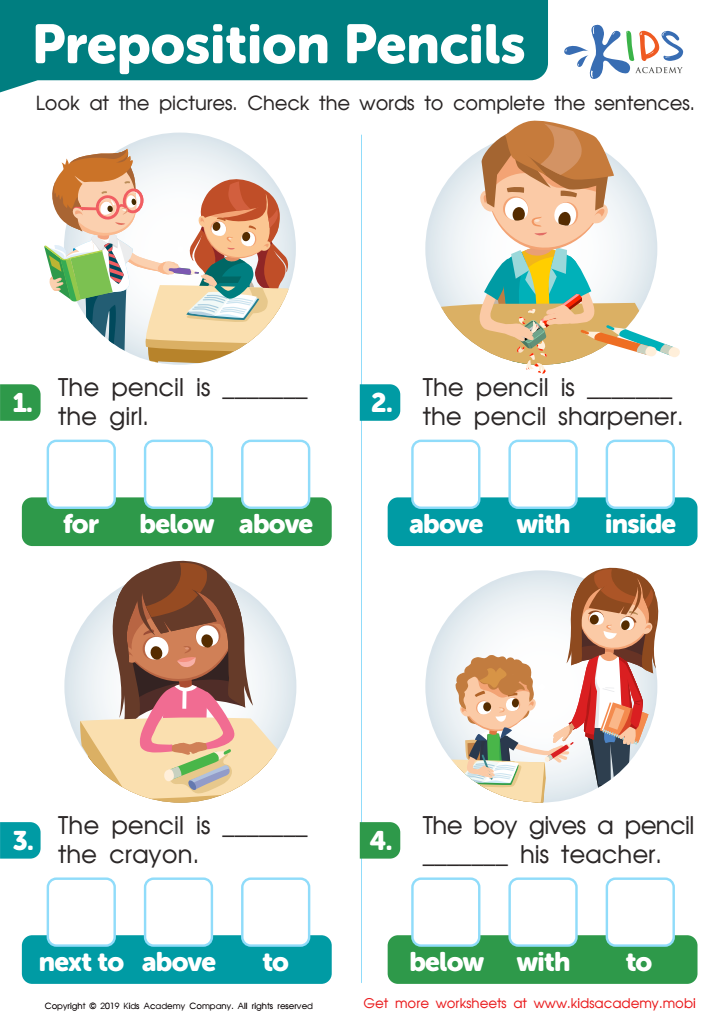
Preposition Pencils Worksheet
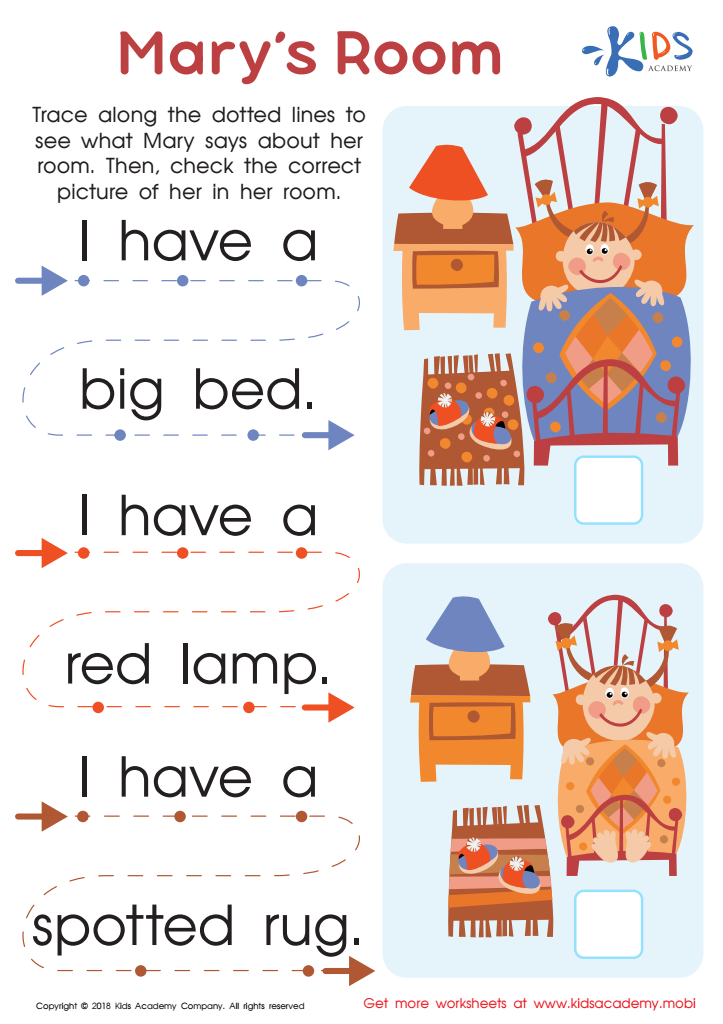
Mary's Room Worksheet







Understanding prepositions is crucial for children aged 4-9 because they form a fundamental part of language development. Prepositions help children describe relationships between objects and ideas, fostering their ability to convey and comprehend descriptive information. When parents and teachers focus on teaching prepositions, they are enhancing children's communication skills and enabling them to express spatial, temporal, and logical relationships effectively.
Moreover, prepositions are essential for reading comprehension. Many instructions, narratives, and texts depend heavily on these words to describe actions and locations. Without a solid grasp of prepositions, young readers may struggle to understand story contexts, follow directions, or grasp essential details in texts. This can lead to frustration and disengagement from learning.
Additionally, early mastery of prepositions lays the groundwork for future literacy skills. Proficient readers tend to have a robust vocabulary, which includes a strong understanding of prepositional use in varying contexts. By prioritizing preposition awareness in early education, parents and teachers create a scaffold for enhanced reading abilities and overall language fluency. In essence, teaching prepositions enriches children's language skills, fosters confidence in communication, and promotes a lifelong love for reading and learning.








