Understanding Rhymes Reading Worksheets for Ages 4-9
3 filtered results
-
From - To
Welcome to our "Understanding Rhymes" reading worksheets designed for children ages 4-9! These engaging and interactive worksheets help young learners grasp the concept of rhyming, enhancing their phonemic awareness and reading skills. Our printable resources are filled with fun activities, including matching rhyming words, completing sentences, and identifying patterns in language. By exploring rhymes, children will develop speech clarity, improve vocabulary, and enjoy the rhythm of language. Perfect for parents and educators, these worksheets aim to foster a love for reading while building essential early literacy skills. Explore the joy of rhyming with our comprehensive, age-appropriate resources!
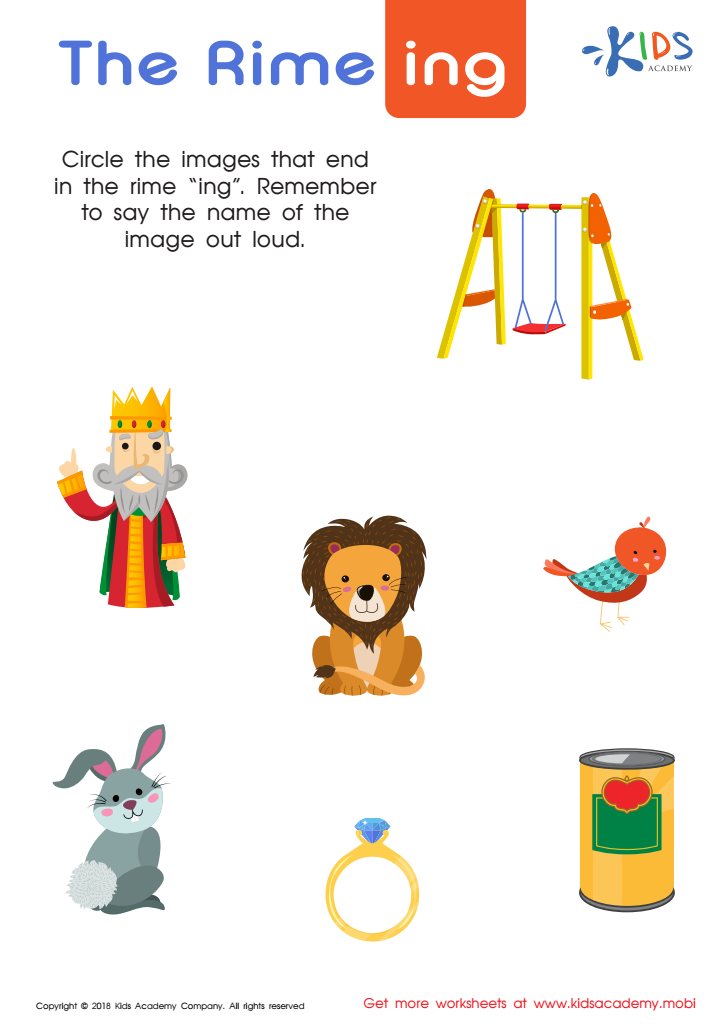
The Rime "ing" Worksheet
 Assign to My Students
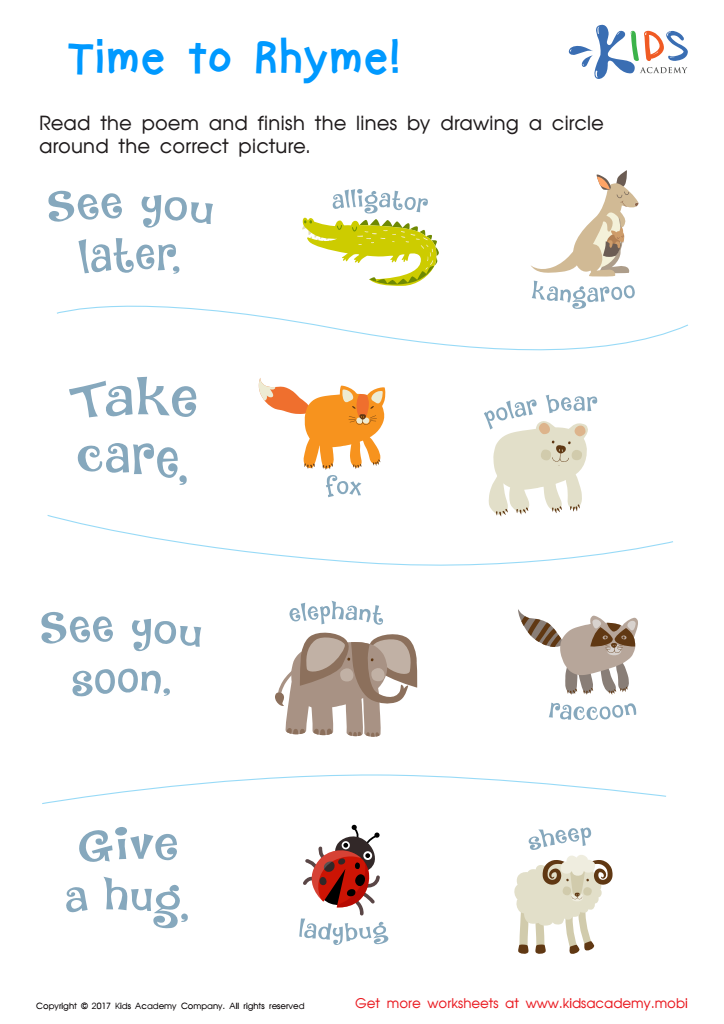
Time to Rhyme Rhyming Worksheet
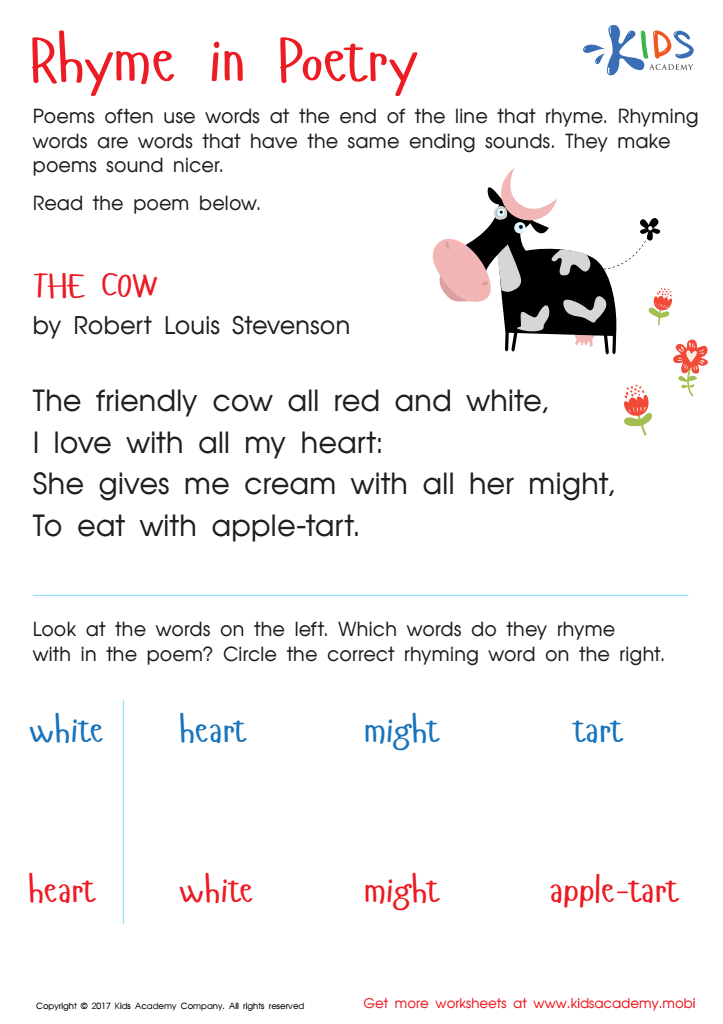
Rhyme In Poetry Worksheet







Understanding rhymes in reading for children ages 4-9 is crucial for several reasons. First, rhymes foster phonemic awareness, which is the ability to hear and manipulate sounds in language. This foundational skill is vital for developing reading proficiency, as it helps children recognize word patterns and improves their overall literacy.
Furthermore, engaging with rhymes makes reading enjoyable and interactive. It captivates young readers, encouraging them to participate actively by predicting words and celebrating the rhythm and melody of language. This can instill a lifelong love for reading.
Rhyming also enriches vocabulary and language development. By encountering new words in a fun context, children can expand their linguistic repertoire. Additionally, rhyme promotes memory and recall skills because repetitive sounds and patterns make it easier for kids to remember and recognize words.
For parents and teachers, emphasizing rhyme can enhance classroom or home literacy activities. By creating a rich, motivating learning environment, they can help children build confidence in their reading skills and improve communication. Ultimately, prioritizing rhymes in reading sets children on a path to academic success, nurturing their cognitive, social, and emotional growth.








