Visual interpretation Reading Worksheets for Ages 4-9
7 filtered results
-
From - To
Enhance your child's reading skills with our "Visual Interpretation Reading Worksheets for Ages 4-9." Carefully crafted to spark curiosity and understanding, these engaging activities help young learners decode visual information effectively. Through fun and interactive exercises, children will develop critical thinking, comprehension, and analytical skills. These worksheets facilitate linking text with images, ensuring a comprehensive reading experience. Ideal for early learners, our materials simplify complex concepts, making visual interpretation an enjoyable learning journey. Explore our innovative resources to support your child's educational growth and foster a lifelong love for reading. Unlock their potential today with Kids Academy!
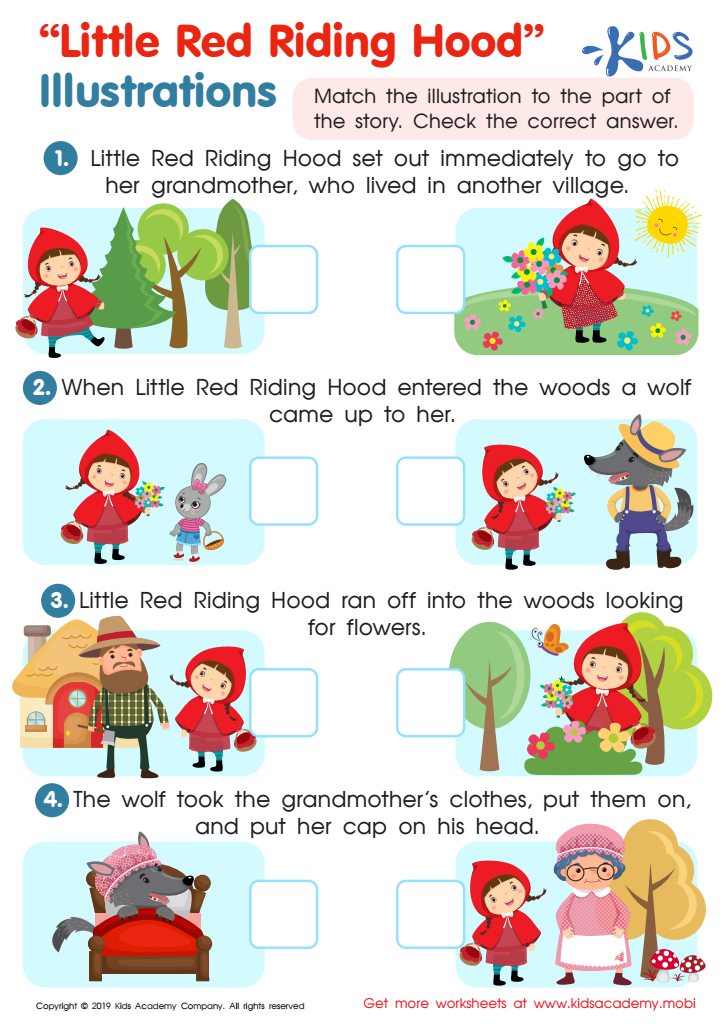
Little Red Riding Hood: Illustrations Worksheet
 Assign to My Students
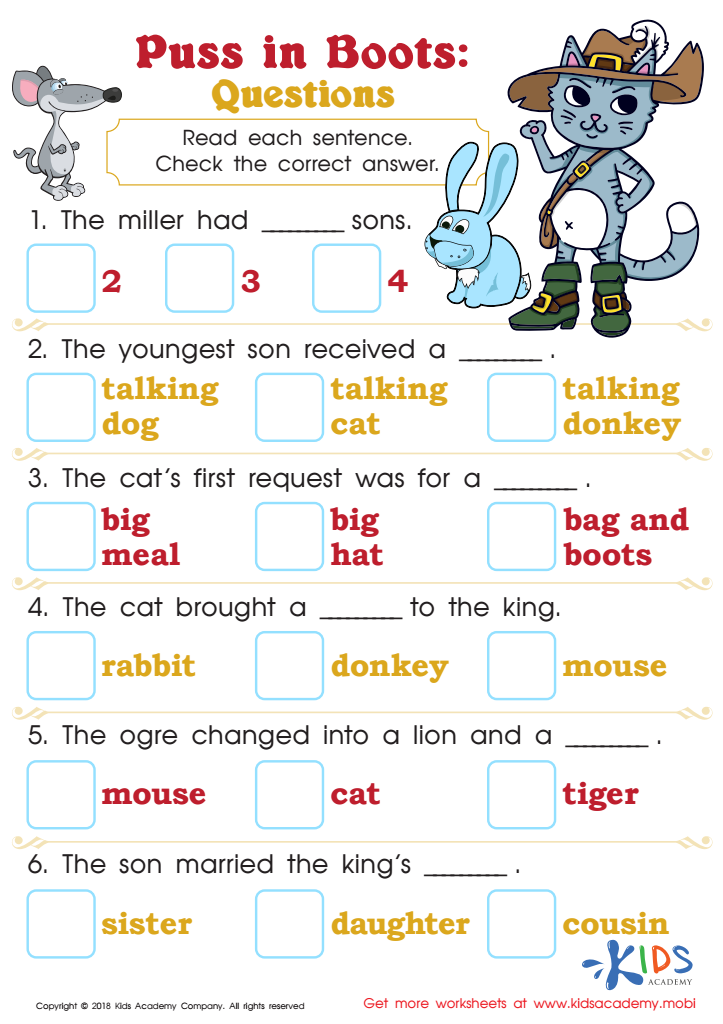
Puss in Boots: Questions Worksheet
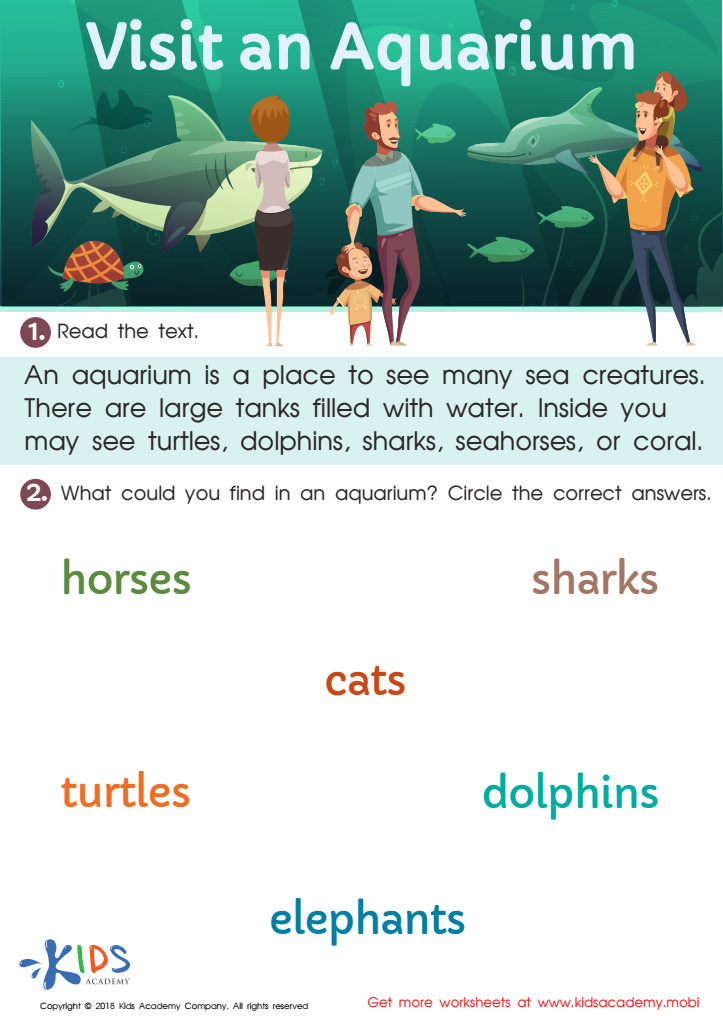
Visit an Aquarium Worksheet
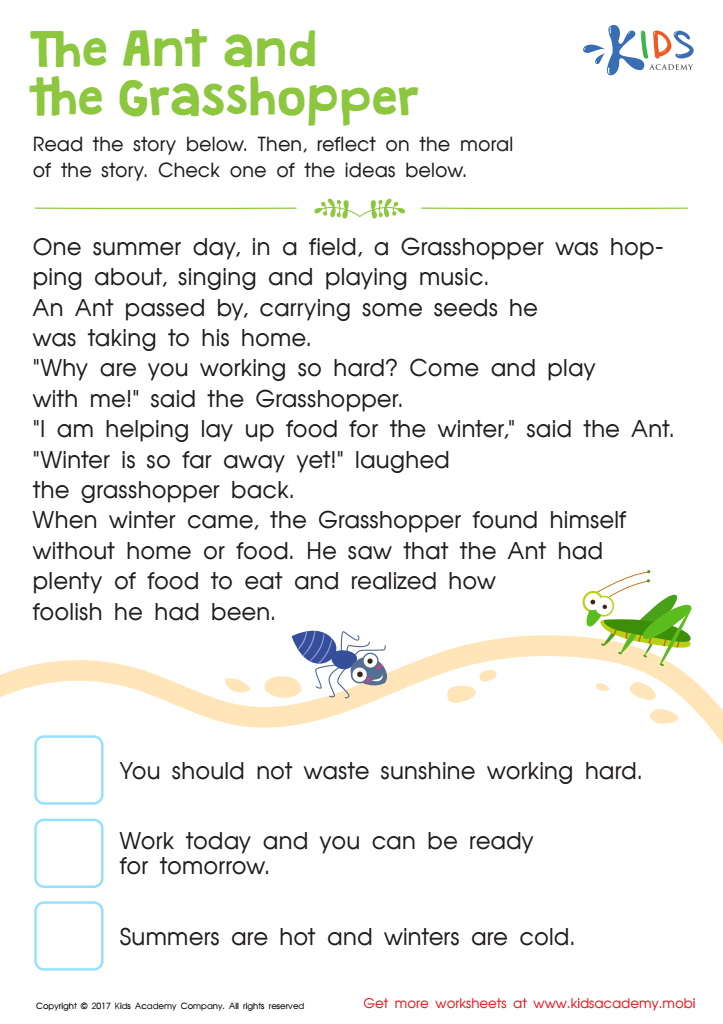
The Ant and The Grasshopper Printable
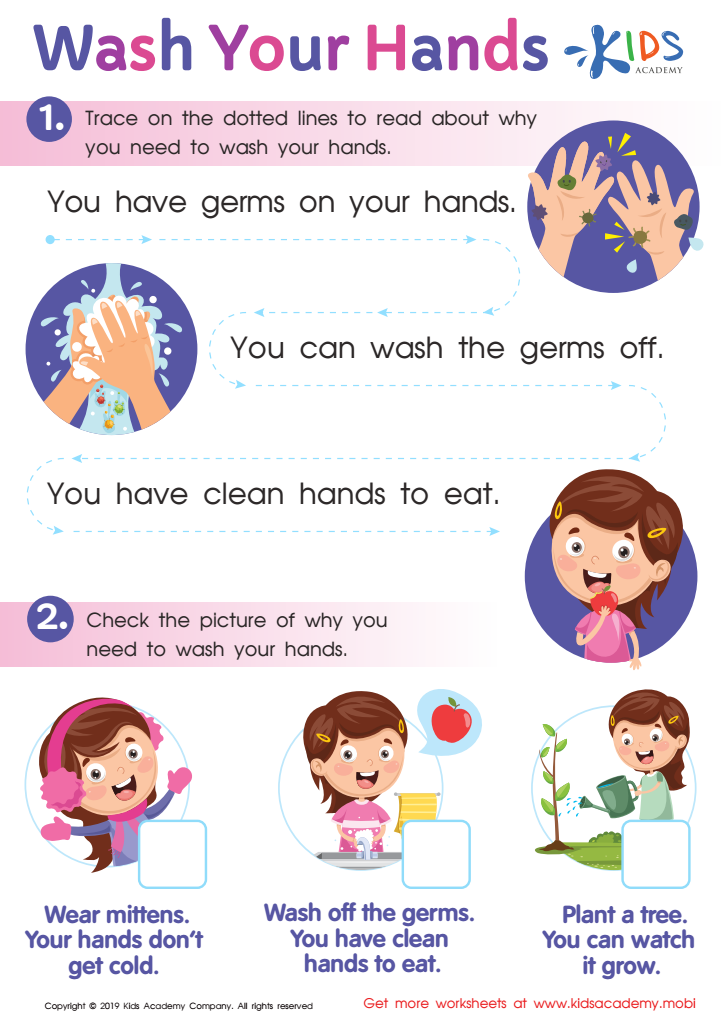
Wash Your Hands Worksheet
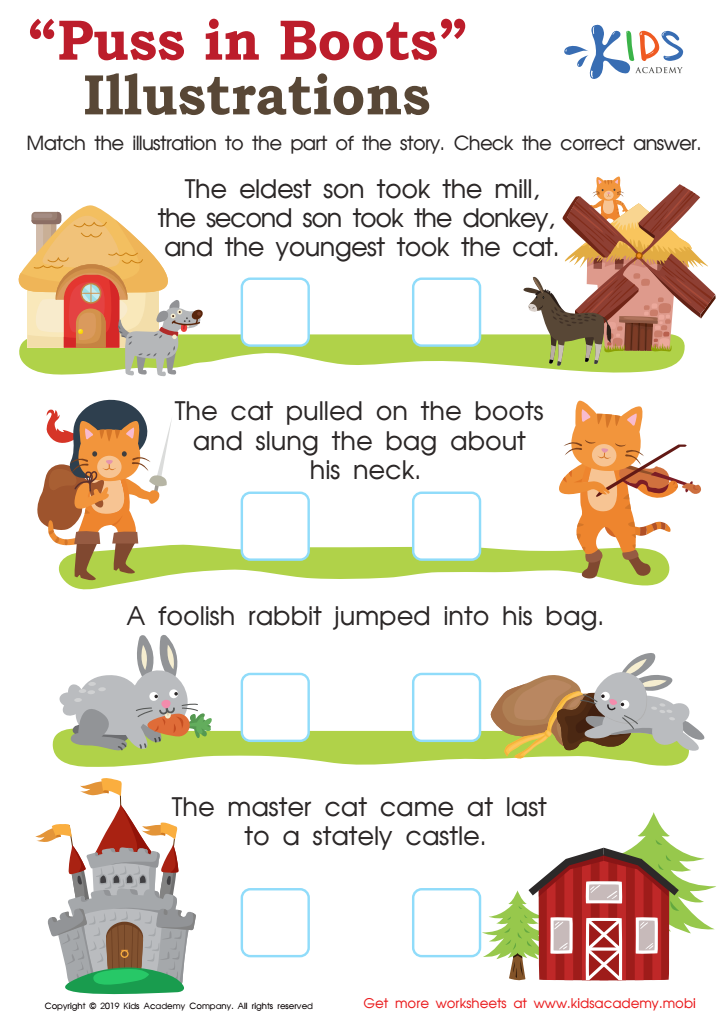
Puss in Boots Illustrations Worksheet







Visual interpretation reading is vital for children aged 4-9 as it forms a fundamental part of their cognitive and literacy development. At this stage, youngsters often process information through images and visual aids, which can significantly enhance comprehension and retention. Incorporating visual elements, such as picture books or illustrated stories, makes abstract concepts more concrete, facilitating deeper understanding.
For parents and teachers, fostering these skills is crucial because visual literacy supports verbal literacy. When children decode images, they simultaneously learn vocabulary and narrative structures, bridging the gap between spoken language and written text. This dual engagement not only keeps their interest alive but also aids memory retention, fostering a love for reading early on.
Moreover, visual interpretation nurtures critical thinking and creativity. By analyzing illustrations, children learn to make inferences, predict outcomes, and express themselves, skills essential for problem-solving and cognitive growth. These abilities extend beyond reading, enhancing performance in subjects like math and science, where visual-spatial thinking is often required.
Engaging with visual-based reading materials also tailors to different learning styles, accommodating diverse educational needs and creating an inclusive learning environment. Overall, visual interpretation reading not only promotes literacy but holistically supports a child’s intellectual and emotional development, catalyzing lifelong learning and curiosity.








