Understanding perspectives Reading Comprehension Worksheets for Ages 4-9
3 filtered results
-
From - To
Boost your child's reading skills with our "Understanding Perspectives Reading Comprehension Worksheets for Ages 4-9". These engaging worksheets are designed to help young readers explore different viewpoints, enhancing their empathy and critical thinking. Our activities include easy-to-follow narratives and questions that encourage kids to understand characters' feelings and actions. These exercises develop not only comprehension but also social-emotional learning, making reading a more immersive experience. Perfect for early learners, parents, and educators, our worksheets provide insightful tools that support foundational literacy skills and support kids in becoming thoughtful readers. Enhance your child’s reading journey today!
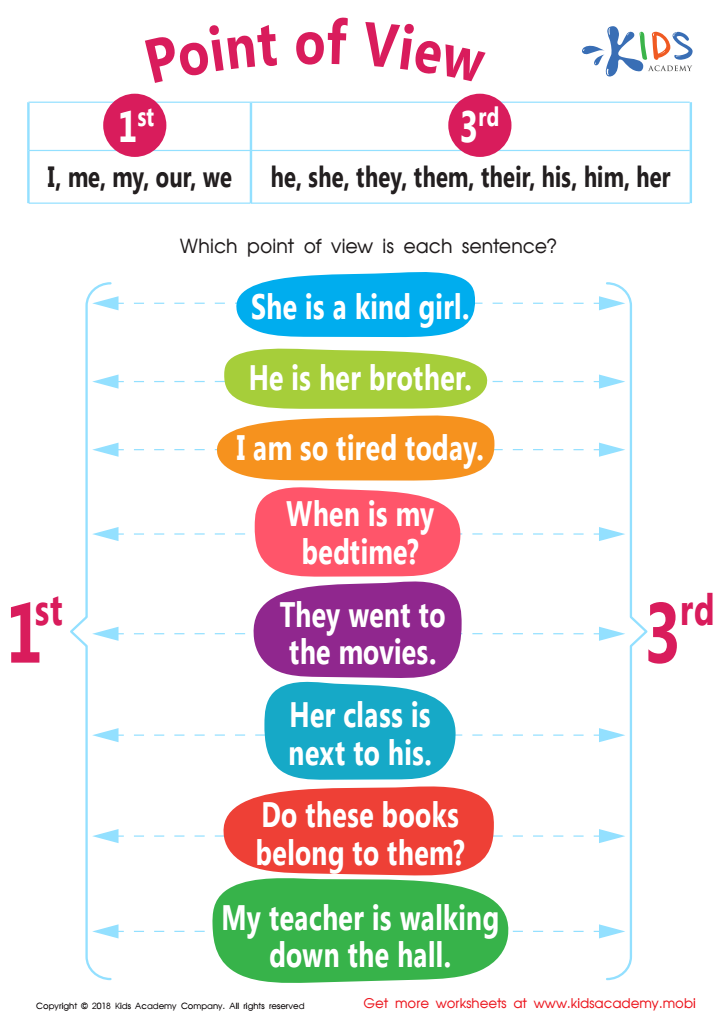
Point of View Worksheet
 Assign to My Students
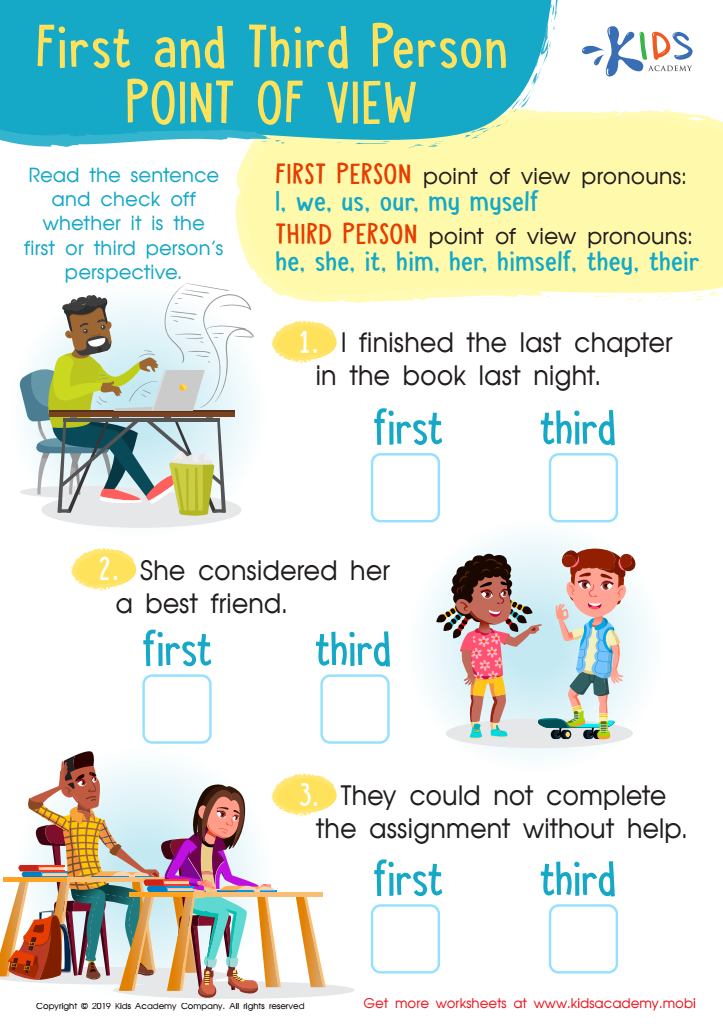
First and Third Person Point of View Worksheet
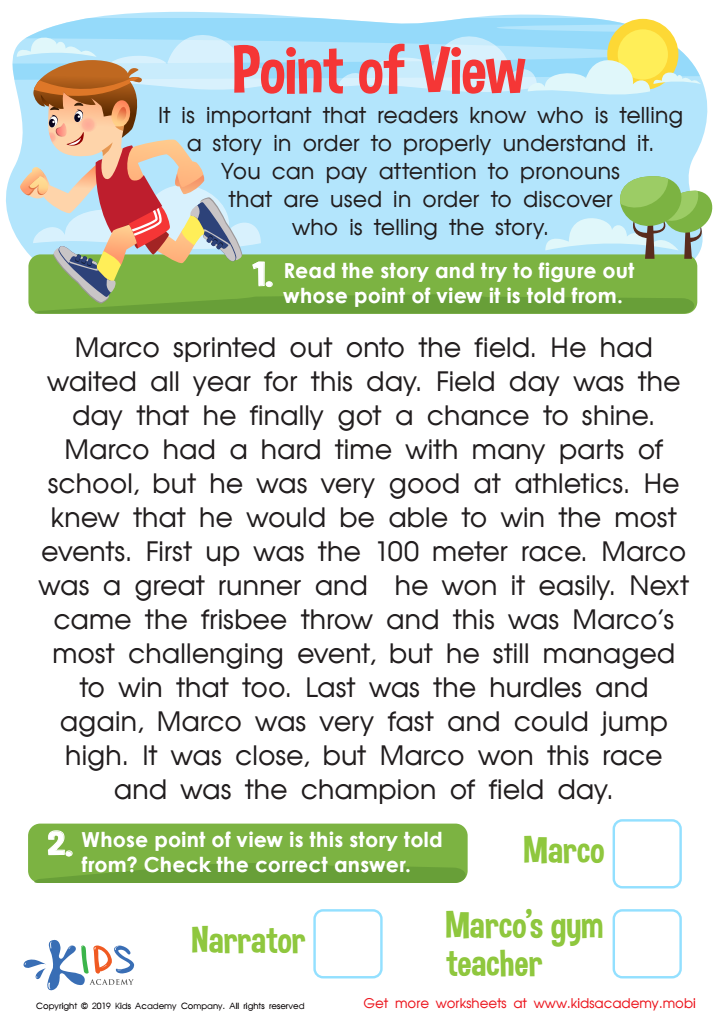
Point of View Worksheet








Understanding perspectives is a vital skill for young children, crucial for both their academic and social development. Reading comprehension at ages 4-9 isn't just about deciphering words; it’s about grasping the broader contexts, emotions, and viewpoints presented in texts.
Firstly, comprehending different perspectives fosters empathy and emotional intelligence. When children understand characters' thoughts and feelings, they become better equipped to relate to others in real life. This skill can enhance their interactions with peers and adults, contributing to harmonious relationships and effective conflict resolution.
Academically, understanding perspectives enriches their critical thinking and reasoning abilities. It trains young learners to analyze situations, understand cause-and-effect relationships, and appreciate multiple outcomes or solutions. This depth of understanding lays the groundwork for more complex comprehension skills they'll need in later grades.
Furthermore, grasping diverse viewpoints helps children appreciate cultural and individual differences. Stories from various backgrounds encourage inclusivity and open-mindedness, essential qualities in our increasingly global society.
Parents and teachers play a crucial role in developing these skills by engaging with children through discussions, asking questions, and encouraging them to think beyond the literal meaning. Nurturing this ability from a young age not only enhances their reading skills but also builds a strong foundation for their overall emotional and intellectual growth.








