Identifying story elements Reading Fiction Worksheets for Ages 4-9
4 filtered results
-
From - To
Discover our "Identifying Story Elements" reading fiction worksheets designed for children ages 4-9! These engaging, interactive activities help young learners understand key story components, including characters, setting, plot, and themes. By using colorful illustrations and age-appropriate texts, our worksheets foster critical thinking and comprehension skills in a fun and enjoyable way. Perfect for classroom use or at-home learning, these resources encourage children to explore stories deeply, enhancing their reading experience. Helping kids build a strong foundation in literature, our worksheets provide valuable practice that promotes a lifelong love for reading. Start your story adventure today!
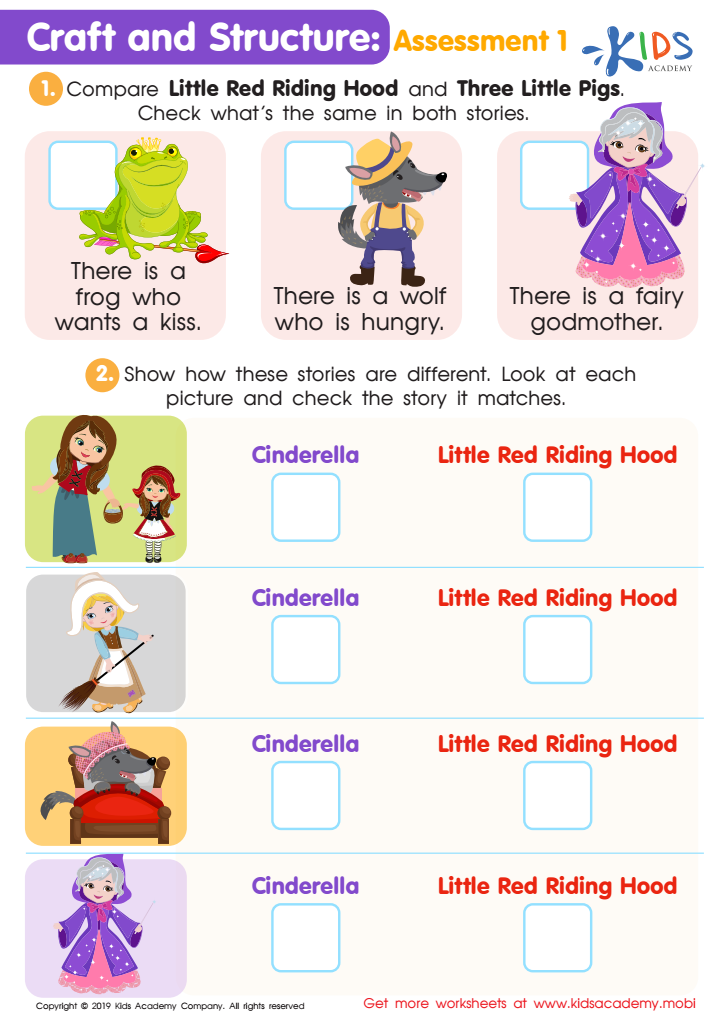
Craft and Structure: Assessment 1 Worksheet
 Assign to My Students
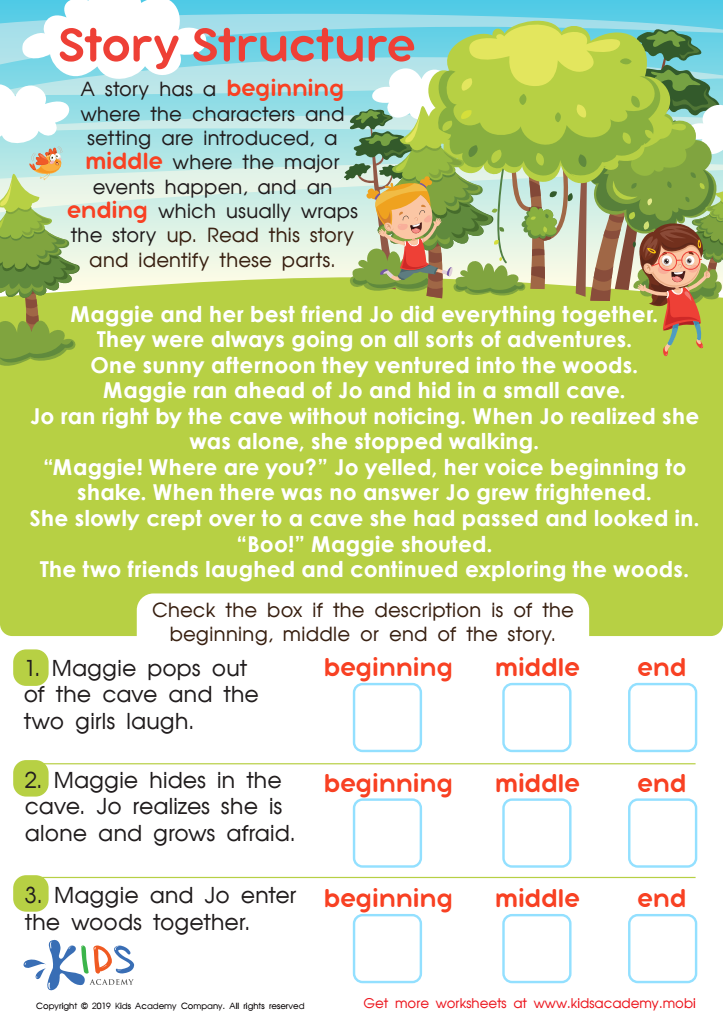
Story Structure Worksheet
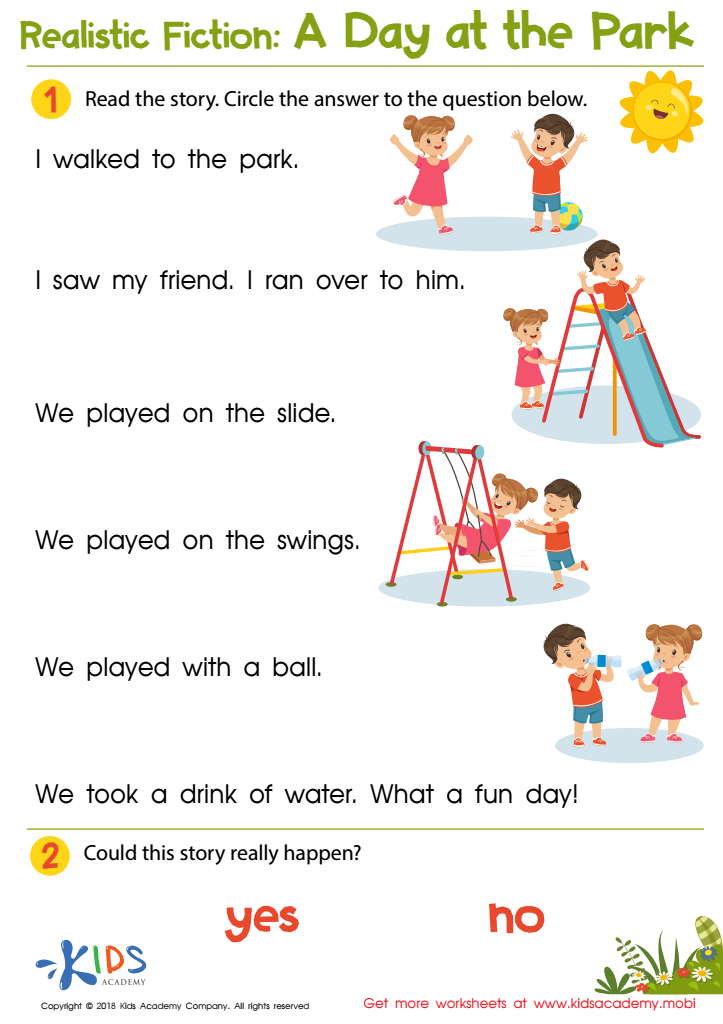
A Day at the Park Worksheet
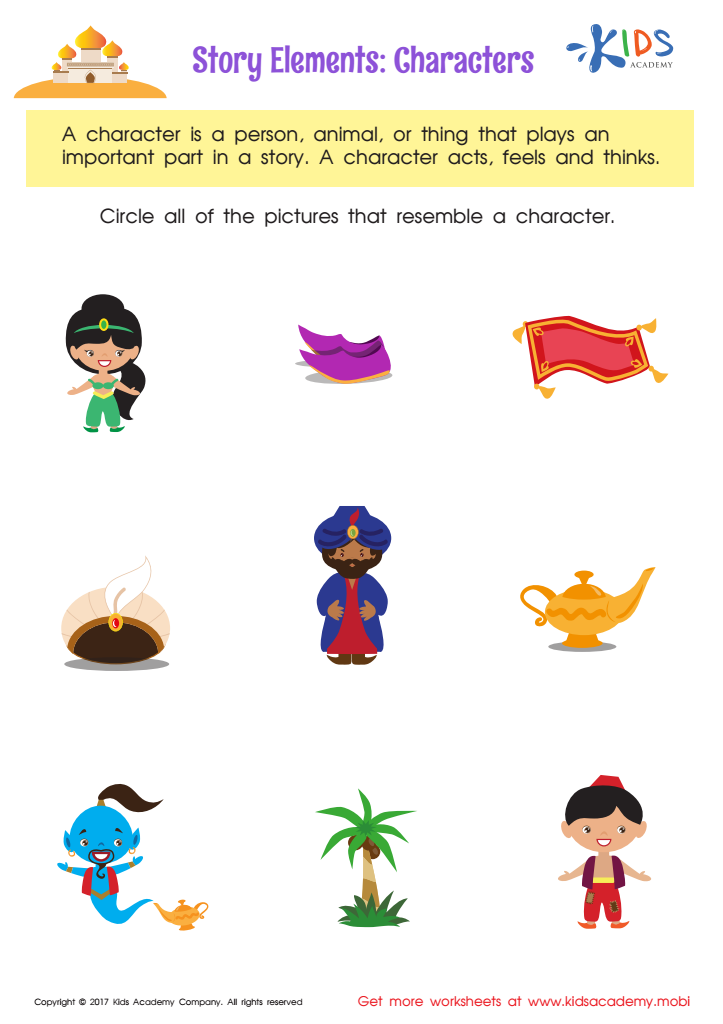
Story Elements Printable




.jpg)



Identifying story elements in fiction is essential for children ages 4-9 as it lays a foundation for critical reading and comprehension skills. Parents and teachers should care about this because understanding the basic components of a story—such as characters, setting, plot, conflict, and resolution—enhances children’s ability to engage with texts meaningfully.
At this formative age, children are developing their cognitive and language skills; learning to identify story elements expands their vocabulary and reinforces narratives they encounter in books and everyday life. When children can distinguish these elements, they become more skilled at predicting outcomes, inferring meanings, and connecting stories to their own experiences.
Additionally, fostering this understanding builds imagination and creativity, as children begin to create their own stories using learned structures. It also empowers them to become confident readers and enthusiastic learners, making the task of reading less daunting and more enjoyable.
Moreover, recognizing story elements cultivates critical thinking, as children analyze different aspects of the narrative and discuss them with peers and adults. Collaborative discussions about stories encourage social skills and critical discourse. Ultimately, investing time in story element identification contributes to a child's lifelong appreciation for literature and enhances their overall academic success.








