Rhyming skills development Rhyming Words Worksheets for Ages 4-9
3 filtered results
-
From - To
Develop essential rhyming skills with our engaging Rhyming Words Worksheets designed for children ages 4-9. At Kids Academy, we provide an enjoyable and educational approach to enhance your child's reading and phonemic awareness. Our worksheets, crafted by experts, contain fun and interactive activities that make learning a delight. Through playful exercises like matching and sorting, children grasp the concept of rhymes, sharpening their auditory discrimination and pre-reading skills. Perfect for both classroom settings and at-home learning, these resources ensure a solid foundation in literacy. Ignite your child's love for reading with our comprehensive rhyming skill development worksheets today!
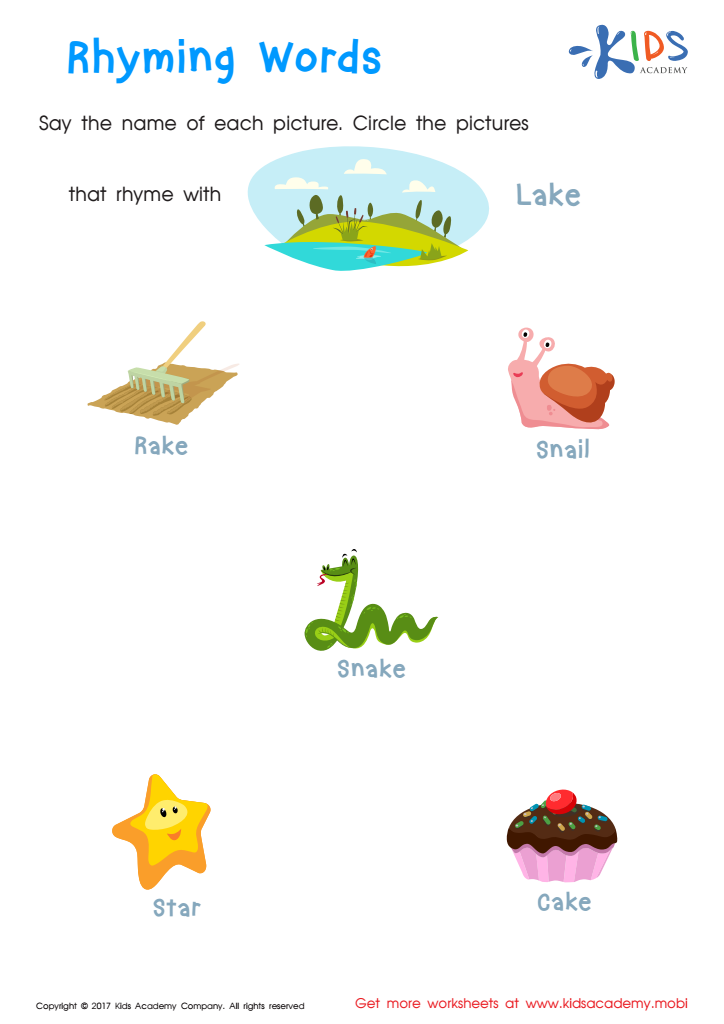
Rhyming Words Rhyming Worksheet
 Assign to My Students
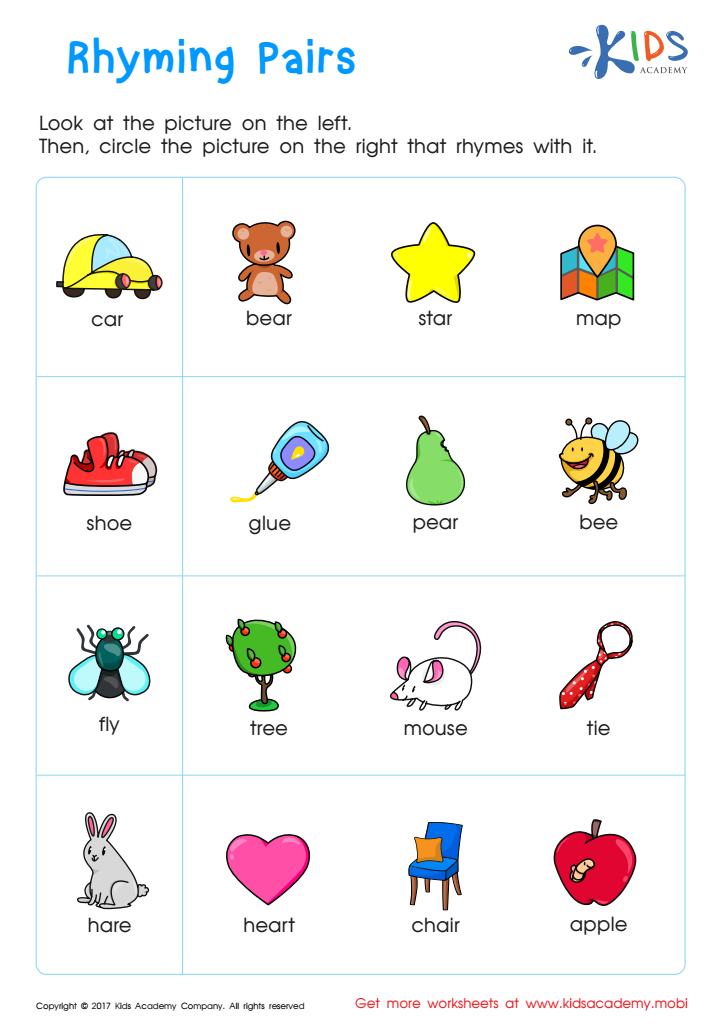
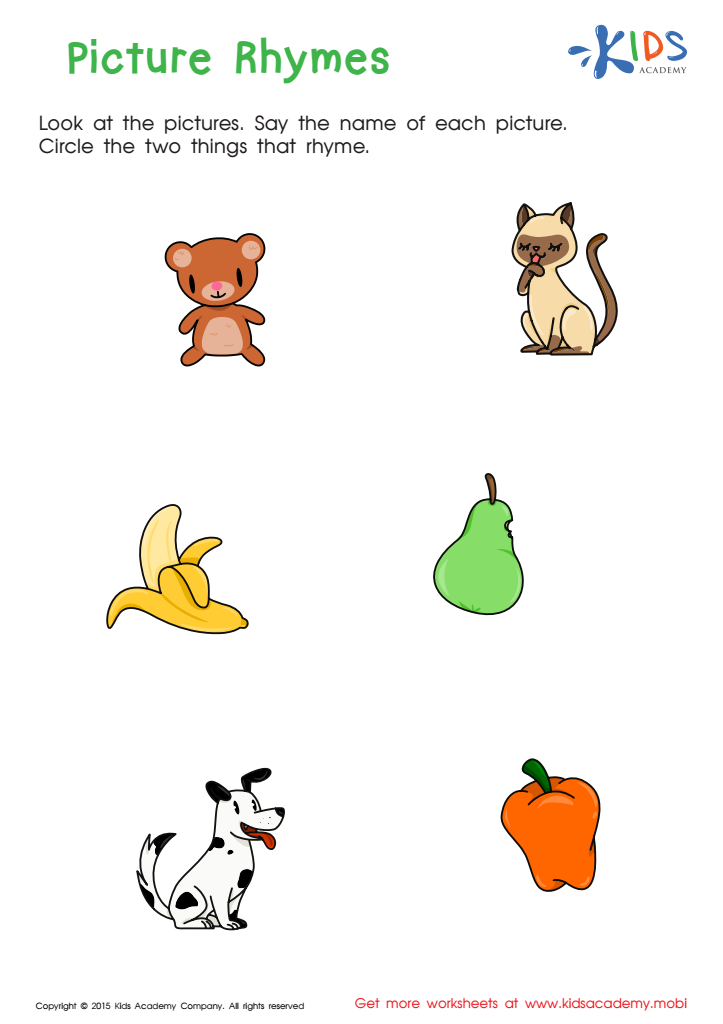
First Words: Picture Rhymes Worksheet




.jpg)



Rhyming skills are pivotal for young children aged 4-9 for several crucial reasons. Primarily, they play an essential role in phonemic awareness, the ability to hear and manipulate the sounds in words, which is foundational for successful reading and spelling. When children recognize rhymes, they become more adept at identifying patterns in words, making it easier to decode new words when reading.
Moreover, rhyming enhances memory and recall. Activities that involve rhymes, such as songs and poems, are often easier for children to remember than simple, non-rhyming text. This boosts vocabulary retention and linguistic fluency, facilitating a smoother transition from oral language skills to written language skills.
Rhyming also promotes creativity and imagination. Engaging with fun, playful language helps children experiment with word formation and storytelling, strengthening their expressive capabilities. Socially, rhyming activities can be inclusive and collaborative, fostering a love for language and learning in an enjoyable setting.
Lastly, early proficiency in rhyming can be an indicator of future reading success. Children with strong rhyming skills are more likely to develop into confident readers. Therefore, parents and teachers should prioritize rhyming activities to ensure children's overall language and literacy development, laying a solid foundation for their educational journey.








