Learning about ecosystems Animals Worksheets for Ages 4-9
4 filtered results
-
From - To
Dive into a world of discovery with our "Learning about Ecosystems Animals Worksheets for Ages 4-9." These engaging and educational worksheets provide young learners with a fun way to explore the fascinating relationships between animals and their habitats. Tailored specifically for children aged 4-9, the activities incorporate colorful images, simple text, and interactive exercises that enhance understanding and retention. Through games, matching tasks, and coloring pages, kids will grasp key concepts about animal classification, ecosystem dynamics, and biodiversity. Perfect for both home and classroom use, these worksheets spark curiosity and a love for science in budding naturalists.
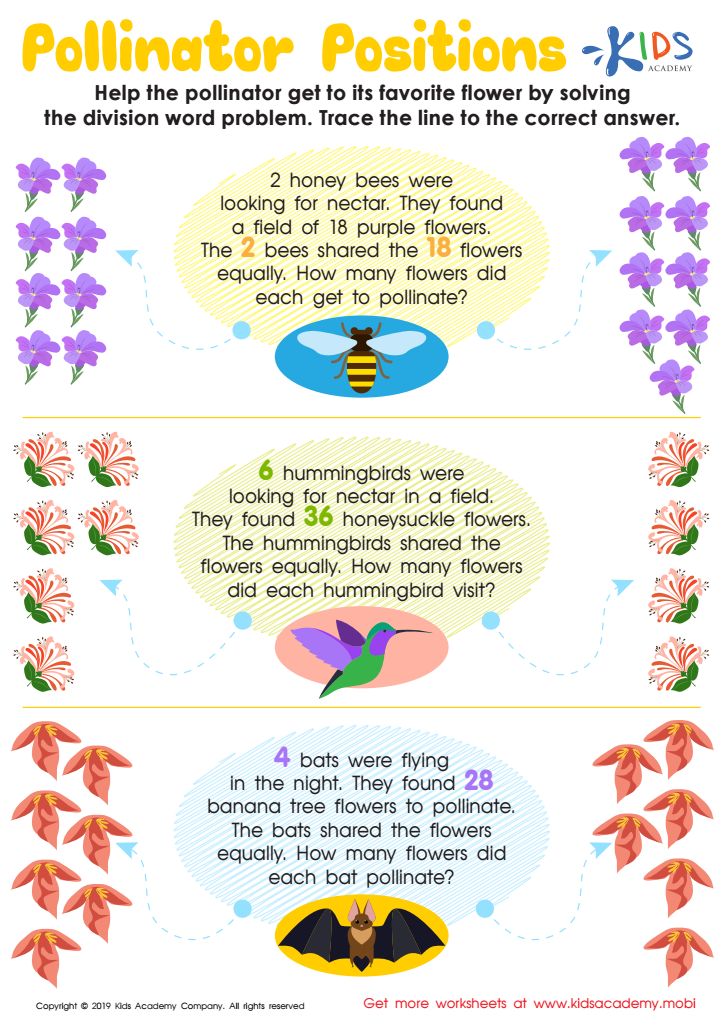
Pollinator Positions Worksheet
 Assign to My Students
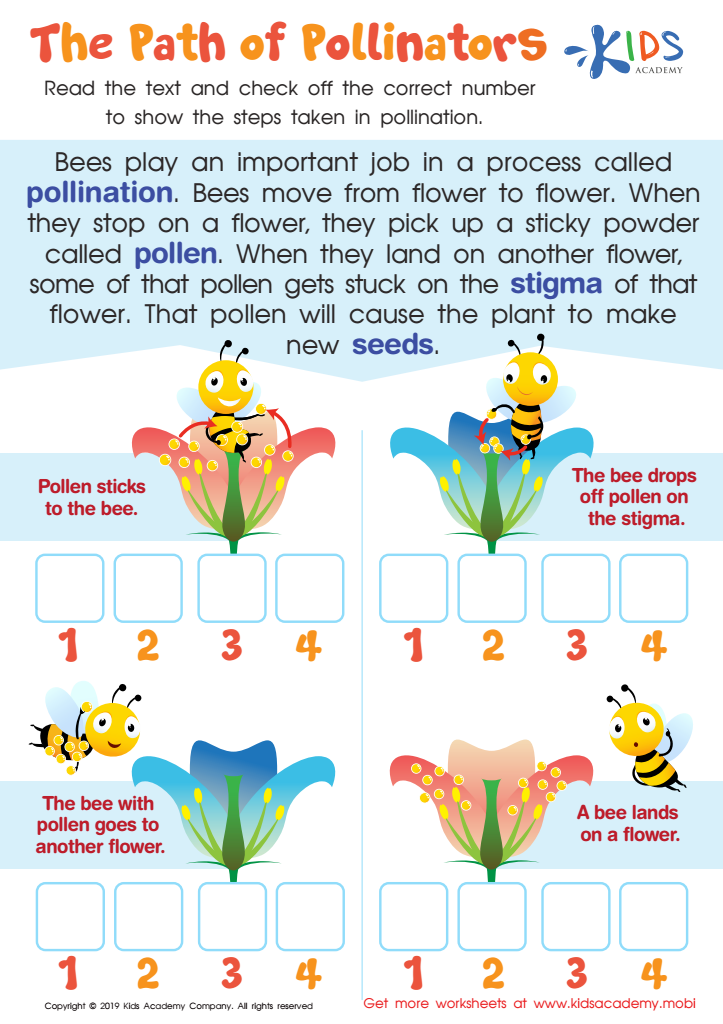
The Path of Pollinators Worksheet
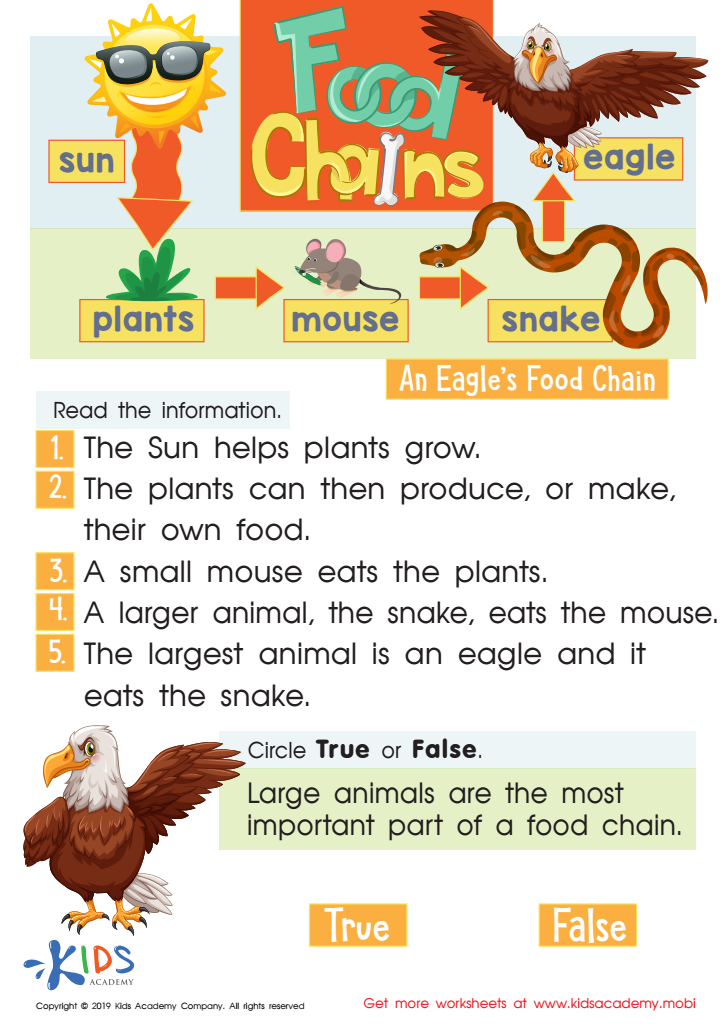
Food Chains Worksheet
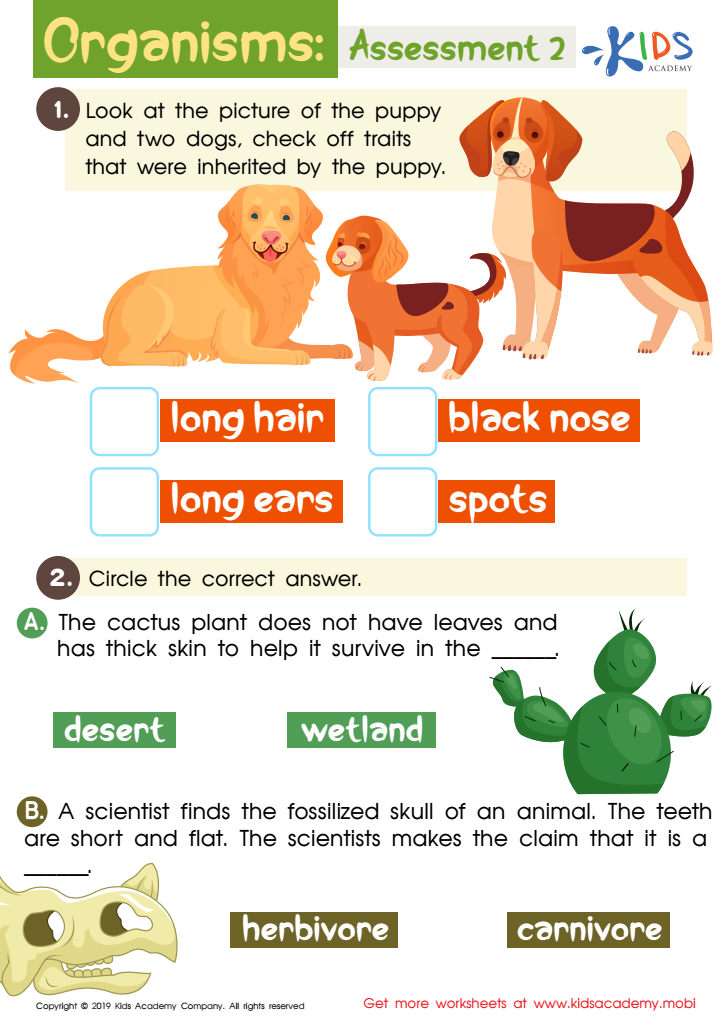
Organisms: Assessment 2 Worksheet








Understanding ecosystems and animals in the early years (ages 4-9) is pivotal for young learners for several key reasons. First, it fosters a sense of curiosity and wonder about the natural world, igniting a lifelong passion for learning. Children's natural inclination to explore helps them appreciate the diversity of life and build a foundation for scientific thinking. They start asking questions, observing patterns, and recognizing relationships between living things and their environments.
Moreover, early education about ecosystems promotes environmental stewardship. When children learn about the balance within ecosystems and the roles different animals play, they become more prone to caring for the environment. This understanding encourages responsible behaviors like recycling, conserving water, and protecting wildlife, contributing to a more sustainable future.
Additionally, learning about animals and their habitats helps children develop empathy and respect for other forms of life. Socially and emotionally, these lessons can instill values such as kindness, compassion, and responsibility.
From an educational standpoint, incorporating these topics can enhance vocabulary, improve comprehension, and integrate various subjects, including science, geography, and literacy. Teachers and parents should care about this because it's not just about imparting knowledge; it's about shaping well-rounded individuals who appreciate and uphold the intricate beauty of our planet.








