Understanding ecosystems Animals Worksheets for Ages 4-9
3 filtered results
-
From - To
Explore the wonders of ecosystems with our "Understanding Ecosystems Animals Worksheets" designed for kids aged 4-9! These engaging, printable worksheets introduce young learners to the intricate relationships between various animals and their habitats. Full of fun activities, such as matching animals to their ecosystems and identifying food chains, these resources promote critical thinking and spark curiosity about nature. Easy to use at home or in the classroom, they help cultivate a love for science while enhancing observational and comprehension skills. Perfect for aspiring young scientists, our worksheets make learning about ecosystems exciting and interactive! Download today to start your adventure!
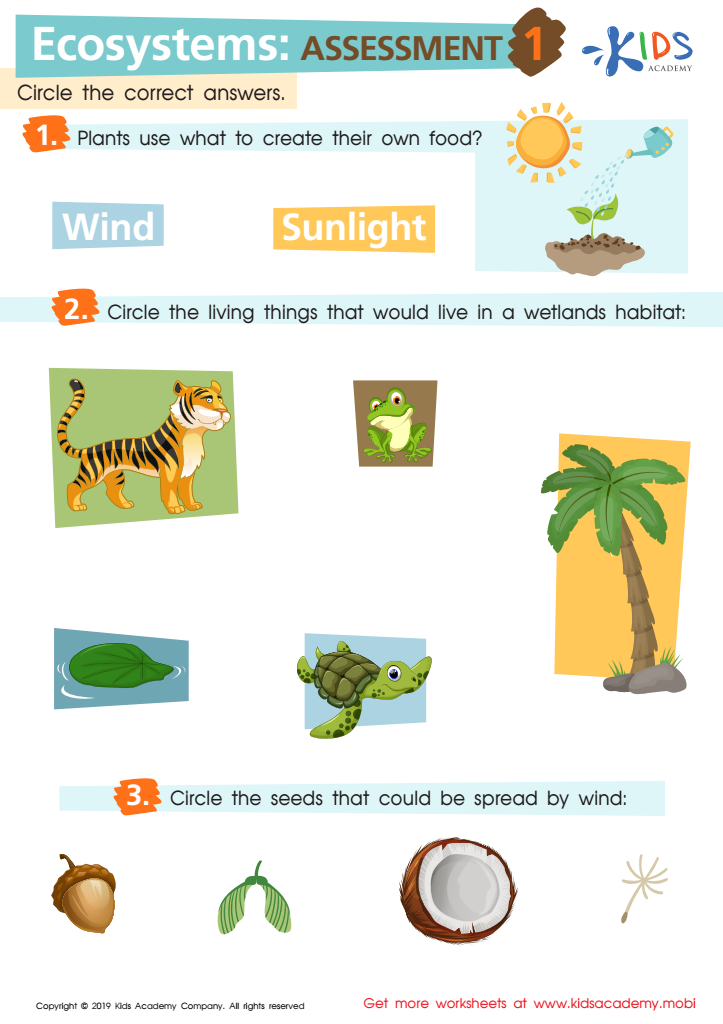
Ecosystems: Assessment 1 Worksheet
 Assign to My Students
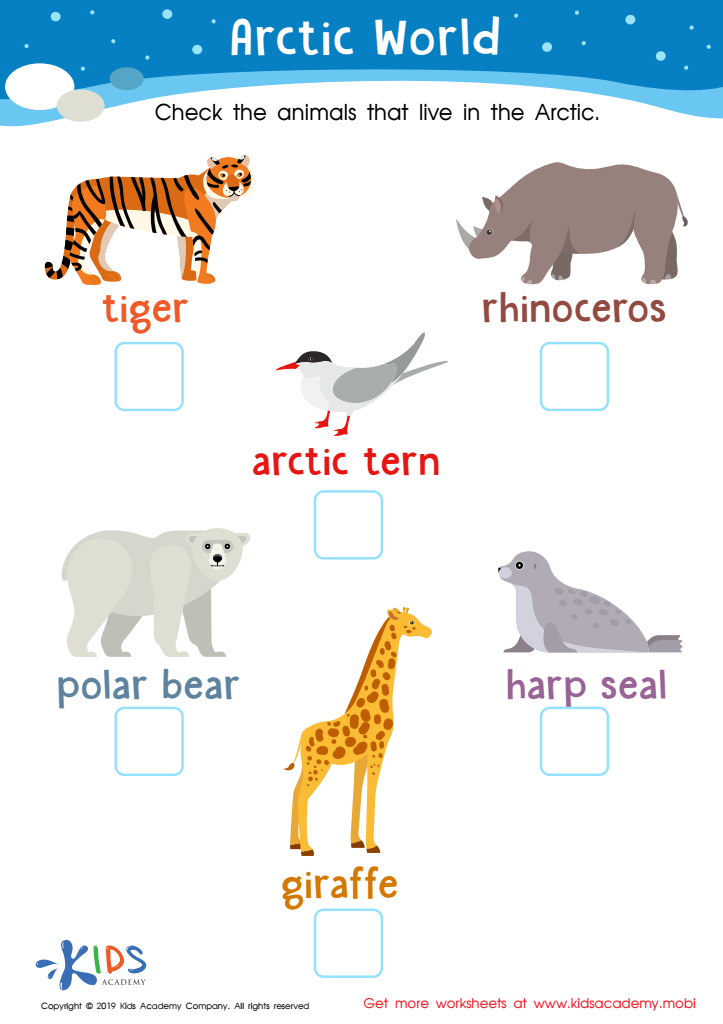
Arctic World Worksheet
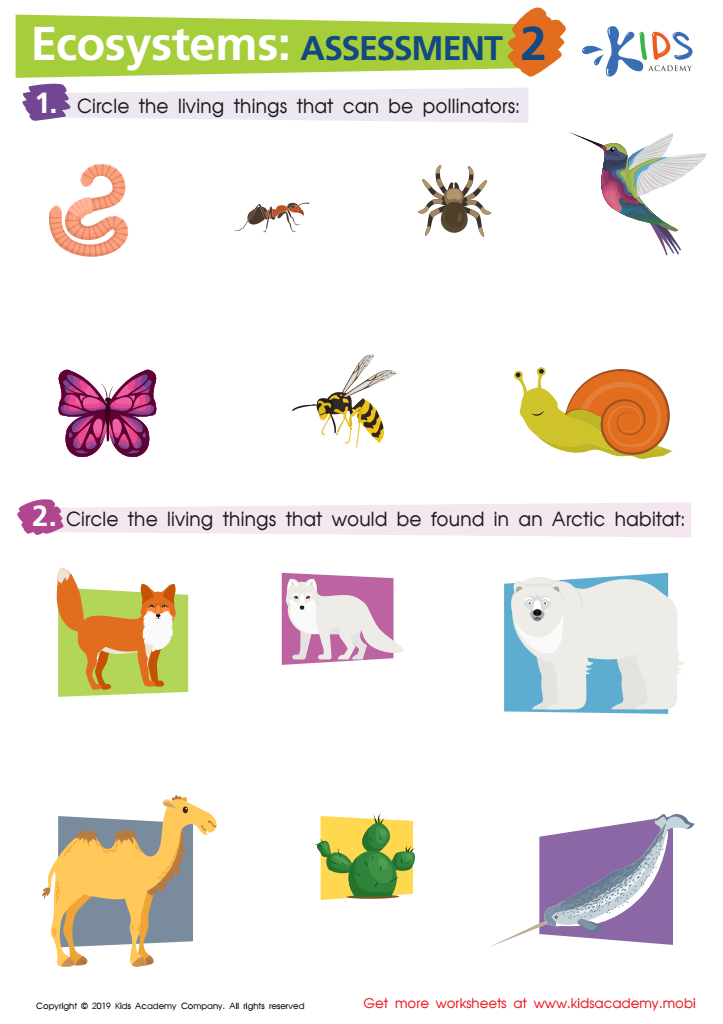
Ecosystems: Assessment 2 Worksheet


%20(1).jpg)





Understanding ecosystems and animals is crucial for children aged 4-9 because it lays the foundation for environmental awareness and appreciation. At this developmental stage, children are naturally curious and eager to explore the world around them. Teaching them about ecosystems fosters an early understanding of how different elements in nature are interconnected—plants, animals, water, and soil all work together to sustain life.
Parents and teachers should care about this topic as it encourages critical thinking and observation skills. Engaging with ecosystems helps children develop a sense of responsibility for the environment, nurturing eco-conscious behaviors that can last a lifetime. When kids learn about animal habitats, food chains, and biodiversity, they become more empathetic toward wildlife and the importance of conservation.
Moreover, these lessons can enhance a child’s literacy and numeracy skills through hands-on activities and storytelling related to animals and habitats. It also provides ample opportunities for outdoor exploration, supporting physical and social development. By instilling a love for nature and an understanding of ecosystems, we empower children to become advocates for the environment, fostering a generation committed to protecting the planet for future generations.