Understanding food chains Animals Worksheets for Ages 4-9
3 filtered results
-
From - To
Explore the fascinating world of food chains with our engaging worksheets designed for children ages 4-9! These carefully crafted resources help young learners grasp the vital relationships between animals and their environment. Through fun activities and vibrant illustrations, kids will discover how plants and animals interact to create a balanced ecosystem. Our "Understanding Food Chains" worksheets promote critical thinking as children classify different organisms, identify their roles, and examine energy flow within habitats. Perfect for homeschooling, classroom lessons, or extracurricular learning, these worksheets make science accessible and enjoyable, helping children build a strong foundation for understanding nature’s interconnected web.
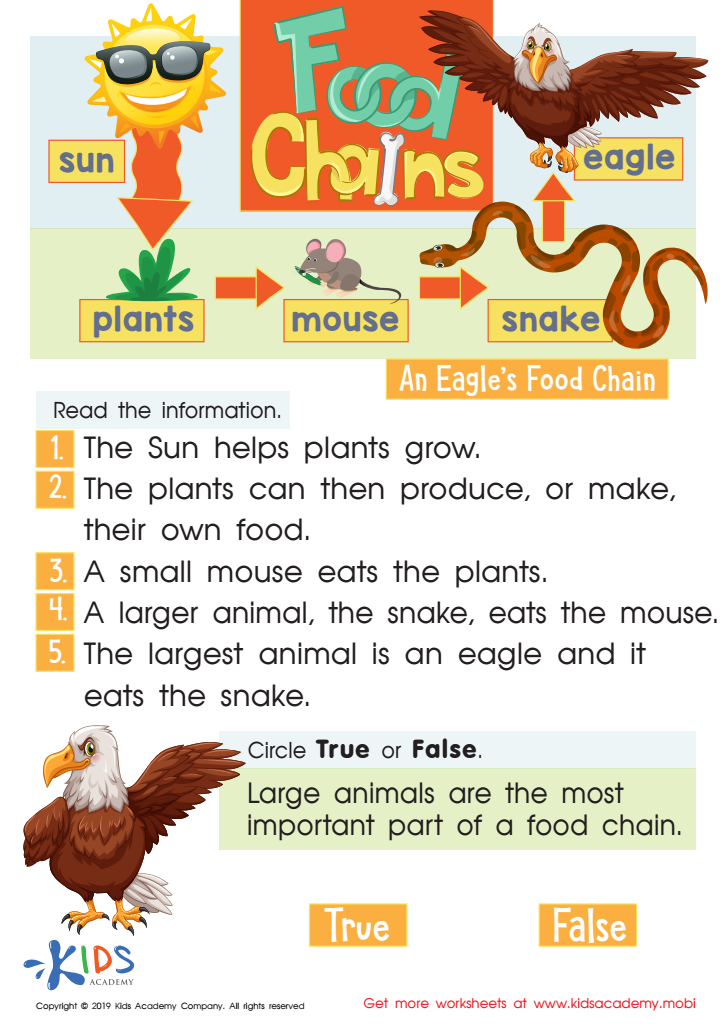
Food Chains Worksheet
 Assign to My Students
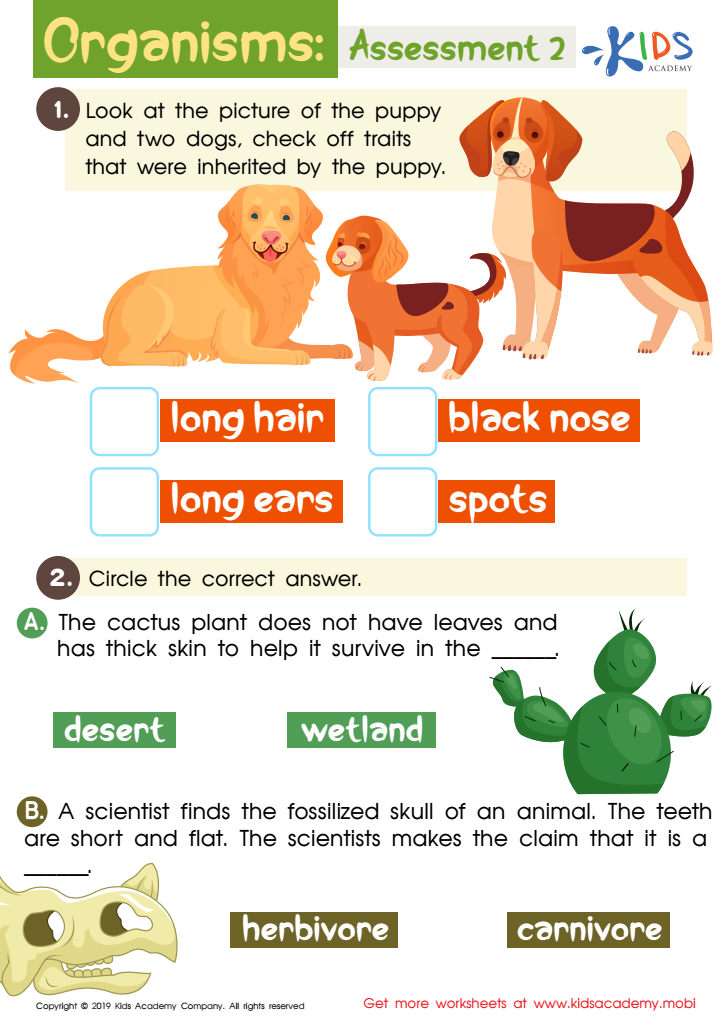
Organisms: Assessment 2 Worksheet
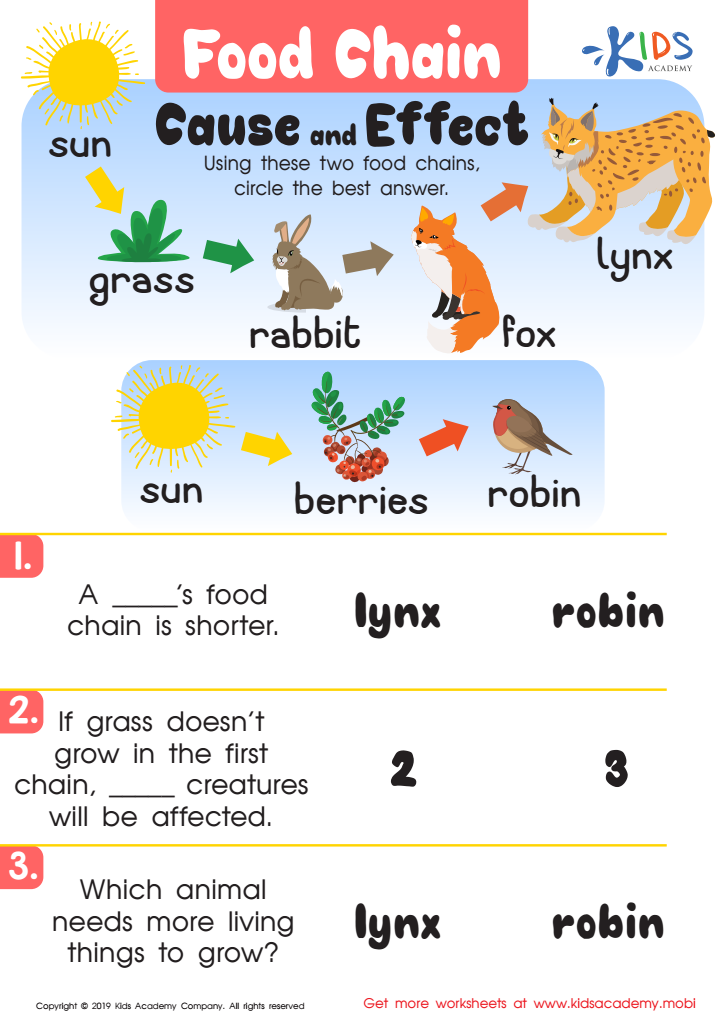
Food Chain Cause Worksheet






Understanding food chains is crucial for young learners aged 4-9, as it lays the foundation for appreciating ecosystems and the interdependence of living organisms. Firstly, food chains illustrate the relationship between producers (like plants), consumers (like animals), and decomposers (like fungi and bacteria), highlighting how energy and nutrients are cycled through nature. This basic knowledge fosters curiosity and encourages children to explore their surroundings, promoting environmental awareness.
Moreover, teaching kids about food chains nurtures critical thinking skills. Through discussions and activities related to these concepts, children learn to categorize organisms, understand their roles in ecosystems, and grasp the importance of biodiversity. These lessons can instill a sense of responsibility toward conservation, inspiring future generations to protect habitats and endangered species.
Additionally, exploring food chains can be engaging for young minds, as it often involves animals they find fascinating. This sensory involvement helps in retaining complex information, making learning fun and memorable. By encouraging this understanding, parents and teachers support holistic development, encouraging social interaction, teamwork in projects, and the development of communication skills while nurturing inquisitive minds about the world around them. Ultimately, this knowledge will set the stage for future science education and a lifelong appreciation for nature.








