Basic Addition Science Worksheets for Ages 4-9
4 filtered results
-
From - To
Explore our engaging Basic Addition Science Worksheets designed for children ages 4-9! These interactive resources blend fundamental math skills with science concepts, making learning both fun and effective. Each worksheet features colorful illustrations and engaging activities that guide young learners through the basics of addition while connecting their understanding to the wonders of science. Ideal for classroom or home use, our worksheets cater to different learning styles and skill levels, ensuring that every child can boost their math confidence. Download and print these worksheets today to help your child develop a solid foundation in addition and spark their curiosity in the world of science!
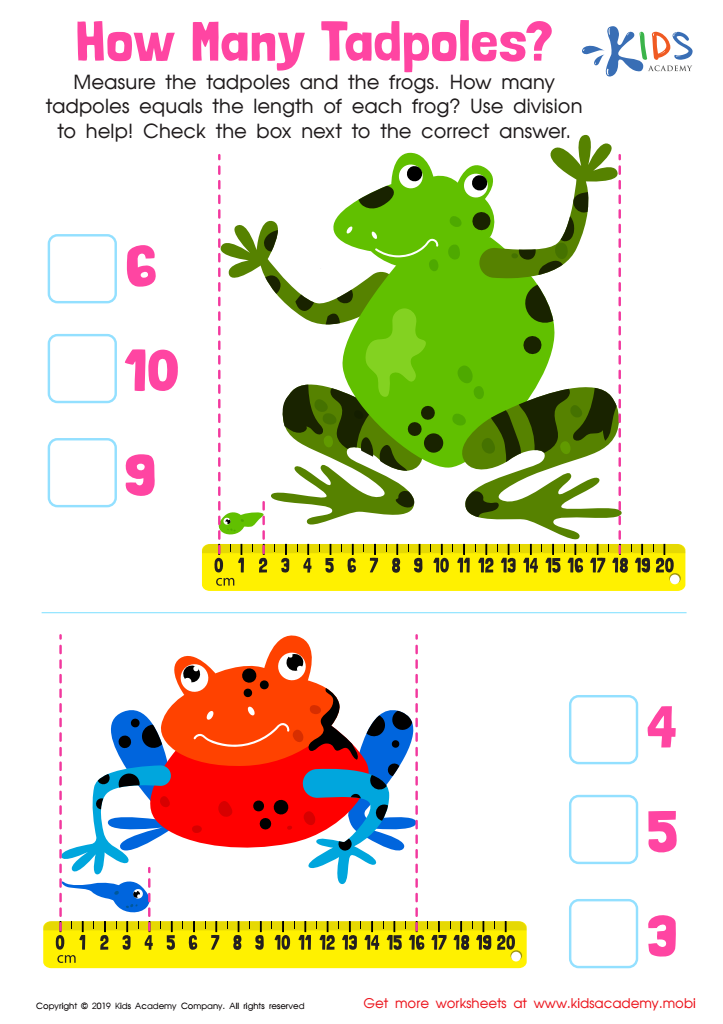
How Many Tadpoles Worksheet
 Assign to My Students

African Wildlife: Giraffe Worksheet
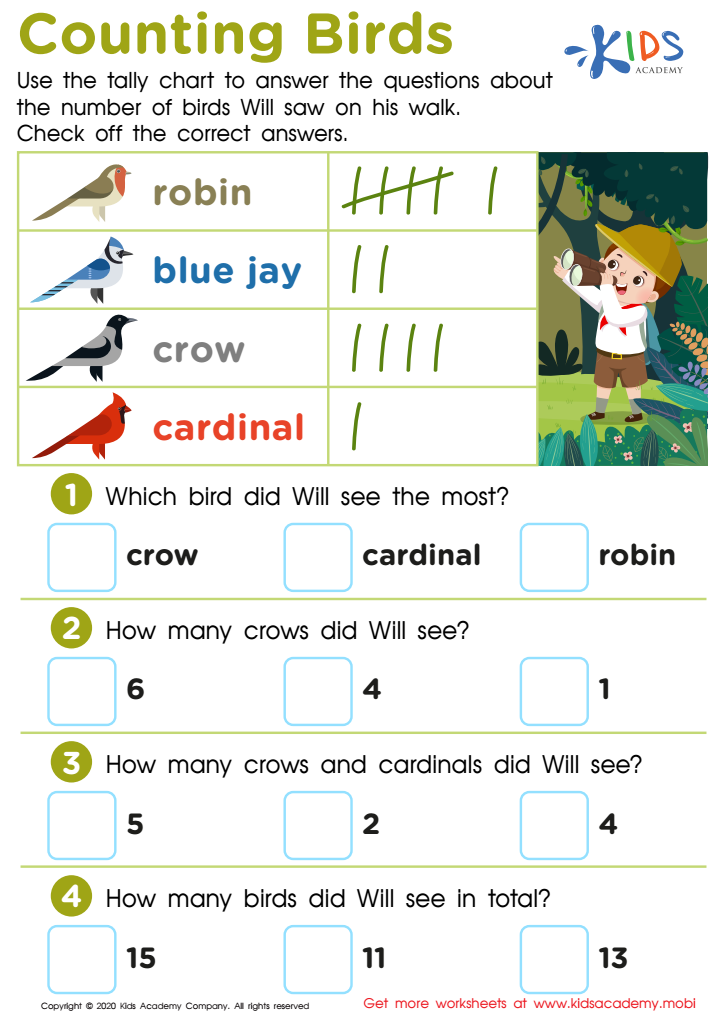
Counting Birds Worksheet
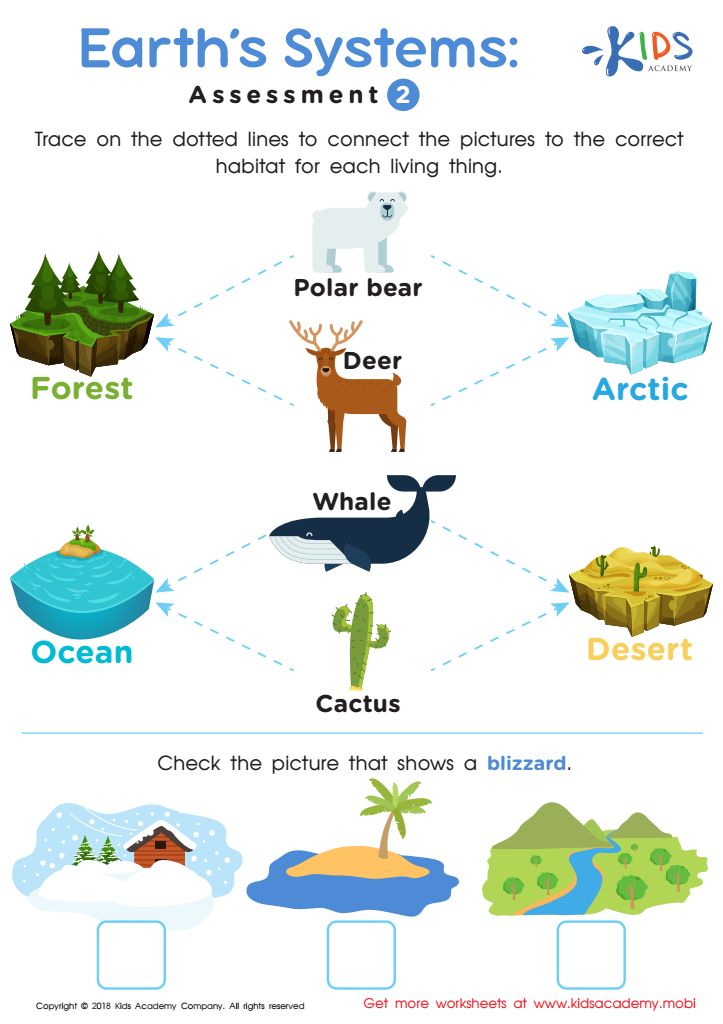
Earth's Systems: Assessment 2








Basic Addition Science is essential for children aged 4-9 as it lays the groundwork for a solid mathematical foundation. At this developmental stage, children are naturally curious and eager to learn, making it the perfect time to introduce mathematical concepts. Addition skills help children grasp the idea of numbers and quantities, enabling them to engage in problem-solving and critical thinking.
Understanding addition not only supports academic success but also reinforces everyday life skills, such as counting objects, calculating money, and telling time. By mastering these basics, children build confidence and develop a positive attitude toward math, reducing future anxiety around the subject.
Moreover, engaging with addition through interactive and playful methods can enhance cognitive abilities and foster a love for learning. Parents and teachers can also use basic addition as an opportunity for meaningful interactions, strengthening their relationships and promoting collaborative learning.
Ultimately, nurturing these skills through Basic Addition Science helps ensure that children are better prepared for higher-level mathematics, making it vital for educators and parents to focus on this crucial aspect of early education. Investing time in these foundational skills creates a strong learning environment where children can thrive academically and socially.







