Developing critical thinking Science Worksheets for Ages 4-9
3 filtered results
-
From - To
Unlock your child's potential with our engaging critical thinking science worksheets designed for ages 4-9! These interactive resources encourage young learners to explore scientific concepts while enhancing their problem-solving skills. Each worksheet incorporates fun activities that challenge children to think independently, make observations, and draw conclusions. From interactive experiments to thought-provoking questions, our materials foster curiosity and a love for learning. Tailored to different learning styles, these worksheets make science accessible and enjoyable. Download them today and watch your child develop vital critical thinking skills that will benefit their academic journey and beyond! Transform learning into an exciting adventure!
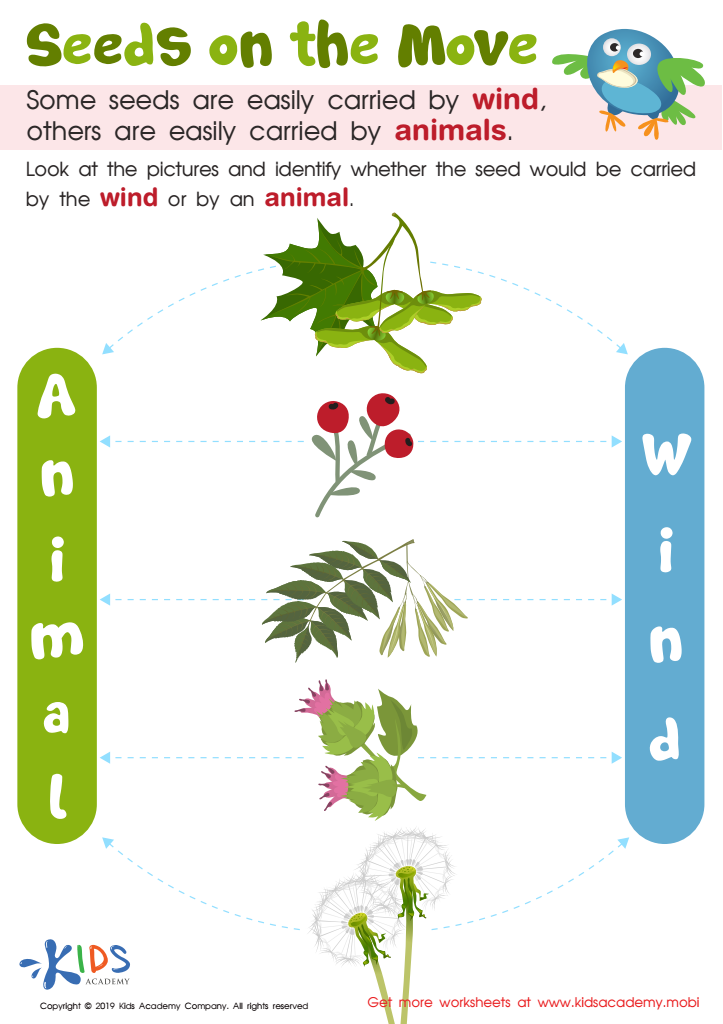
Seeds on the Move Worksheet
 Assign to My Students
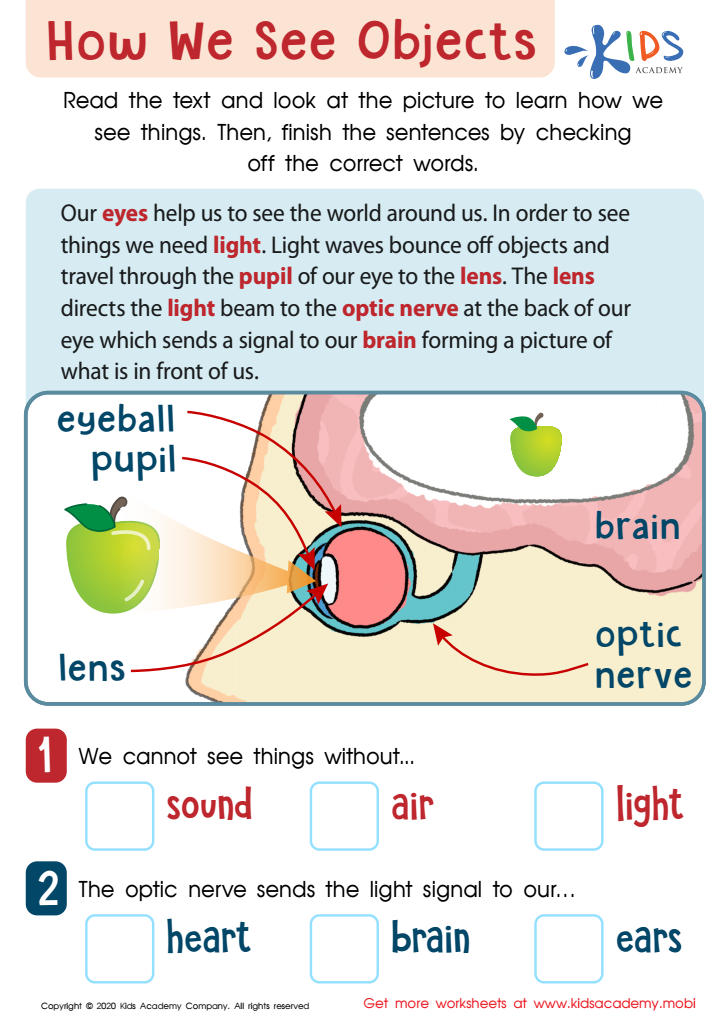
How We See Objects Worksheet
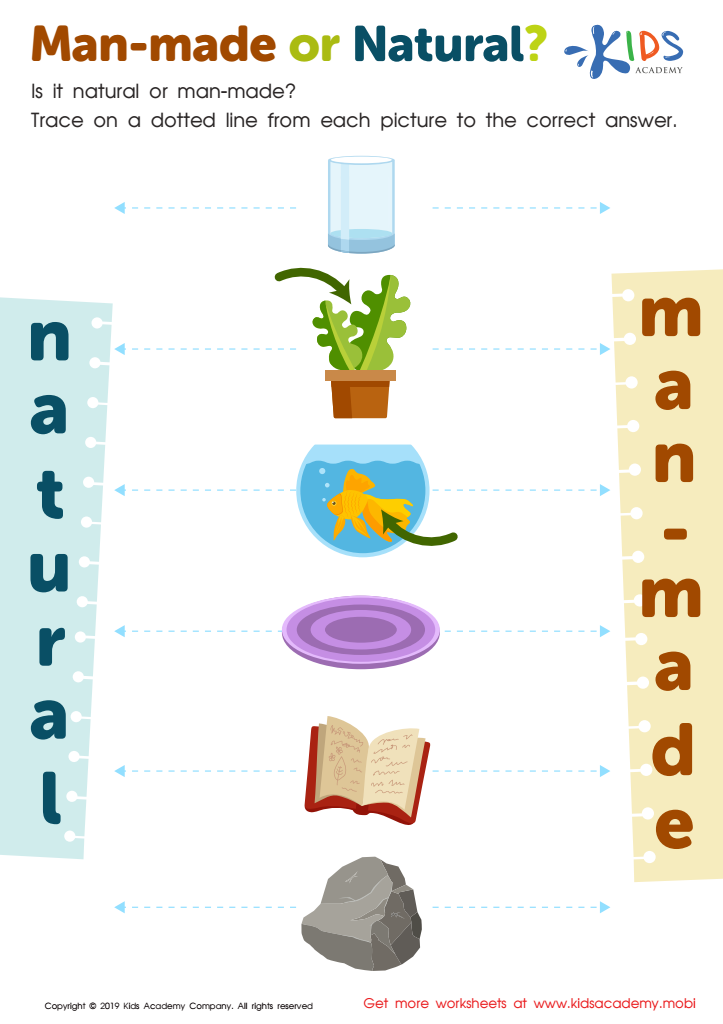
Man-Made or Natural? Worksheet








Developing critical thinking skills in young children, especially in the context of science, is essential for their cognitive growth and future success. For ages 4-9, this foundation helps children learn to question, analyze, and interpret information rather than passively accepting it. Critical thinking empowers kids to explore scientific concepts, fostering curiosity and creativity.
When parents and teachers encourage critical thinking in science, they are contributing to children's problem-solving abilities. This approach helps them make connections between concepts and apply knowledge to real-world scenarios. It nurtures a sense of inquiry, encouraging children to ask “why” and “how,” which is integral to scientific exploration.
Moreover, it prepares them for overcoming challenges in everyday life as they learn to evaluate options, consider consequences, and make informed decisions. Teaching critical thinking also enhances communication skills; children learn how to articulate their thoughts and engage in discussions, further promoting social skills.
Ultimately, investing in these skills lays a strong groundwork for scientific literacy, equipping young learners to navigate an increasingly complex world, fostering a generation of innovative thinkers and informed citizens who can tackle the challenges of the future.







