Understanding directions Science Worksheets for Ages 4-9
4 filtered results
-
From - To
Explore our engaging "Understanding Directions Science Worksheets" designed for children ages 4-9! These worksheets are perfect for helping young learners develop essential directional skills while diving into fun scientific concepts. Each activity encourages your child to follow simple instructions, enhancing their comprehension and critical thinking abilities. Kids will enjoy hands-on tasks, colorful illustrations, and interactive exercises that make science exciting. Our user-friendly worksheets are ideal for both classroom settings and homeschooling. Foster a love for learning and boost your child's confidence as they master understanding directions in science. Start your journey of discovery today with our comprehensive science worksheets!
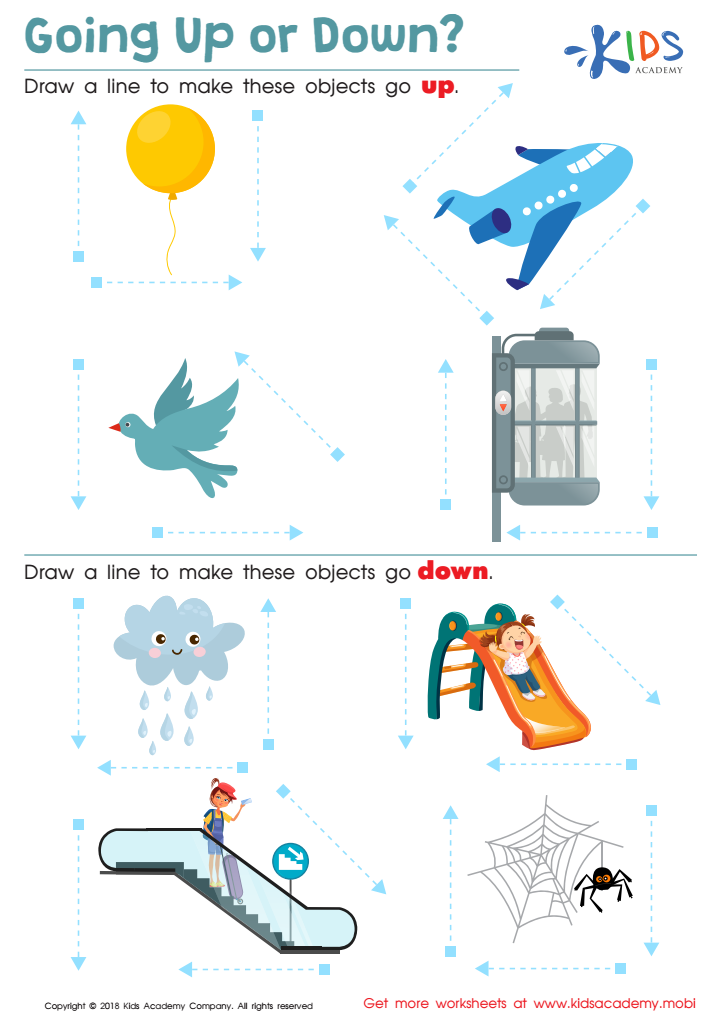
Going up or Down? Worksheet
 Assign to My Students
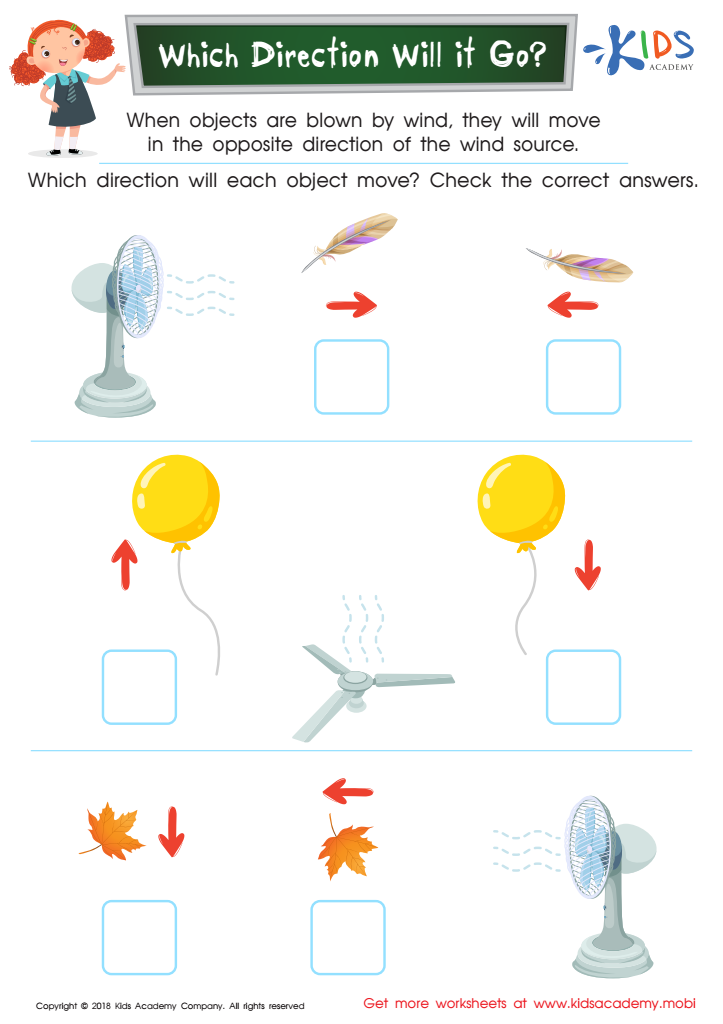
Which Direction Will it Go? Worksheet
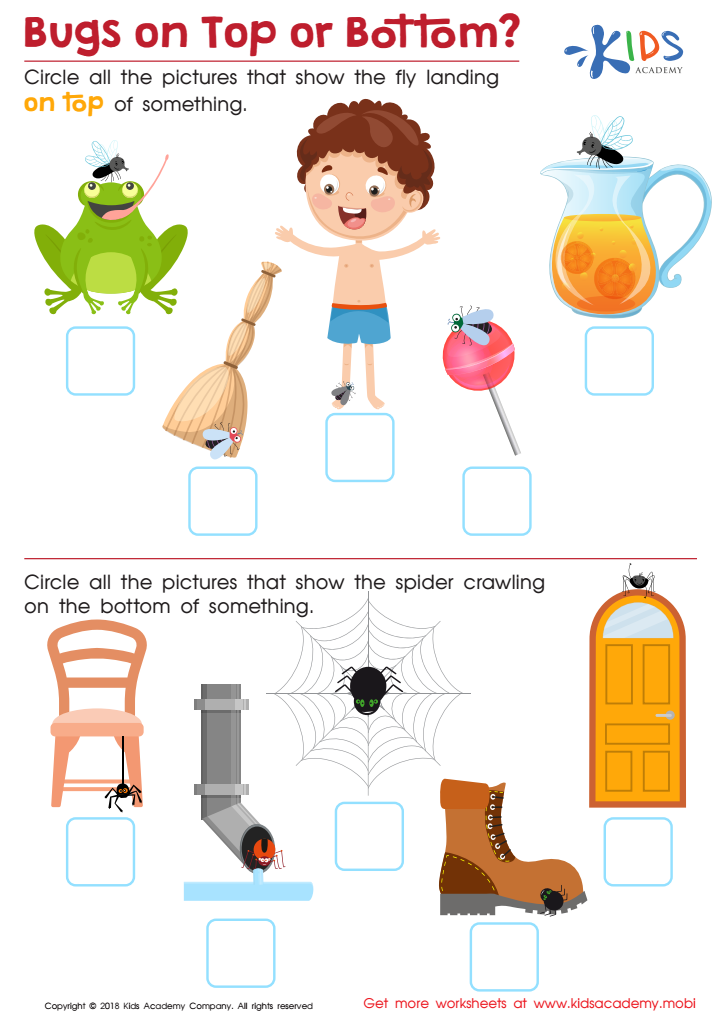
Bugs on Top or Bottom? Worksheet
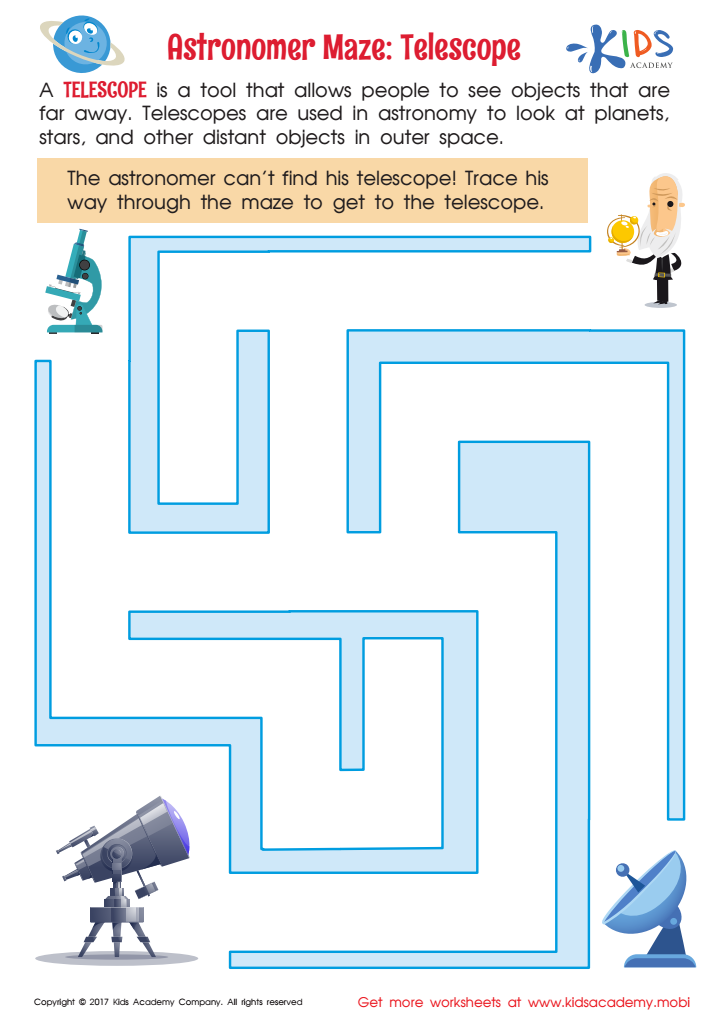
Astronomer Maze: Telescope Worksheet


.jpg)



Understanding directions in science for children aged 4-9 is crucial for several reasons. At this developmental stage, children are naturally curious and eager to explore the world around them. Introducing them to scientific concepts through clear and engaging directions fosters an early love for learning. It enables kids to grasp basic principles of inquiry, observation, and experimentation, which are foundational skills in science education.
When parents and teachers prioritize clear understanding of directions, they create an environment where children feel empowered to ask questions and seek answers. This nurtures critical thinking and problem-solving skills that will benefit them across all subject areas and in life. Additionally, clear directions in science help children develop essential literacy skills as they learn to follow instructions, enhancing their ability to decode language and comprehend tasks.
Moreover, science provides opportunities for practical, hands-on experiences that are vital for young learners. When children engage in experiments and projects, they learn to work collaboratively and communicate effectively with peers. Thus, caring about understanding directions in science sets the stage for lifelong learning, curiosity, and the essential skills needed in an ever-evolving world. Investing in this foundational aspect of education yields positive outcomes for both individual children and society as a whole.







