Decision making skills Community Worksheets for Ages 4-9
3 filtered results
-
From - To
Enhance young minds with our "Decision-Making Skills Community Worksheets for Ages 4-9." Tailored to nurture critical thinking, these engaging worksheets help children learn to make thoughtful choices in everyday situations. Each activity fosters essential social and emotional development, teaching kids to consider consequences and understand different perspectives. Ideal for classroom or home use, our worksheets are designed by educational experts to align with developmental milestones. Through fun scenarios and relatable storylines, children build confidence in their decision-making abilities while strengthening their problem-solving skills. Give your child a head start in becoming a responsible and conscientious decision-maker in their community.
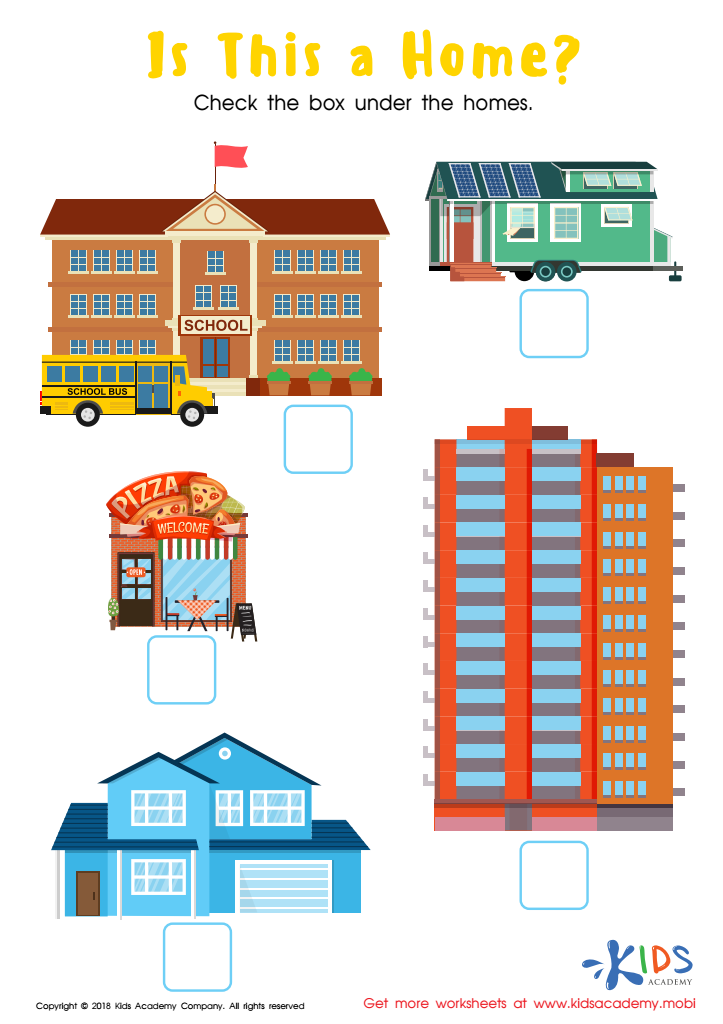
Is this a Home? Worksheet
 Assign to My Students
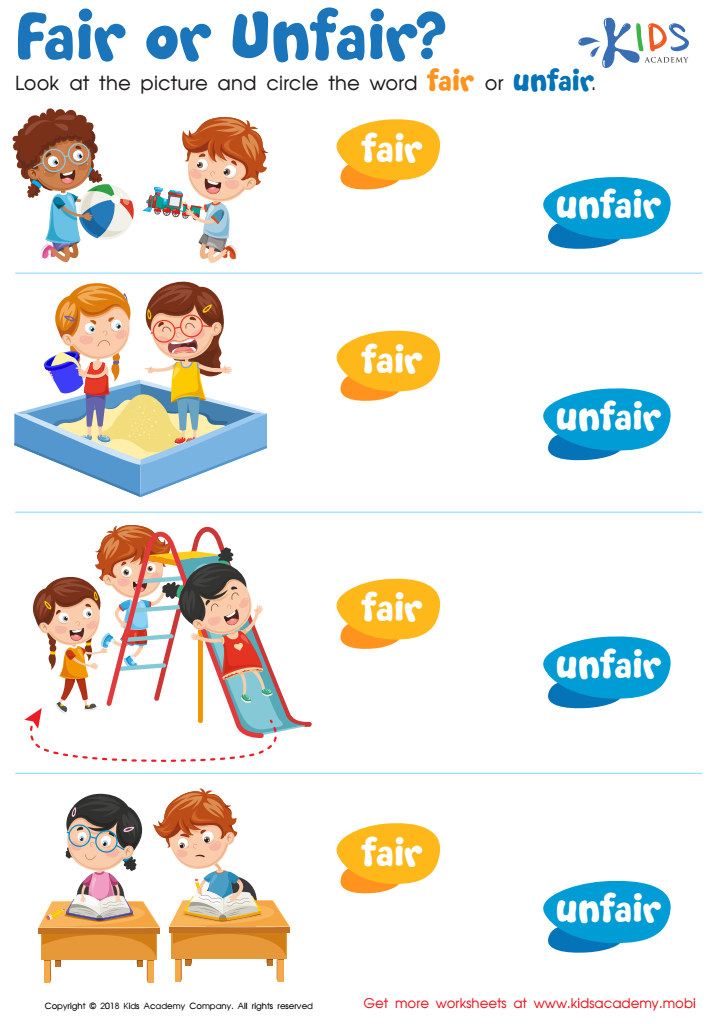
Fair or Unfair Worksheet

Towns Worksheet








Decision-making skills are a cornerstone for a child's overall development. For ages 4-9, fostering these abilities is crucial as children begin to learn how to navigate the world independently. Parents and teachers play a pivotal role in this learning process.
Firstly, decision-making skills help children build self-confidence. They feel valued and more capable when they're allowed to make age-appropriate decisions, whether it’s choosing what to wear or deciding what game to play. This confidence leads to higher self-esteem, forming a positive self-image that is essential for mental health.
Secondly, good decision-making fosters critical thinking and problem-solving skills. Children who are guided to consider consequences and options learn to think ahead and evaluate situations more effectively. This groundwork is vital for complex decisions later in life.
Lastly, instilling these skills within a community setting offers additional advantages. It teaches children about social responsibility and empathy. Understanding that their choices can affect others instills a sense of accountability and fosters a habit of considering diverse perspectives.
By prioritizing decision-making skills, parents and teachers help children develop into thoughtful, responsible individuals. Early investment in these skills lays a foundation for a future of adaptive, rational, and socially mindful adults.








