Vocabulary Building Community Worksheets for Ages 4-9
4 filtered results
Difficulty Level
Grade
Age
-
From - To
Subject
Activity
Standards
Welcome to our Vocabulary Building Community Worksheets designed specifically for ages 4-9! These engaging and interactive resources aim to enhance your child’s vocabulary while exploring essential community concepts. Our worksheets incorporate fun illustrations and relatable scenarios, helping young learners connect words to their everyday experiences. Each activity promotes language development, critical thinking, and comprehension skills. Perfect for homeschooling, afterschool learning, or supplementing classroom instruction, these worksheets will inspire your child’s curiosity and love for language. Foster a deeper understanding of the world around them with our thoughtfully crafted vocabulary activities that make learning enjoyable and effective! Start building critical language skills today!
Favorites
With answer key
Interactive
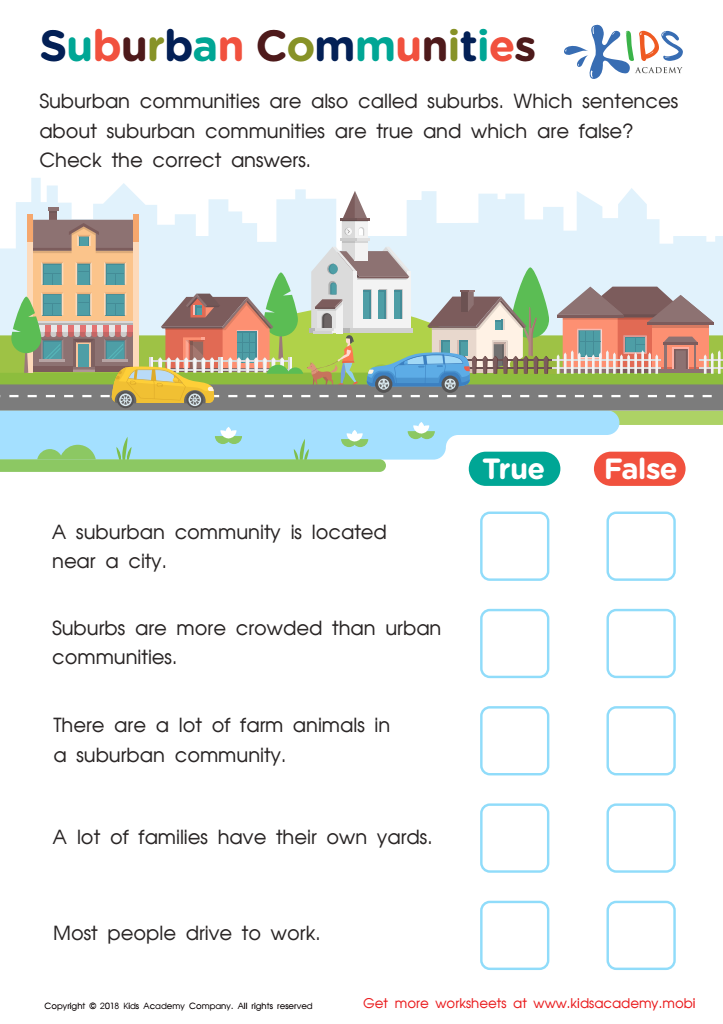
Suburban Communities Worksheet
This worksheet helps your students/children understand suburban communities. Have them read the sentences and check the true or false box for each. They will gain a better knowledge of the suburbs after this exercise.
 Assign to My Students
Suburban Communities Worksheet
Worksheet
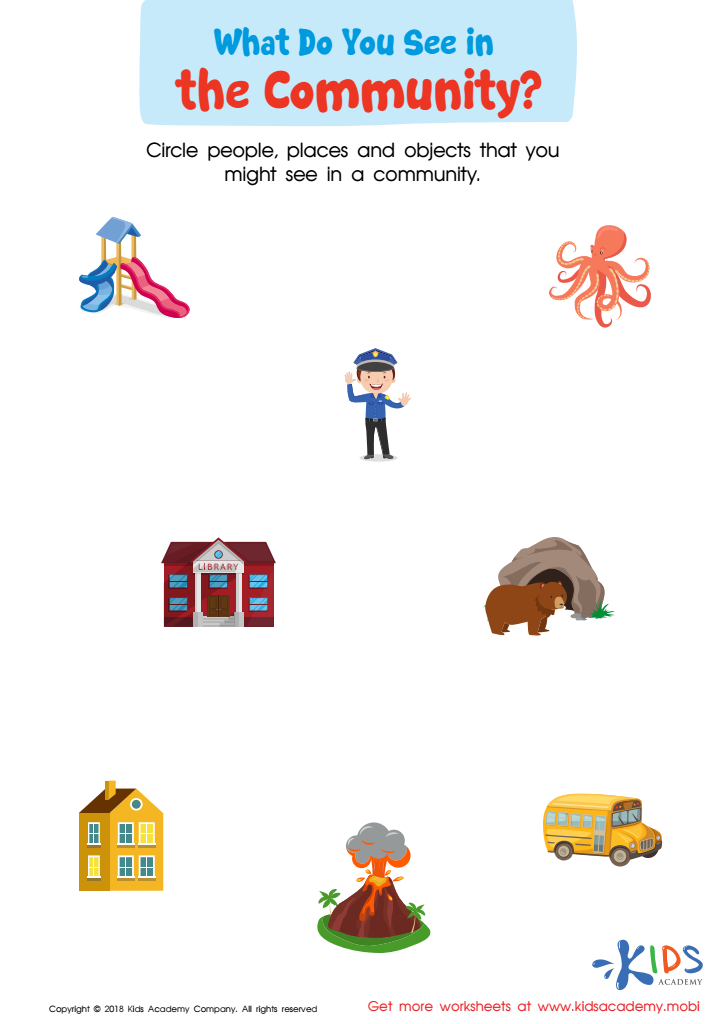
What Do You See in the Community Worksheet
This free social studies PDF can help your children learn about their local community. They'll identify its members, places and objects using engaging and recognizable pictures. As they trace circles around them, they'll also practice fine motor skills. It's a great way to introduce social science concepts and help them understand the importance of community.
What Do You See in the Community Worksheet
Worksheet
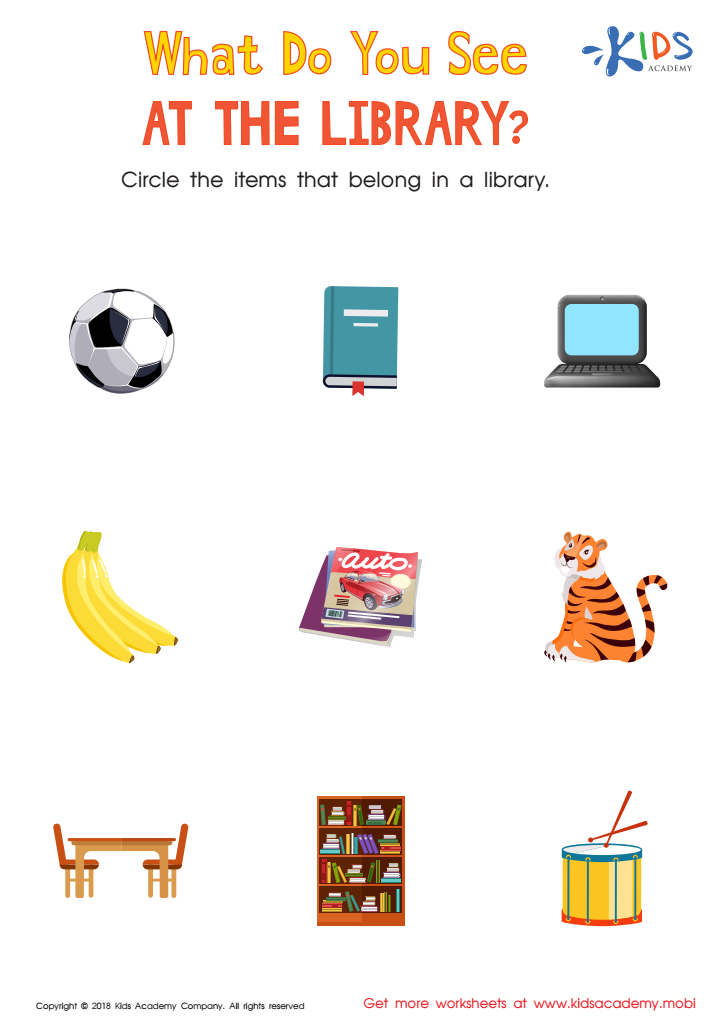
What Do you See at the Library? Worksheet
Let your kids look at the worksheet with pictures of objects found in libraries and those that don't. Ask them to list some, then circle the ones that belong in a library. Can they identify them? See if you can spot any they miss!
What Do you See at the Library? Worksheet
Worksheet
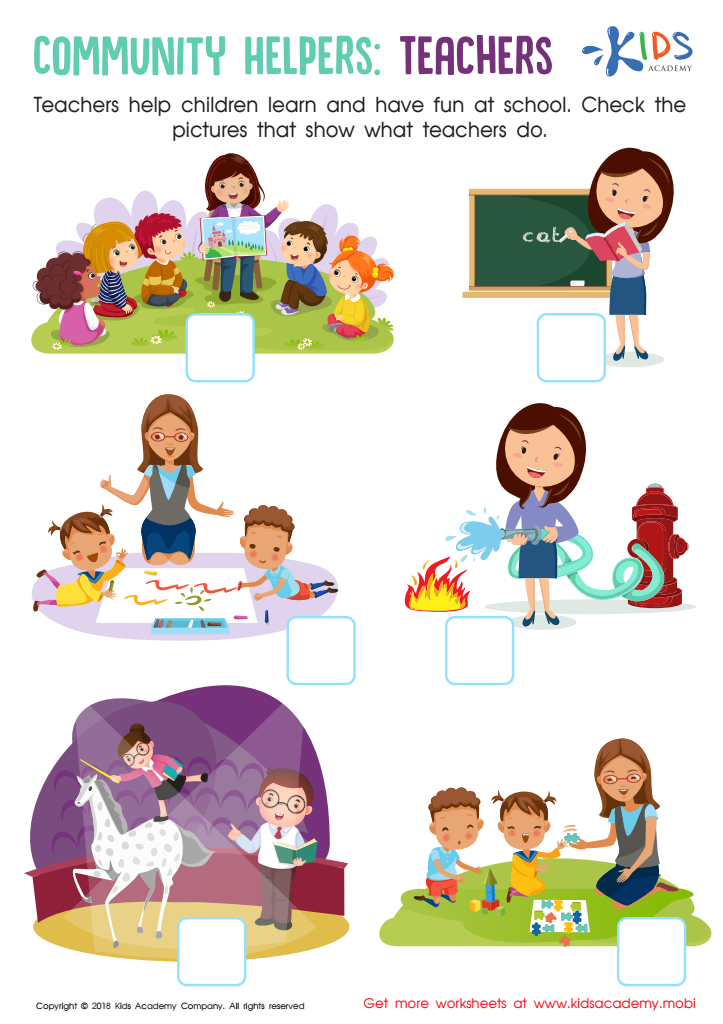
Teachers Community Helpers Worksheet
Ask your students to name some of the ways a teacher helps. Then, use this worksheet to show the right ways teachers can help. Have them check the boxes of the pictures that accurately depict what a teacher does. This is a great exercise to show your students how you help them learn and contribute to their community.
Teachers Community Helpers Worksheet
Worksheet
Join Kids Academy for Free
Who is primarily going to use this learning content?








Vocabulary building is crucial for children aged 4-9 as it lays the foundation for communication, literacy, and overall cognitive development. During these formative years, children are like sponges, eagerly absorbing language and concepts. A robust vocabulary enhances their ability to express thoughts, understand others, and engage in conversations, which fosters healthy social interactions.
Parents and teachers should care about creating a Vocabulary Building Community because it makes vocabulary acquisition a collaborative effort. When families and educators come together, they can share strategies, resources, and activities that promote language richness in diverse contexts, such as home and school. This community support encourages consistent practice, making vocabulary learning enjoyable and engaging.
Furthermore, an enriched vocabulary is linked to improved reading comprehension and academic success. Children exposed to varied words and concepts have a greater chance of thriving in school environments. By caring about this community, parents and teachers can ensure that children are equipped with essential language skills, ultimately paving the way for lifelong learning.
Establishing a Vocabulary Building Community instills a sense of enthusiasm for language, nurturing curious, confident communicators who can articulate their ideas and navigate the complexities of the world around them.