Map reading Geography Worksheets for Ages 4-9
3 filtered results
Difficulty Level
Grade
Age
-
From - To
Subject
Activity
Standards
Discover our engaging Map Reading Geography Worksheets designed for children ages 4-9! These interactive resources help young learners develop essential map-reading skills through fun activities that promote spatial awareness and understanding of geography. Each worksheet features vibrant illustrations and age-appropriate challenges, ensuring that kids enjoy exploring concepts like symbols, legends, and directions. Perfect for enhancing classroom learning or as supplemental home activities, our worksheets support early social studies education. Encourage curiosity about the world and foster critical thinking skills in your children with our comprehensive and accessible map reading materials. Explore and download today for an educational adventure!
Favorites
With answer key
Interactive
 Assign to My Students
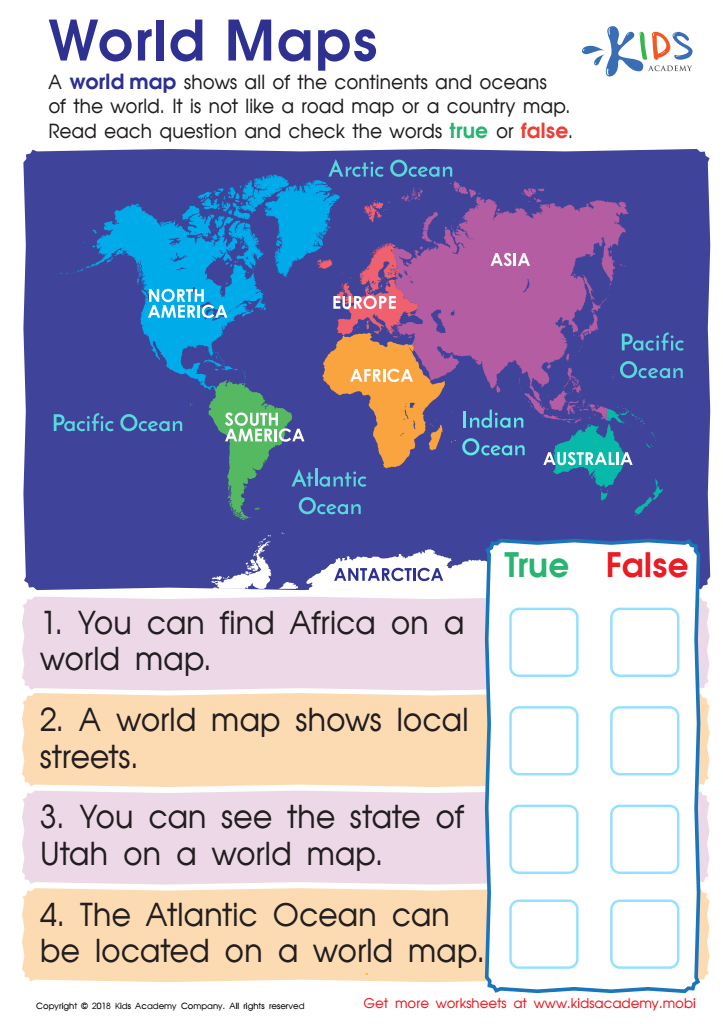
World Maps Worksheet
Help your young geographer learn about world maps. Show them that it displays all the oceans, continents and is distinct from other maps. Challenge them to answer the true/false questions on this free worksheet, and help them become a global citizen who understands the purpose of world maps.
World Maps Worksheet
Worksheet
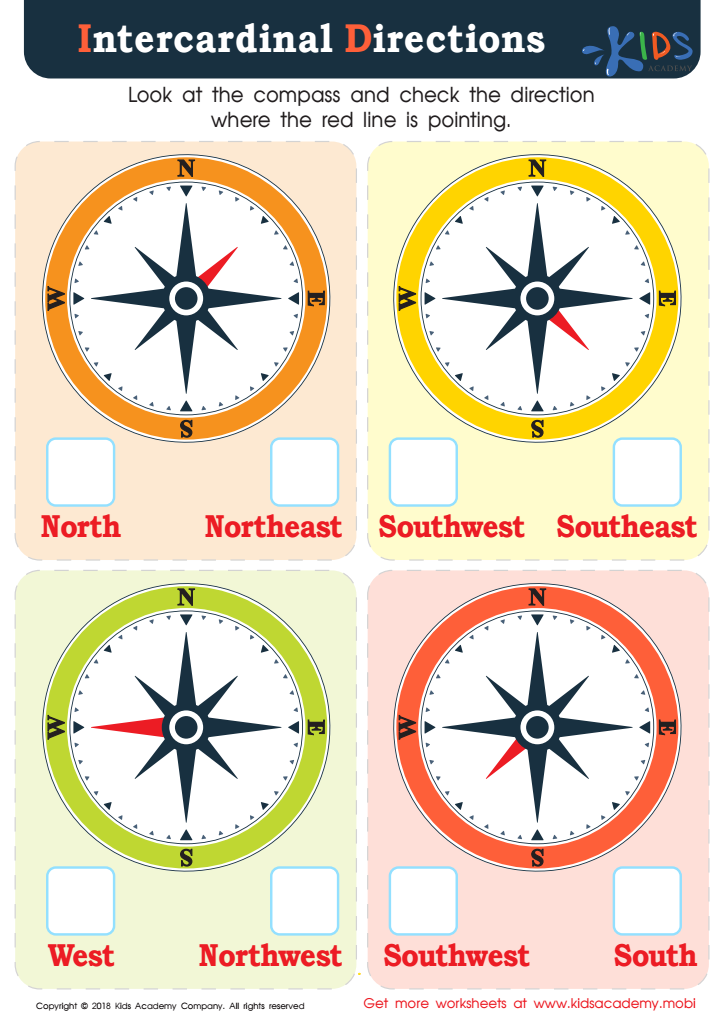
Intercardinal Directions Worksheet
Young students often don't get to practice cardinal and intercardinal directions in the digital age, but it's an important social studies and geography concept to learn. This PDF provides colorful compasses for them to practice with, giving them a real-world skill for common curriculum and independent living.
Intercardinal Directions Worksheet
Worksheet
Join Kids Academy for Free
Who is primarily going to use this learning content?


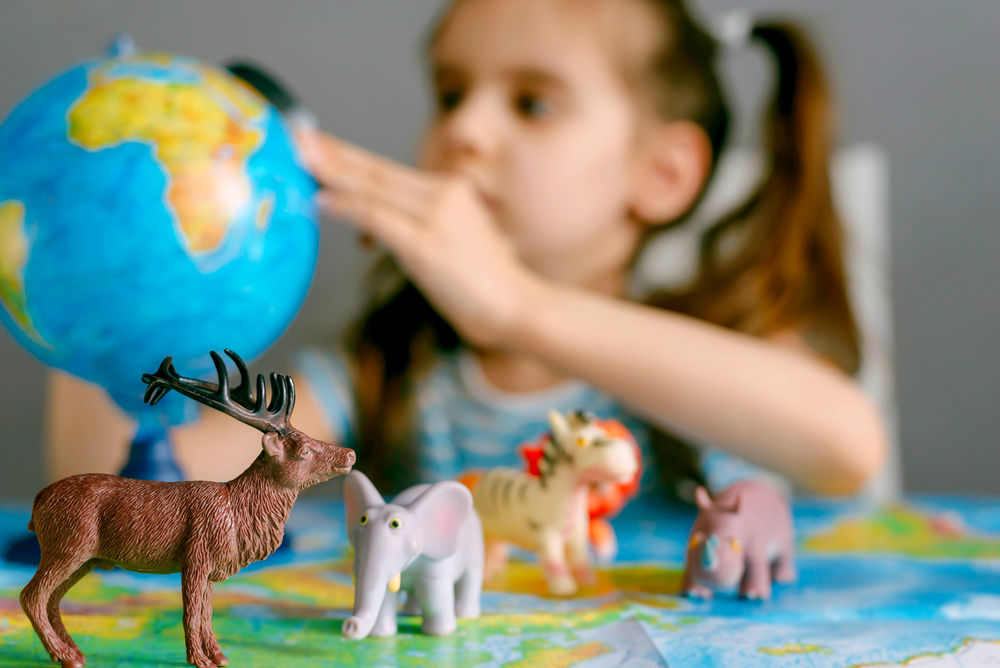




Map reading is an essential skill for children ages 4-9, providing numerous benefits that parents and teachers should prioritize. First, it introduces young learners to spatial awareness, helping them understand their surroundings and how to navigate the world around them. This foundational skill is crucial for developing critical thinking and problem-solving abilities as children grow.
Additionally, map reading can stimulate curiosity about geography and the diversity of the world. Engaging with maps encourages children to learn about different cultures, environments, and communities, fostering empathy and a broader worldview. It also enhances their ability to engage in discussions about travel, history, and environmental issues.
Furthermore, map activities can boost cognitive skills such as memory, reasoning, and coordination. By using maps, children practice following directions, recognizing symbols, and interpreting information visually, which promotes their overall literacy and numeracy skills.
Ultimately, by integrating map reading into educational activities, parents and teachers can create memorable learning experiences that equip children with crucial skills for lifelong learning and exploration. Encouraging an interest in geography helps young learners become informed, responsible, and confident individuals capable of navigating their world successfully.