Understanding citizenship Good Citizenship Worksheets for Ages 4-9
5 filtered results
-
From - To
Discover the importance of good citizenship with our engaging "Understanding Citizenship Good Citizenship Worksheets" designed for children ages 4-9. These worksheets offer fun and interactive activities that help young learners grasp essential concepts of citizenship, such as respect, responsibility, and community involvement. Through colorful illustrations and age-appropriate exercises, kids will explore what it means to be a good citizen and how to make positive contributions to their communities. Enhance your child's social studies learning with these easy-to-use resources that promote ethical values, teamwork, and active participation in their environment. Start fostering the seeds of citizenship today!
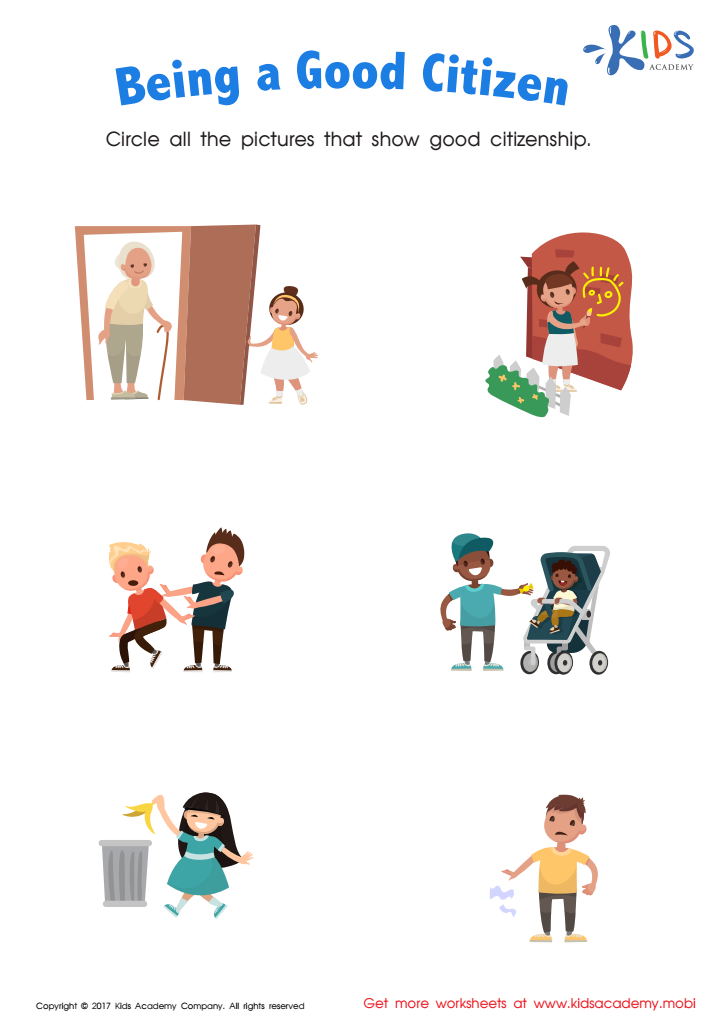
Being a Good Citizen Printable
 Assign to My Students
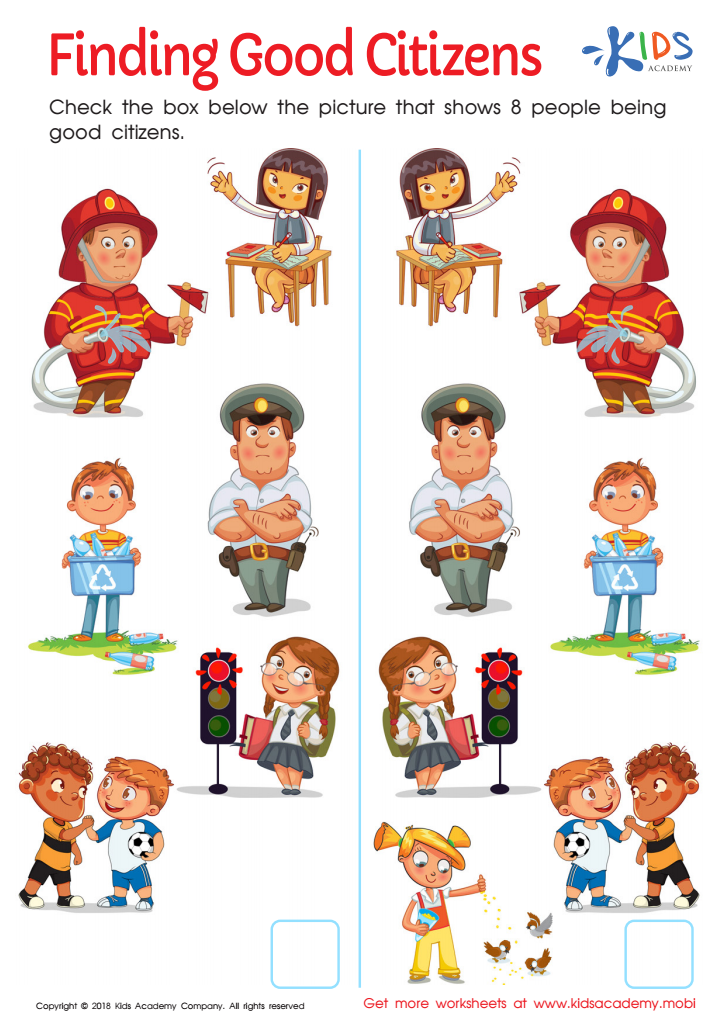
Finding Good Citizens Worksheet
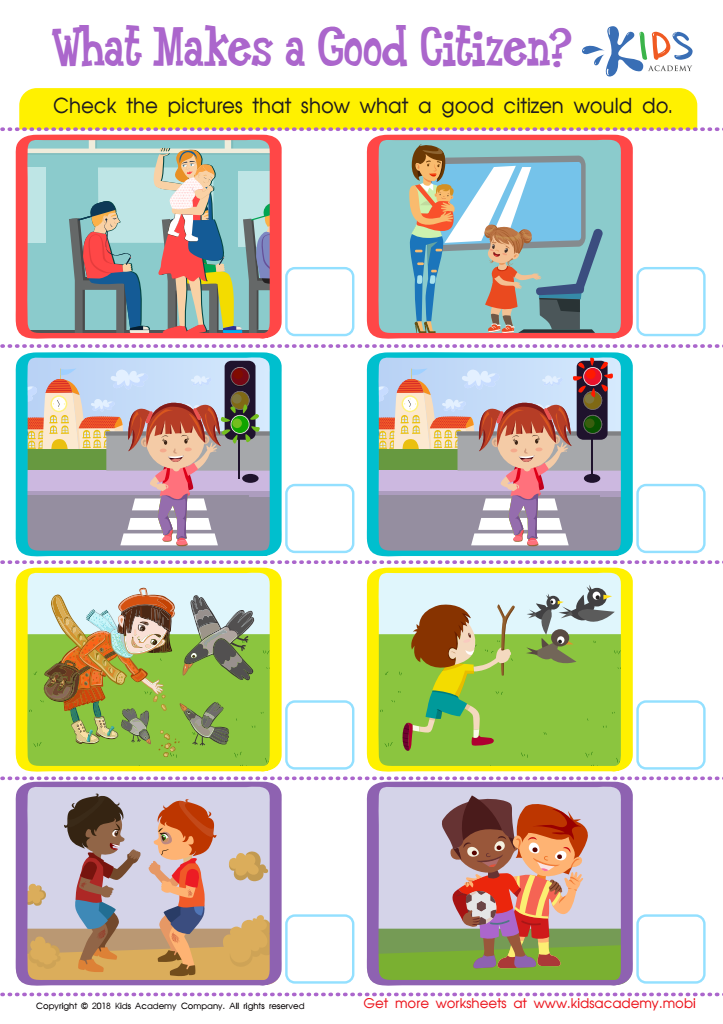
What Makes a Good Citizen? Worksheet
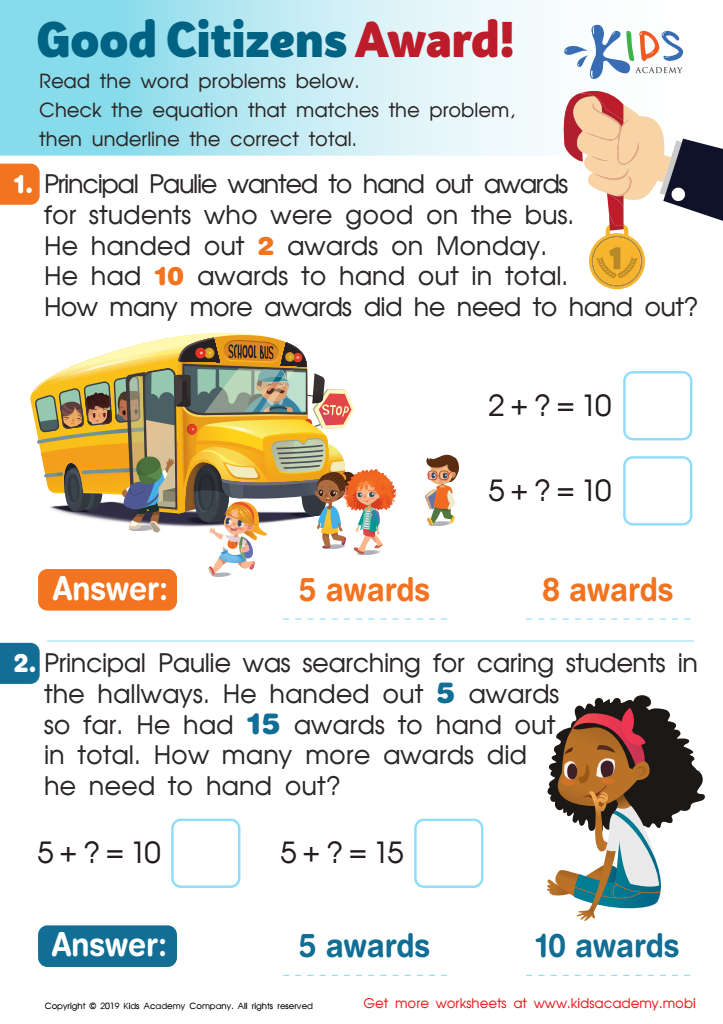
Good Citizens Award! Worksheet
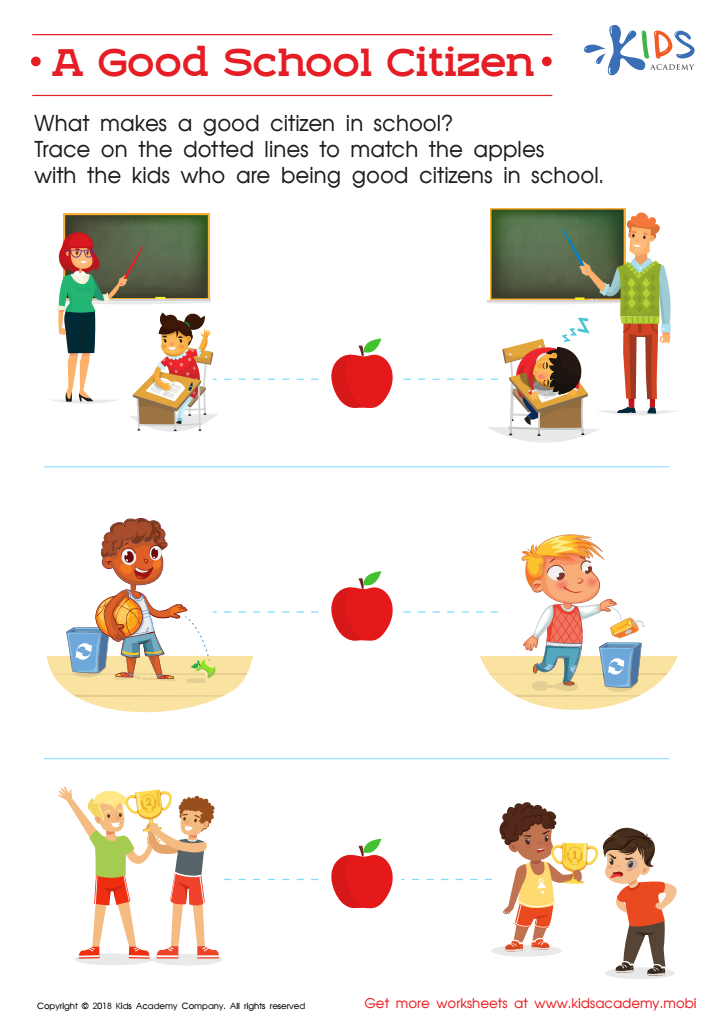
A Good School Citizen Worksheet




Understanding citizenship and promoting good citizenship from a young age, especially for children aged 4-9, is crucial for several reasons. Firstly, early exposure to citizenship concepts fosters a sense of belonging and responsibility within the community. When children grasp the idea of citizenship, they learn that they are part of something bigger than themselves, which cultivates empathy and respect for others.
Furthermore, teaching good citizenship helps children develop important social skills. Through interactive activities, such as sharing, teamwork, and conflict resolution, they learn how to communicate effectively, cooperate with peers, and respect diverse perspectives. These skills are foundational for building relationships and promoting harmony in classrooms and beyond.
Additionally, instilling values such as fairness, kindness, and respect for rules at this age sets a strong moral compass for children as they grow. It lays the groundwork for them to become responsible citizens, engaged in their communities, and committed to contributing positively to society.
Ultimately, parents and teachers should care about teaching citizenship, as it shapes not only the immediate environment of schools and homes but also the future of society by nurturing informed, compassionate, and proactive members of the community.