Critical Thinking Governance and Civics Worksheets for Ages 4-9
7 filtered results
-
From - To
Explore our "Critical Thinking Governance and Civics Worksheets" designed specifically for ages 4-9! These engaging resources foster essential critical thinking skills while introducing young learners to fundamental concepts of governance and civic responsibility. Kids will enjoy interactive activities that encourage them to ask questions, analyze information, and make informed decisions, all in a fun and supportive learning environment. Our worksheets promote curiosity about community roles, rights, and responsibilities, nurturing both cognitive development and social awareness. Perfect for home or classroom use, these activities will instill a sense of civic engagement in the youngest learners. Empower their minds today!
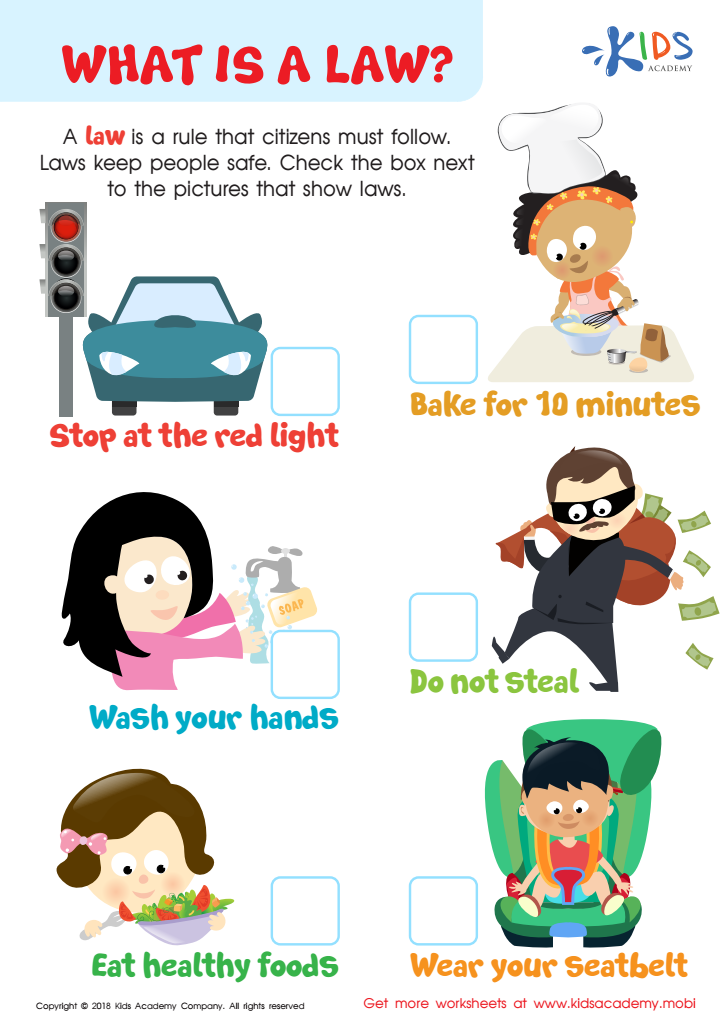
What is a Law? Worksheet
 Assign to My Students

Thomas Jefferson and the 7’s Worksheet
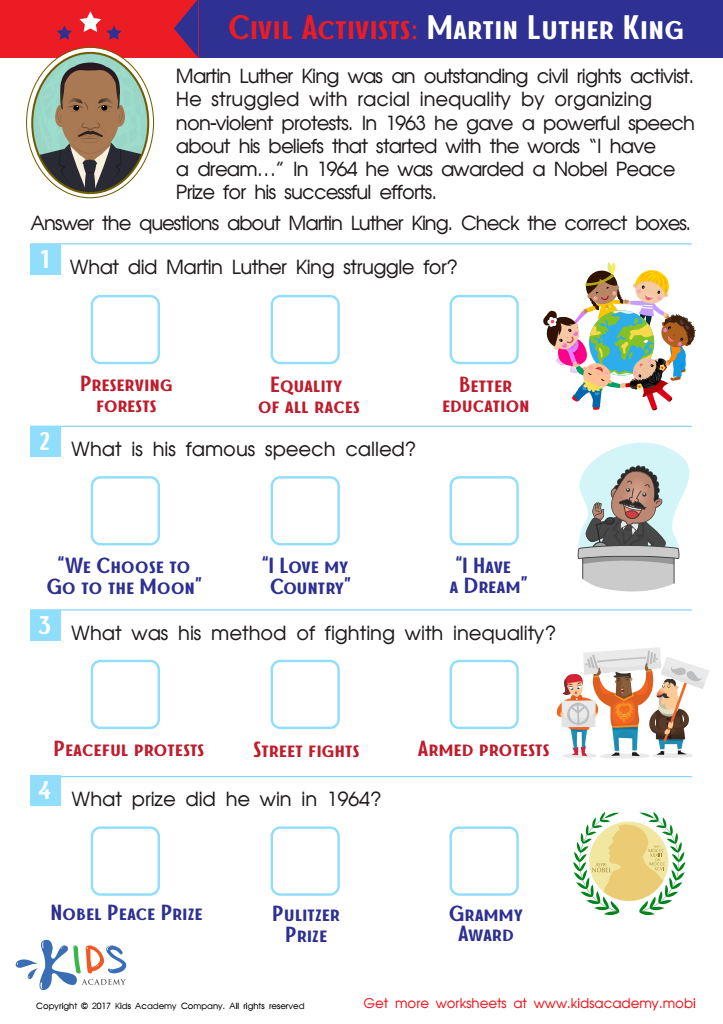
Martin Luther King Worksheet
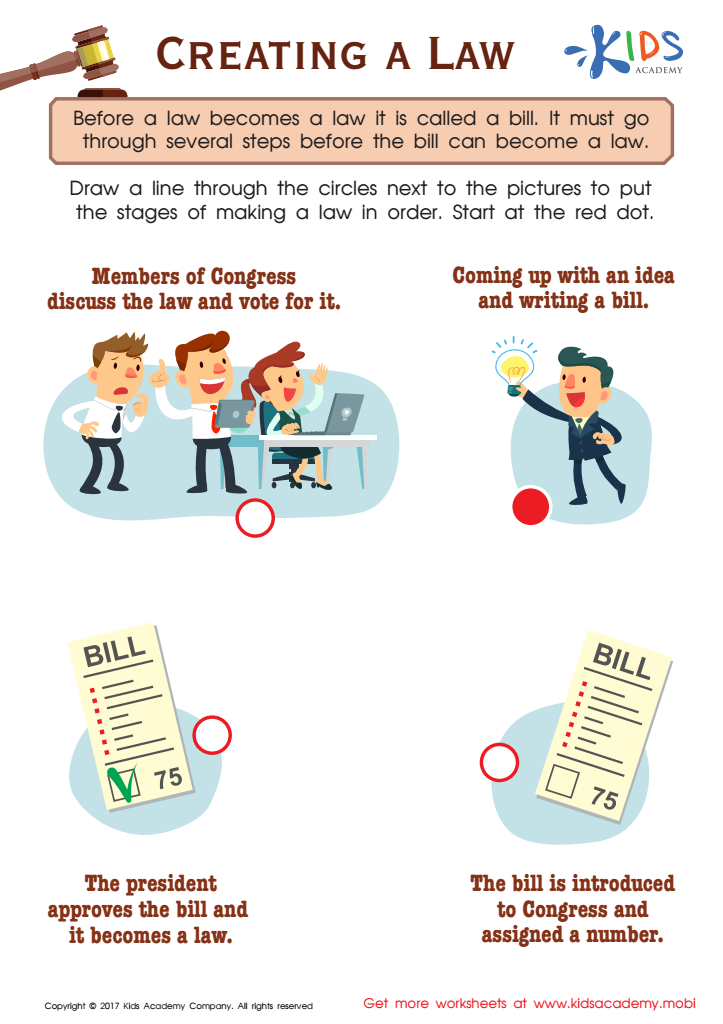
Creating a Law Worksheet
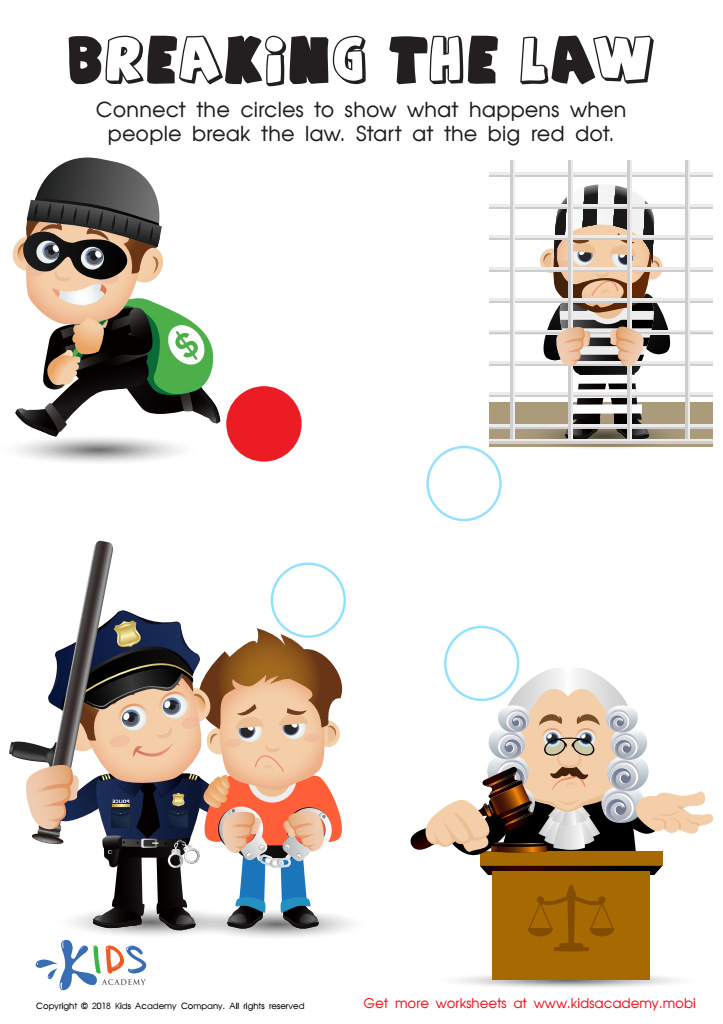
Breaking the Law Worksheet
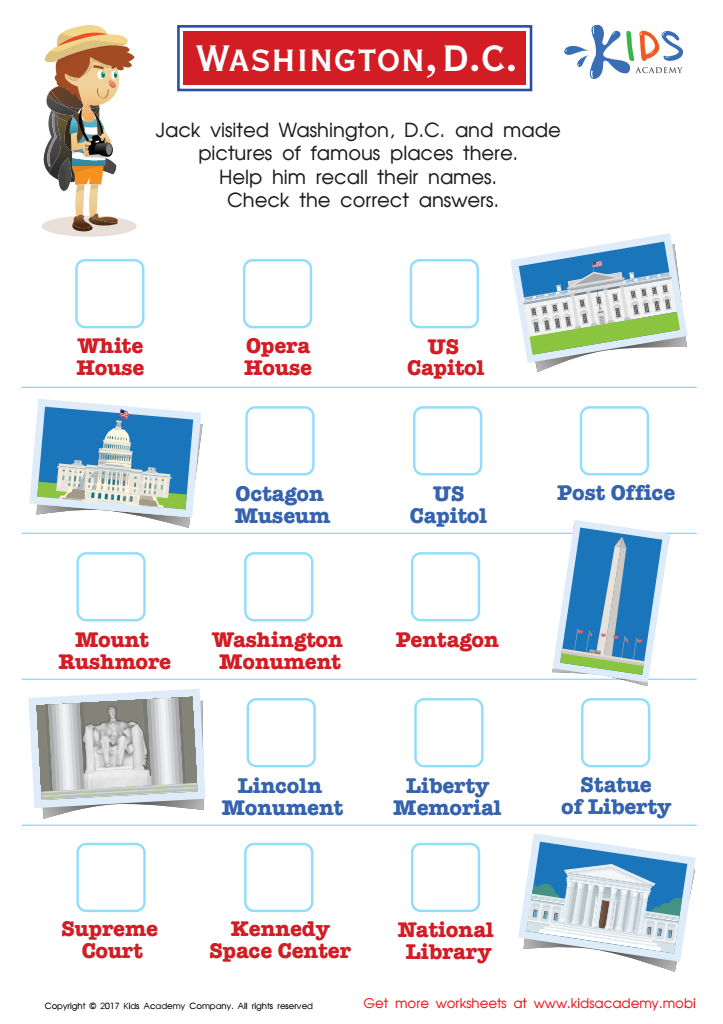
Washington D.C. Printable Worksheet
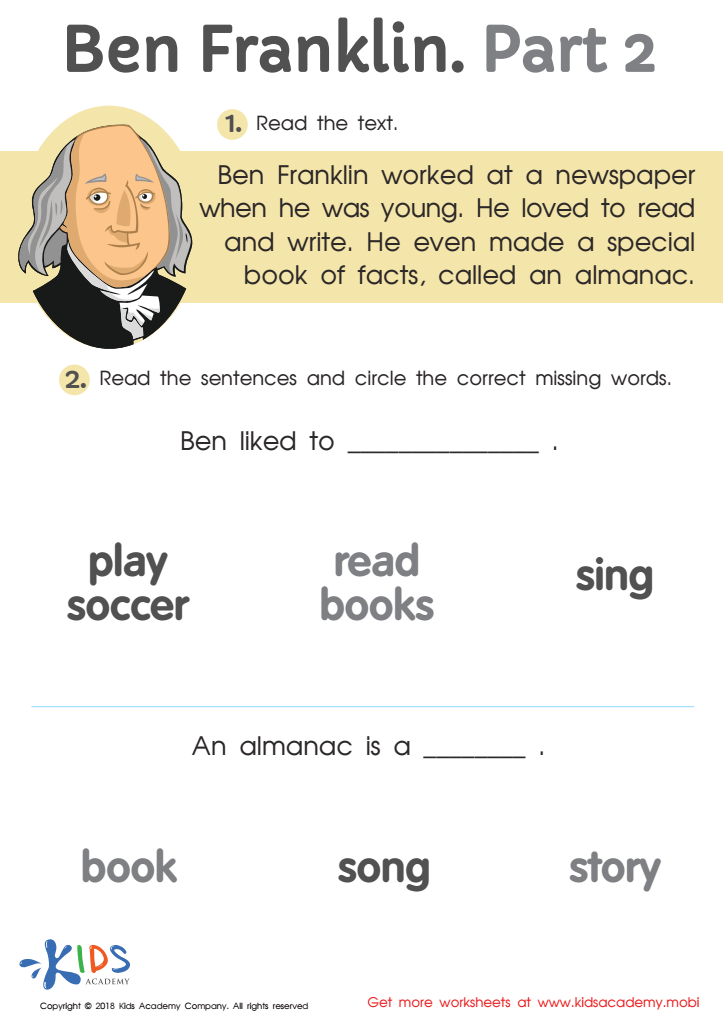
Ben Franklin Part 2 Worksheet


Parents and teachers should prioritize Critical Thinking, Governance, and Civics for children ages 4-9 because these foundational skills equip young learners to navigate their social worlds thoughtfully and responsibly. At this age, children are naturally curious and eager to understand their environment. Introducing critical thinking allows them to ask questions, evaluate information, and form reasoned conclusions, skills essential for becoming engaged citizens.
Understanding governance and civics fosters a sense of community and belonging. Children learn about the roles of individuals and institutions, which helps them grasp concepts like fairness, justice, and responsibility early on. By discussing civic concepts in age-appropriate ways, educators and parents can ignite a sense of agency—empowering children to know their voices matter and that they can effect change in their surroundings.
Furthermore, cultivating these skills helps counter misinformation and preconceived biases. As students learn to analyze perspectives and acknowledge diverse viewpoints, they grow into compassionate, informed adults. Investing time in critical thinking and civics training helps nurture responsible future leaders who will actively participate in democracy and contribute positively to society. Ultimately, fostering these competencies now lays the groundwork for informed and engaged citizens in the future.








