Cultural awareness Governance and Civics Worksheets for Ages 4-9
3 filtered results
-
From - To
Welcome to our Cultural Awareness Governance and Civics Worksheets page designed for children aged 4-9! These engaging worksheets focus on fostering understanding and appreciation of diverse cultures, values, and citizenship. Through fun activities, young learners will explore essential concepts such as community, belonging, and global awareness. Our resources encourage critical thinking, creativity, and inclusivity while supporting foundational social studies skills. Help your child develop a strong sense of cultural identity and respect for others with our thoughtfully crafted materials. Dive into interactive learning experiences that make civics come alive and shape compassionate, informed future citizens! Start exploring today!
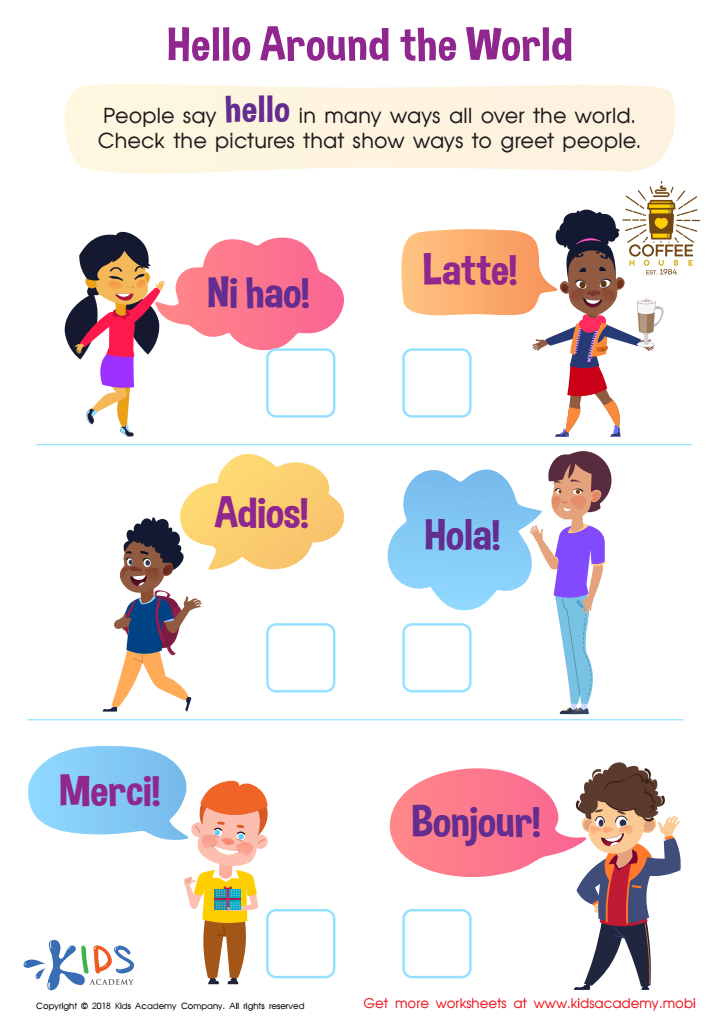
Hello Around the World Worksheet
 Assign to My Students
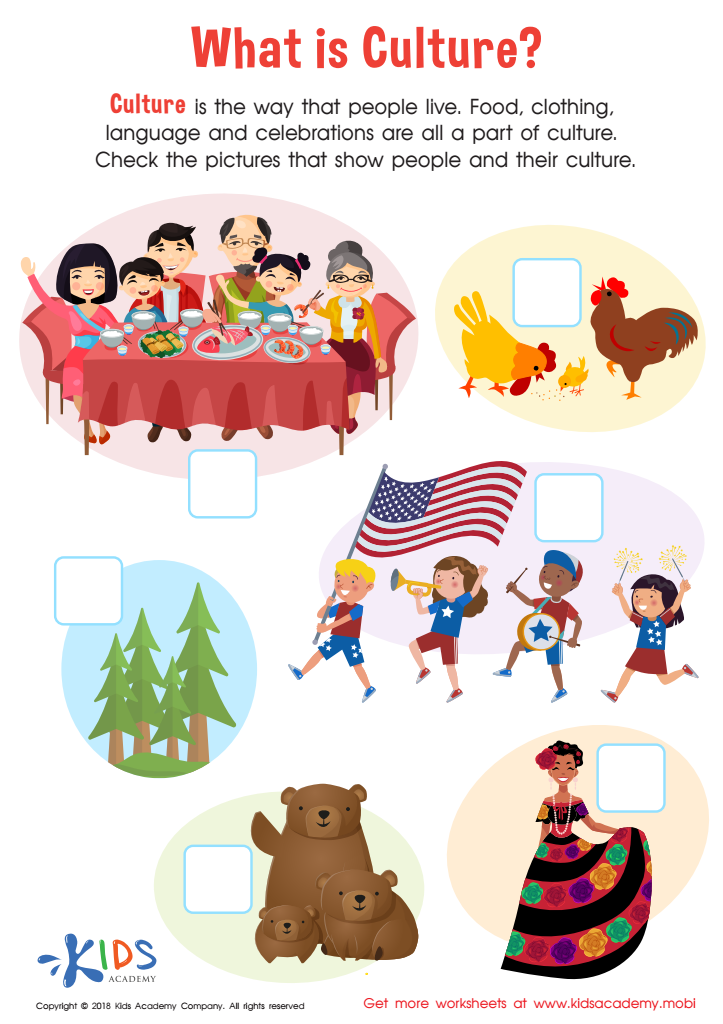
What Is Culture? Worksheet
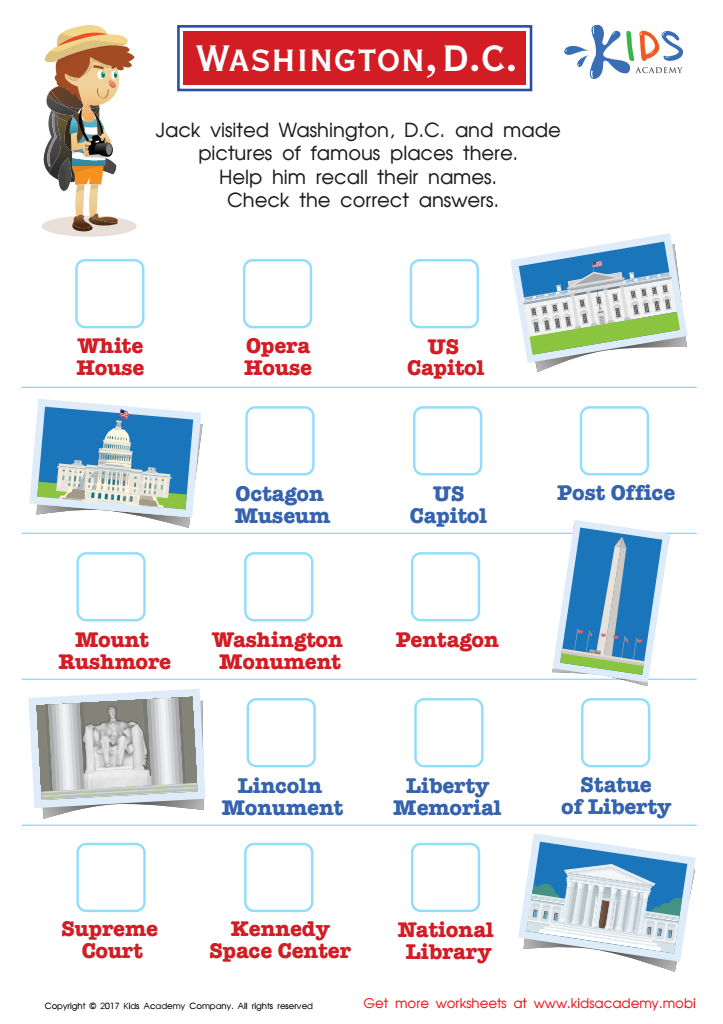
Washington D.C. Printable Worksheet


Cultural awareness, governance, and civics are vital components of education for children ages 4-9. During these formative years, children start to understand their identity and the world around them. By teaching cultural awareness, parents and teachers can foster respect, empathy, and appreciation for diversity, shaping children into open-minded individuals. Exposure to various cultures encourages critical thinking and dispels stereotypes, which is essential in our increasingly multicultural societies.
Introducing governance and civics at an early age empowers children by teaching them the principles of fairness, responsibility, and community engagement. Understanding simple concepts of rules, leadership, and citizenship can help them become active, informed participants in their communities. This foundation lays the groundwork for future civic engagement, enabling children to voice their opinions, respect others’ perspectives, and participate in democratic processes.
Moreover, children who grasp these concepts early are more likely to carry these values into adulthood, creating compassionate leaders and responsible citizens. By prioritizing cultural awareness and civics in education, parents and teachers instill essential life skills that nurture a sense of belonging, respect, and responsibility, enriching not only individual lives but also the broader community and society.








