Historical Knowledge Governance and Civics Worksheets for Ages 4-9
5 filtered results
Difficulty Level
Grade
Age
-
From - To
Subject
Activity
Standards
Explore our engaging "Historical Knowledge Governance and Civics Worksheets" designed specifically for young learners aged 4 to 9. These thoughtfully crafted worksheets introduce foundational concepts of governance, civic responsibilities, and historical awareness in an age-appropriate way. Through fun activities, children will learn about important historical figures, community roles, and the basics of government while enhancing their critical thinking and comprehension skills. Our resources foster curiosity and encourage children to appreciate their societal heritage. Perfect for classroom settings or at-home learning, these worksheets make understanding civics accessible and enjoyable for early grade students. Start their journey into history and citizenship today!
Favorites
With answer key
Interactive
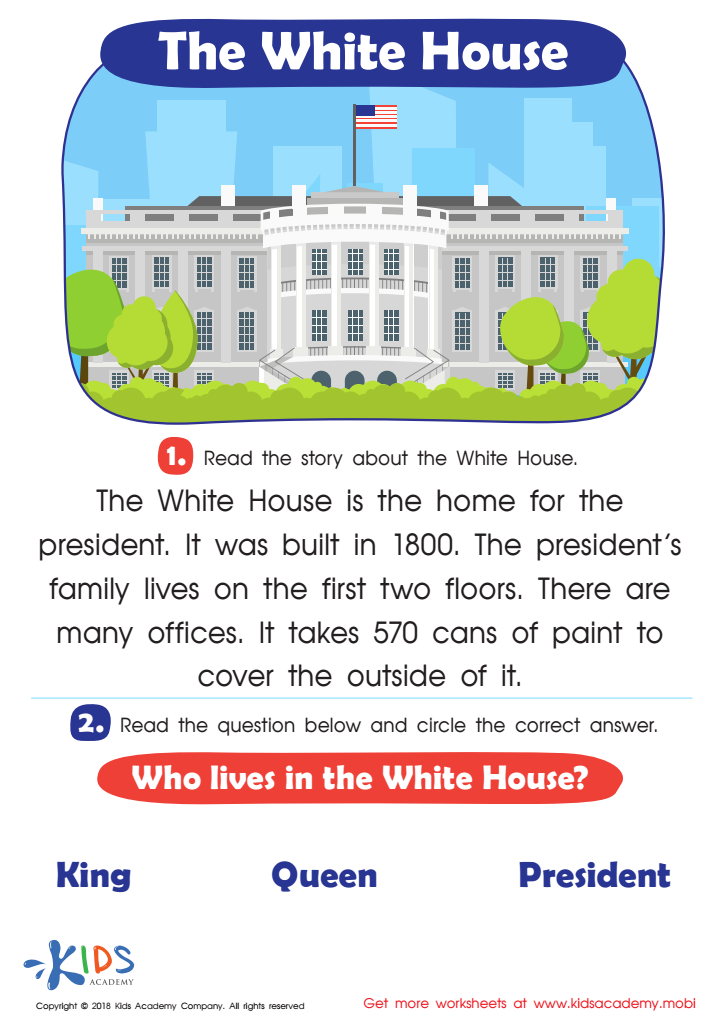
White House Worksheet
Read stories to your students to teach them new words, and about the White House. Before reading, ask your kindergartners what they already know. Then read short sentences for them to learn about the building the U.S President resides in.
 Assign to My Students
White House Worksheet
Worksheet
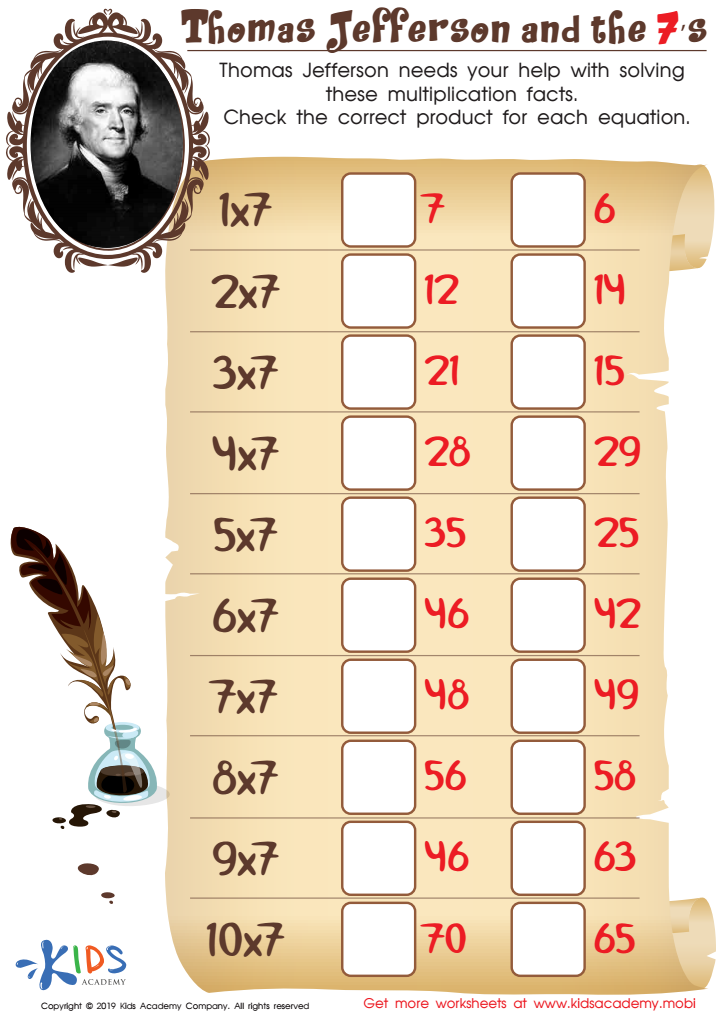
Thomas Jefferson and the 7’s Worksheet
Thomas Jefferson championed education and wants kids to know their times tables. Help your child with this worksheet focusing on 7's. Check the box for the correct answer for each multiplication problem. Make sure your child gets the facts right!
Thomas Jefferson and the 7’s Worksheet
Worksheet
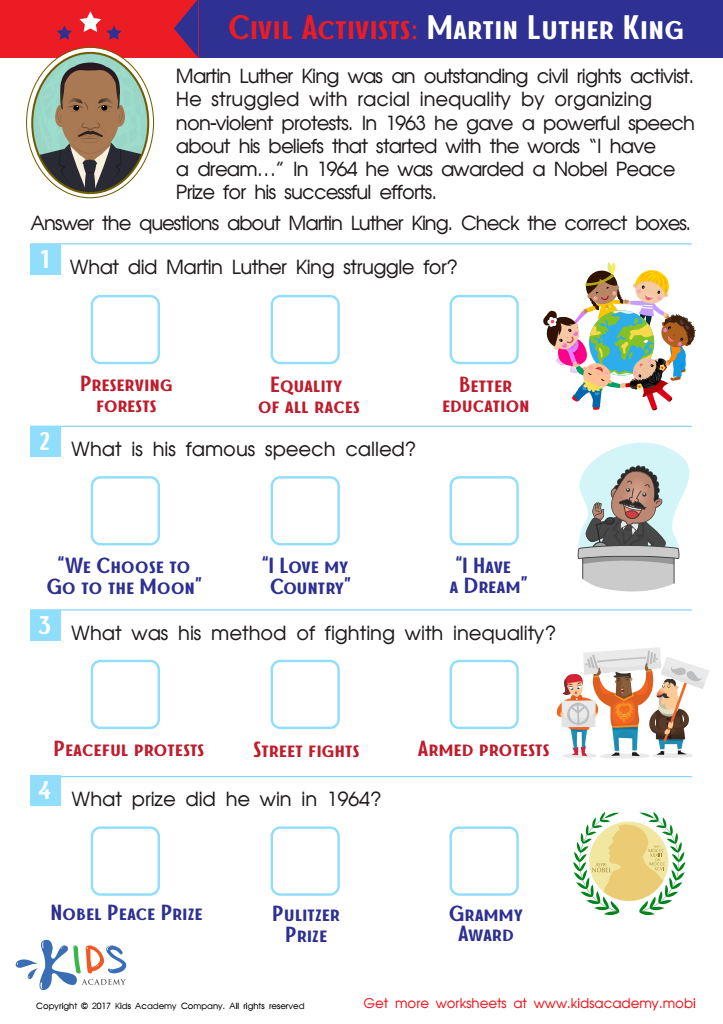
Martin Luther King Worksheet
Introduce your 3rd grader to Martin Luther King Jr.! This worksheet will open their eyes to his impact on US history. Let them discover his life, learnings, and legacy with this informative activity.
Martin Luther King Worksheet
Worksheet
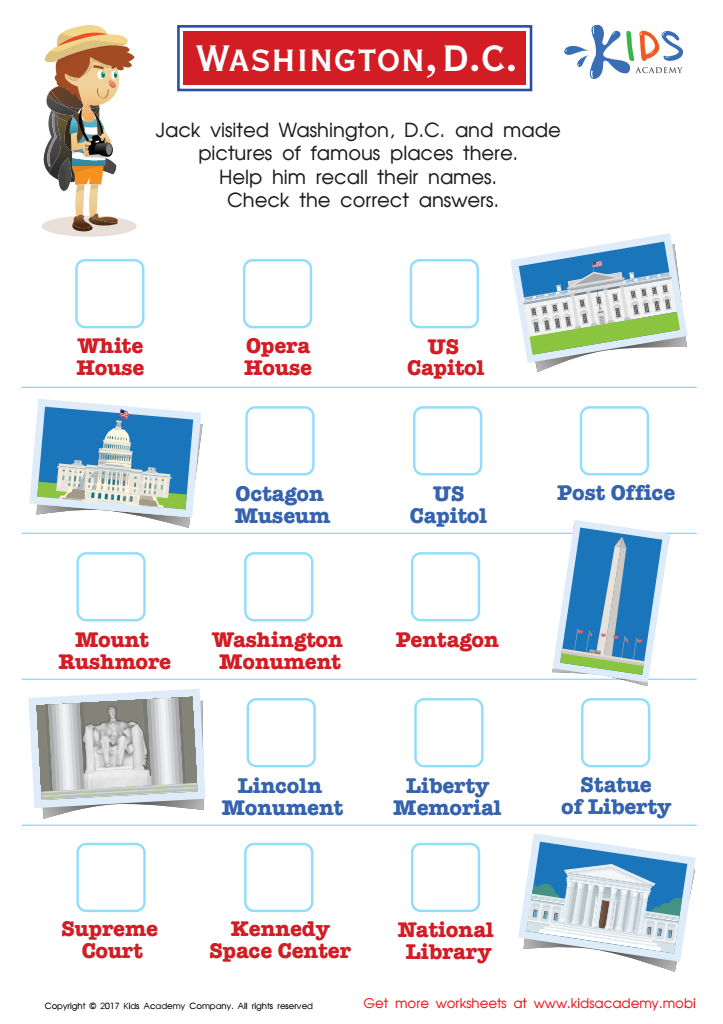
Washington D.C. Printable Worksheet
Join Jack on an adventure to explore the iconic attractions of Washington, D.C.! This printable worksheet helps kids learn about and recognize buildings and monuments that form part of the nation's history. It's a fun way to introduce children to the importance of these landmarks.
Washington D.C. Printable Worksheet
Worksheet
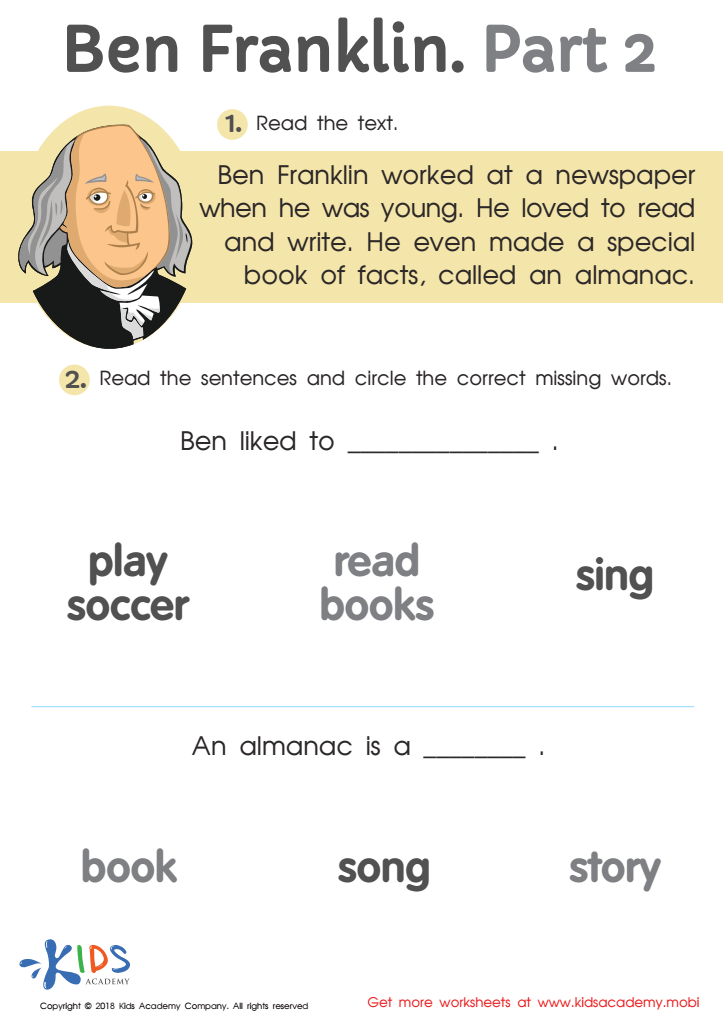
Ben Franklin Part 2 Worksheet
History is filled with great figures, like Benjamin Franklin. Let your kids in on the legacy by introducing them to the founder of the US fire department, diplomat, and inventor. Then, use a worksheet to have them fill in the blanks with the correct word to teach them more. Read the text, then read the sentences and have them circle the missing word.
Ben Franklin Part 2 Worksheet
Worksheet
Join Kids Academy for Free
Who is primarily going to use this learning content?


Parents and teachers should care about Historical Knowledge Governance and Civics for children aged 4-9 because these foundational topics shape young learners' understanding of the world and their role in it. At an early age, children develop core skills such as critical thinking, empathy, and decision-making. Introducing themes of history and civics encourages children to appreciate diverse perspectives, understand societal structures, and recognize their rights and responsibilities.
Nurturing historical awareness helps children grasp significant events and figures, fostering a sense of identity and community. Knowing the past equips them to analyze current events and societal issues more thoughtfully, instilling a sense of justice and fairness at a young age.
Civic education empowers children by promoting active citizenship, encouraging participation in age-appropriate community activities, and building skills like cooperation and leadership. It helps children recognize the importance of rules and laws, promoting respect for authority and responsibility.
Overall, instilling a strong knowledge of history and civic values early on fosters engaged, informed, and responsible citizens, preparing children not just for school, but for their role in society as they grow. Ultimately, it lays the groundwork for a more informed, compassionate, and active participating generation in their communities and the larger world.