Decision making skills Social Studies Worksheets for Ages 4-9
3 filtered results
Difficulty Level
Grade
Age
-
From - To
Subject
Activity
Standards
Discover our engaging "Decision Making Skills" Social Studies worksheets designed for children aged 4 to 9. These age-appropriate resources help young learners develop critical thinking and reasoning abilities through fun activities and relatable scenarios. Our worksheets encourage kids to explore choices, understand consequences, and make informed decisions, all while fostering social awareness. Ideal for classroom use or at-home learning, these interactive worksheets promote essential skills that contribute to personal growth and responsibility. Dive into our collection today and empower your child to become a confident decision-maker in various situations! Learning has never been so enjoyable!
Favorites
With answer key
Interactive
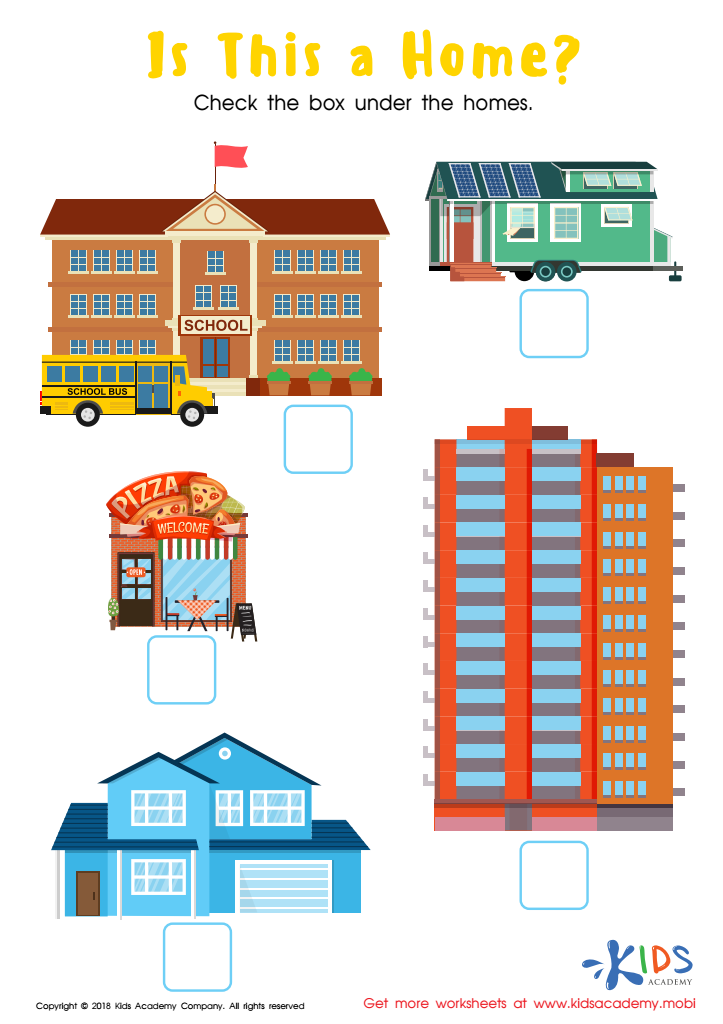
Is this a Home? Worksheet
Ask your child what the building you live in is called. Is it a home, restaurant or hospital? Then look at the pictures in the worksheet and ask them to identify which are homes - even if they don't look like yours. Check the box next to the homes in the pictures.
 Assign to My Students
Is this a Home? Worksheet
Worksheet
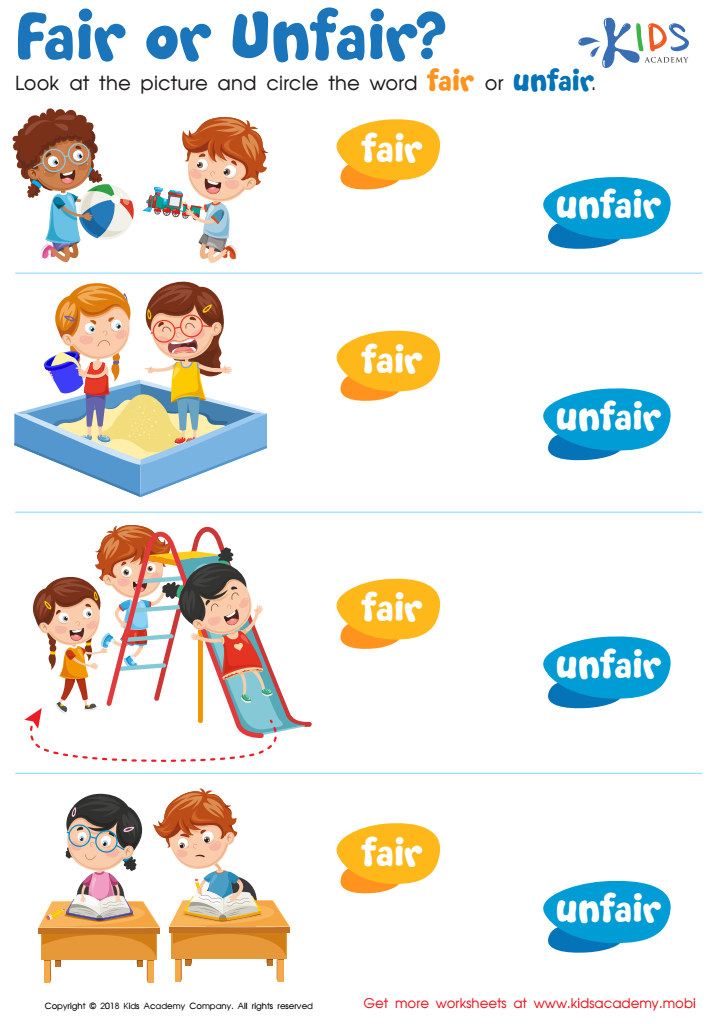
Fair or Unfair Worksheet
Look at the pictures in this worksheet with kids. Can they tell if the actions are fair or unfair? Help them decide and circle the appropriate option. When something causes harm to one person, it is unfair; when all parties benefit, it is fair.
Fair or Unfair Worksheet
Worksheet

Towns Worksheet
Towns are generally quiet and safe, making them attractive for young families. Cities have more people, businesses and tall buildings. Roads are busy, and there is often plenty to do and see. Help your kids check which pictures in this worksheet show towns.
Towns Worksheet
Worksheet
Join Kids Academy for Free
Who is primarily going to use this learning content?








Decision-making skills are crucial for children aged 4-9, and both parents and teachers play a vital role in nurturing these abilities. In the context of Social Studies, decision-making enables young students to navigate their social world more effectively. Through engaging with concepts such as community, diversity, and responsible citizenship, children learn to evaluate options and foresee consequences, preparing them for future interactions and responsibilities.
By fostering critical thinking and problem-solving skills, children become more adept at making informed choices that reflect understanding and empathy towards others. This is particularly important at a young age, as developing these skills early lays the groundwork for better decisions in adolescence and adulthood.
Moreover, teaching decision-making within Social Studies encourages teamwork and collaboration, enabling children to appreciate different perspectives and respect individual differences. It cultivates their ability to communicate their thoughts while also considering the feelings and opinions of others. Consequently, children become better equipped to handle conflicts and challenges they face in an increasingly complex world. Ultimately, parents and teachers should prioritize decision-making skills in Social Studies to help children grow into thoughtful, responsible individuals who can contribute positively to society.