Developing critical thinking Social Studies Worksheets for Ages 4-9
3 filtered results
-
From - To
Enhance your child's intellect with our expertly crafted Social Studies worksheets designed for ages 4-9. These resources aim to foster critical thinking by engaging young learners in fun, educational activities that stimulate their curiosity and reasoning skills. Each worksheet promotes interactive learning, helping children to analyze information, solve problems, and make informed decisions. Tailored to align with educational standards, our materials assist in the development of key skills essential for academic success. Foster your child's critical thinking abilities and cultivate a passion for discovery with our innovative Social Studies printables that make learning an exciting adventure.
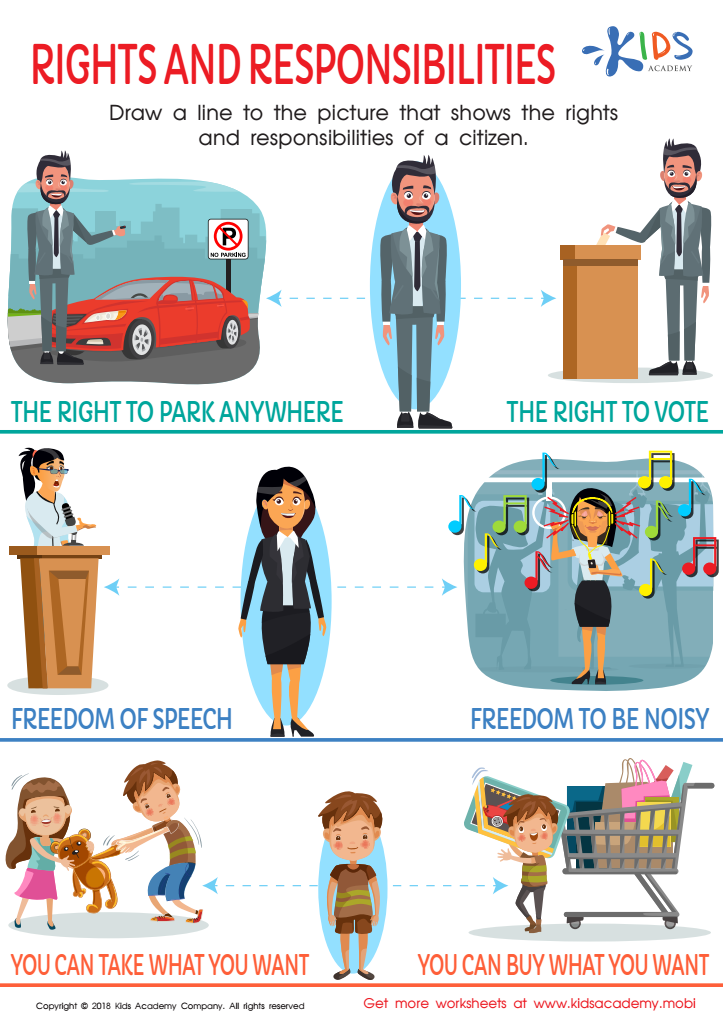
Rights and Responsibilities Worksheet
 Assign to My Students
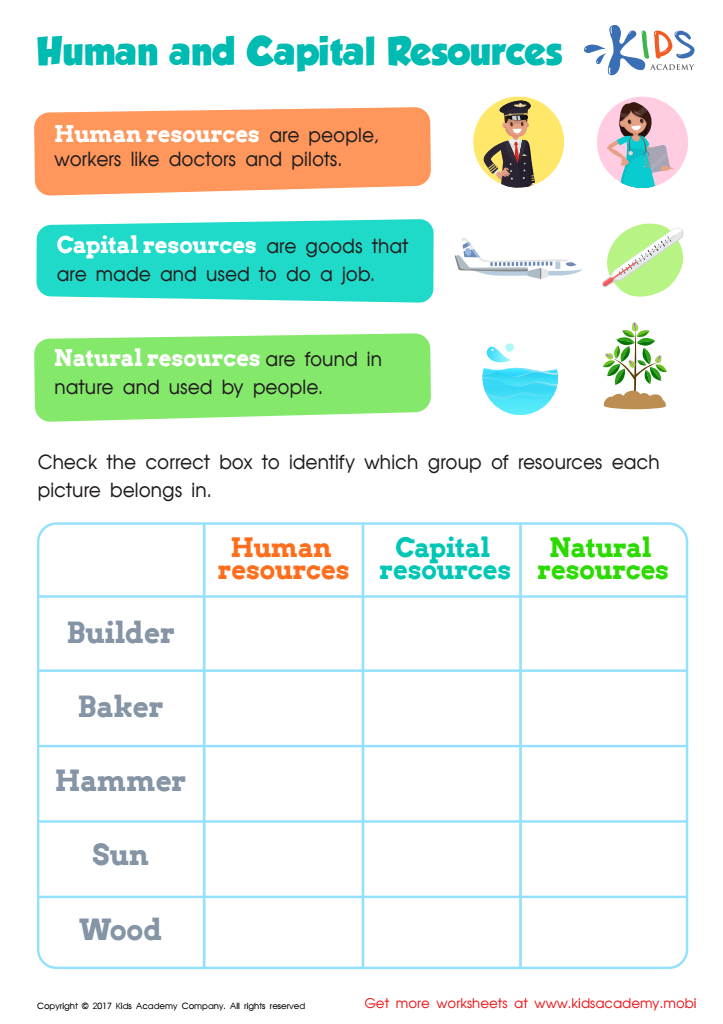
Human and Capital Resources Worksheet
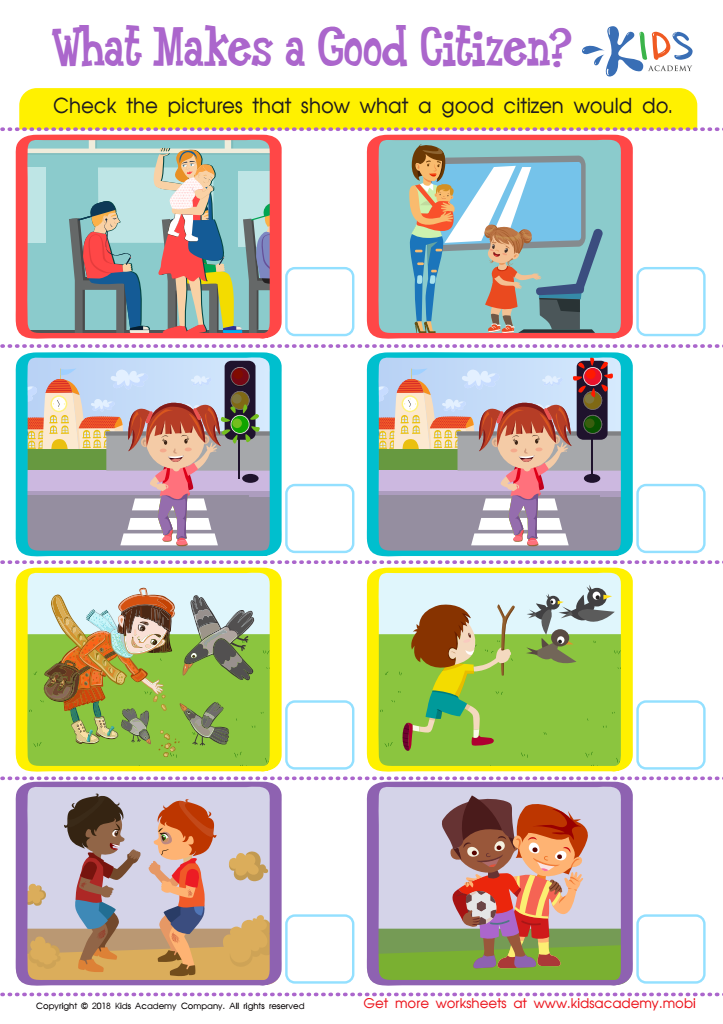
What Makes a Good Citizen? Worksheet








Developing critical thinking skills in social studies for children aged 4-9 is crucial for several reasons. First, critical thinking empowers young learners to analyze, evaluate, and interpret information, enabling them to understand and make sense of the world around them. In social studies, this means grasping basic concepts of history, geography, and societal norms, which fosters a more informed and empathetic worldview.
Introducing these skills at an early age helps to create a foundation for lifelong learning and curiosity. When children learn to ask questions and think deeply about social situations, they become more adept at solving problems and making reasoned decisions. These skills can translate to all areas of life, including academics, personal relationships, and future careers.
Moreover, developing critical thinking in social studies encourages children to appreciate diversity and understand multiple perspectives. They begin to recognize the value in different cultures and viewpoints, promoting inclusivity and tolerance.
Finally, fostering these skills early helps children to become engaged citizens. Understanding basic social and civic concepts enables them to participate meaningfully in their communities as they grow. For example, they learn to appreciate democratic principles, the importance of community involvement, and the impact of their actions on others.
In sum, investing in critical thinking through social studies for young children lays the groundwork for well-rounded, thoughtful, and engaged individuals. Teaching these skills early is integral for their personal and societal development.








