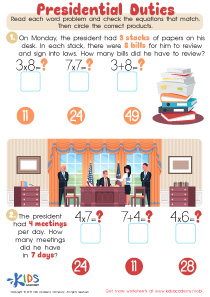
Multiplication practice Social Studies Worksheets for Ages 4-9
9 filtered results
-
From - To
Unlock your child's potential with our "Multiplication Practice Social Studies Worksheets" designed for ages 4-9. Combining foundational math skills with engaging social studies content, these worksheets provide a unique, educational experience. Kids will be captivated by fun, colorful activities that promote critical thinking and problem-solving, making learning both informative and exciting. Our expertly crafted resources help kids practice multiplication while exploring various social studies topics. Ideal for young learners, teachers, and parents, these worksheets enhance learning at home or in the classroom. Start your child's journey towards academic success today with our innovative, enjoyable, and educational resources.
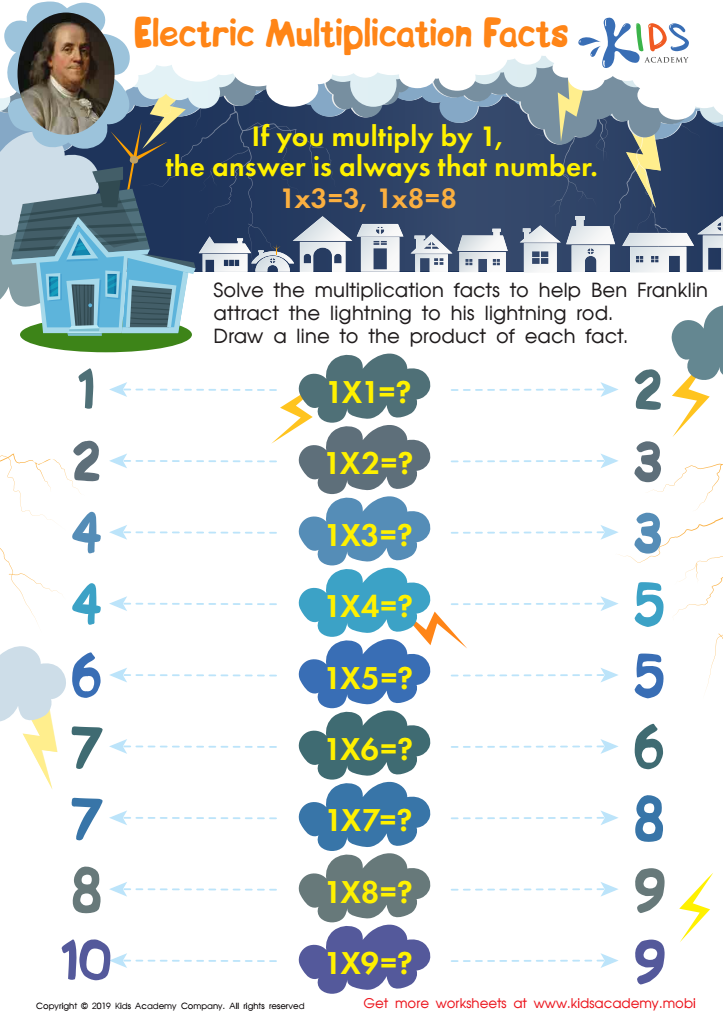
Electric Multiplication Facts Worksheet
 Assign to My Students
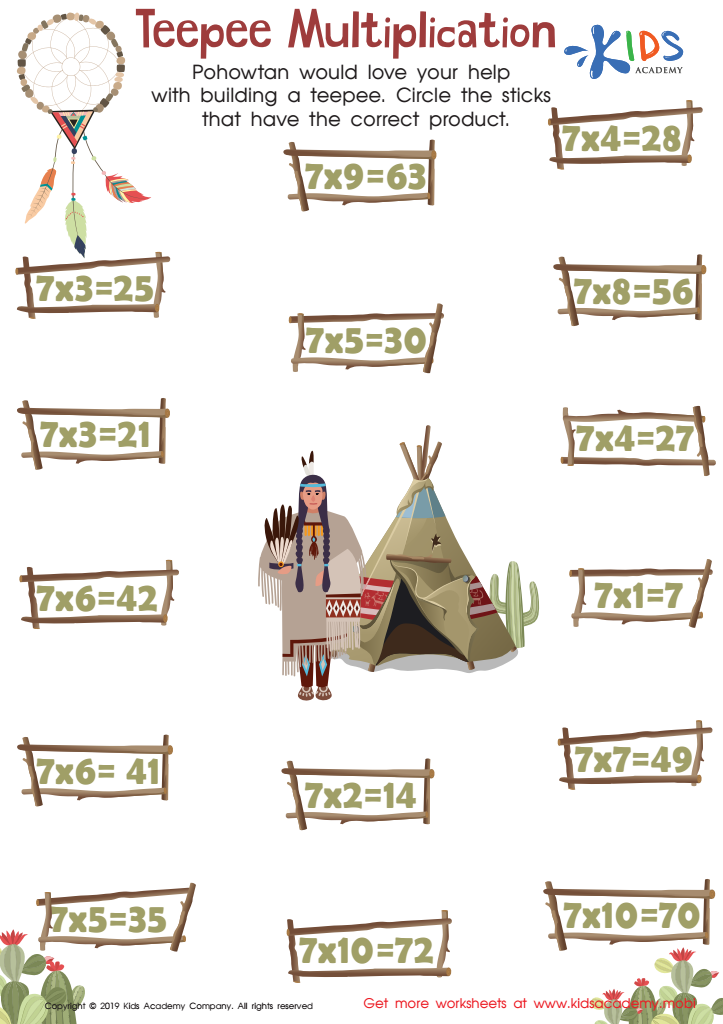
Teepee Multiplication Worksheet
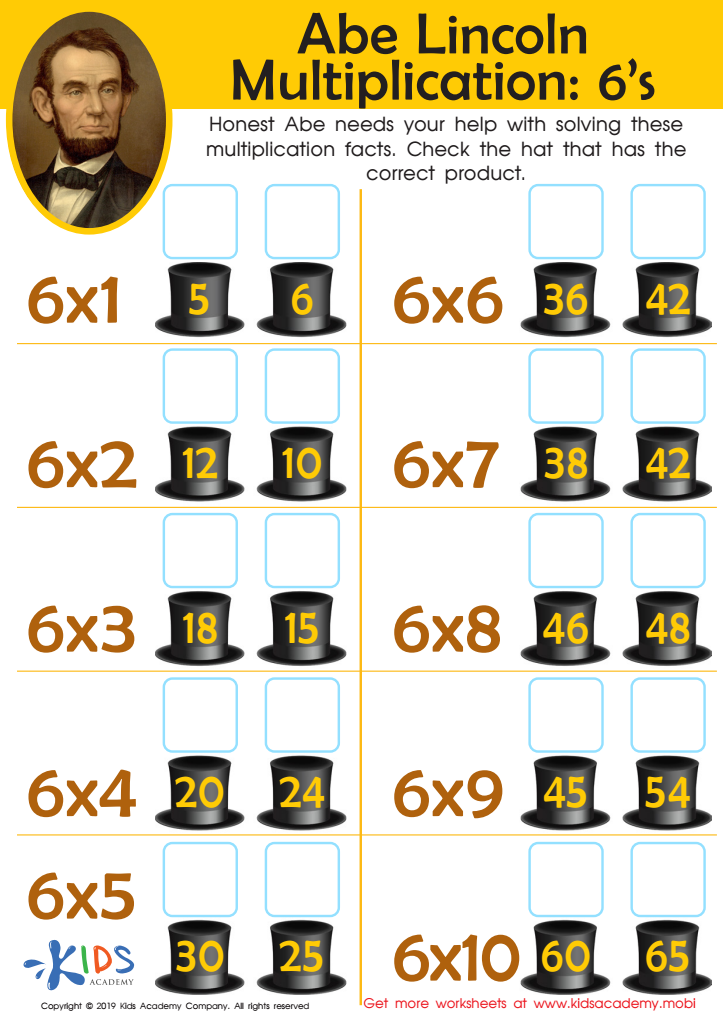
Abe Lincoln Multiplication: 6’s Worksheet
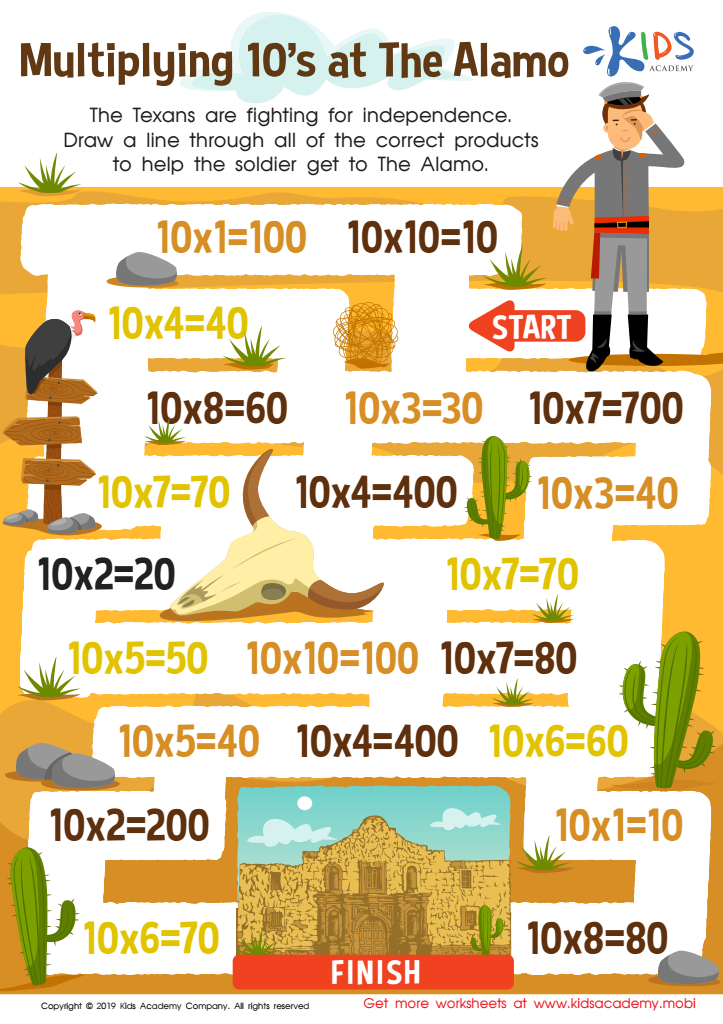
Multiplying 10’s at The Alamo Worksheet
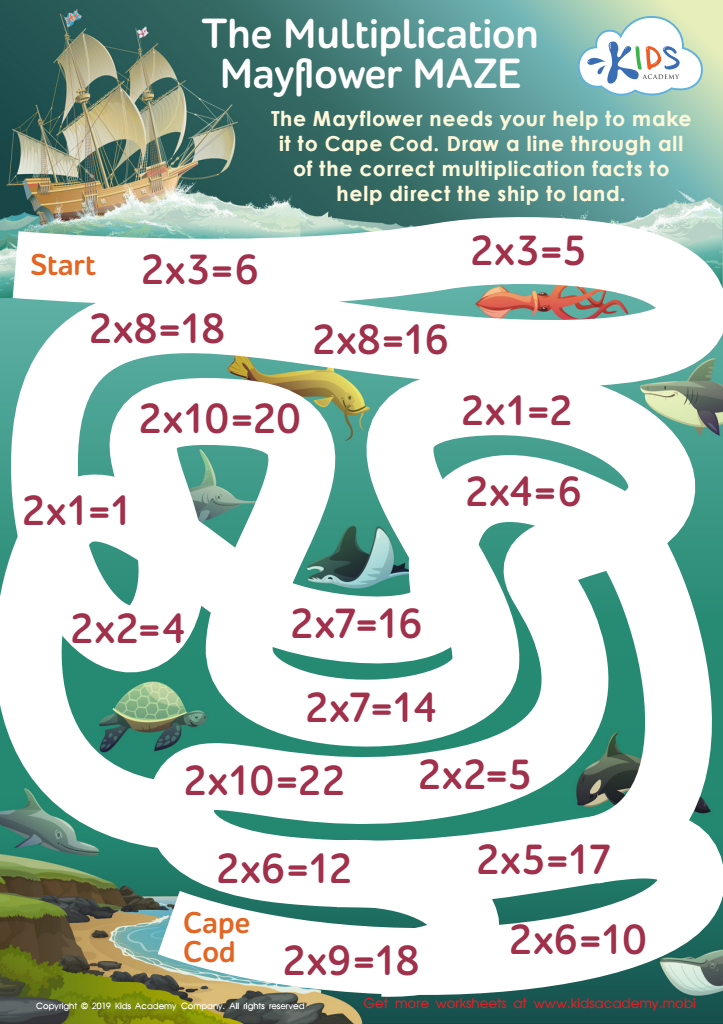
The Multiplication Mayflower Maze Worksheet
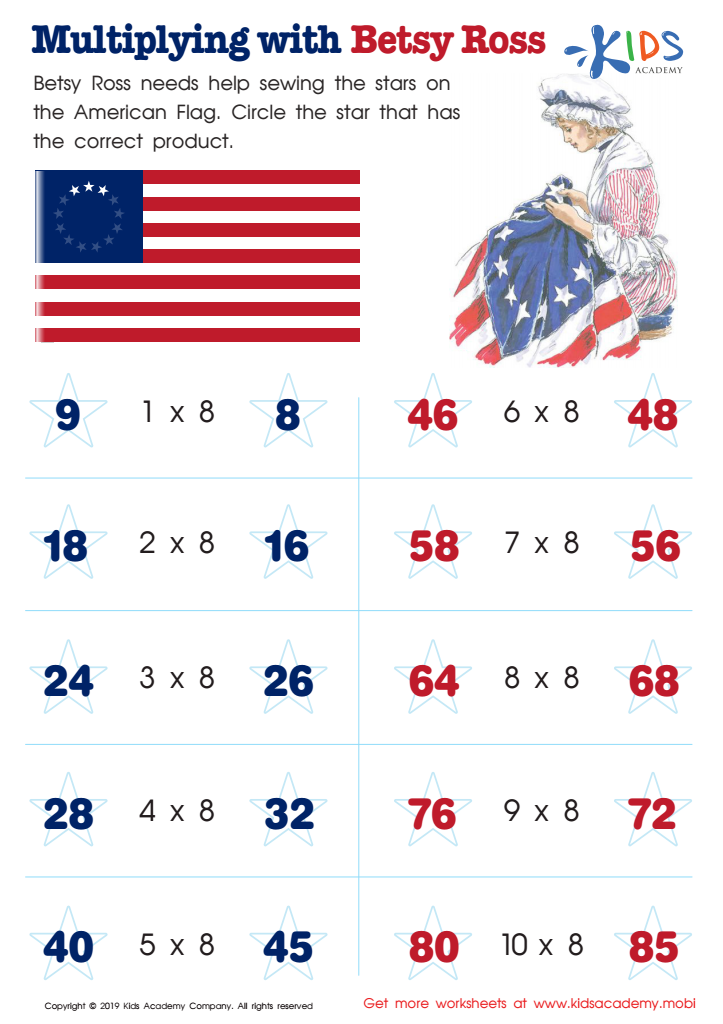
Multiplying with Betsy Ross Worksheet
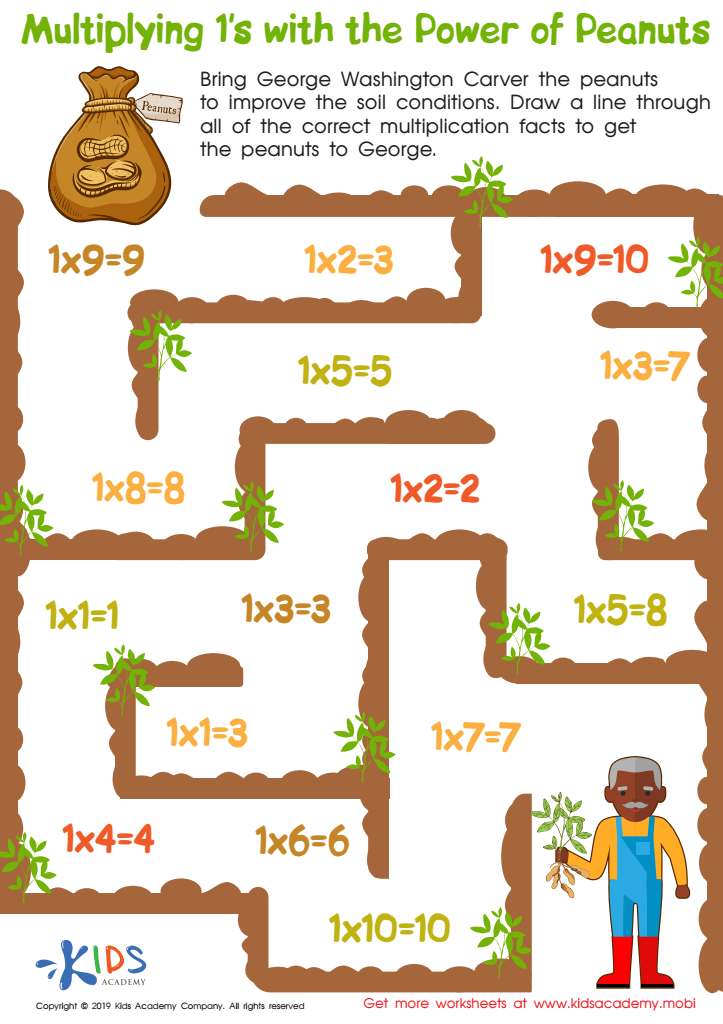
Multiplying 1’s With the Power of Peanuts Worksheet
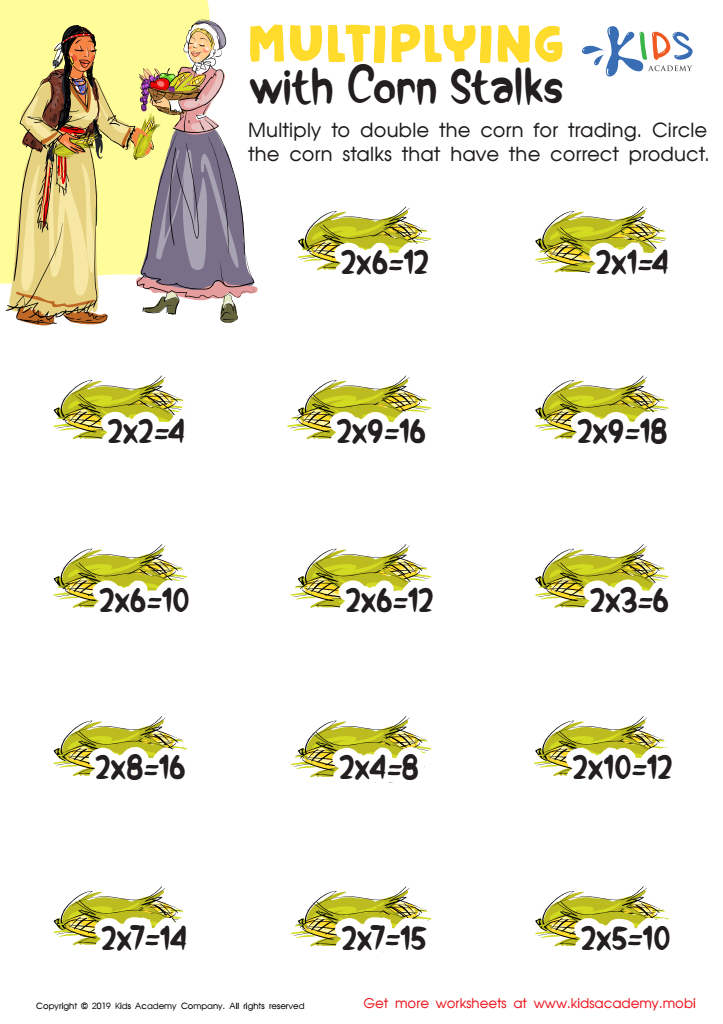
Multiplying With Corn Stalks Worksheet
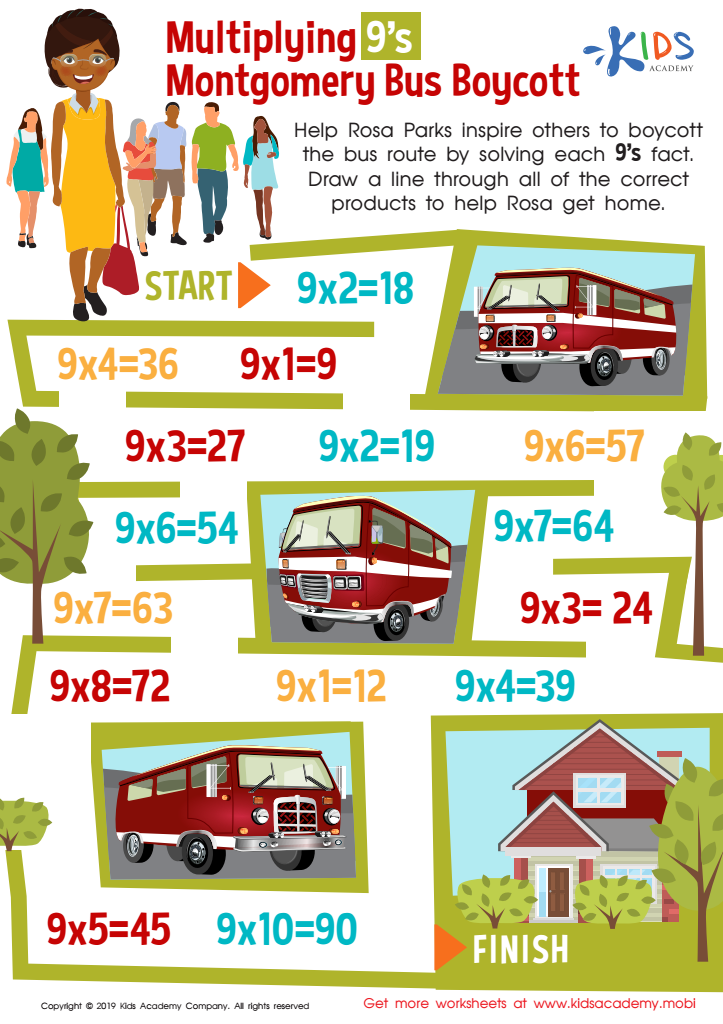
Multiplying 9’s Montgomery Bus Boycott Worksheet







Parents and teachers should prioritize incorporating multiplication practice and social studies into the education of young children (ages 4-9) because these foundational skills foster essential cognitive and social development. Multiplication practice at an early stage builds crucial arithmetic skills, trains logical thought processes, and establishes a solid mathematical foundation essential for future academic success. Grasping multiplication concepts early aids in problem-solving, enhances memory skills, and instills confidence in tackling more complex math topics later on.
Equally essential, social studies education for young learners lays the groundwork for understanding the world around them. It introduces fundamental concepts of history, geography, civics, and cultures, essential for fostering informed and engaged citizens. By learning about diverse cultures, historical events, and societal systems, children develop critical thinking, empathy, and an appreciation for diversity. Social studies also teach valuable attitudes such as cooperation, responsibility, and respect for others, promoting better social behavior and civic participation.
Combining multiplication practice with engaging social studies projects can create a holistic learning experience. Fun activities such as counting objects from different cultures or solving historical puzzles involving numbers integrate mathematical and social knowledge seamlessly. Together, these subjects cultivate well-rounded, socially aware, and intellectually equipped youngsters prepared for lifelong learning.