Understanding democracy Social Studies Worksheets for Ages 4-9
3 filtered results
-
From - To
Discover the engaging world of democracy with our "Understanding Democracy" Social Studies Worksheets, designed specifically for children ages 4 to 9. These interactive and age-appropriate worksheets introduce young learners to essential democratic concepts such as fairness, voting, and community involvement. Through fun activities and insightful questions, children will develop critical thinking skills and a deeper understanding of how democracy shapes their lives. Ideal for classroom use or at home, our thoughtfully crafted worksheets encourage curiosity and discussion about civic responsibility. Equip your little ones with the knowledge they need to become active, informed citizens in their communities. Start exploring today!
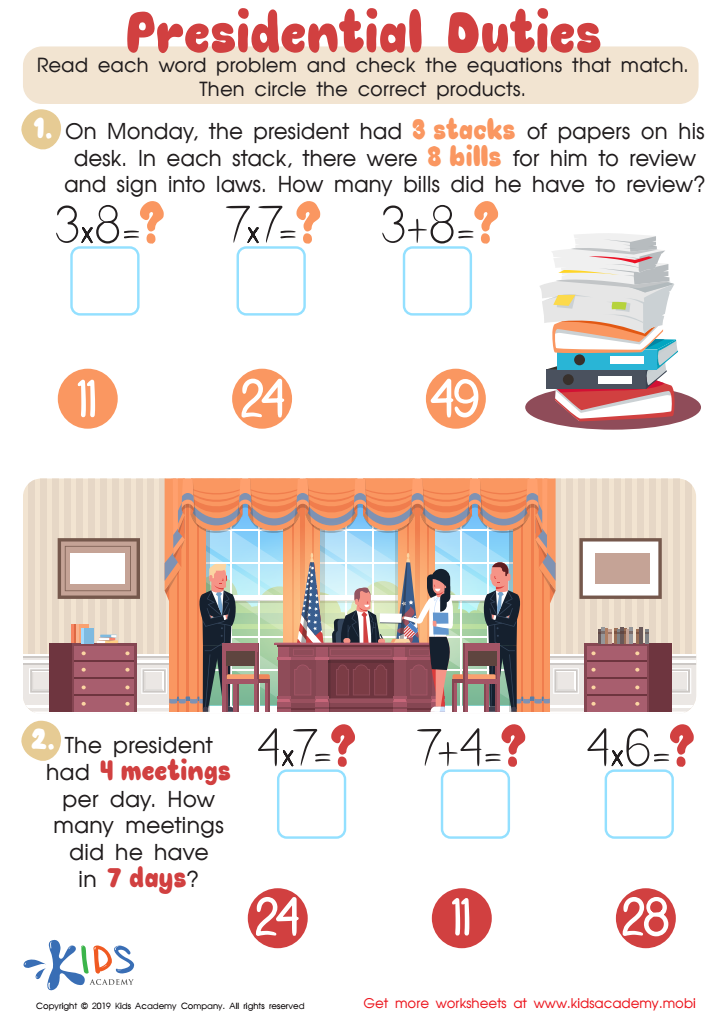
Presidential Duties Worksheet
 Assign to My Students
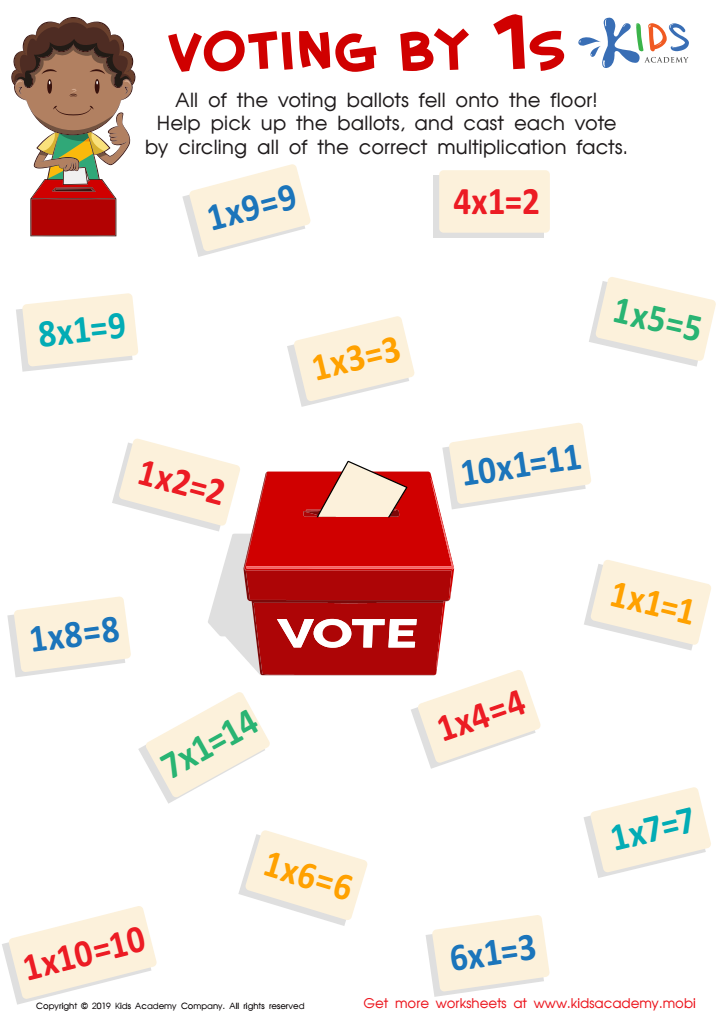
Voting by 1s Worksheet
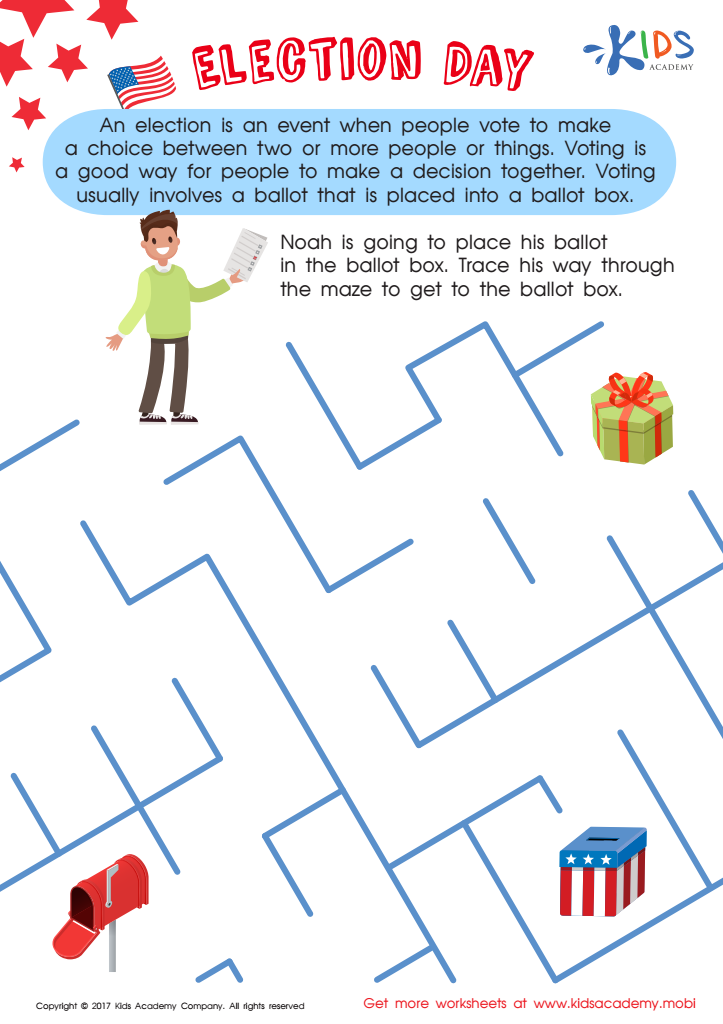
Election Day Worksheet








Understanding democracy is vital for children aged 4-9 as it lays the foundation for responsible citizenship and promotes values like cooperation, equality, and respect for others. Teaching young learners about democracy empowers them to actively participate in their communities and understand the importance of their voices. This age group is particularly receptive to concepts like fairness and sharing, making it an ideal time to introduce fundamental democratic principles.
Parents and teachers play a crucial role in this learning process. By discussing decision-making, leadership, and the significance of rules, adults help children grasp how democracy functions in daily life and within their communities. Engaging in age-appropriate activities, such as classroom elections or discussing diverse perspectives, fosters critical thinking and empathy.
Moreover, instilling democratic values in early education encourages social skills and emotional intelligence, creating a more harmonious learning environment. Children who learn about democracy are not only more likely to become informed and active citizens but also develop a strong sense of justice and responsibility. Ultimately, understanding democracy from an early age equips children with the tools they need to navigate the complexities of society, ensuring they grow into engaged and mindful participants in their communities.








