English grammar practice Grammar Worksheets for Ages 4-9
3 filtered results
-
From - To
Discover our comprehensive English grammar worksheets designed specifically for children ages 4-9. These engaging resources cover essential grammar topics such as punctuation, sentence structure, verb tense, and more, making learning enjoyable and effective. Each worksheet is crafted by education experts to match the needs of early learners, with vibrant illustrations and fun activities. Whether for classroom use or at-home practice, our worksheets help young students build a solid foundation in grammar, boosting their confidence and academic skills. Visit Kids Academy today to explore our wide range of printable worksheets and support your child's English language journey!
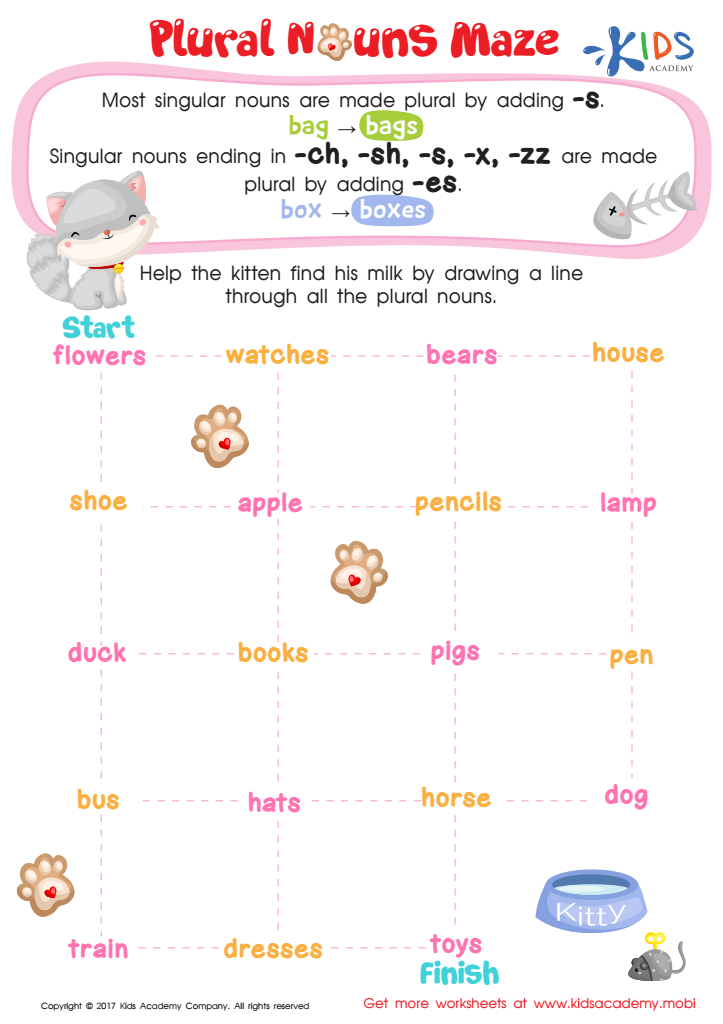
Plural Nouns Maze Worksheet
 Assign to My Students
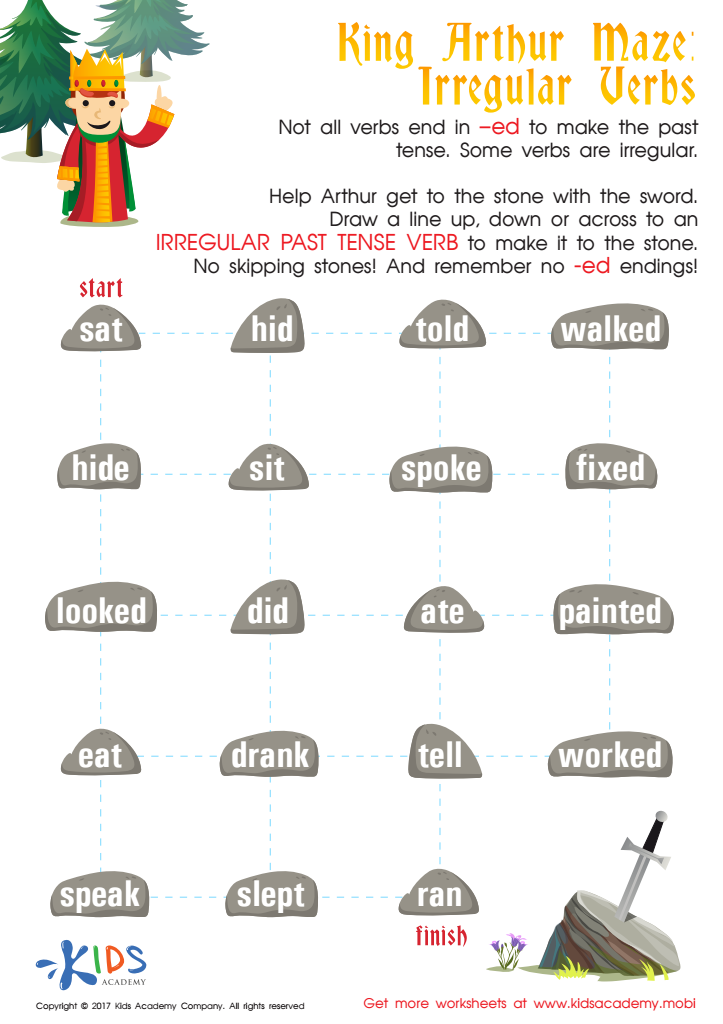
Irregular Verbs: Stones Worksheet
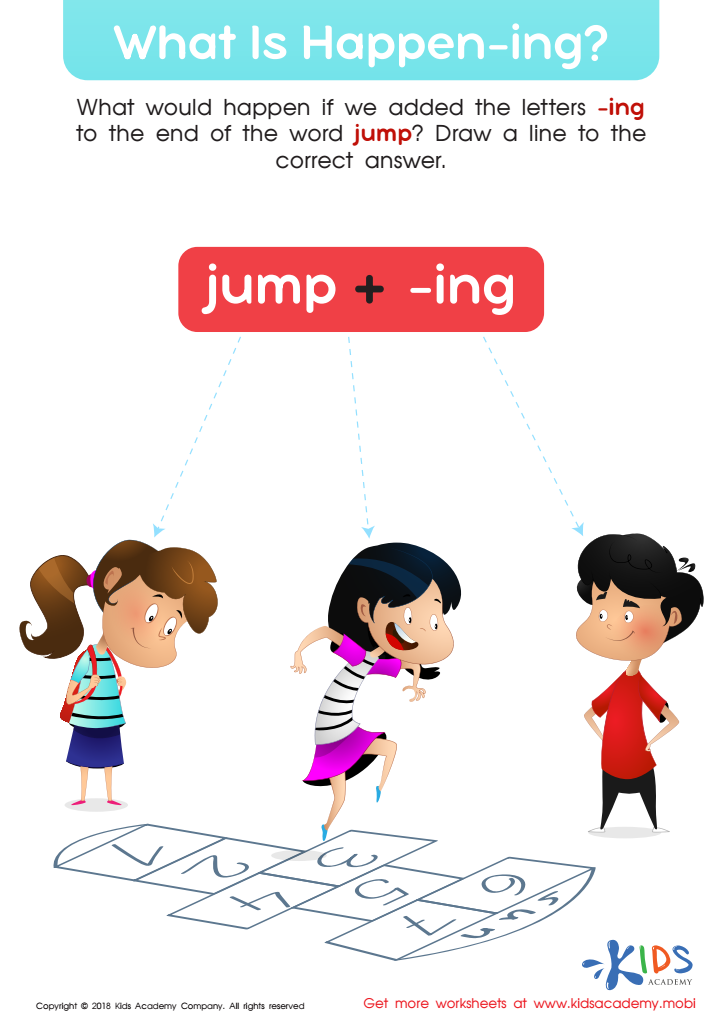
What Is Happen-Ing? Worksheet







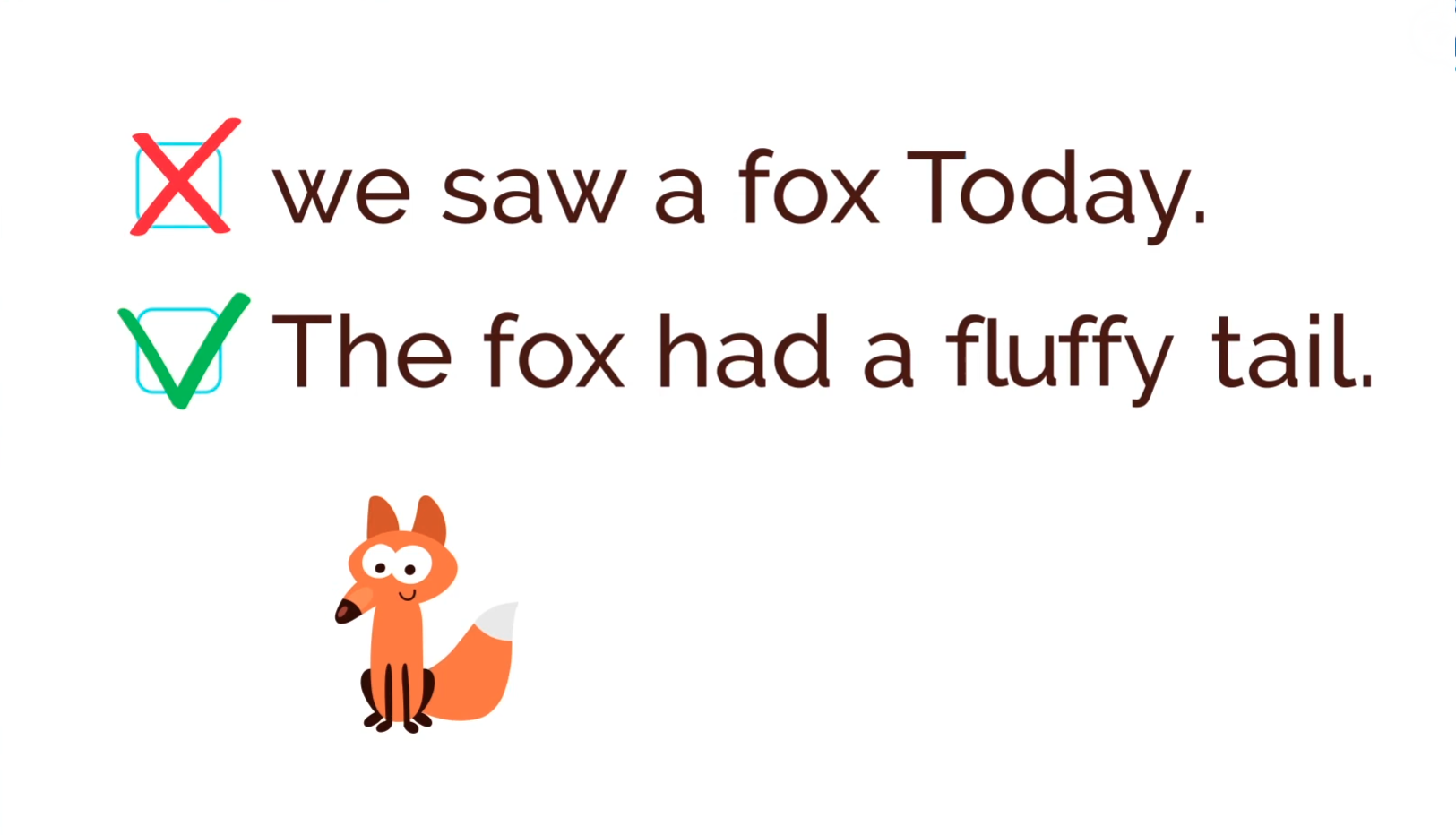
Ensuring that children aged 4-9 engage in English grammar practice is fundamental for their linguistic and cognitive development. At this early stage, young brains are highly adaptable and receptive, making it an optimal period for grasping the foundational aspects of language. Proper grammar education not only enhances their ability to communicate clearly and effectively but also fosters better reading comprehension. When children understand the structure of sentences, they can more easily decode written texts, which is vital as they progress through their educational journey.
Moreover, good grammar skills are closely tied to improved critical thinking and analytical abilities. As children learn to construct sentences correctly, they are simultaneously learning to organize their thoughts more logically. This mental discipline can translate into stronger performance in other academic areas, including mathematics and science.
For parents and teachers, fostering a strong grammatical foundation also has social benefits. Clear communication boosts a child's confidence and aids in the development of social interactions. It equips them with the necessary tools to express their needs, emotions, and ideas effectively, reducing frustration and misunderstandings. Investing in grammar at this early age lays the groundwork for lifelong literacy and communication skills, thus making it a crucial component of early education.








