
Phonics recognition Grammar Worksheets for Ages 4-9
5 filtered results
Difficulty Level
Grade
Age
-
From - To
Subject
Activity
Standards
Unlock the power of literacy with our Phonics Recognition Grammar Worksheets designed specifically for children ages 4-9! These fun and engaging worksheets enhance phonics skills through interactive activities that help young learners recognize sounds, blend words, and understand basic grammar concepts. With colorful illustrations and age-appropriate exercises, students will develop essential reading and writing abilities while having fun. Perfect for home or classroom use, our worksheets cater to diverse learning styles, making it easy to tailor instruction to each child's needs. Empower your little ones with the foundational skills necessary for successful communication—explore our Phonics Recognition Grammar Worksheets today!
Favorites
With answer key
Interactive
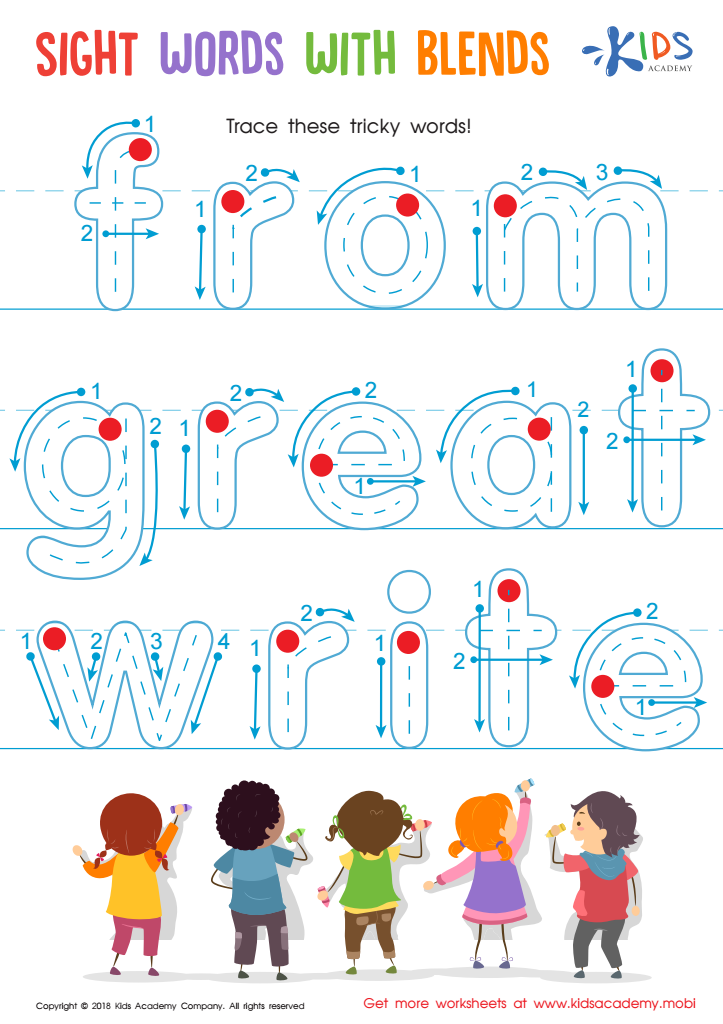
Sight Words with Blends Worksheet
This free PDF lets your children trace and write sight words with tricky blends. The guide numbers help them start from the top, building fine motor skills and enhancing sight word vocab. It's a great way to give your kids a solid foundation for reading!
 Assign to My Students
Sight Words with Blends Worksheet
Worksheet
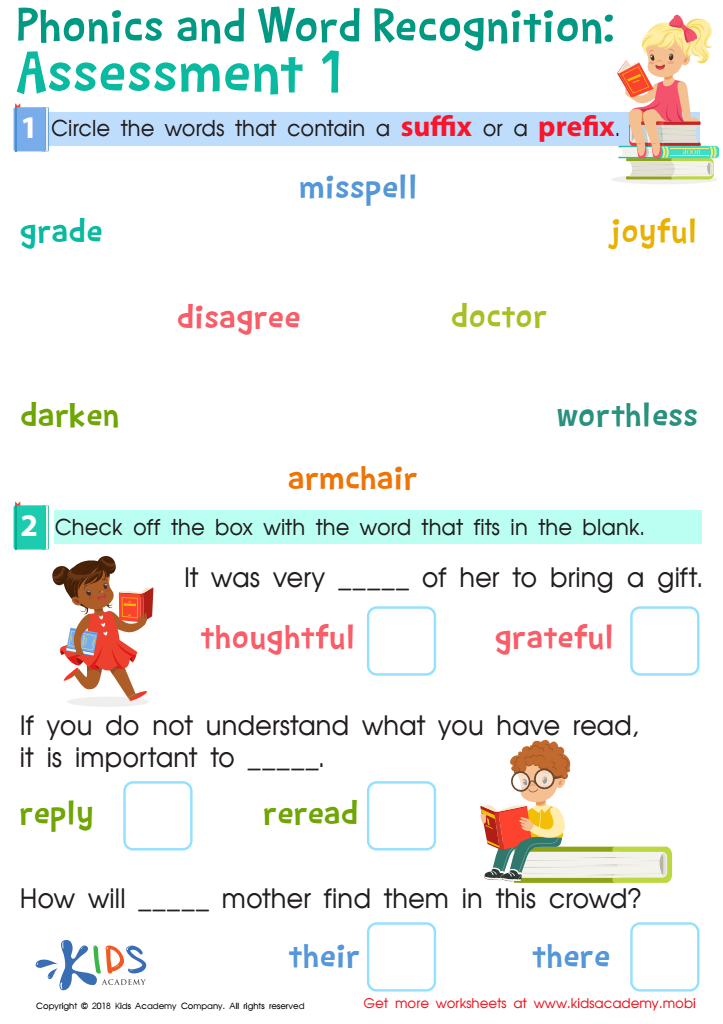
Phonics and Word Recognition: Assessment 1 Worksheet
Explain prefixes (words added to start of another word to give it a new meaning) and suffixes (added to end of word to change its meaning) to your kids with examples like 'unhappy' (prefix) and 'forgetful' (suffix). Now, help your child complete this worksheet, including circling words and checking boxes.
Phonics and Word Recognition: Assessment 1 Worksheet
Worksheet
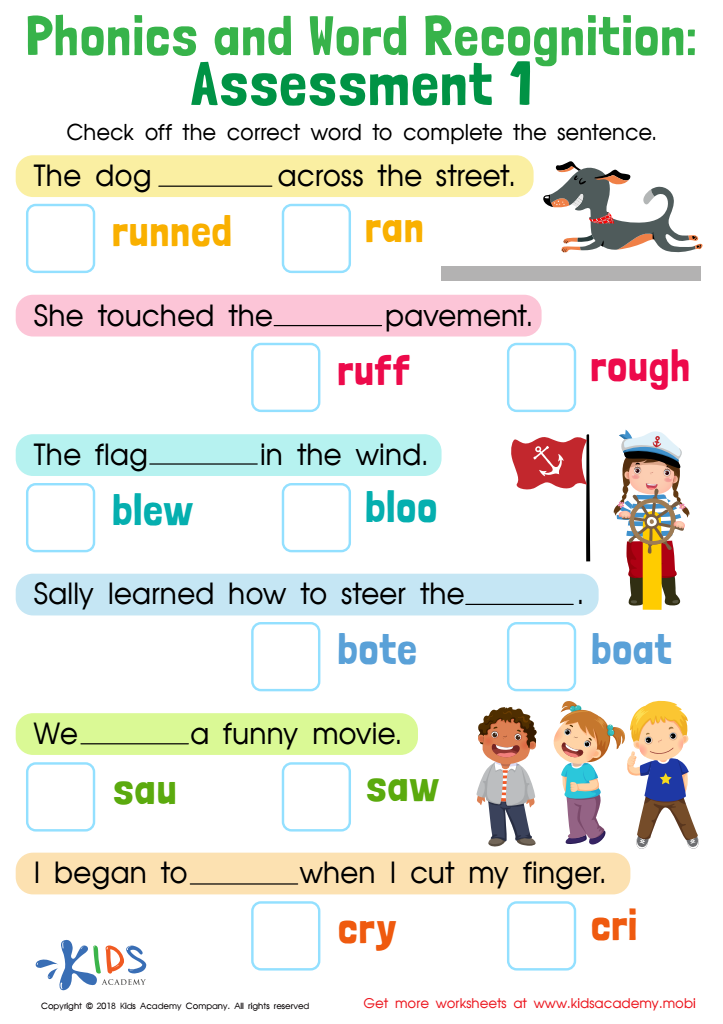
Phonics and Word Recognition: Assessment 1 Worksheet
This worksheet tests phonetics and word recognition. Students should be familiar with past tense verbs. Read incomplete sentences, then read multiple options and help students select the correct one.
Phonics and Word Recognition: Assessment 1 Worksheet
Worksheet
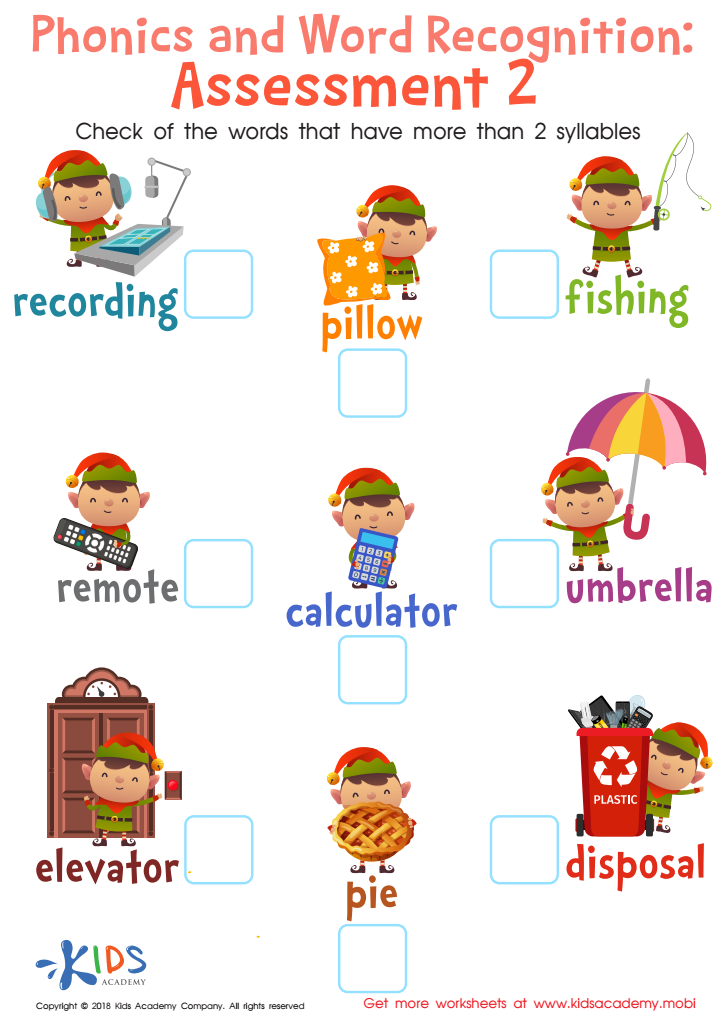
Phonics and Word Recognition: Assessment 2 Worksheet
Help your kids learn proper pronunciation by counting syllables. Most words they'll encounter have 1-3 syllables, making them simple to say. Have them repeat the words in your worksheet after you. Focus on longer words with more than two syllables.
Phonics and Word Recognition: Assessment 2 Worksheet
Worksheet
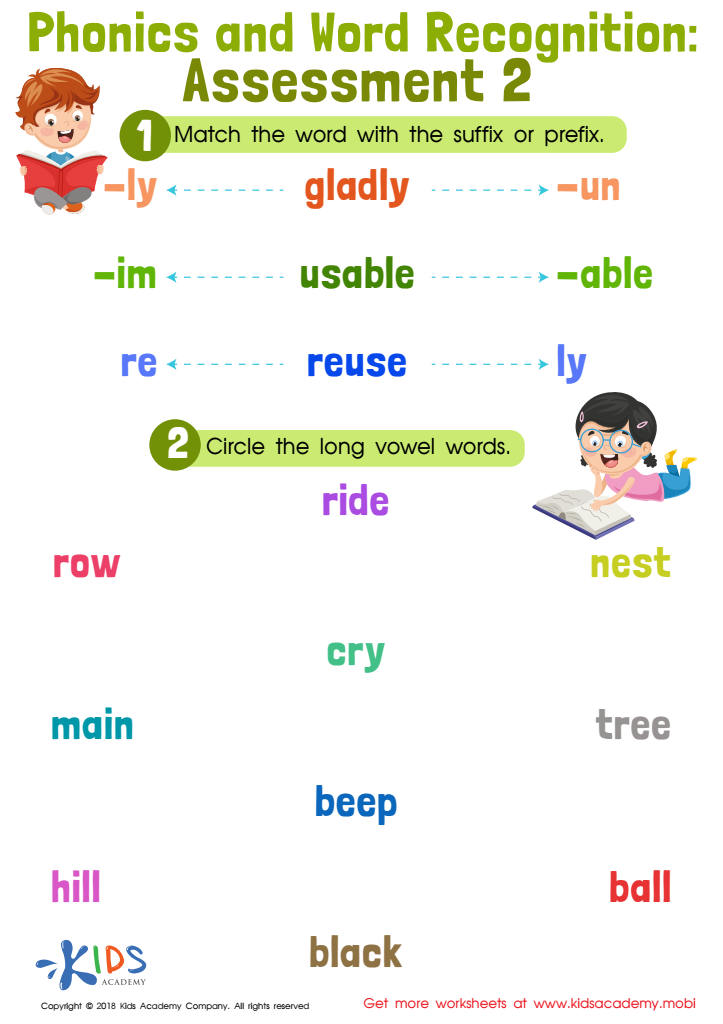
Phonics and Word Recognition: Assessment 2
Give kids common examples of suffixes and prefixes, such as "un-," "unhappy," "ness," "happyness." Ask them to match each word in the word recognition exercise to the correct suffix or prefix. Test phonetic understanding by having them circle the long vowel sounds.
Phonics and Word Recognition: Assessment 2
Worksheet
Join Kids Academy for Free
Who is primarily going to use this learning content?





.jpg)
Phonics recognition and grammar are fundamental building blocks of literacy for children ages 4-9. Understanding phonics enables students to decode words, fostering reading fluency and comprehension. By teaching children the relationship between letters and sounds, parents and teachers can equip them with the skills necessary for successful reading and spelling, essential components of academic achievement.
Grammar awareness further enhances children's ability to convey thoughts clearly and effectively. During this age range, students begin to form sentences and express their ideas, making grammar instruction important. Recognizing the structure of sentences and basic grammatical rules helps them communicate better, both in oral and written forms, reinforcing their confidence and competence in language use.
Moreover, early exposure to phonics and grammar lays the groundwork for future literacy skills. Children who master these concepts early on are more likely to become proficient readers and writers, positively impacting their educational journey. As reading influences all subject areas, strong phonics and grammar skills open doors for greater learning opportunities and academic success. For these reasons, prioritizing phonics recognition and grammar is crucial for parents and teachers nurturing young learners during these formative years.








