Contextual understanding Writing Worksheets for Ages 4-9
6 filtered results
-
From - To
Unlock your child's potential with our "Contextual Understanding Writing Worksheets" designed specifically for ages 4-9. These engaging worksheets enhance comprehension and writing skills by providing contexts that help children connect ideas and deepen their understanding of various topics. Each worksheet features age-appropriate prompts, encouraging creativity while reinforcing essential language skills. Our resources are aligned with early learning standards, making them perfect for home or classroom use. With a focus on fun and interactive learning, these worksheets create a supportive environment for young writers to express themselves. Explore our diverse collection and watch your child's confidence in writing flourish!
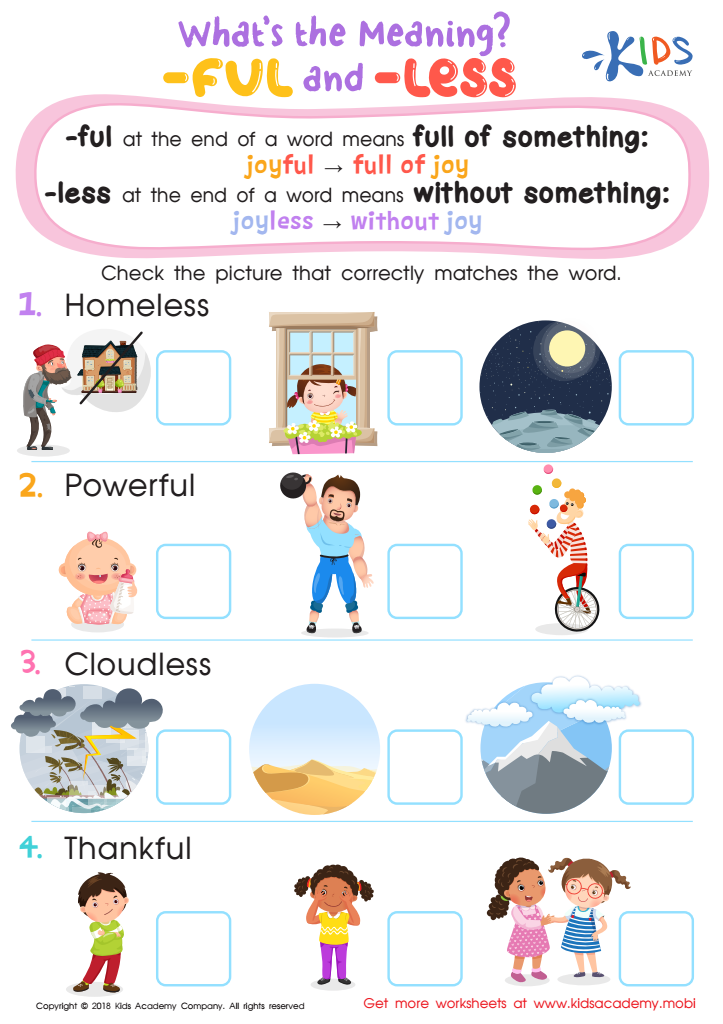
What's the Meaning? Worksheet
 Assign to My Students
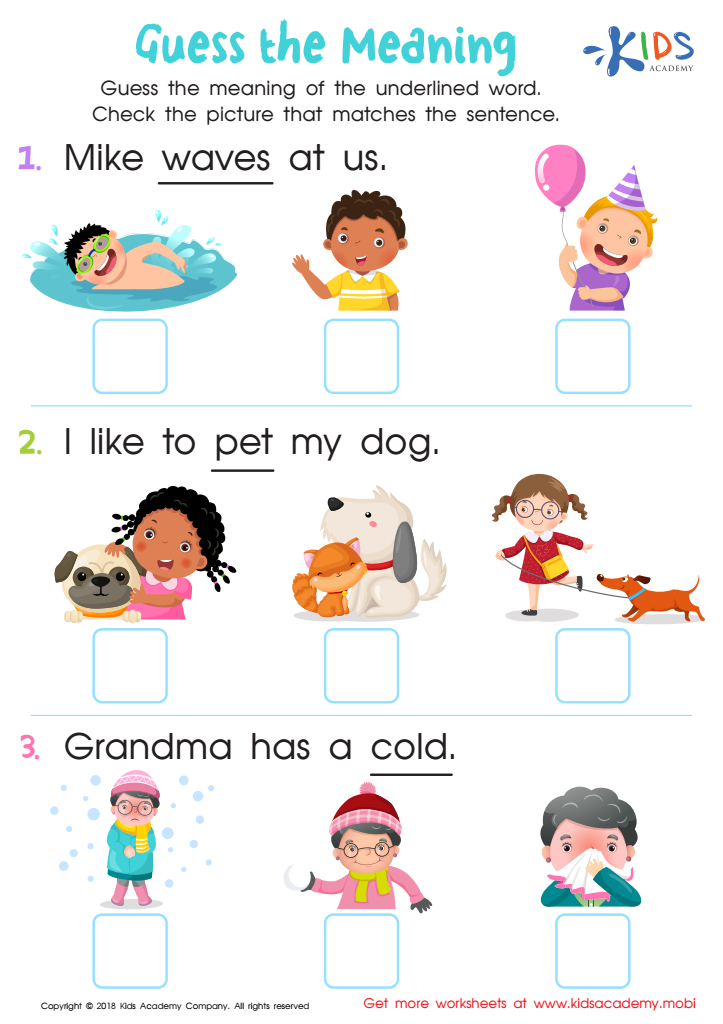
Guess the Meaning Worksheet
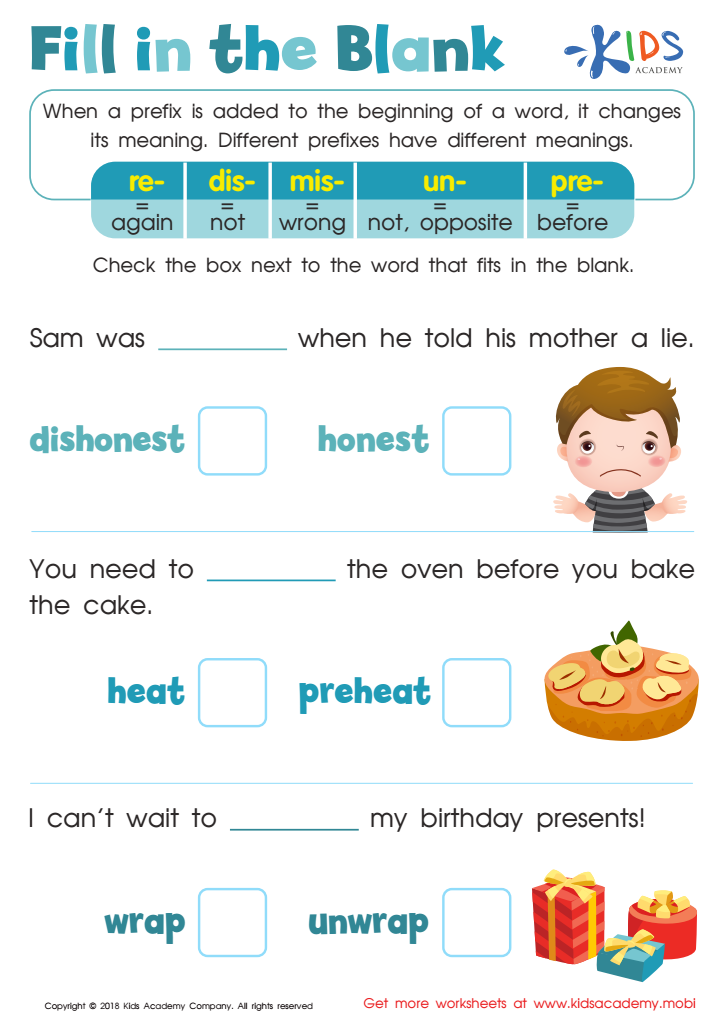
Reading: Fill in the Blank Worksheet
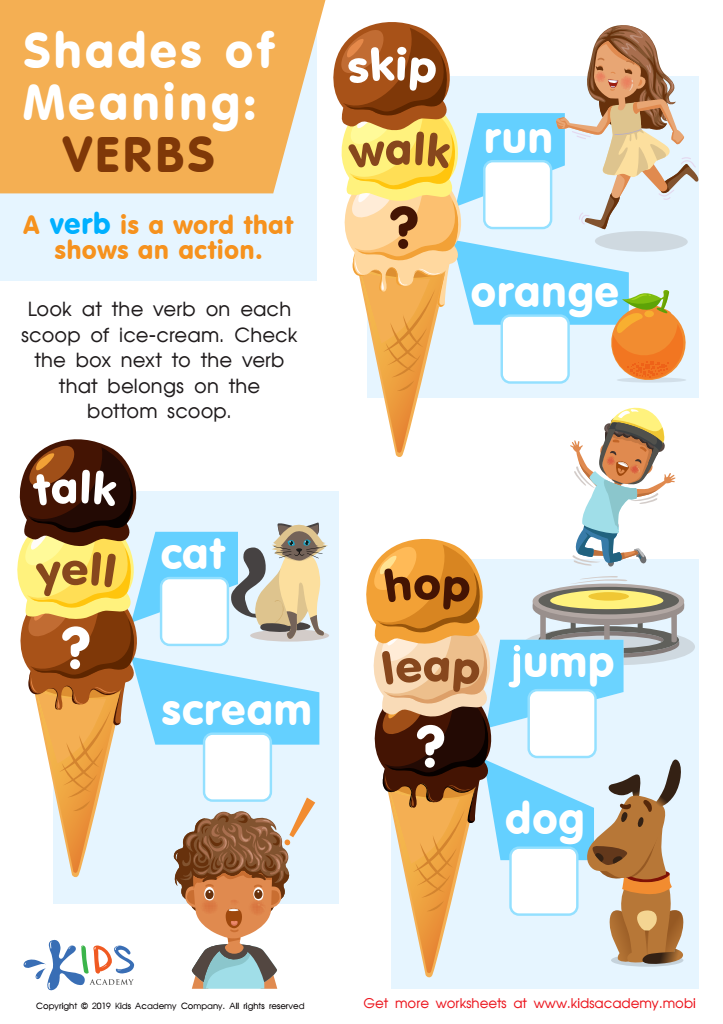
Shades of Meaning: Verbs Worksheet
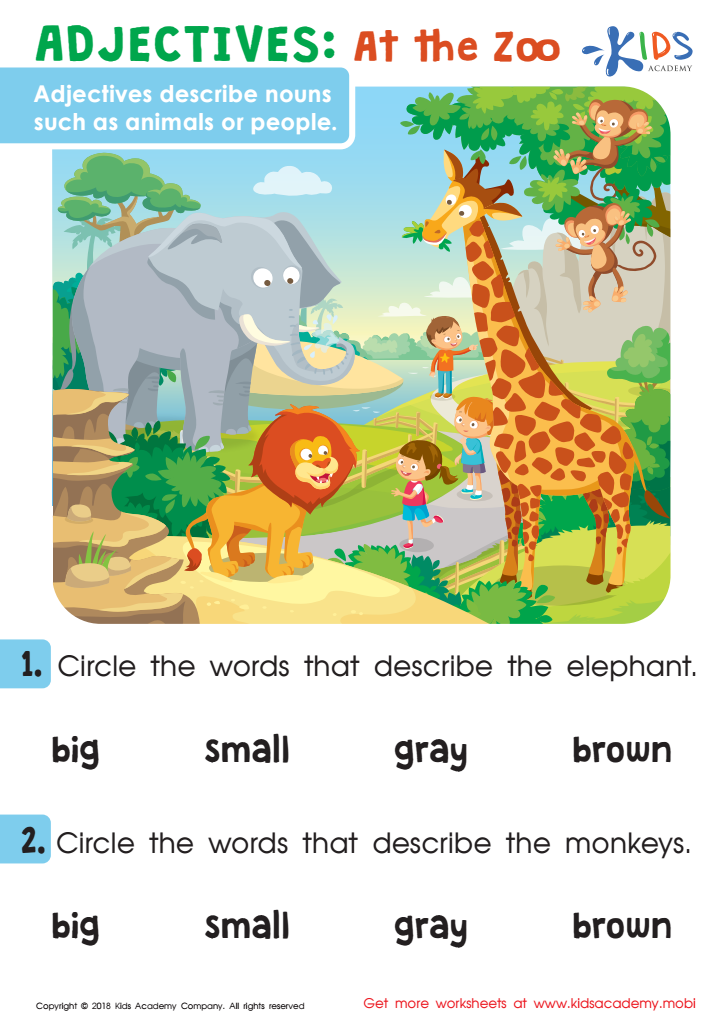
Adjectives: At The Zoo Worksheet
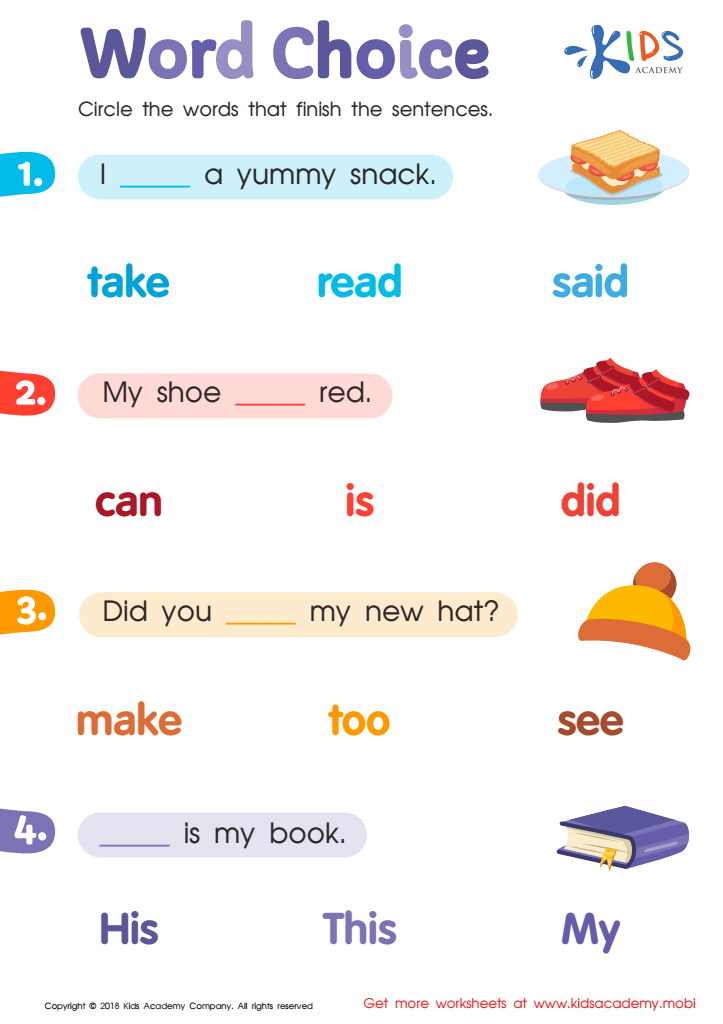
Word Choice Worksheet








Contextual understanding in writing is essential for children aged 4 to 9, as it concerns their ability to comprehend and convey meaning effectively within various situations. For parents and teachers, fostering this skill is crucial to developing young learners' literacy and critical thinking abilities. When children engage in contextual writing, they learn to connect their experiences and ideas to the world around them, enhancing their communication skills.
By encouraging contextual writing, adults can help children understand that words are not just isolated figures but are influenced by circumstances surrounding them. This awareness aids in building vocabulary, improving comprehension, and encouraging imaginative expression. Moreover, writing within context allows children to better express emotions and opinions, which is foundational for their social development.
For educators and parents, facilitating contextual understanding in young writers promotes a love for storytelling and language. It empowers students to be authentic in their expression and nuanced in their interpretation of texts, nurtured through discussions about real-life situations, emotions, and experiences. Ultimately, supporting children's contextual writing not only strengthens their academic skills but prepares them to navigate diverse social landscapes with empathy and clarity as they grow.








