Critical Thinking Writing Worksheets for Ages 4-9
4 filtered results
-
From - To
Unlock young minds with our Critical Thinking Writing Worksheets for ages 4-9. Tailored to spark curiosity and boost intellectual growth, these engaging activities guide children through problem-solving, logical reasoning, and creative thinking tasks. From story prompts to opinion writing exercises, each worksheet is designed to enhance critical thinking while making learning fun and interactive. Ideal for classrooms and home settings, our worksheets help develop vital skills that pave the way for academic success. Provide your little learners with the tools they need to analyze, evaluate, and express their ideas confidently. Explore our collection and watch their minds soar!
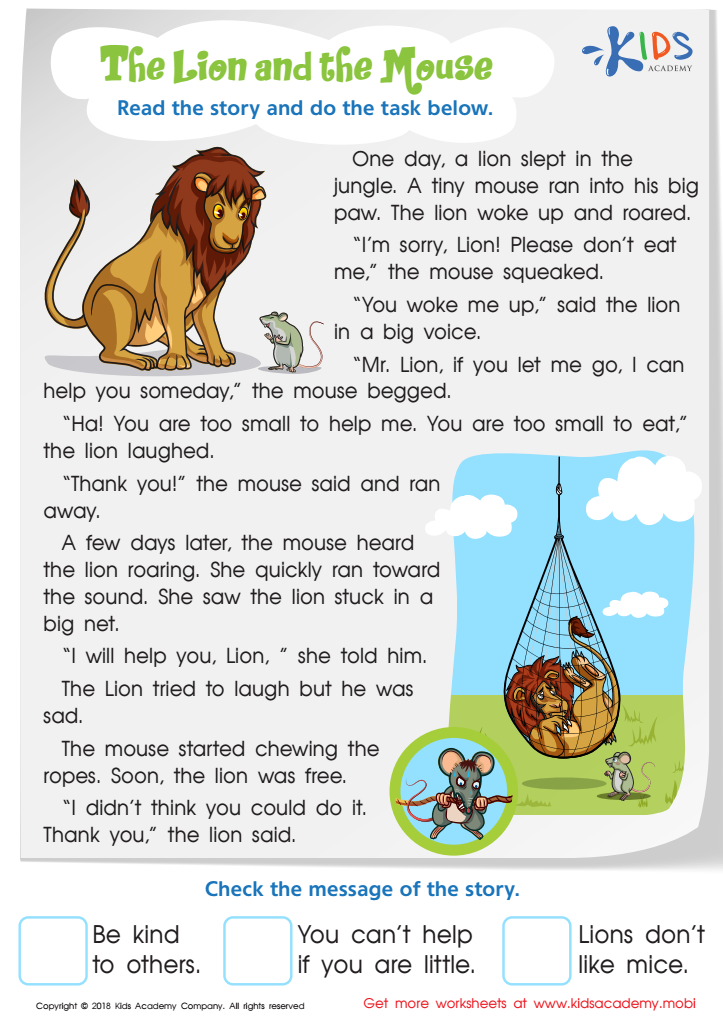
The Lion and the Mouse Worksheet
 Assign to My Students
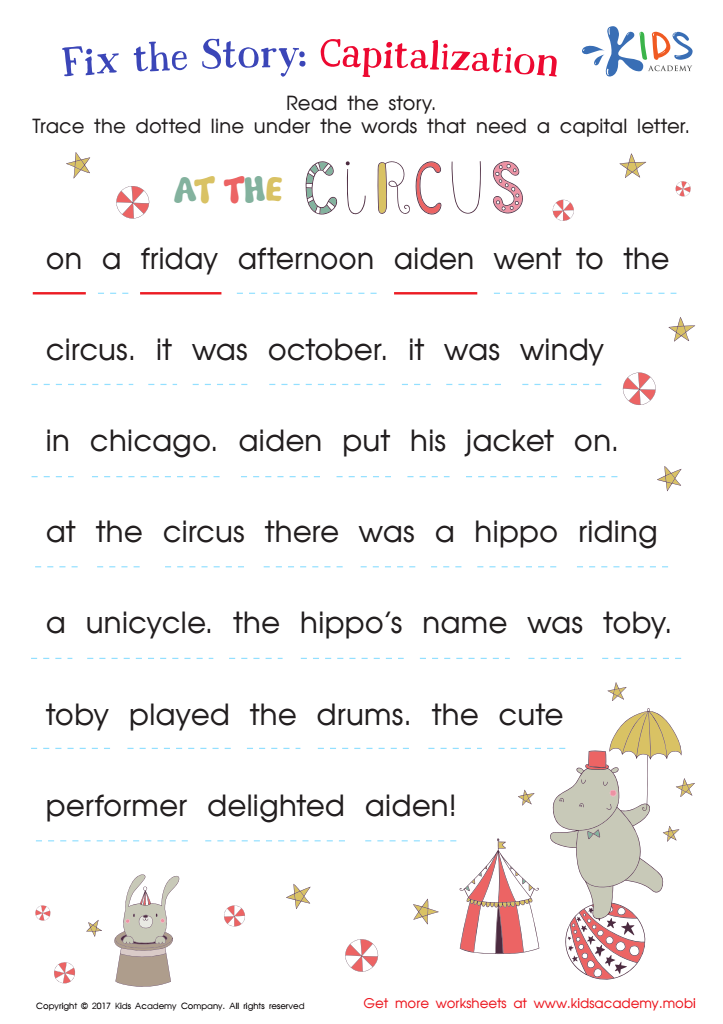
Capitalization: Fix the Story Worksheet
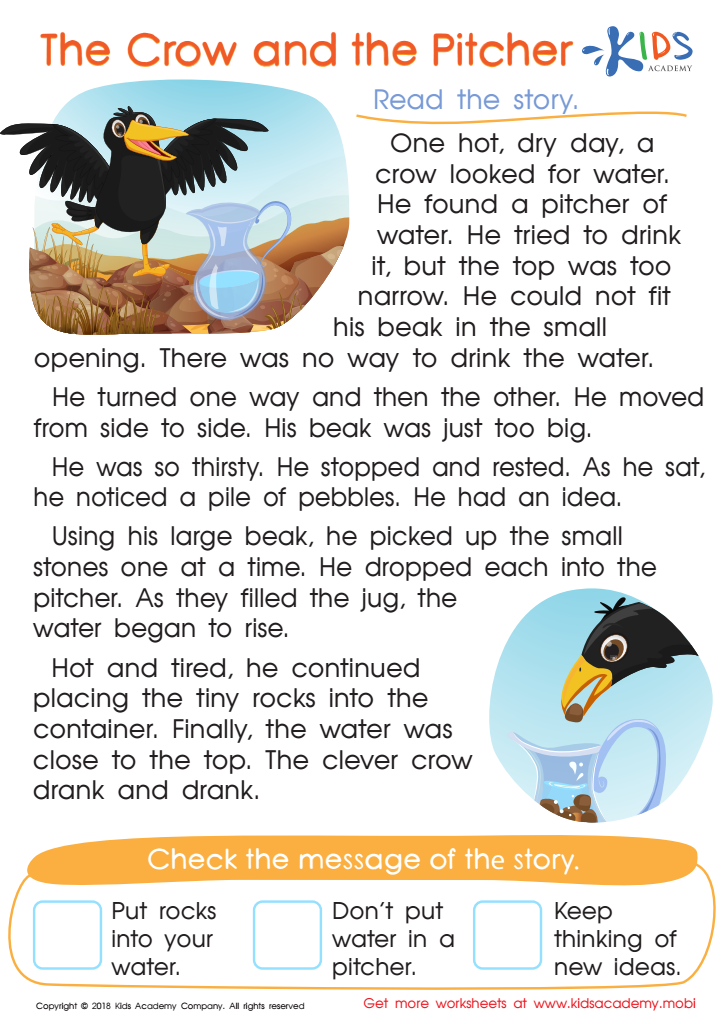
The Crow and the Pitcher Worksheet
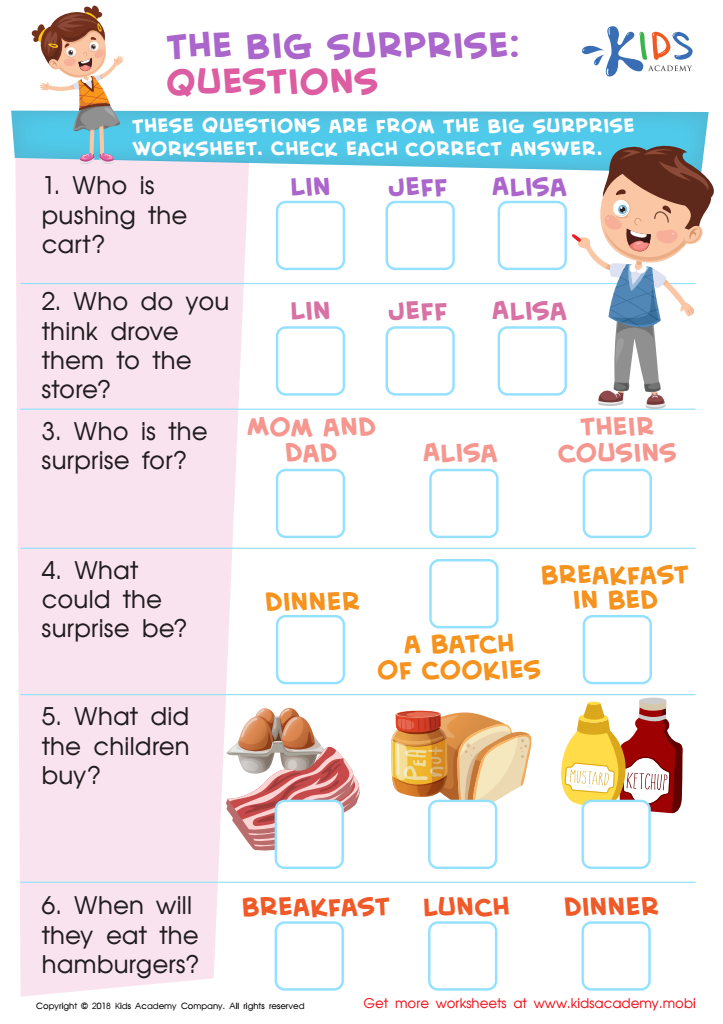
The Big Surprise: Questions Worksheet








Critical thinking writing for ages 4-9 is a vital skill that parents and teachers should prioritize because it forms the foundation for future academic and life success. At this young age, children’s brains are highly receptive and developing rapidly, making it the perfect period to cultivate crucial cognitive abilities.
Firstly, engaging in critical thinking exercises, such as journaling or storytelling, enhances children's problem-solving skills. These activities encourage them to evaluate various scenarios, consider consequences, and devise solutions. This, in turn, promotes a mindset that goes beyond rote memorization, fostering deeper understanding.
Secondly, critical thinking writing bolsters language skills. As children articulate their thoughts on paper, they expand their vocabulary and grasp of sentence structure, directly benefiting their reading and comprehension abilities. These competencies lay the groundwork for proficient communication, an essential skill in every life aspect.
Moreover, such writing tasks inspire creativity and boost self-confidence. When children see their ideas materialize on paper, it validates their thoughts and encourages independent thinking. They learn to trust their instincts and opinions, which is crucial for developing a strong sense of self.
By encouraging critical thinking writing at an early age, parents and teachers empower children to navigate the complexities of life thoughtfully and confidently. Ultimately, it equips them with an analytical mindset, essential for lifelong learning and personal growth.








