Spelling practice Writing Worksheets for Ages 4-9 - Page 3
51 filtered results
-
From - To
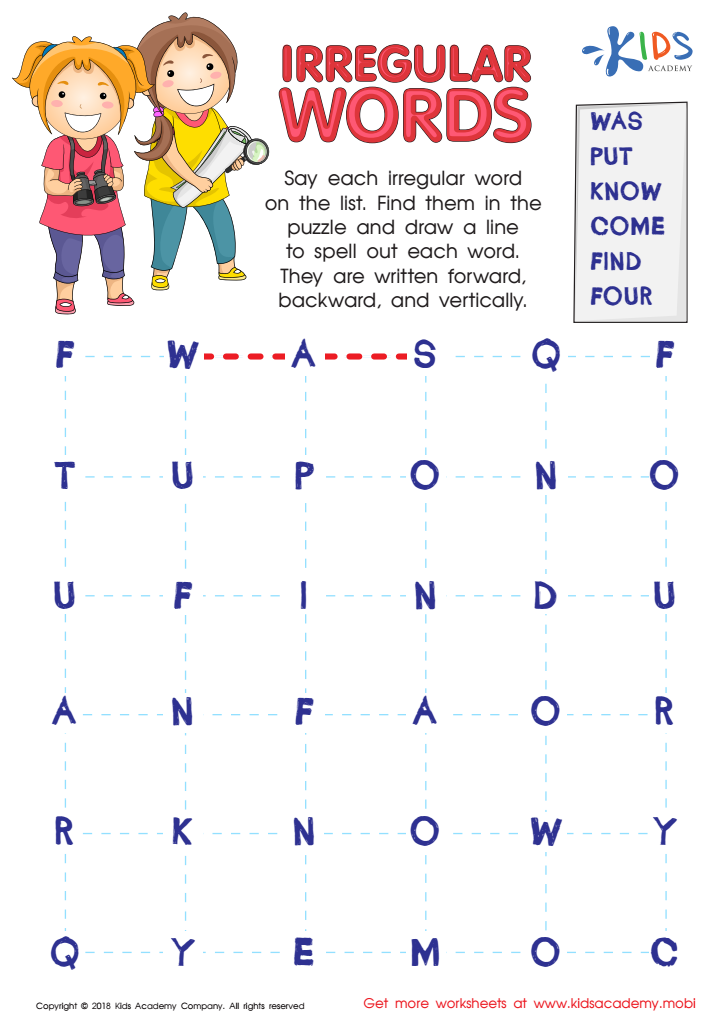
Irregular Words Worksheet
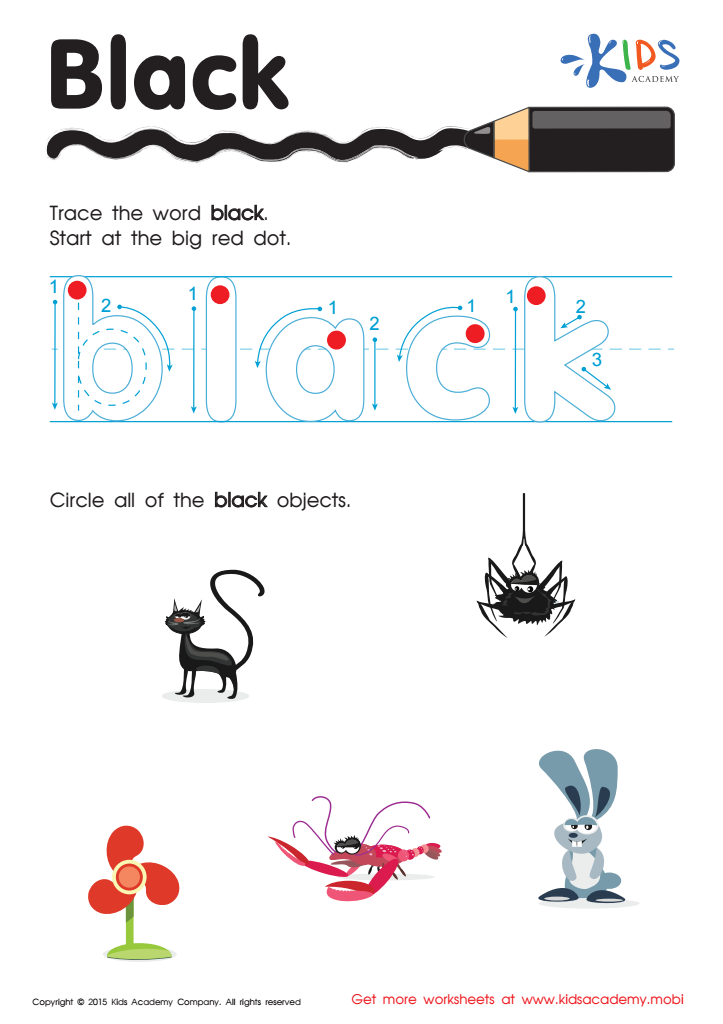
Black Tracing Color Words Printable
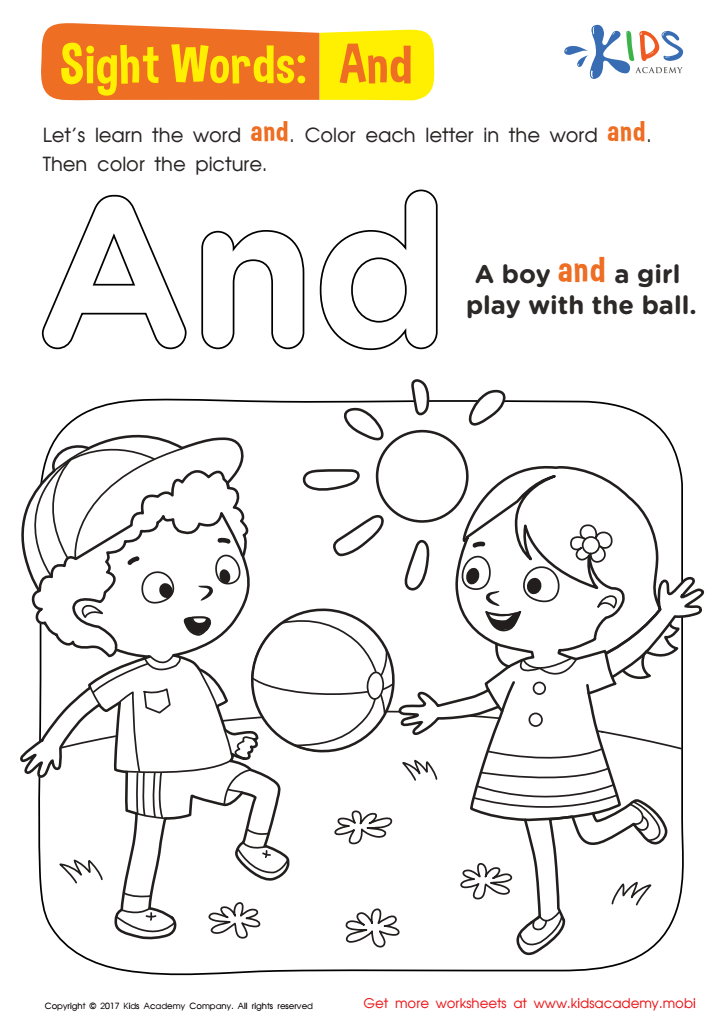
And Worksheet Sight Words Worksheet
 Assign to My Students








Spelling practice at a young age (ages 4-9) is crucial for a child's overall academic and cognitive development, making it an essential concern for parents and teachers. This period is a formative phase in a child's education where foundational skills are established. Mastery of spelling enables children to read and write more confidently, which in turn enhances their communication abilities and fosters a love for language.
Spelling practice aids in phonemic awareness, helping children understand the relationship between letters and sounds. This understanding is key to decoding words during reading and constructing them during writing. When children learn to spell accurately, their vocabulary expands, and their comprehension skills improve. These gains impact not just their language arts performance but also their success in other subjects.
Moreover, spelling practice exercises the cognitive skills of memory, attention, and critical thinking. Regular practice can refine handwriting, ensuring children can encode and relay information more neatly and efficiently. Good spelling habits established early lead to better literacy skills, impacting a child's future academic pursuits and lifelong learning.
Therefore, consistent spelling practice is integral, fostering academic confidence and a robust linguistic foundation essential for future educational achievements. It is a simple yet profoundly effective way of preparing children for more complex literacy challenges ahead.








