Vocabulary development Writing Worksheets for Ages 4-9
10 filtered results
-
From - To
Unlock your child's potential with our Vocabulary Development Writing Worksheets, perfect for ages 4-9. These engaging and educational activities are designed to boost your child’s language skills, enrich their vocabulary, and inspire a love for writing. Our expertly crafted worksheets help young learners identify new words, use them in sentences, and enhance their comprehension. Tailored to build foundational skills, each colorful and interactive sheet supports early learning milestones, making vocabulary development fun and effective. Visit Kids Academy to explore our wide range of printable worksheets and give your child the tools they need to succeed in writing and communication!
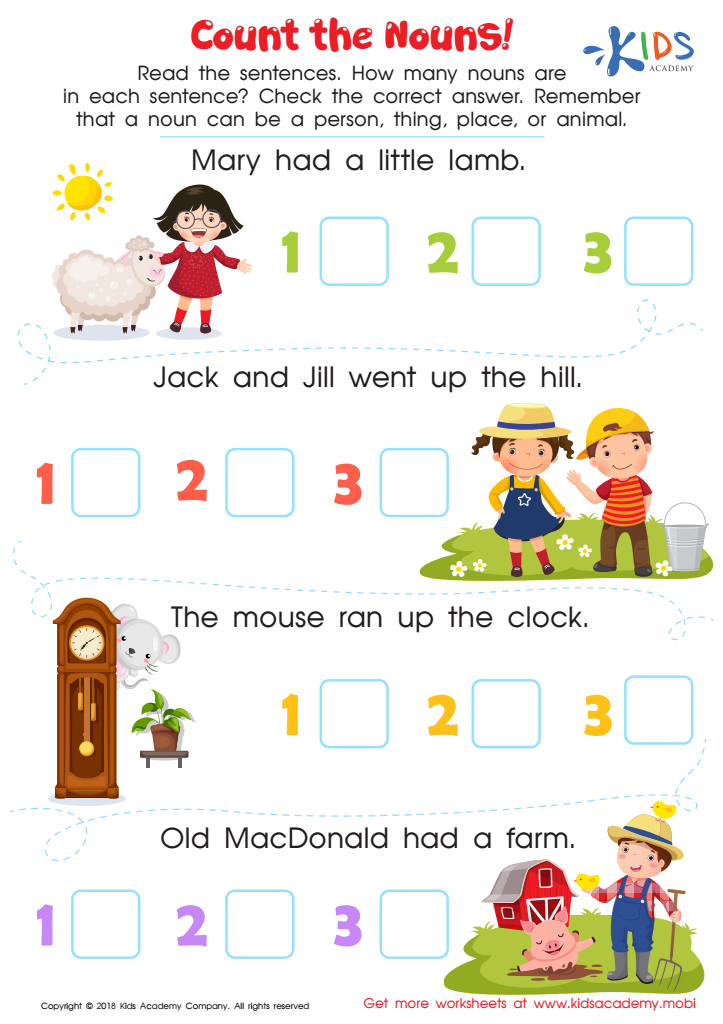
Count the Nouns Worksheet
 Assign to My Students
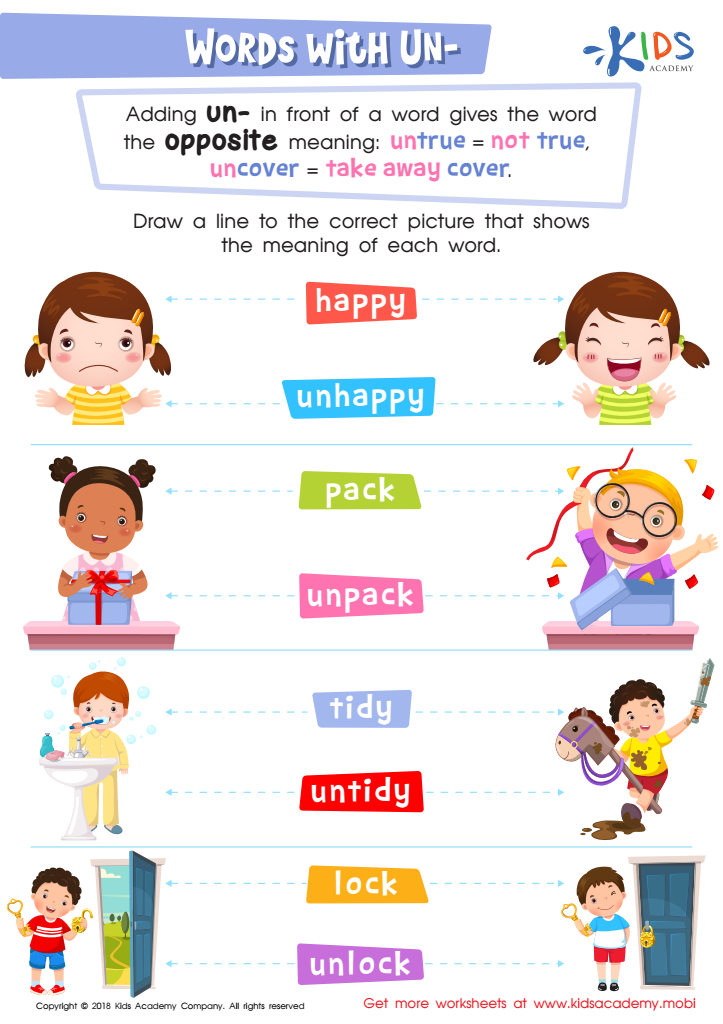
Words with Un– Worksheet
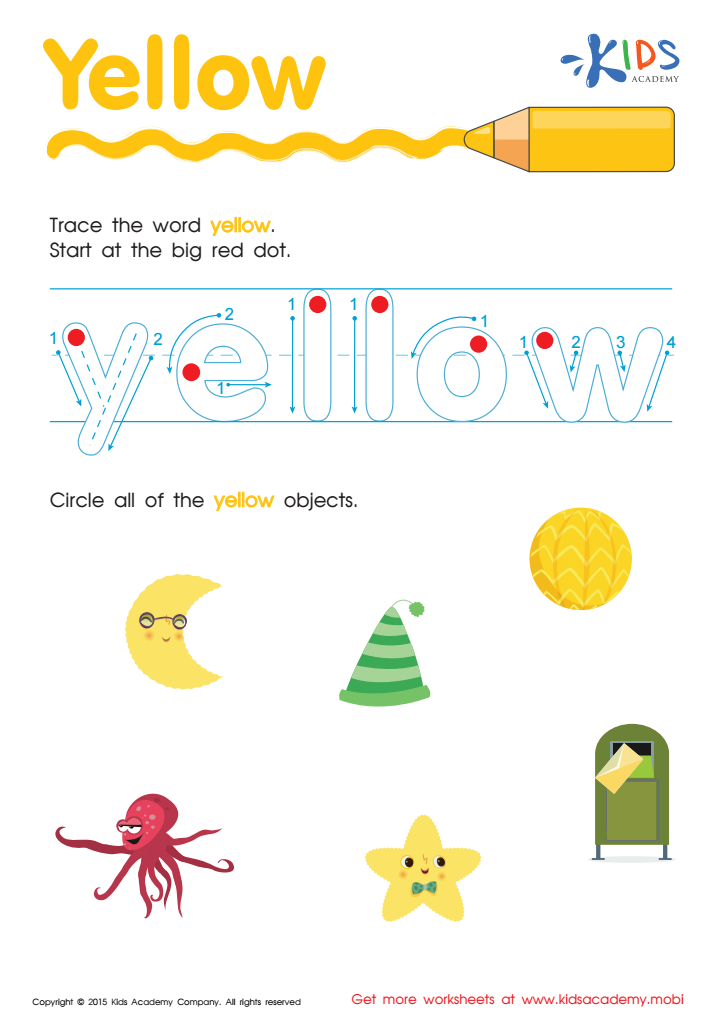
Yellow Tracing Color Words Worksheet
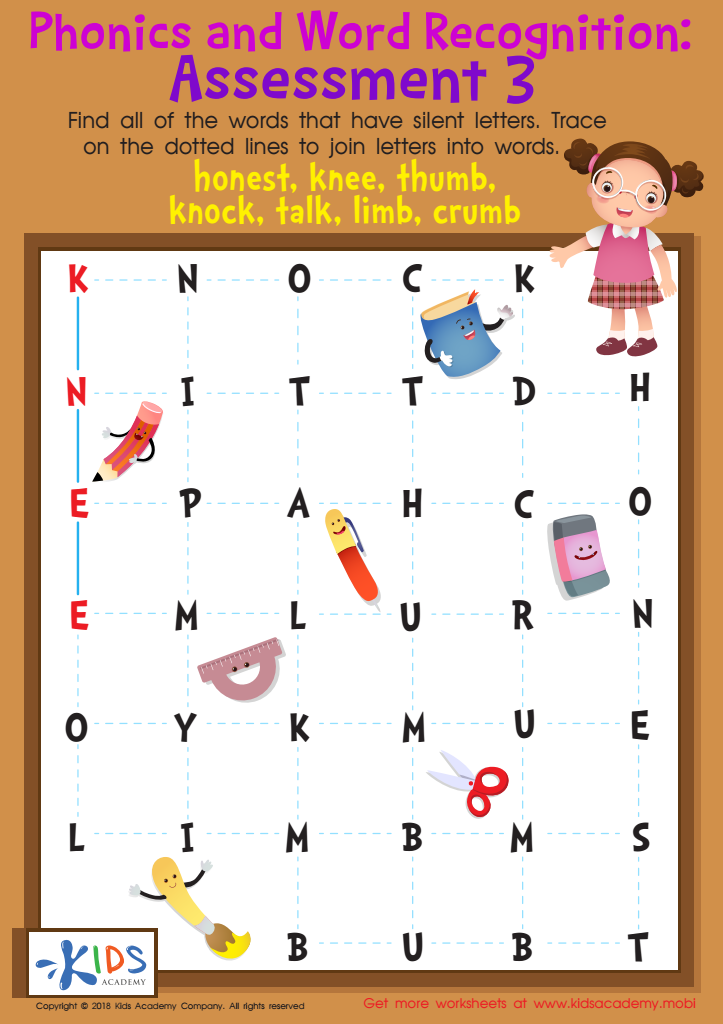
Phonics and Word Recognition: Assessment 3 Worksheet
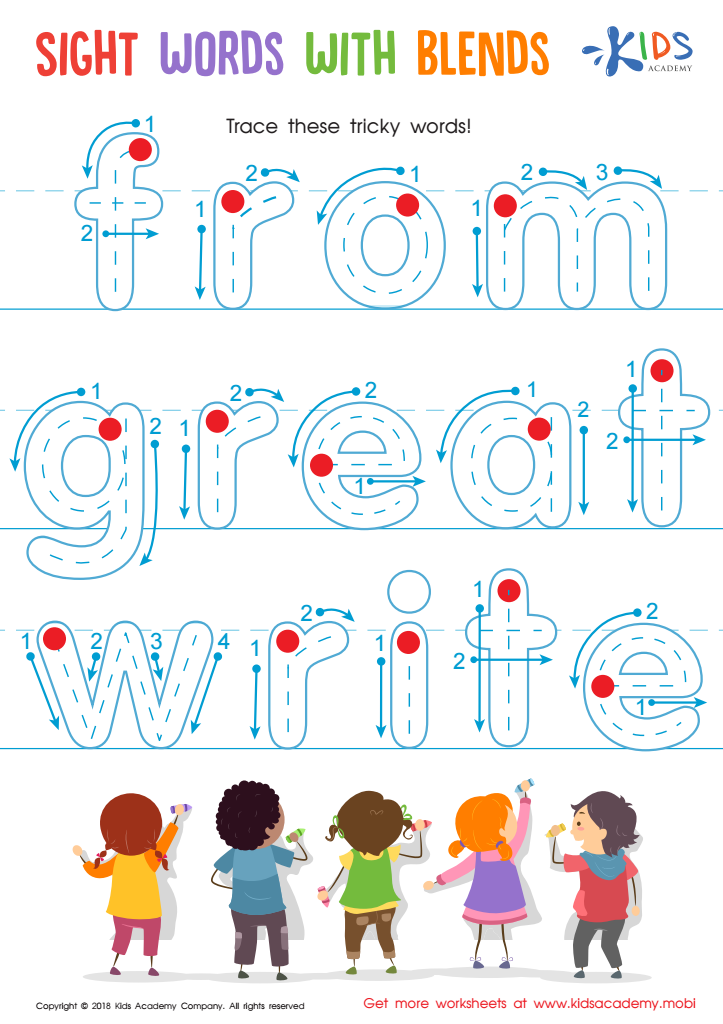
Sight Words with Blends Worksheet
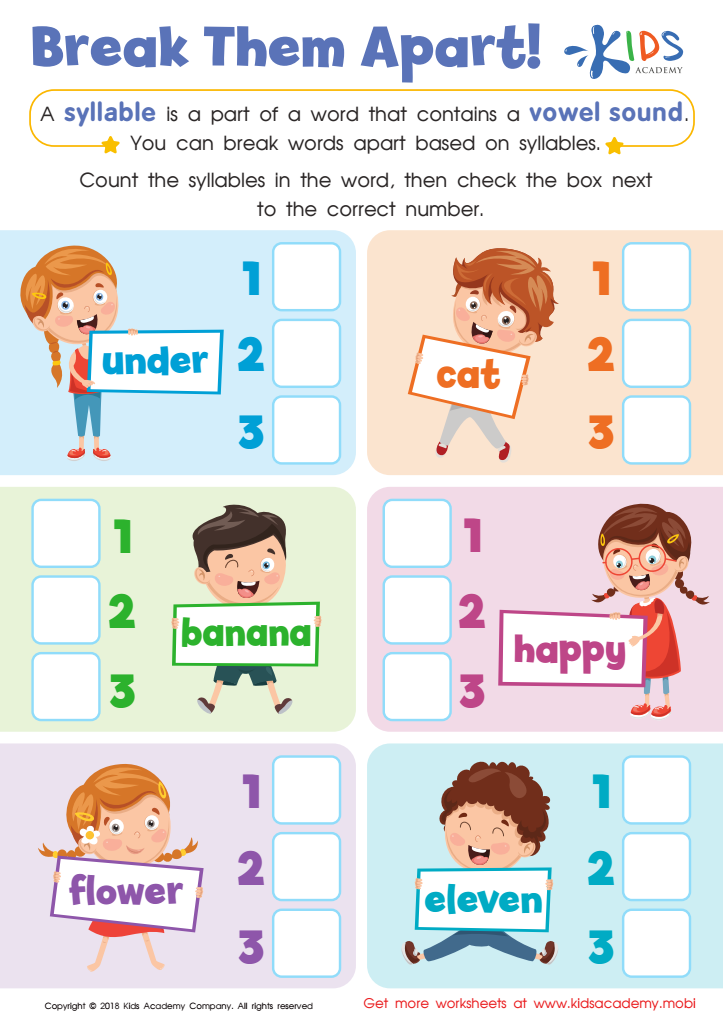
Reading: Break Them Apart Worksheet
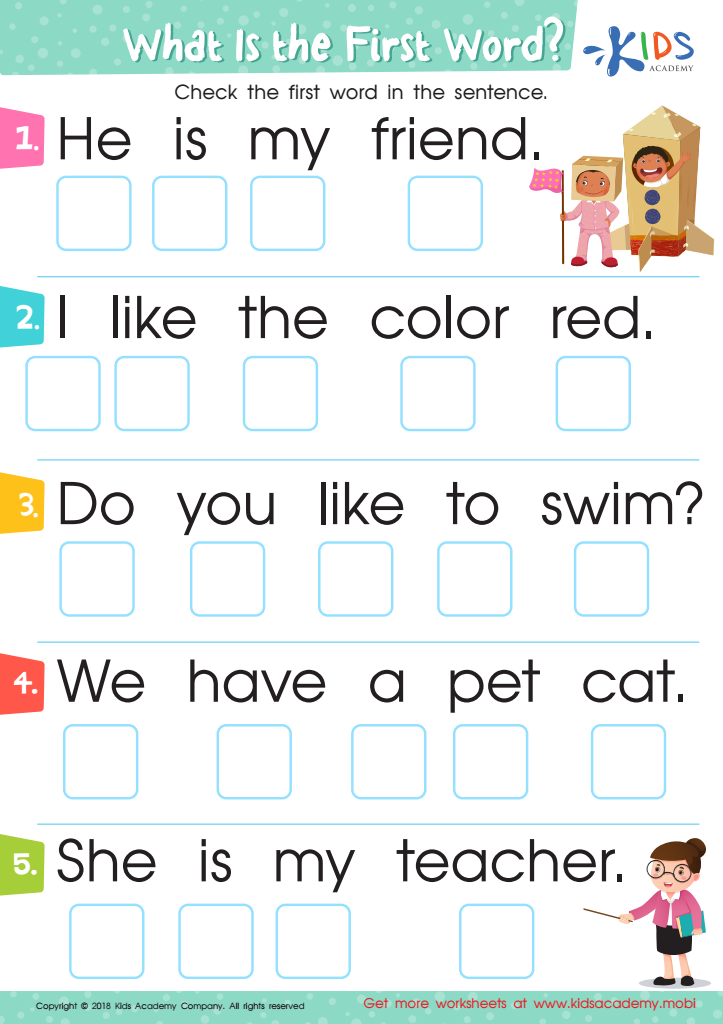
What is the First Word? Worksheet
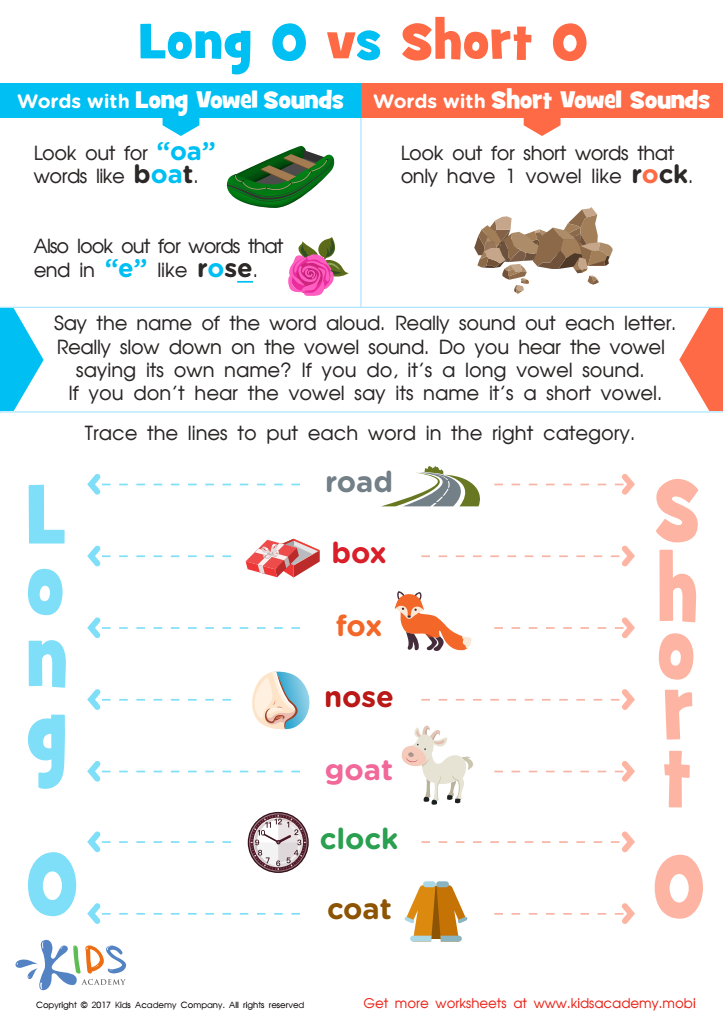
Long and Short Vowel O Spelling Worksheet
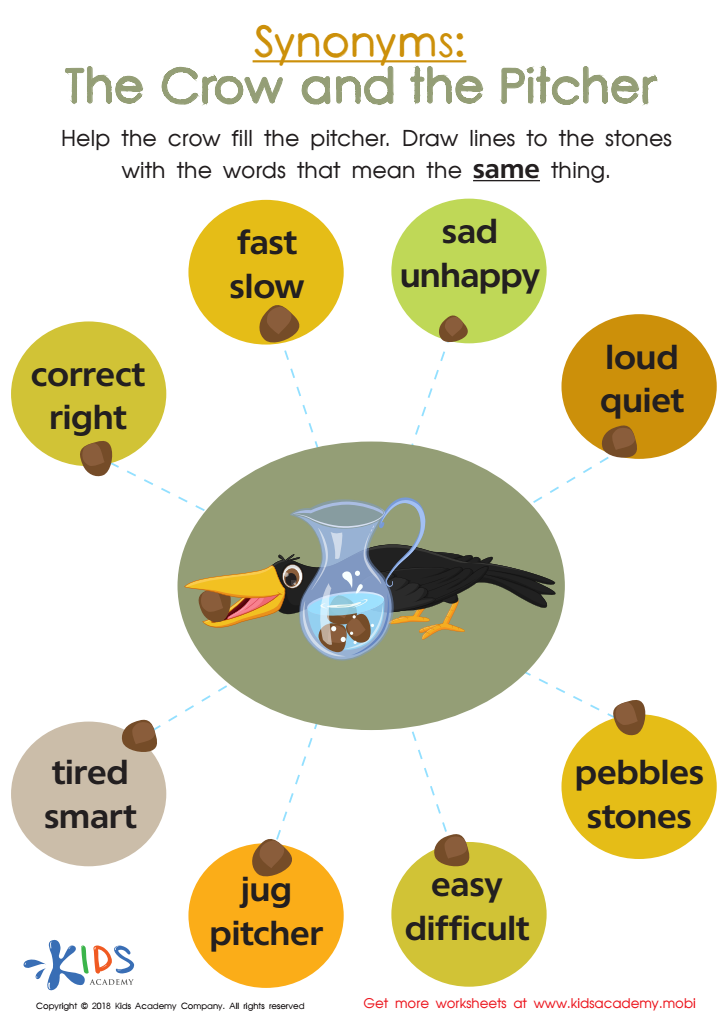
The Crow and the Pitcher Synonyms Worksheet
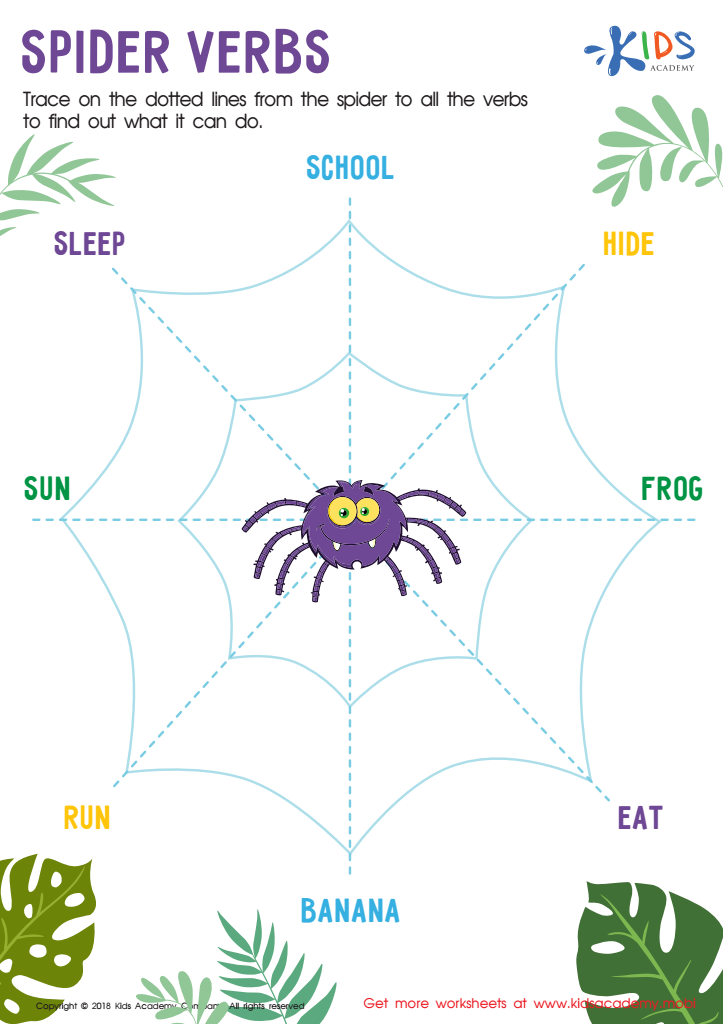
Spider Verbs Worksheet







Vocabulary development in children ages 4-9 is crucial for several key reasons:
First, strong vocabulary skills are foundational to overall language development. Children with a rich vocabulary can express their ideas more clearly and effectively, leading to better communication skills. This competence enhances their confidence in social interactions at school and in other settings.
Second, vocabulary growth directly influences reading comprehension. As children learn to read, their understanding of text is heavily dependent on knowing the meaning of individual words. A strong vocabulary allows them to make sense of what they read, fostering a love of reading and boosting their academic performance in all subjects.
Moreover, vocabulary development is closely linked to cognitive skills. It aids in concept formation and critical thinking by providing the linguistic tools necessary for categorizing and relating new information. Enhanced vocabulary skills also contribute to improved writing abilities, as children can use a more varied and precise set of words to convey their thoughts.
Lastly, a robust vocabulary can act as a predictor of future academic success. Studies have shown that children with larger vocabularies tend to perform better on later standardized tests and have a greater likelihood of long-term academic achievement.
For these reasons, parents and teachers should actively engage in strategies that enrich children's vocabulary, such as reading aloud, fostering curiosity, and encouraging expressive language use.








