Understanding punctuation Punctuation Worksheets for Ages 4-9
3 filtered results
-
From - To
Explore our "Understanding Punctuation" worksheets designed for children ages 4-9! These engaging resources help young learners grasp the essentials of punctuation marks, including periods, commas, question marks, and exclamation points. Our interactive activities allow kids to practice recognizing and using punctuation correctly, making writing not only educational but also fun. Each worksheet caters to various skill levels, ensuring that every child can enhance their understanding at their own pace. Whether at home or in the classroom, our worksheets promote essential writing skills and foster a love for language. Start your child's punctuation journey today and watch their confidence soar!
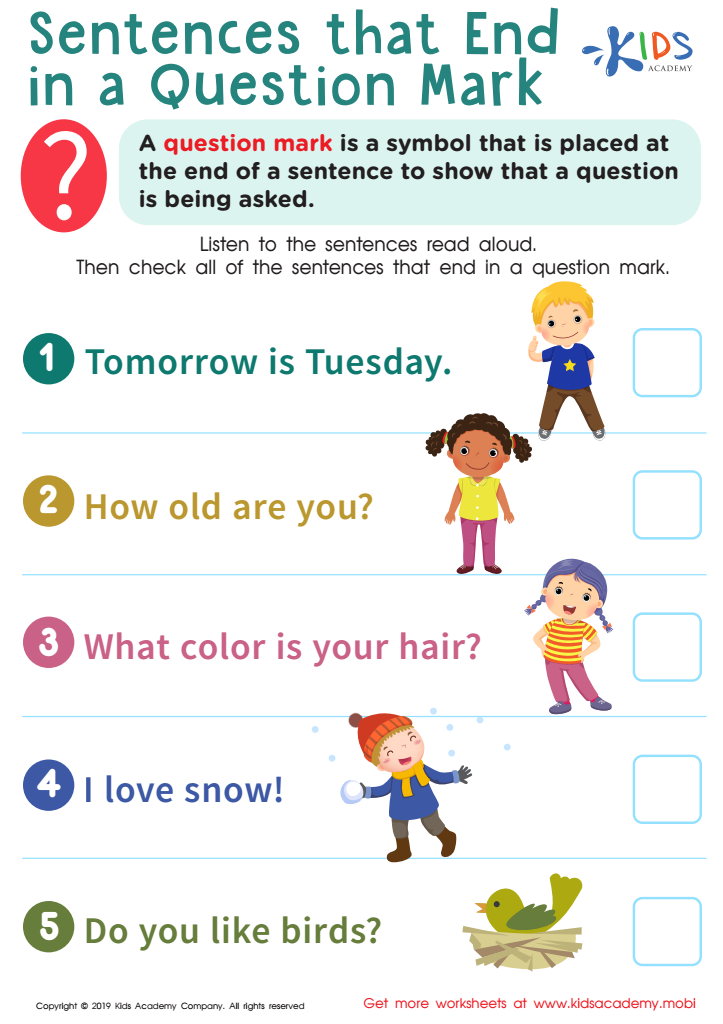
Sentences That End in an Question Mark Worksheet
 Assign to My Students
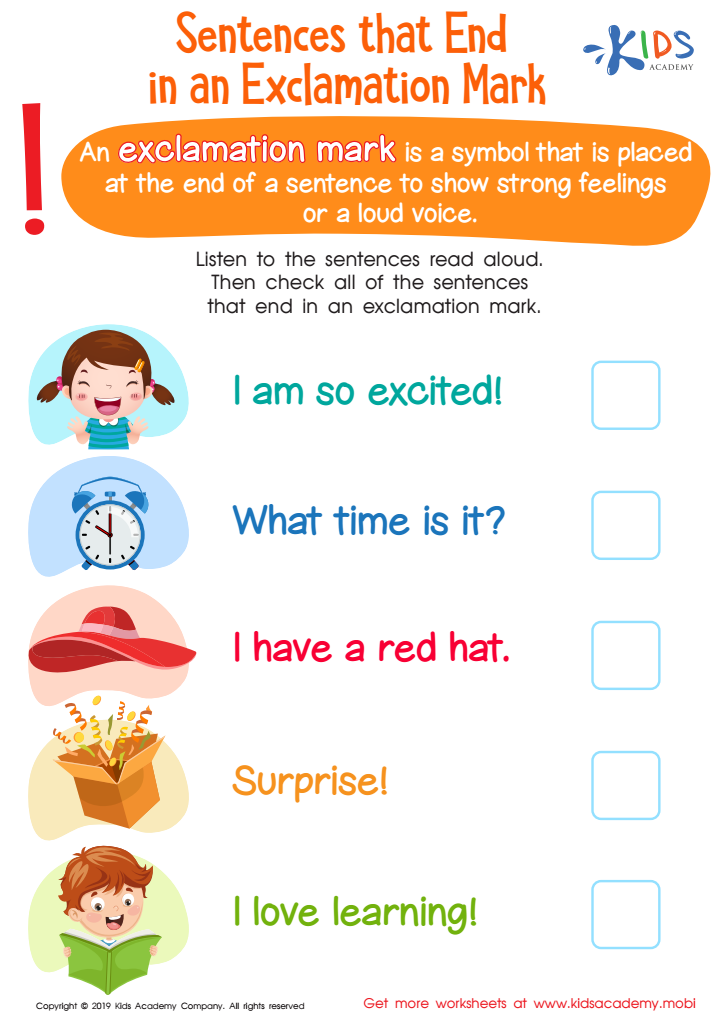
Sentences That End in an Exclamation Mark Worksheet
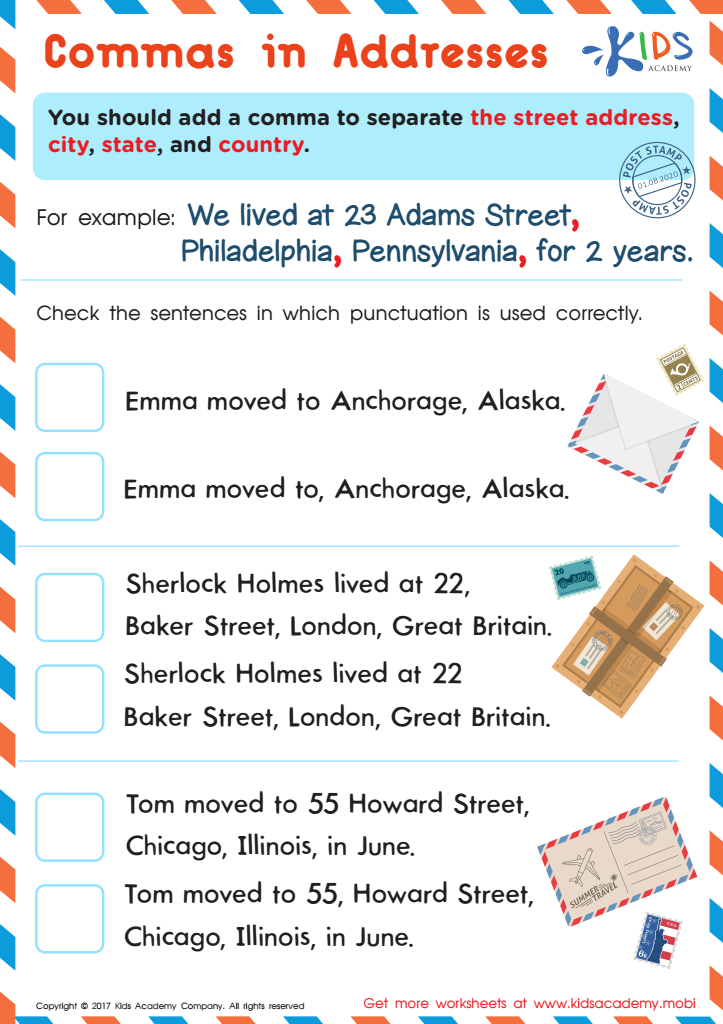
Commas in Addresses Worksheet







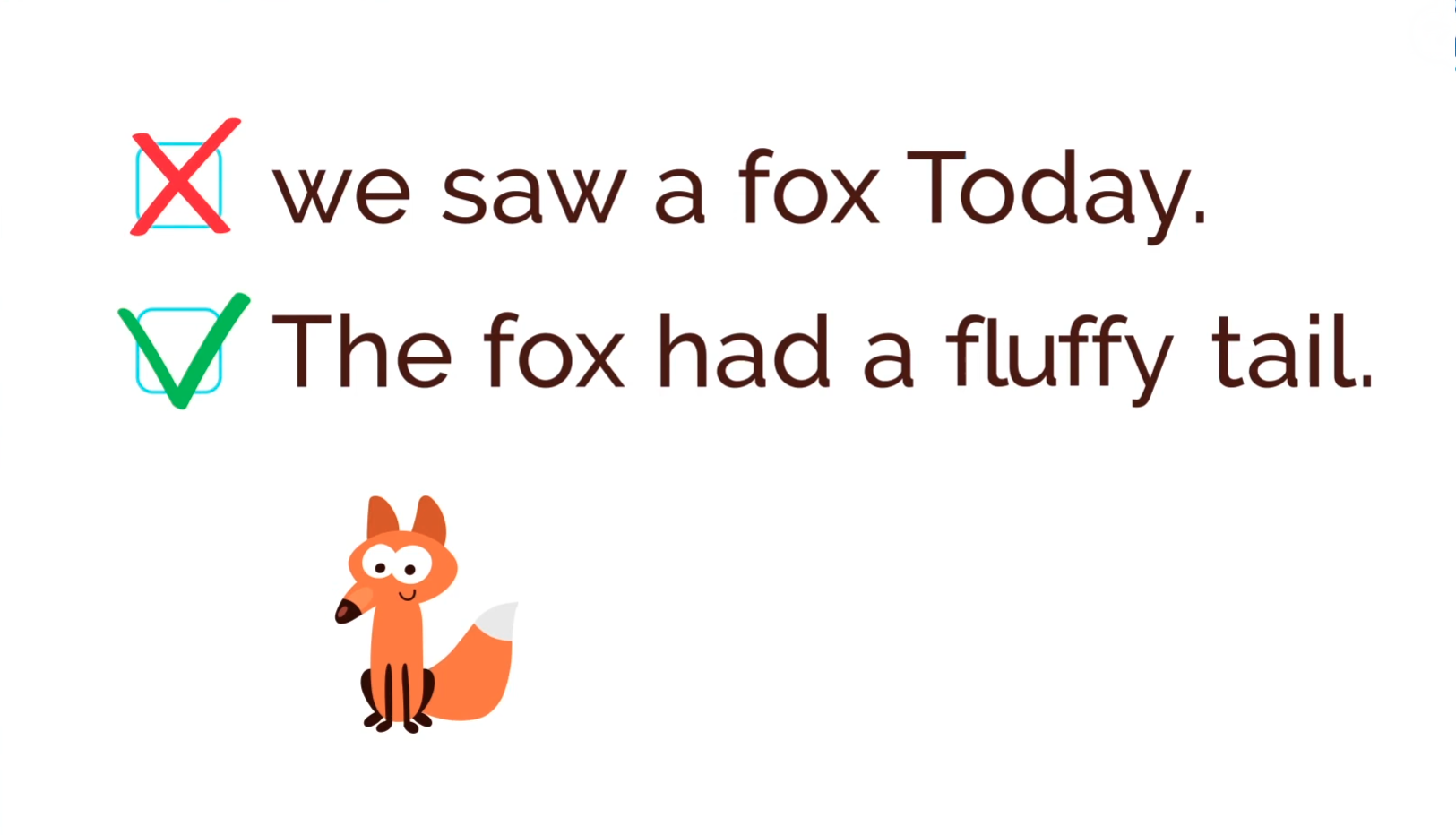
Understanding punctuation is crucial for children aged 4-9 as it serves as the building block for effective communication. At this developmental stage, children are beginning to explore reading and writing independently, and punctuation marks are essential tools to clarify meaning and enhance comprehension. Proper use of punctuation helps children distinguish between statements, questions, and exclamations, fostering their ability to express feelings and ideas accurately.
For parents and teachers, emphasizing punctuation can significantly improve a child's literacy skills. Engaging activities that involve reading aloud and emphasizing punctuation encourage children to pause, change tone, and understand context, making stories more enjoyable and memorable. Children who grasp these concepts early are less likely to struggle with complex writing tasks later.
Moreover, well-placed punctuation can change the entire meaning of a sentence, and teaching children this early on helps them become critical readers and writers. This foundational skill instills confidence, encouraging students to share their thoughts creatively and effectively. In a world where communication is vital, understanding punctuation not only aids academic success but also empowers children to engage thoughtfully with the world around them. Thus, parents and teachers play a key role in reinforcing these essential skills.








