Welcome to our "Addition Skills Worksheets for 4-Year-Olds" page! Designed to make learning fun, these engaging and colorful worksheets introduce young learners to the fundamentals of addition. Each activity promotes counting, number recognition, and basic problem-solving skills, helping children build a solid math foundation. With a variety of interactive exercises, toddlers can practice adding objects and number concepts using illustrations that capture their creativity. Perfect for parents and educators, these worksheets provide a structured approach to enhance early math skills at home or in the classroom. Start your child's mathematical journey today with our carefully crafted addition resources!

Check out this FREE "Addition skills" Trial Lesson for age 4!

Adding with 5's

Favorites
With answer key
Interactive
  • 4
  • Addition skills
Solving Problems: Number Lines Worksheet

Solving Problems: Number Lines Worksheet

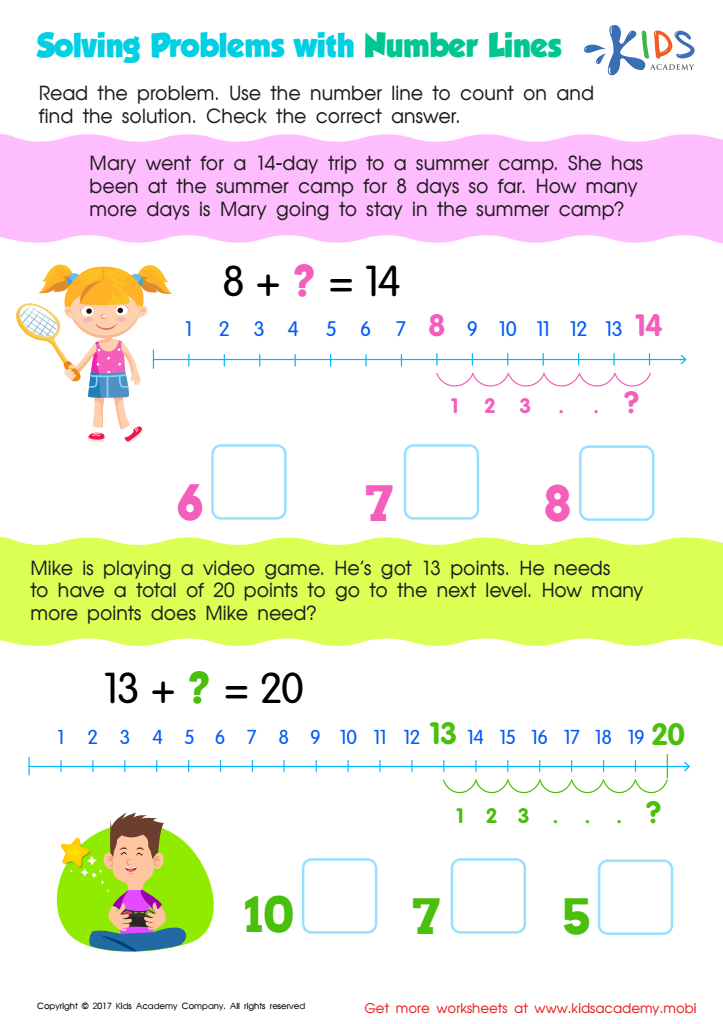
Number lines are fun and help build number sense and reasoning. This worksheet uses them to help students count on to find a solution to an equation. They'll have fun counting with familiar numbers and 10-bases, while also working on algebraic reasoning.
Solving Problems: Number Lines Worksheet
Worksheet
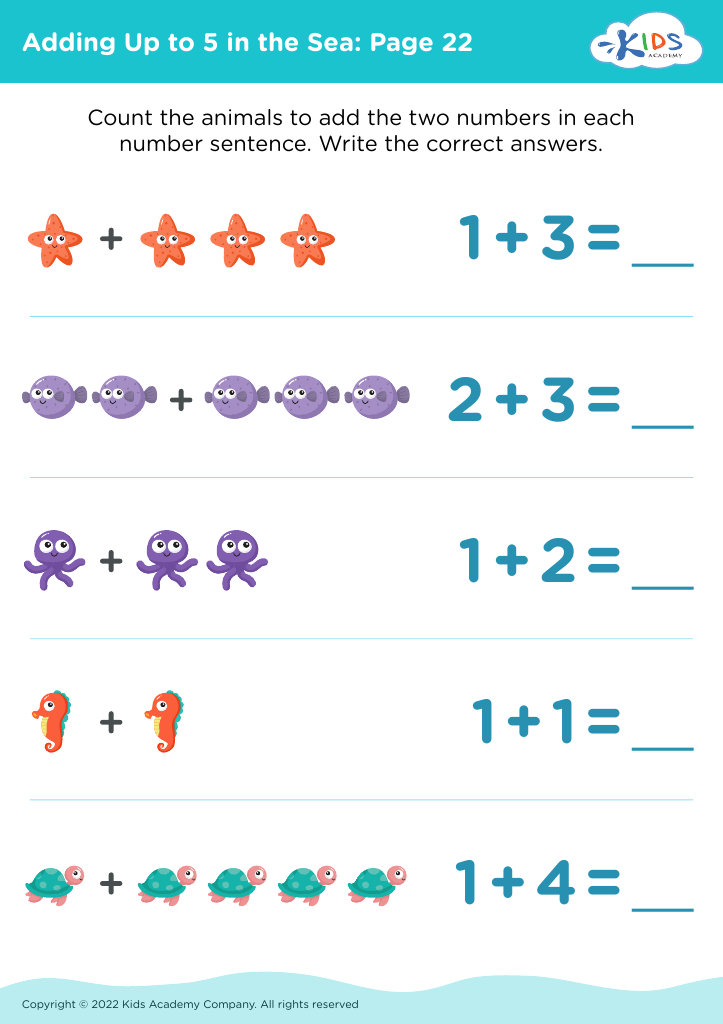
Adding Up to 5 in the Sea: Page 22
Worksheet
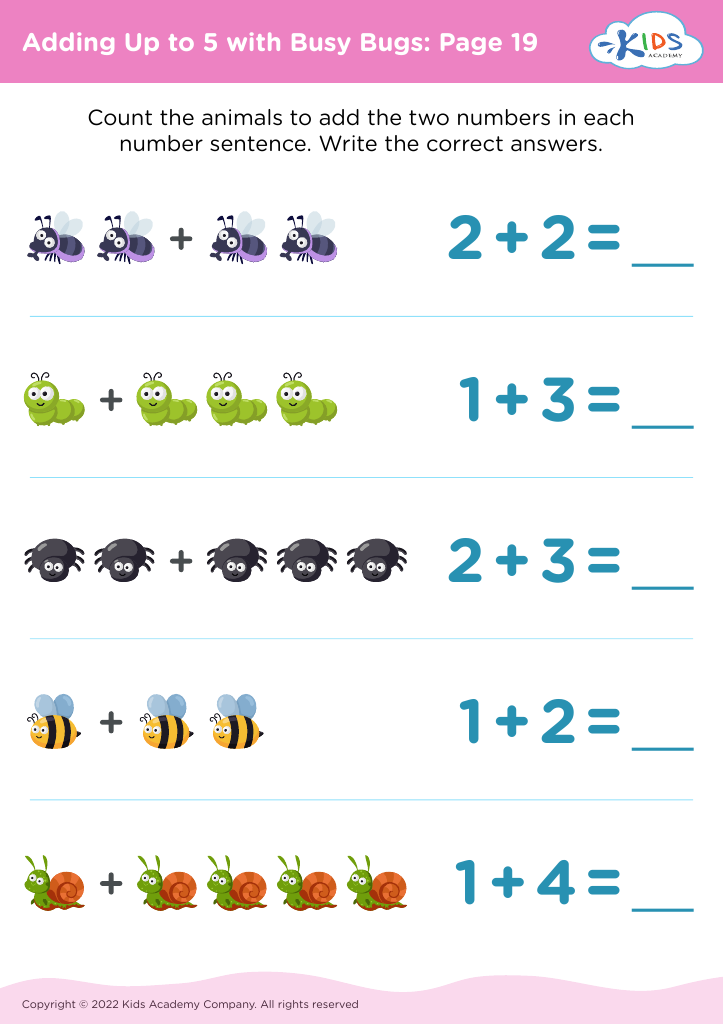
Adding Up to 5 with Busy Bugs: Page 19
Worksheet
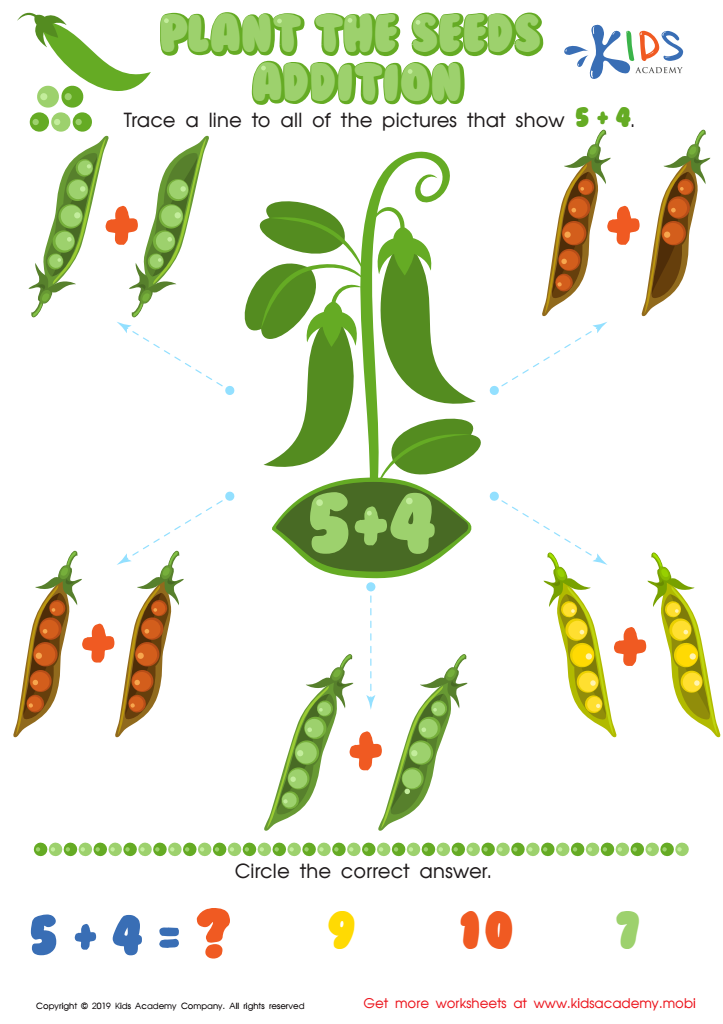
Plant the Seeds Addition Worksheet
Plant the Seeds Addition Worksheet
This worksheet combines math and learning about plants. Ask kids to name their favorite plants and which ones they see the most. Have them trace a line to all pictures in the middle which show the equation 5+4. Enjoy the beauty of plants while introducing math skills!
Plant the Seeds Addition Worksheet
Worksheet
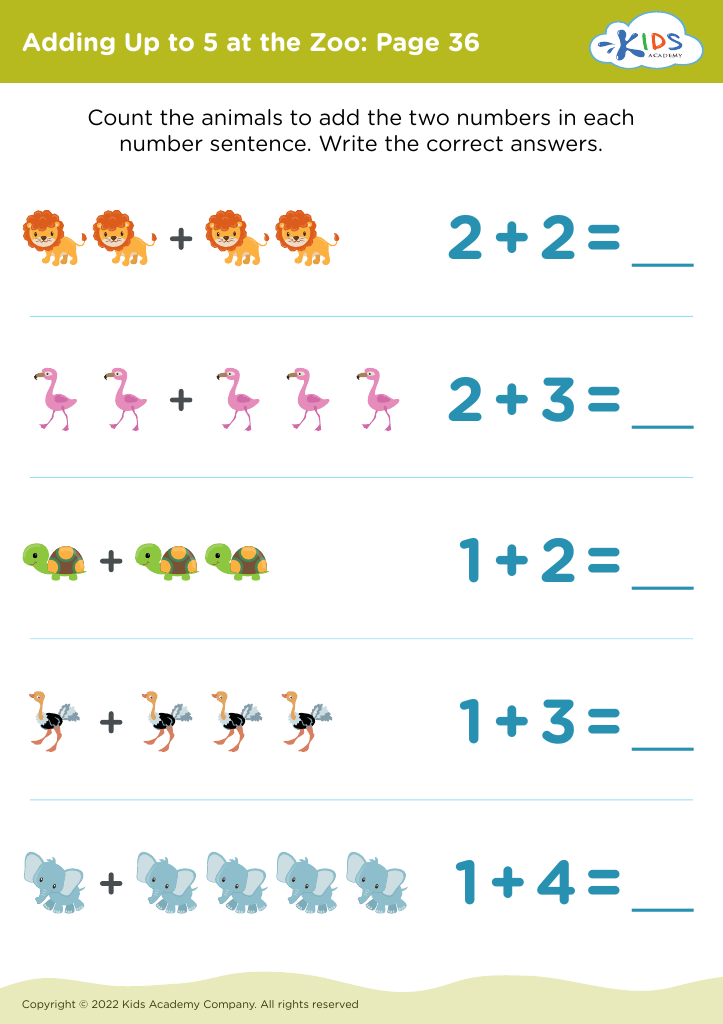
Adding Up to 5 at the Zoo: Page 36
Worksheet
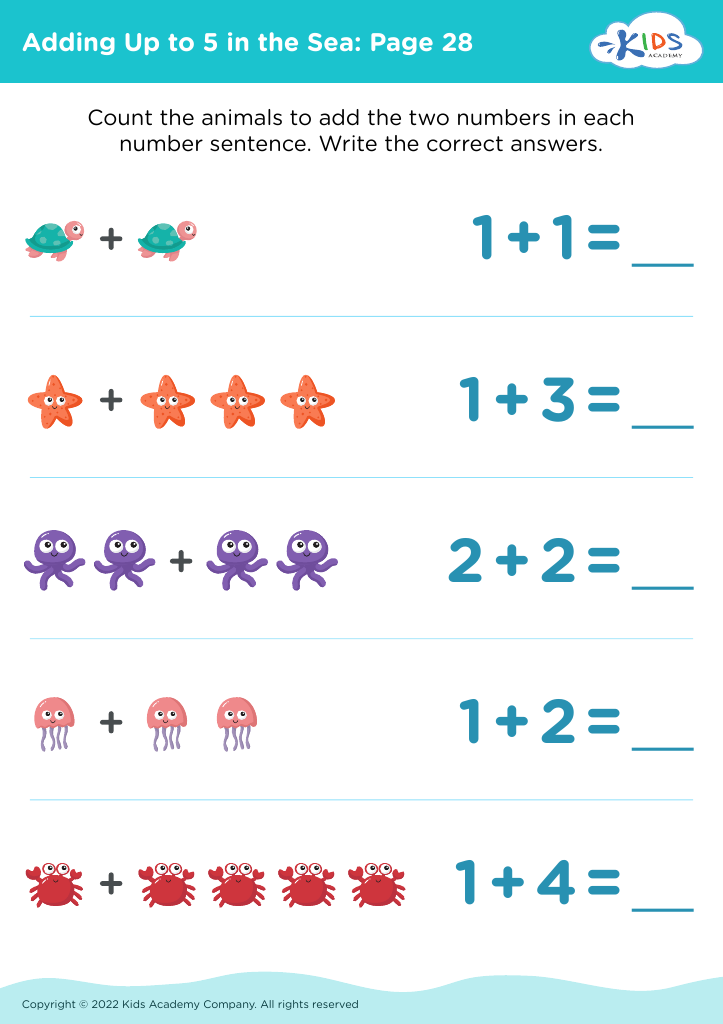
Adding Up to 5 in the Sea: Page 28
Worksheet
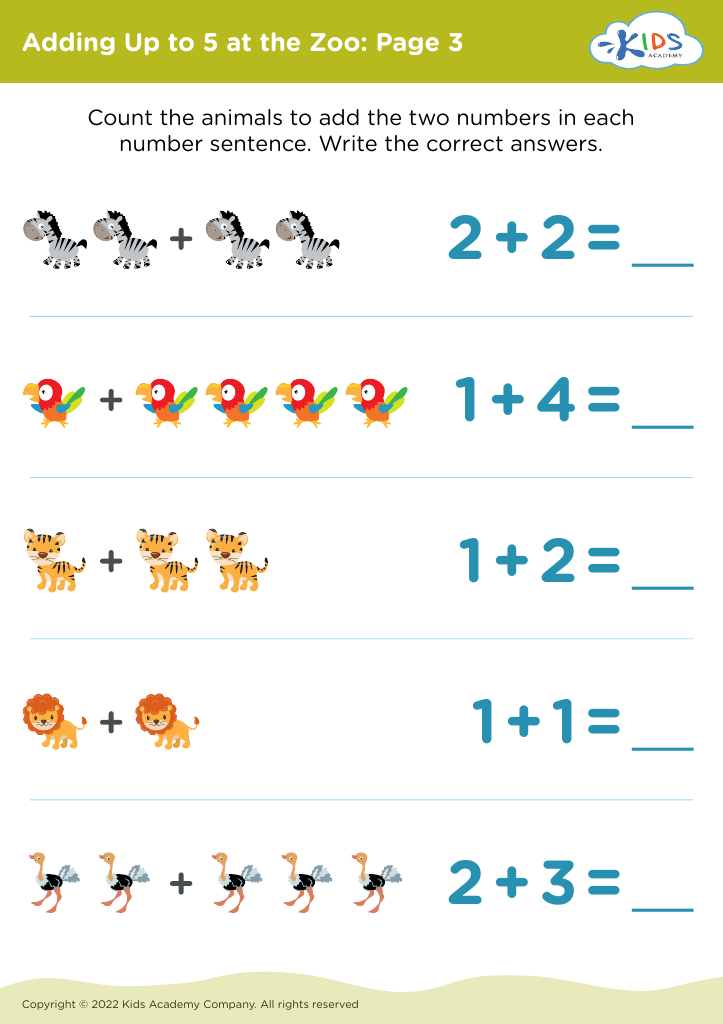
Adding Up to 5 at the Zoo: Page 3

Adding Up to 5 at the Zoo: Page 3

Adding Up to 5 at the Zoo: Page 3
Worksheet
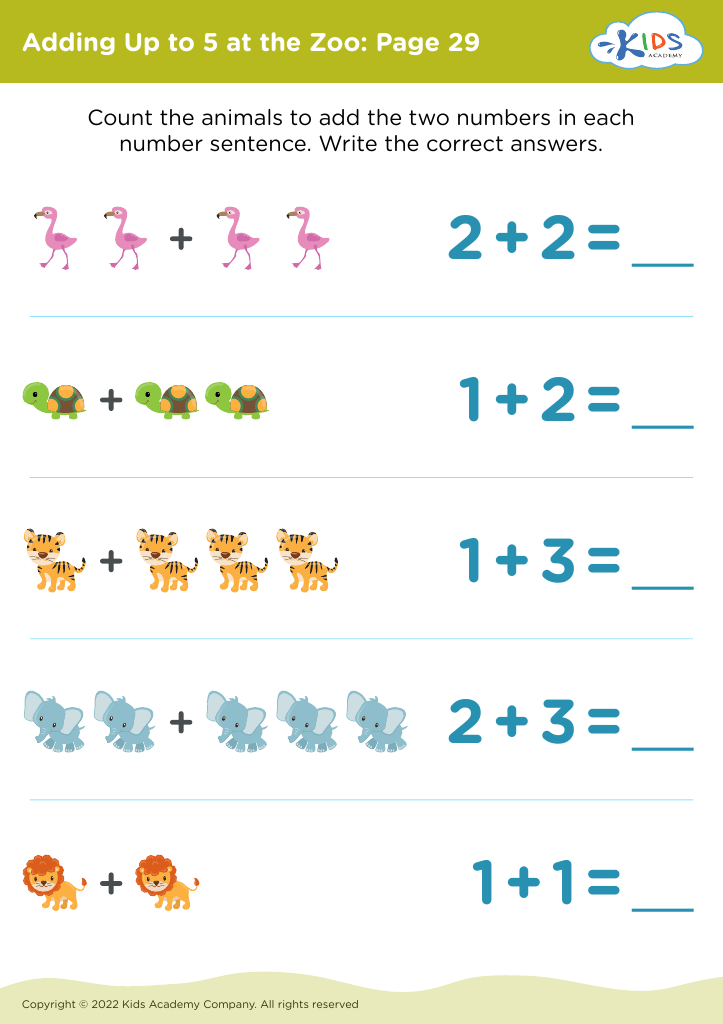
Adding Up to 5 at the Zoo: Page 29
Worksheet
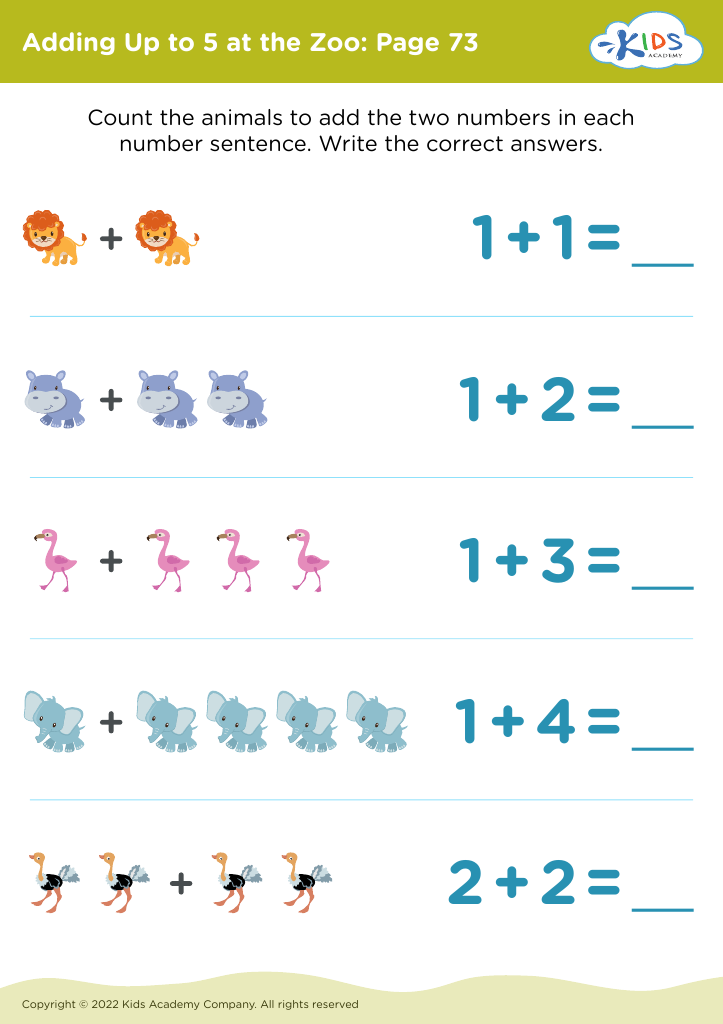
Adding Up to 5 at the Zoo: Page 73
Worksheet
Math: Two And Three Addition PDF Worksheet

Two And Three Addition Worksheet
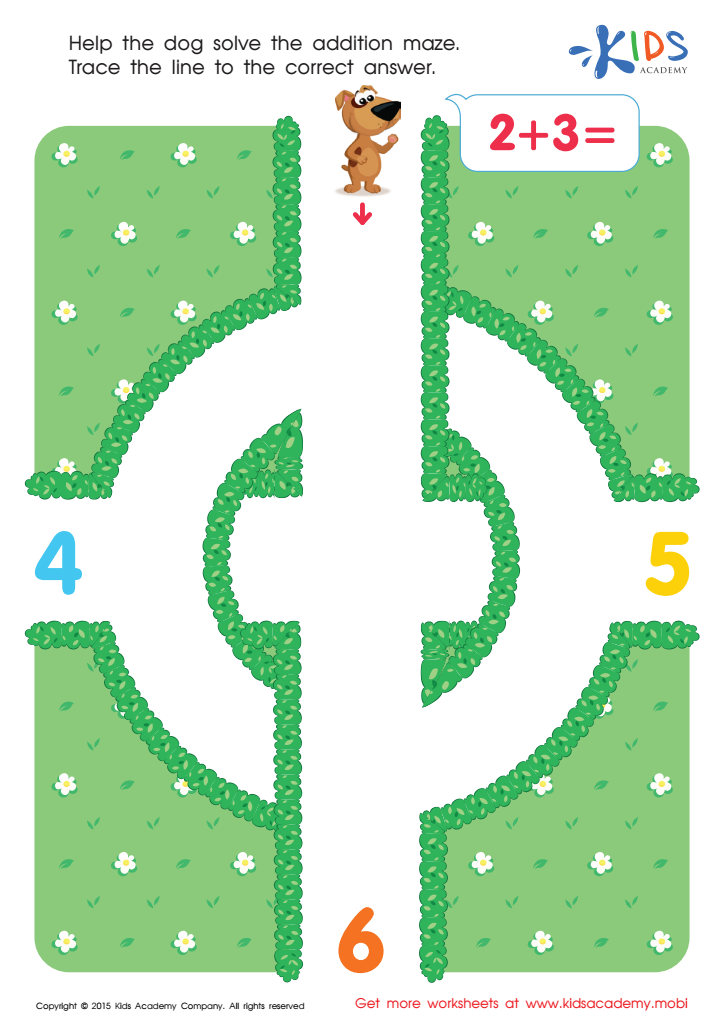
Give your children the task and let them find the path to the right answer while they make their way through the maze, and don't forget to let them trace the path.
Two And Three Addition Worksheet
Worksheet
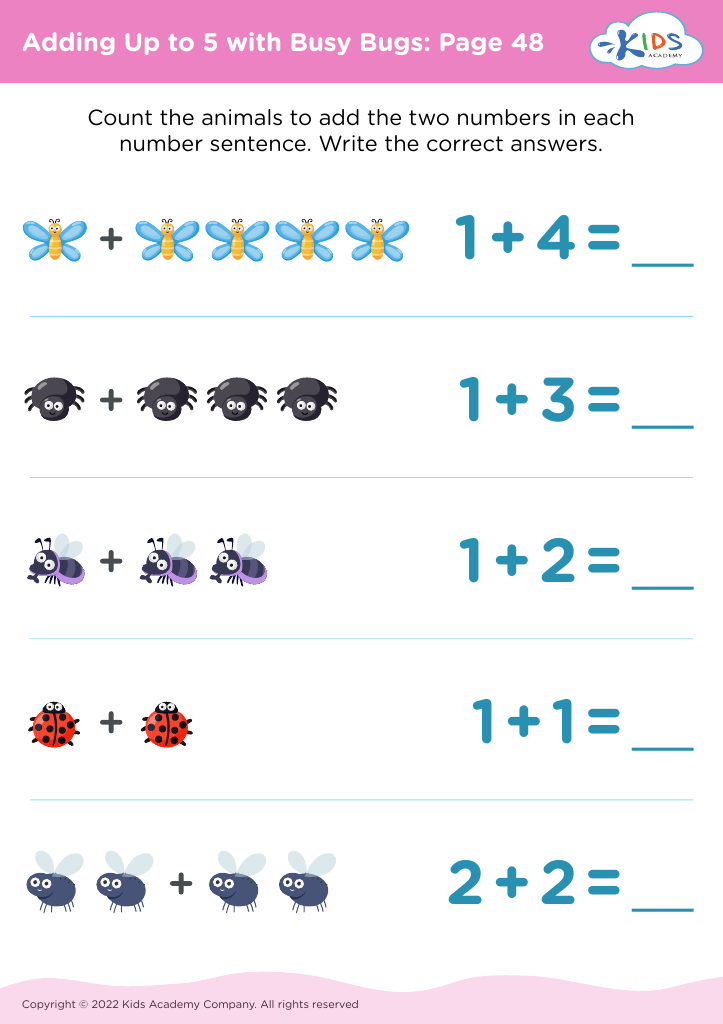
Adding Up to 5 with Busy Bugs: Page 48
Worksheet
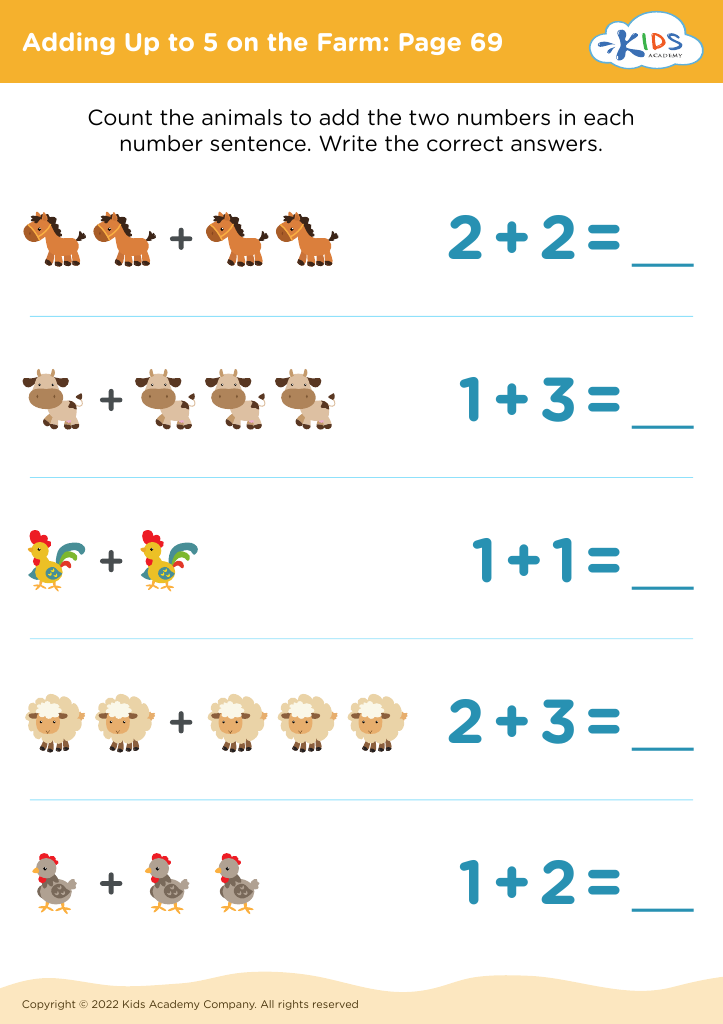
Adding Up to 5 on the Farm: Page 69
Worksheet
Butterfly Addition Worksheet
Butterfly Addition Worksheet
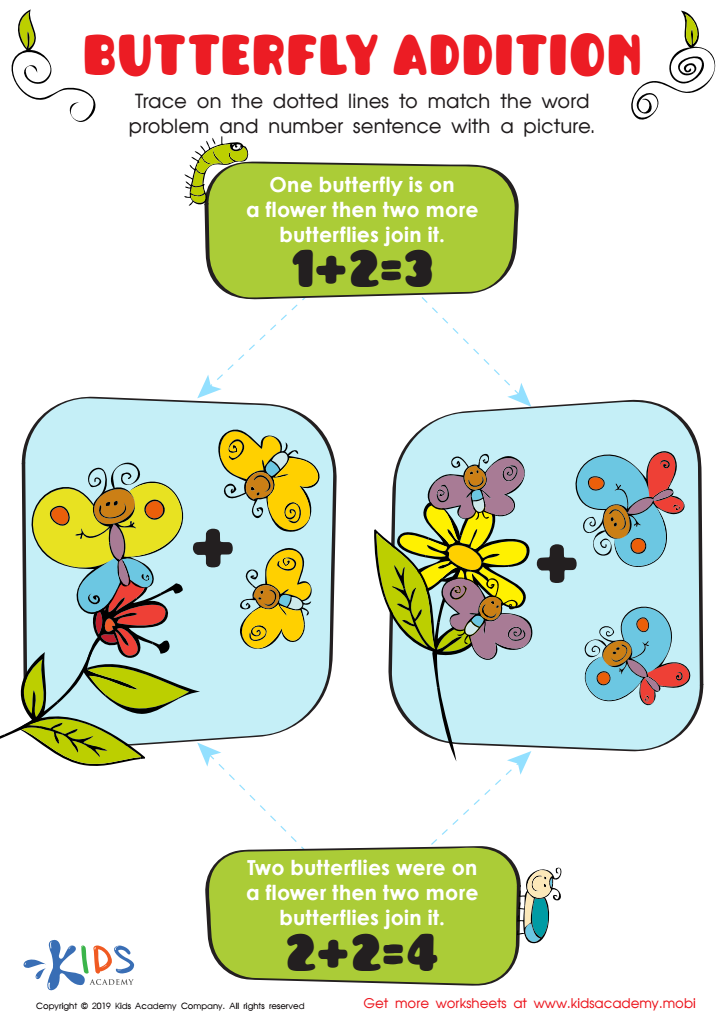
This tracing sheet is great for kids to work on math skills and have fun too. Read the word problems to them, then help them trace the dotted lines to match the problem and number sentence to a picture. Not only is it educational, it's beautiful too - your kids will love learning about butterflies!
Butterfly Addition Worksheet
Worksheet
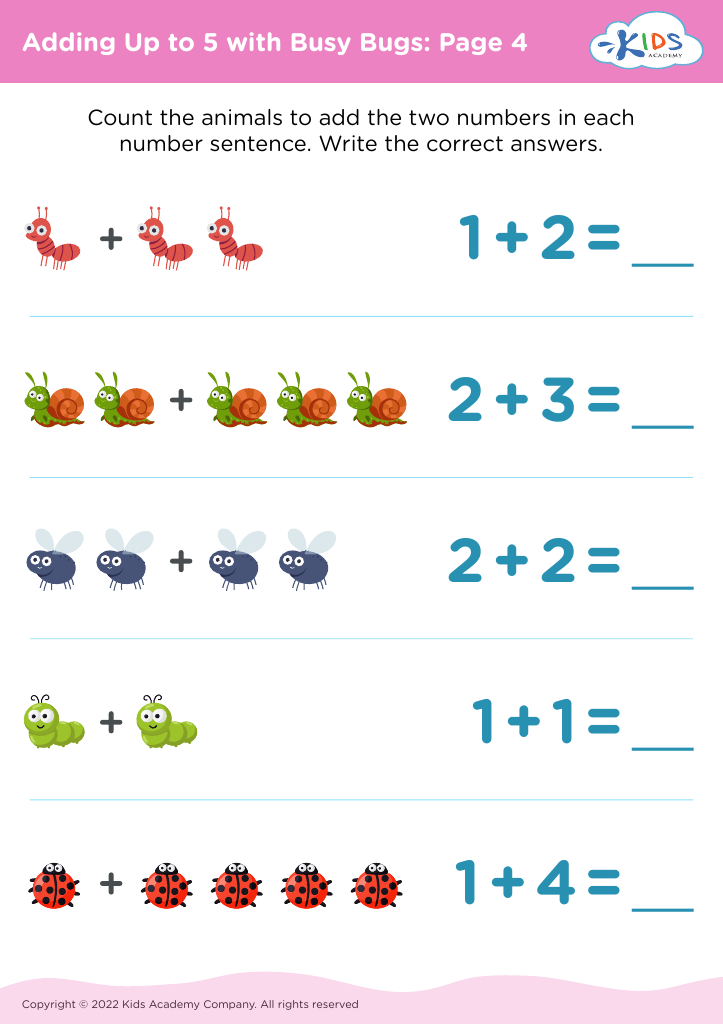
Adding Up to 5 with Busy Bugs: Page 4
Worksheet
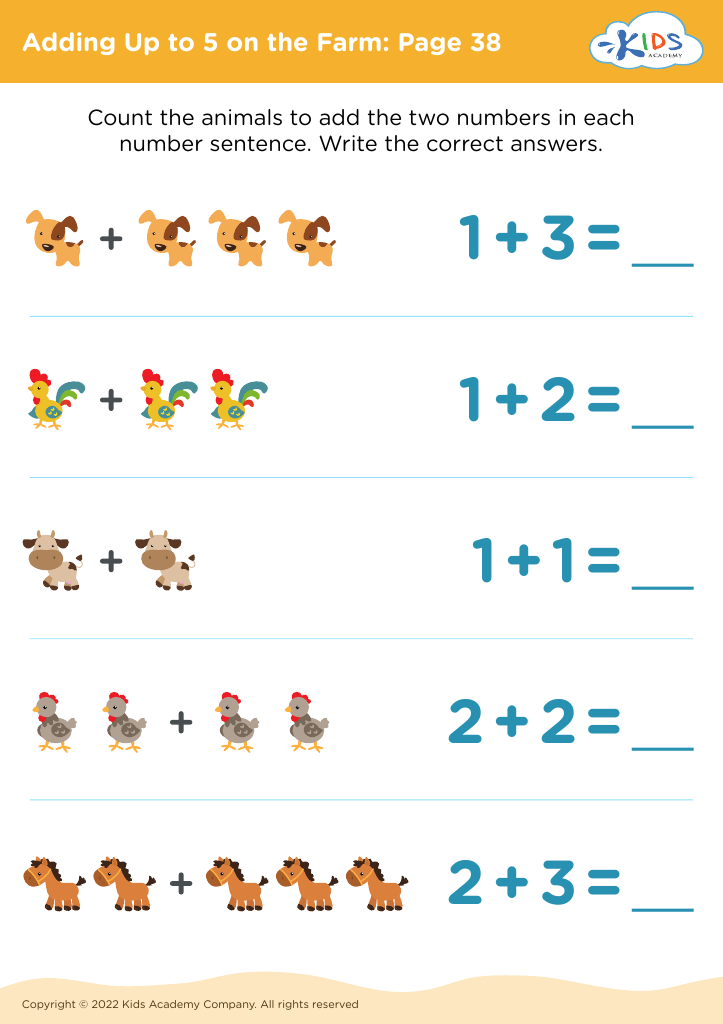
Adding Up to 5 on the Farm: Page 38
Worksheet
Adding Up to 5 with Busy Bugs: Page 57
Worksheet
Adding Up to 5 on the Farm: Page 40
Worksheet
Adding Up to 5 at the Zoo: Page 22
Worksheet
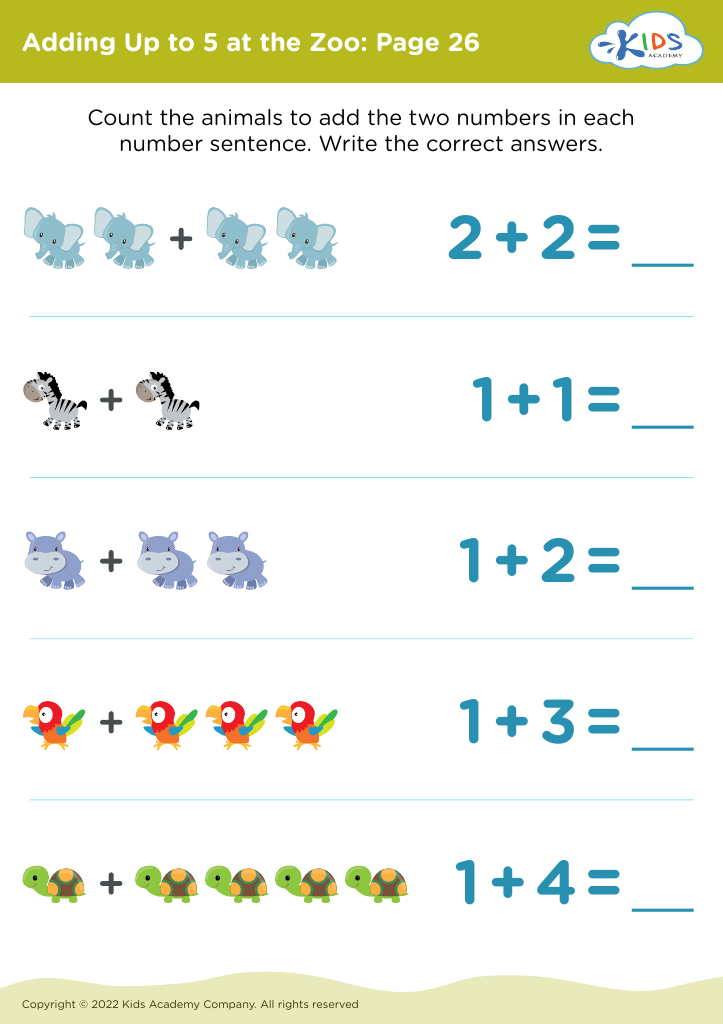
Adding Up to 5 at the Zoo: Page 26
Worksheet
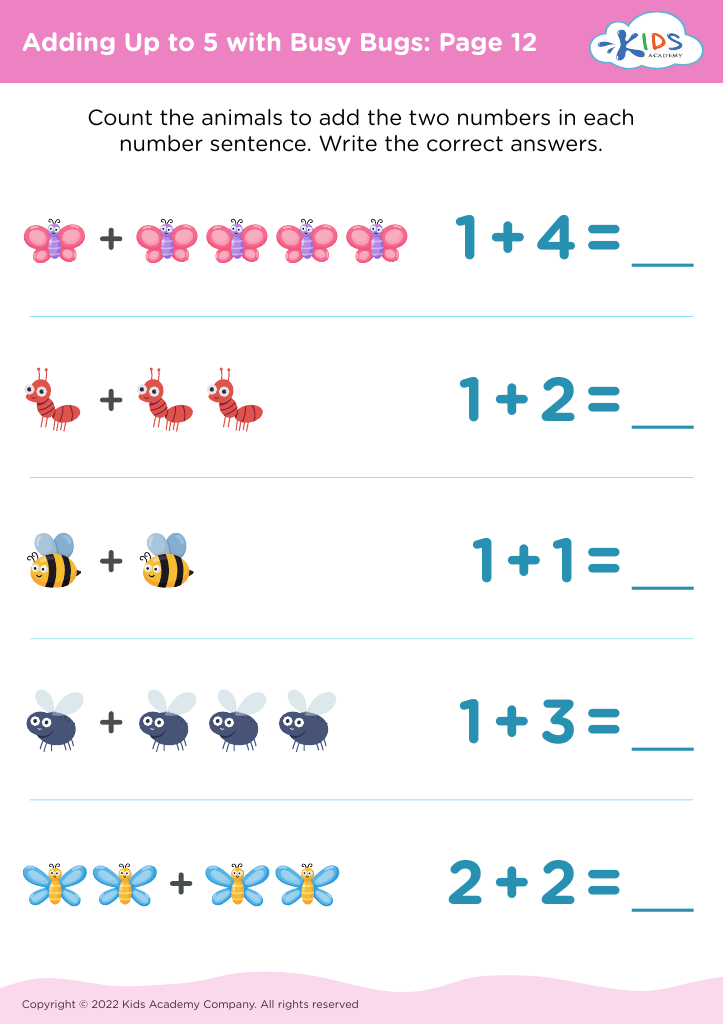
Adding Up to 5 with Busy Bugs: Page 12
Worksheet
Adding Up to 5 on the Farm: Page 49
Worksheet
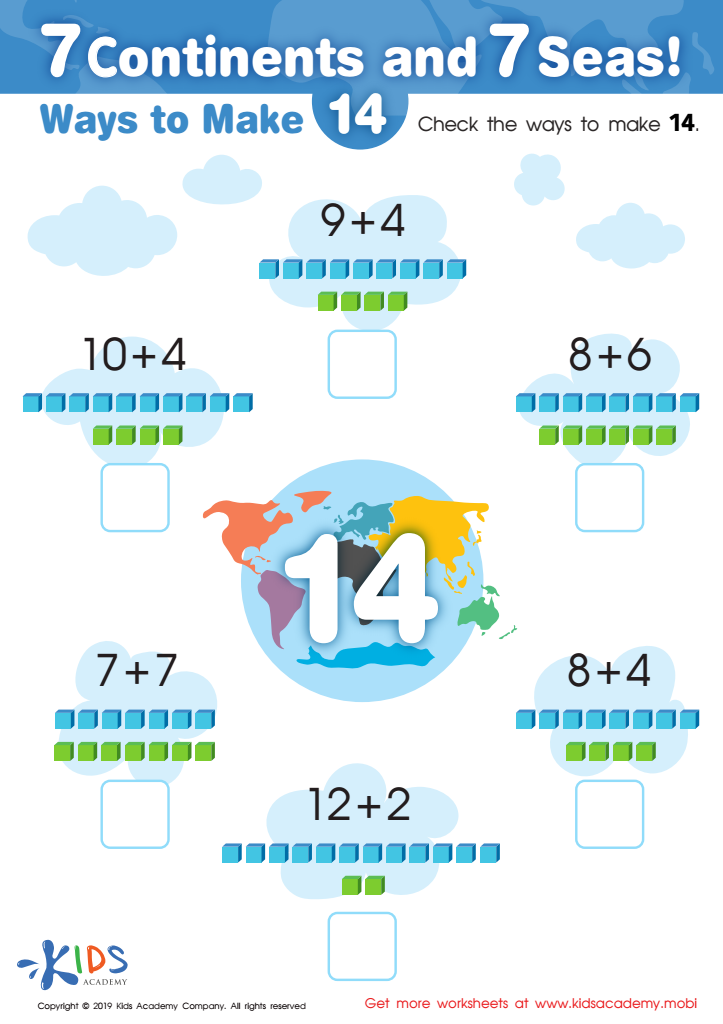
7 Continents and 7 Seas Worksheet
7 Continents and 7 Seas Worksheet

Remind kids of the continents and show them how different numbers can add up to the same figure. Give examples, like 2+2 =4, and 3+1 =4. Ask if they can provide other examples, then work through the simple additions in this worksheet with them. Ask them to circle all equations that make 14.
7 Continents and 7 Seas Worksheet

Worksheet
Adding Up to 5 at the Zoo: Page 75
Worksheet
Adding Up to 5 in the Forest: Page 72
Worksheet


Parents and teachers should prioritize addition skills for 4-year-olds because early mathematical understanding forms the foundation for future learning. At this age, children are naturally curious and excited about learning, making it an ideal time to introduce basic concepts. Addition skills help develop critical thinking and problem-solving abilities, which are essential throughout their educational journey.

Moreover, engaging with numbers in playful and meaningful ways can enhance children’s cognitive development. Simple activities like counting toys, clapping rhythms, or using visual aids like blocks bolster their understanding of quantity and addition. Encouraging these skills promotes not just mathematical abilities but also language skills, as children learn to talk about numbers and relate them to everyday experiences.

Additionally, fostering addition skills can boost confidence in young learners. As children master basic addition, they build a sense of accomplishment, motivating them to tackle more complex concepts in the future. Early competency in math is correlated with academic success later on, impacting a child's overall confidence in school settings.

Ultimately, focusing on addition at this formative age set children on a path of lifelong learning, paving the way for both their academic and personal growth.