
Spelling practice Worksheets for 4-Year-Olds
55 filtered results
Difficulty Level
Grade
Age
-
From - To
Subject
Activity
Standards
Discover fun and engaging Spelling Practice Worksheets for 4-year-olds that enhance early literacy skills. Tailored specifically for young learners, these worksheets introduce essential spelling concepts through colorful visuals and interactive activities. Children will enjoy tracing letters, matching pictures with words, and filling in missing letters in a playful manner. Our resources not only promote spelling proficiency but also boost fine motor skills and concentration. Ideal for both classroom and home learning, these worksheets create an enjoyable educational experience. Support your child’s language development and build confidence in reading with our expertly crafted spelling activities today!
Favorites
With answer key
Interactive
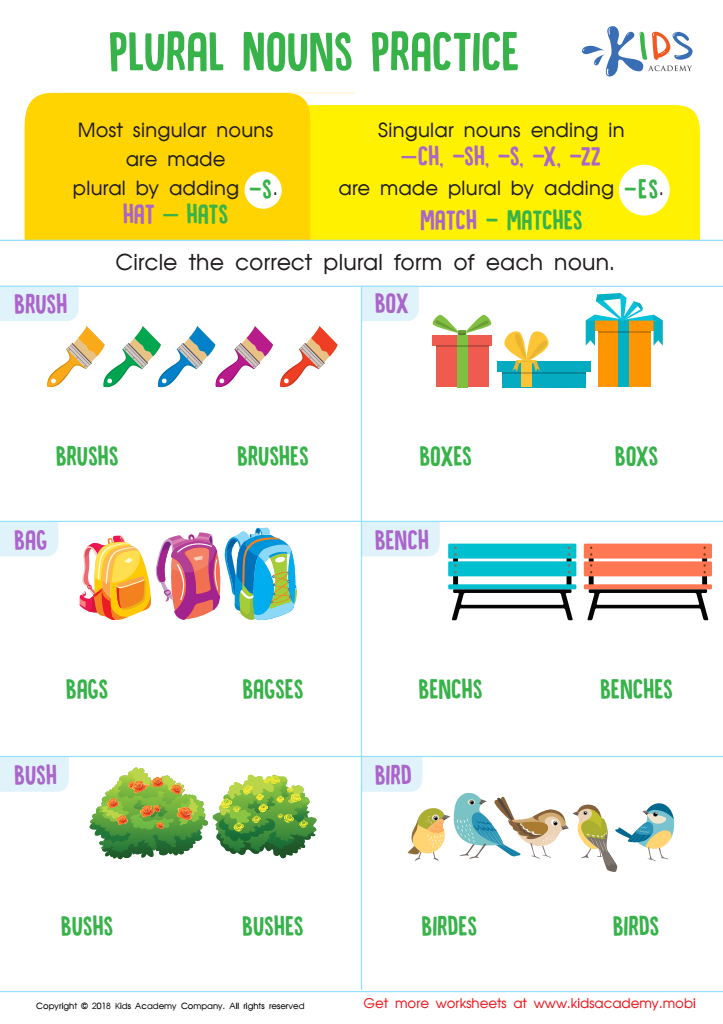
Plural Nouns Practice Worksheet
Explain to your child that most singular nouns become plural by adding "-s". E.g. "cat"->"cats". For words ending in "-ch", "-sh", "-s", "-x", or "-zz", add "-es". E.g. "buzz"->"buzzes". Then, get them to circle the right plural form of each noun on the worksheet.
 Assign to My Students
Plural Nouns Practice Worksheet
Worksheet
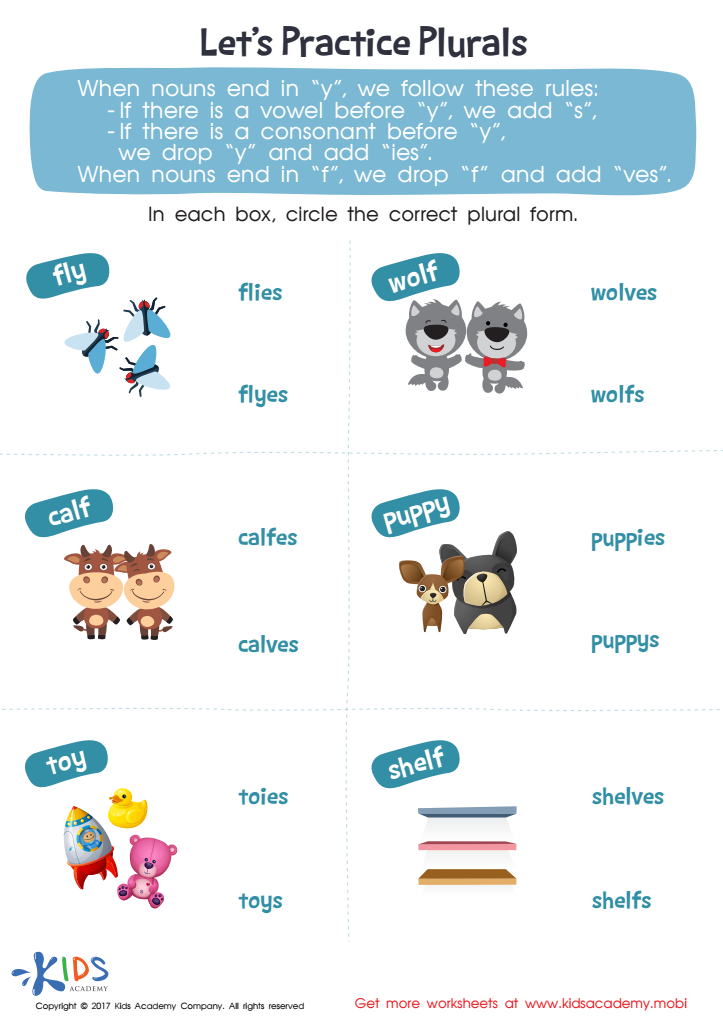
Let's Practice Plurals Word Structure Worksheet
Practise plurals with this meaningful word structure worksheet. Plurals can be tricky for kids, but with this worksheet they'll learn to transform singular words with certain ends into plural forms.
Let's Practice Plurals Word Structure Worksheet
Worksheet
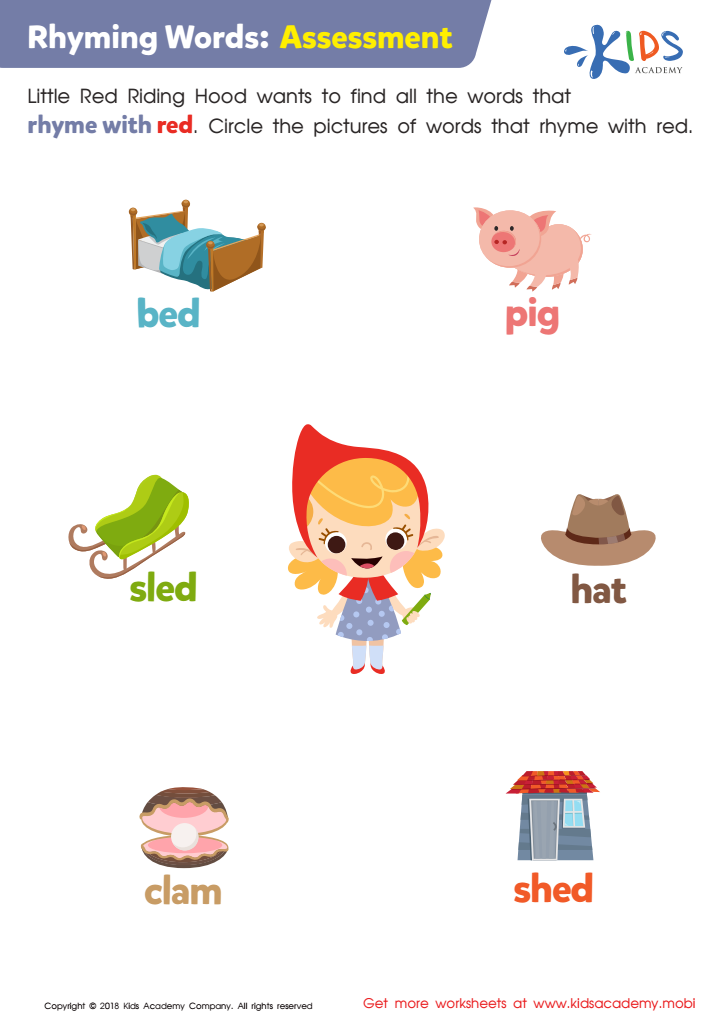
Rhyming Words: Assessment Worksheet
Help Little Red Riding Hood find rhyming words with "red". Download and print this worksheet. Have your child circle the rhyming words and pictures. Get them to say each word out loud and compare it to the word "red". When they're done, review the answers and talk about any words that don't rhyme.
Rhyming Words: Assessment Worksheet
Worksheet
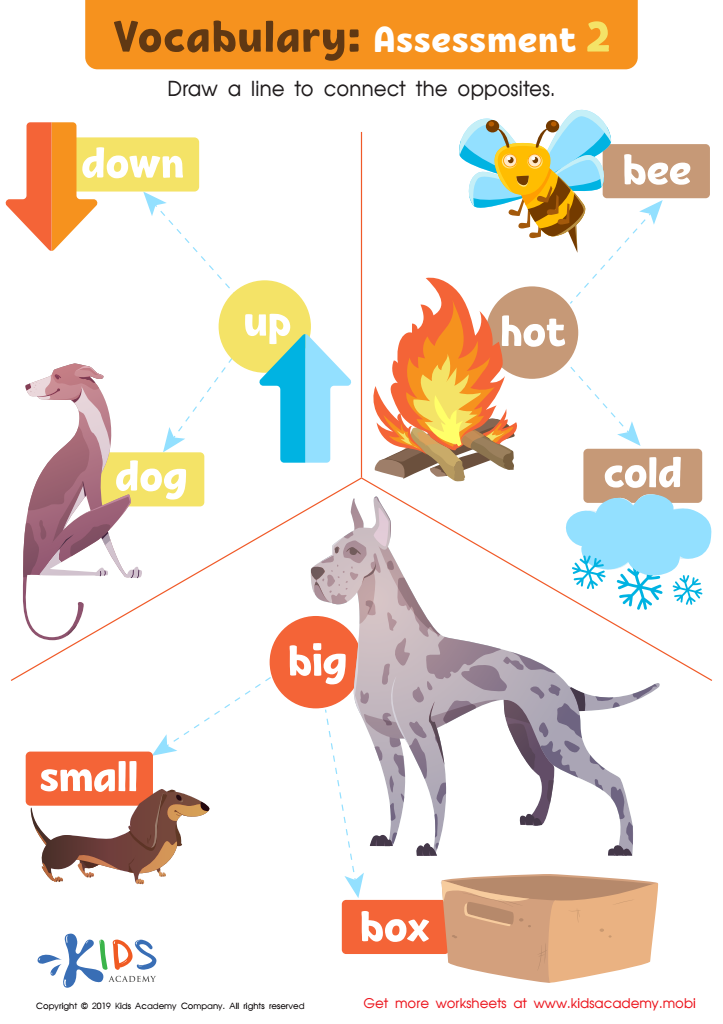
Vocabulary: Assessment 2 Worksheet
Opposites attract! Boost your preschooler's vocabulary by reviewing antonyms with this fun worksheet. View the images, read the words, and find the opposites. Guide your learner with the illustrations, then discuss each one before they trace the dotted lines to match. Have fun and reinforce learning!
Vocabulary: Assessment 2 Worksheet
Worksheet
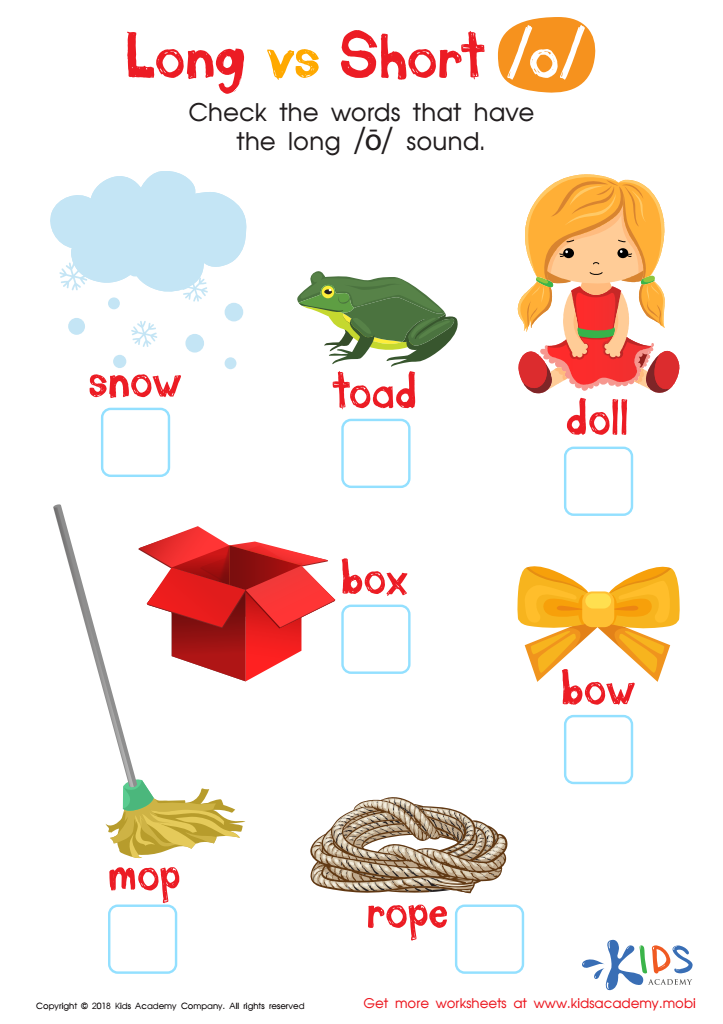
Long vs Short O Reading Worksheet
Help your child learn to identify the long and short «o» sound with this colourful worksheet. Guide them as they spot words with the long or short «o» sound. With practice, your child will find it easier to tell the difference between the two.
Long vs Short O Reading Worksheet
Worksheet
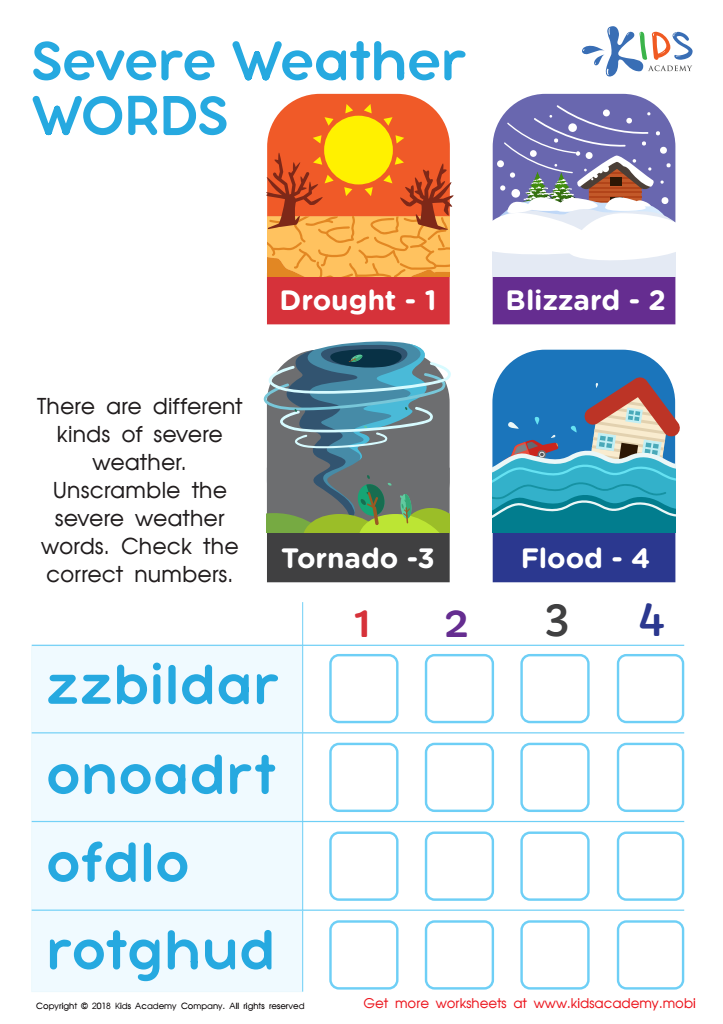
Severe Weather Words Worksheet
Help your child learn about severe weather with this PDF worksheet! Review each image's term and discuss, then have kids unscramble the words. Match the picture number to the term by selecting the correct box. Let your kids work through it and become weather-savvy!
Severe Weather Words Worksheet
Worksheet
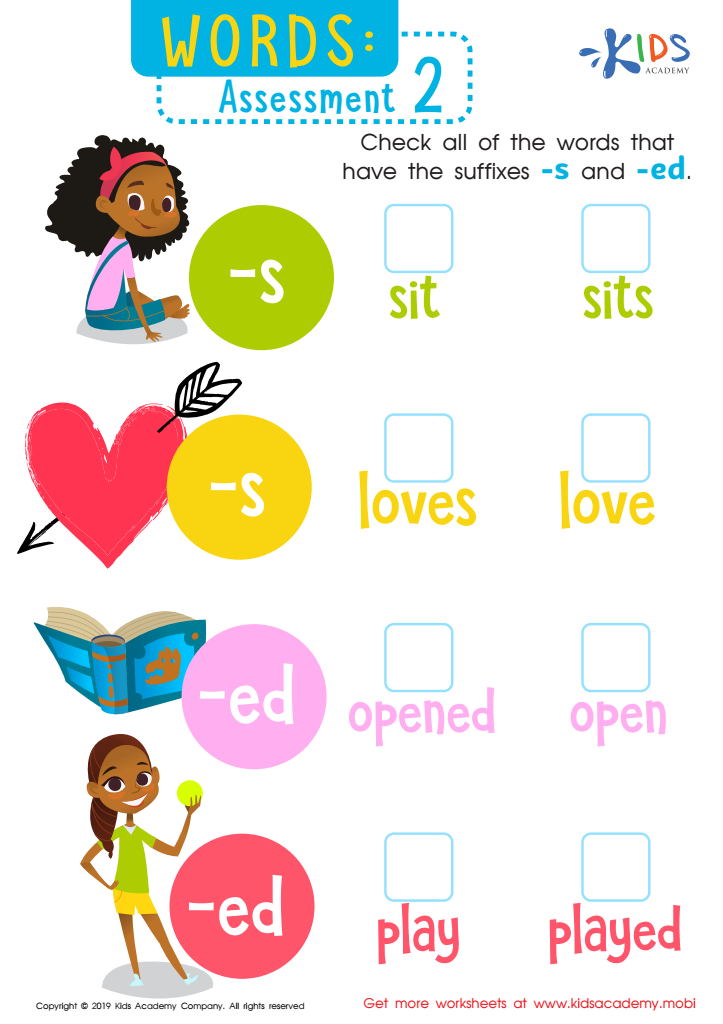
Words: Assessment 2 Worksheet
Test your child’s knowledge of -s and -ed word endings with this fun worksheet! They'll look at images and read the words, then choose the correct suffix to finish each one. Vivid illustrations make this an enjoyable learning experience!
Words: Assessment 2 Worksheet
Worksheet
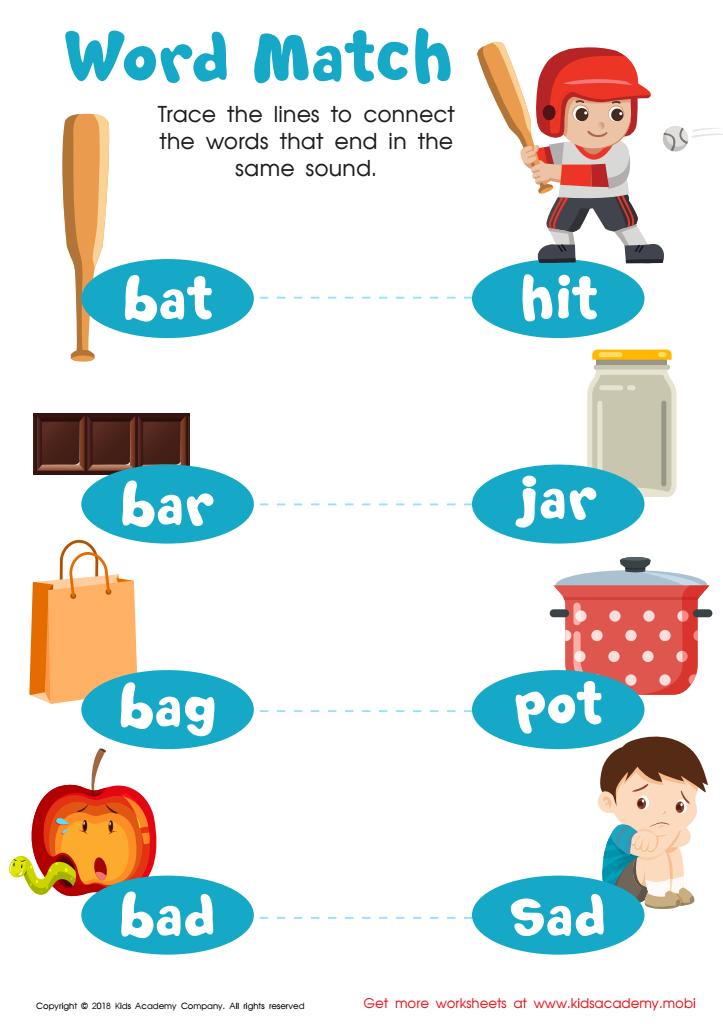
Word Match Reading Worksheet
This printout helps children learn to read fluently by connecting words with the same sound. Colorful pictures aid understanding and context for kindergarten-level students. Tracing lines, they learn to identify the sounds made by letters of the alphabet and deepen their knowledge of phonics.
Word Match Reading Worksheet
Worksheet
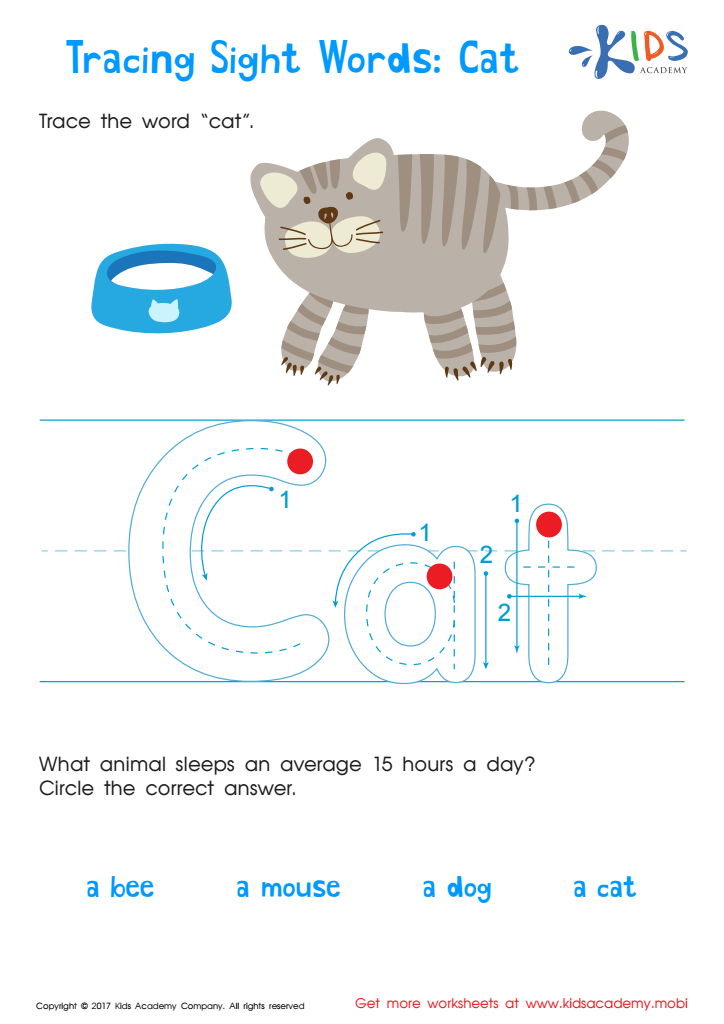
Cat Printable Sight Words Worksheet
Encourage your child's literacy with this fun sight words worksheet: cat PDF! It helps build a solid foundation for reading, featuring activities such as reading and tracing the word cat, and finding it amongst other sight words. With its cute cat, Kids Academy makes learning to read a delight!
Cat Printable Sight Words Worksheet
Worksheet
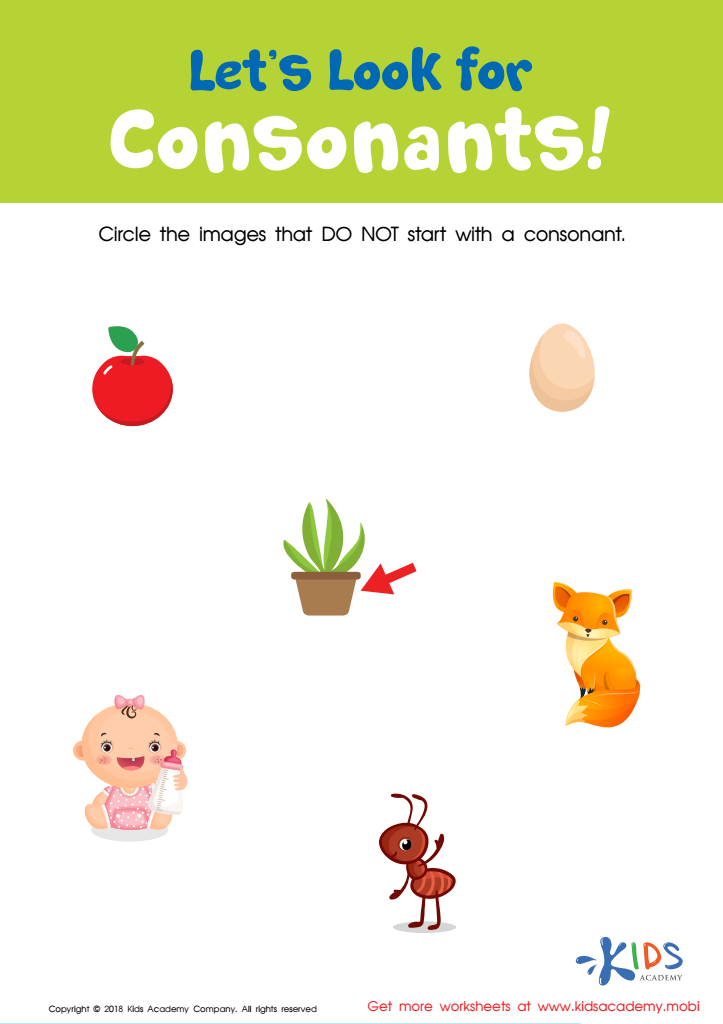
Let's Look for Consonants Worksheet
Help kids learn consonants and words that start with them. Ask them to recite the alphabet, then explain consonants are all letters but the 5 vowels. Use the worksheet to ask them to circle items without a consonant. Emphasize that's 21 consonants.
Let's Look for Consonants Worksheet
Worksheet
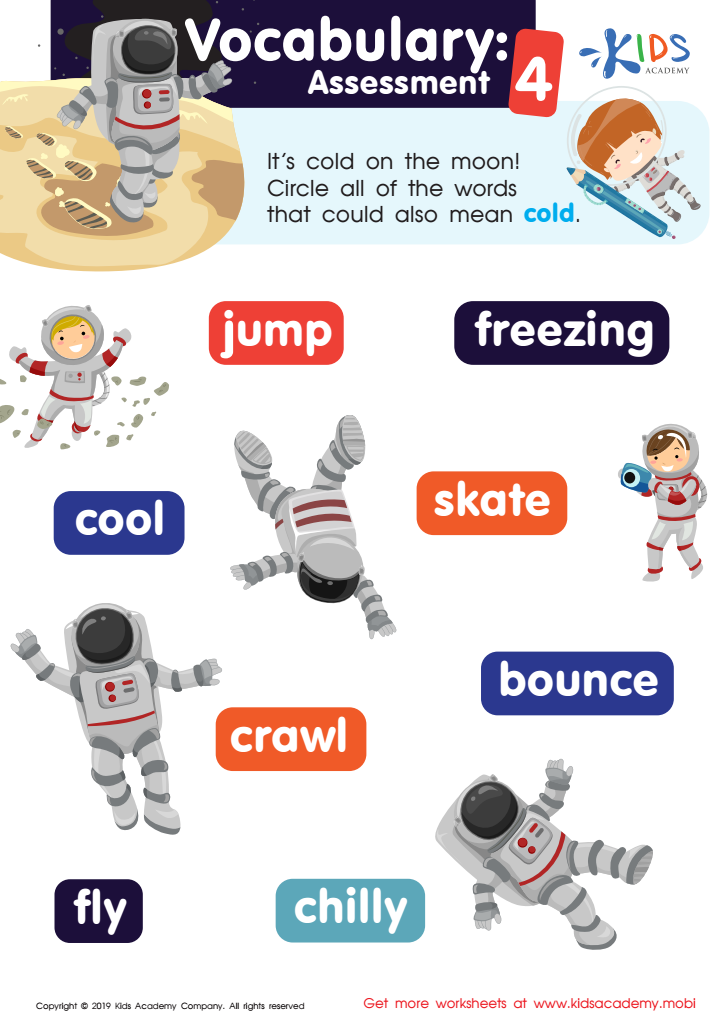
Vocabulary: Assessment 4 Worksheet
Download this free worksheet and have your child explore outer space with our charming astronauts! Help them find the right words to describe the chilly moon. Have fun with synonyms as they circle the right words to match "cold". Let your child's imagination run wild as they discover the wonders of space with this Kids Academy exercise!
Vocabulary: Assessment 4 Worksheet
Worksheet
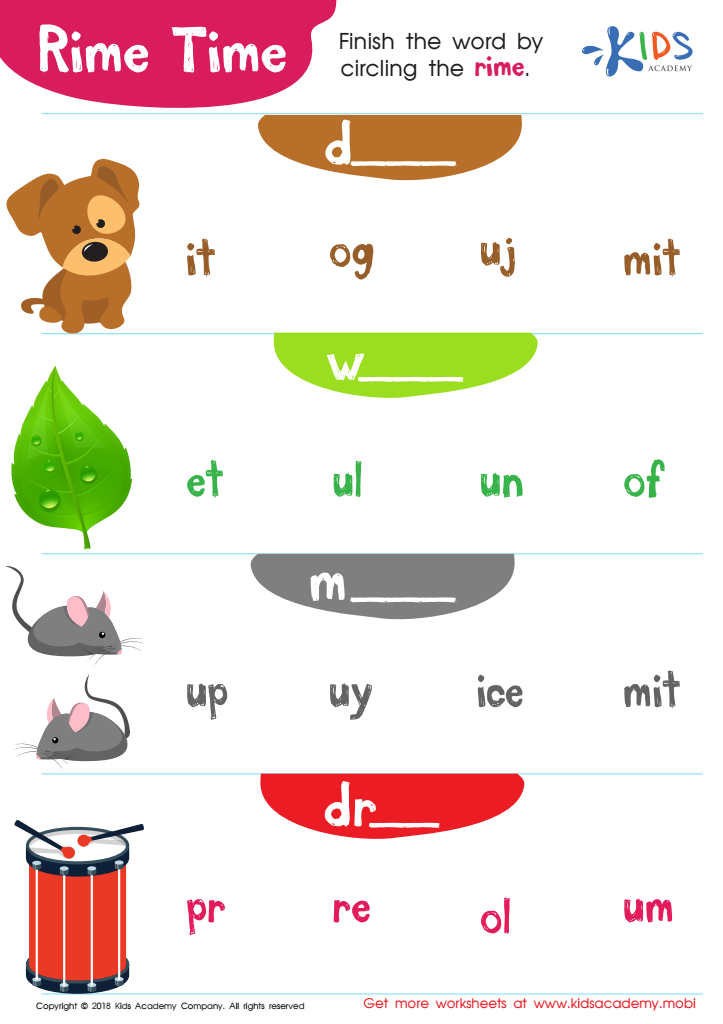
Rime Time Worksheet
This free PDF worksheet helps new and emerging readers identify rimes (the letters after initial consonants) and practice fine motor skills. Kids trace the correct rimes for each picture and increase their fluency and decoding skills with each one!
Rime Time Worksheet
Worksheet
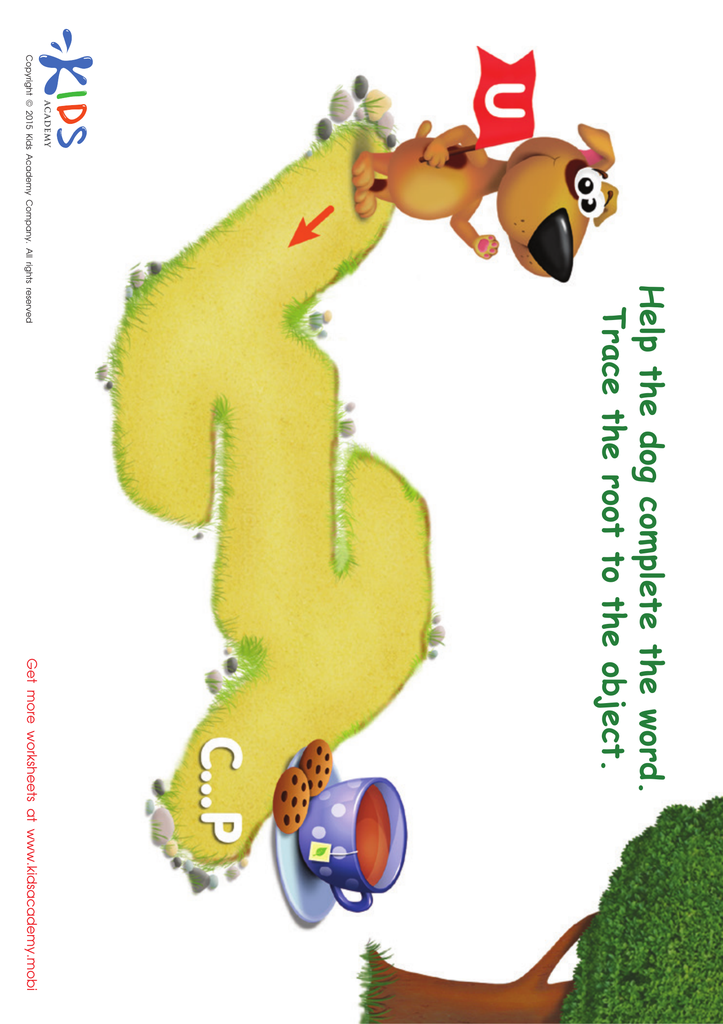
Short Vowel Sound U Worksheet Worksheet
Help your early reader join the adorable dog on his way to the cup of tea with cookies. This traceable worksheet reinforces the short -u sound and strengthens fine motor skills. Kids don't realize they are practicing reading skills while having fun!
Short Vowel Sound U Worksheet Worksheet
Worksheet
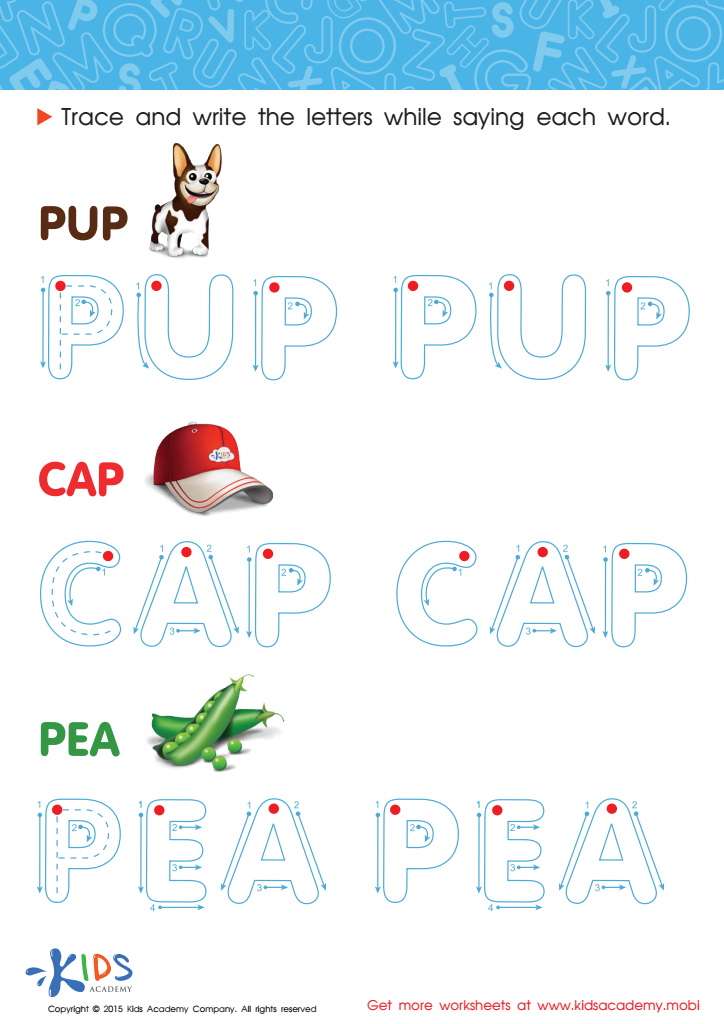
A Pup, a Cap and a Pea Spelling Worksheet
Practice tracing and writing with three new words. Carefully trace each word and try to remember it, then move on to the next one. Head to Kids Academy for more tracing worksheets!
Get your pencils ready! Let's practice tracing and writing three new words on Kids Academy's spelling worksheets. Carefully trace each line and remember the words. Pick more great worksheets on their website to continue practicing. Have fun!
A Pup, a Cap and a Pea Spelling Worksheet
Worksheet
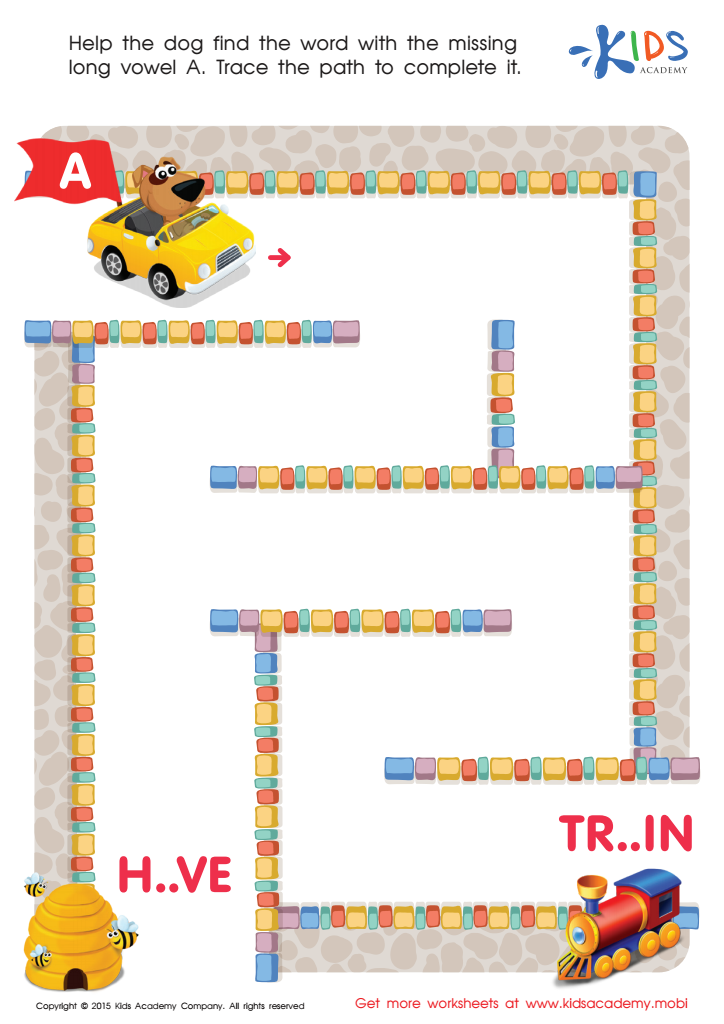
Long Vowel Sound A Worksheet
Teach your young learner about the long vowel A with this colorful free printable phonics worksheet. The long vowel A says its name while the short vowel A does not. Complete the worksheet by tracing the root to the toy train and helping the dog by filling in the missing letter A. Have them practice writing and spelling with phonics while having fun!
Long Vowel Sound A Worksheet
Worksheet
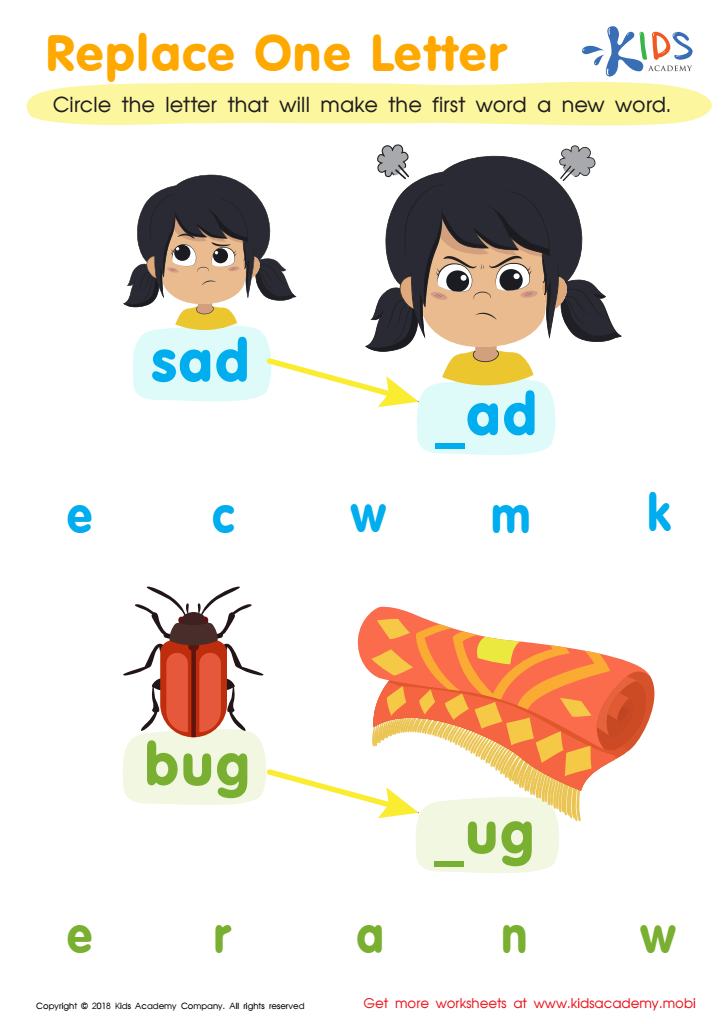
Replace One Letter Worksheet
Emerging readers will practice switching initial consonants to create new words with this fun PDF worksheet. They'll use picture clues, learn about onset letters and work on their fine motor skills as they circle the right letter for each "ad" and "ug" word family.
Replace One Letter Worksheet
Worksheet
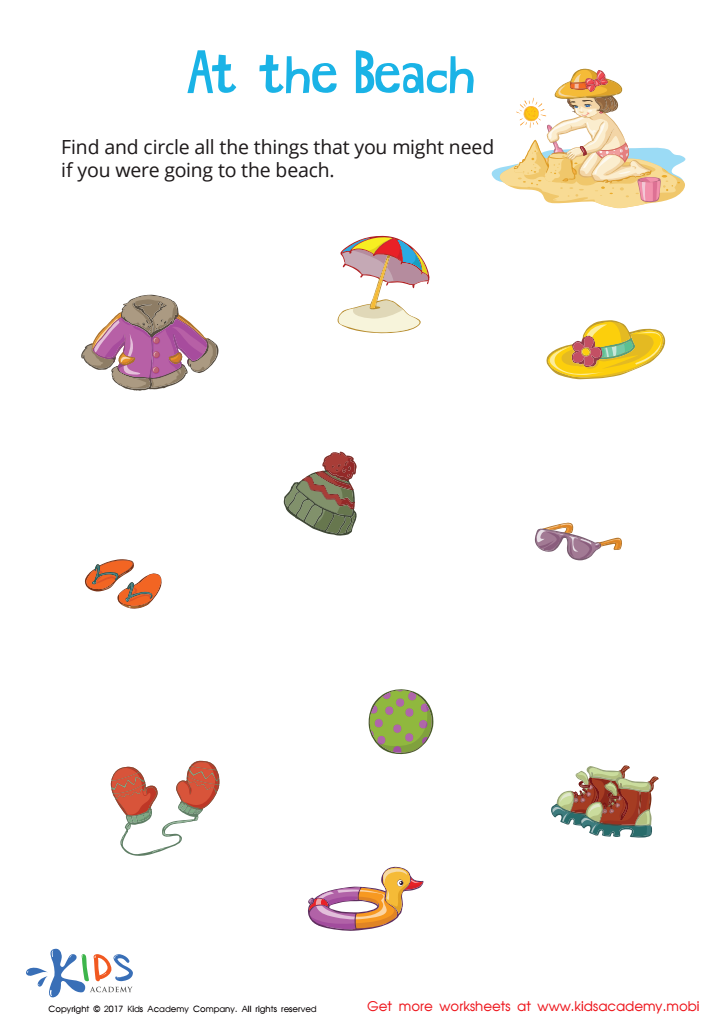
At the Beach Sorting Worksheet
Let your child get beach-ready with this summer worksheet! They'll sort items for a beach trip, then imagine their own trip and make a list. This helps sharpen problem solving and sorting skills plus encourages creative thought.
At the Beach Sorting Worksheet
Worksheet
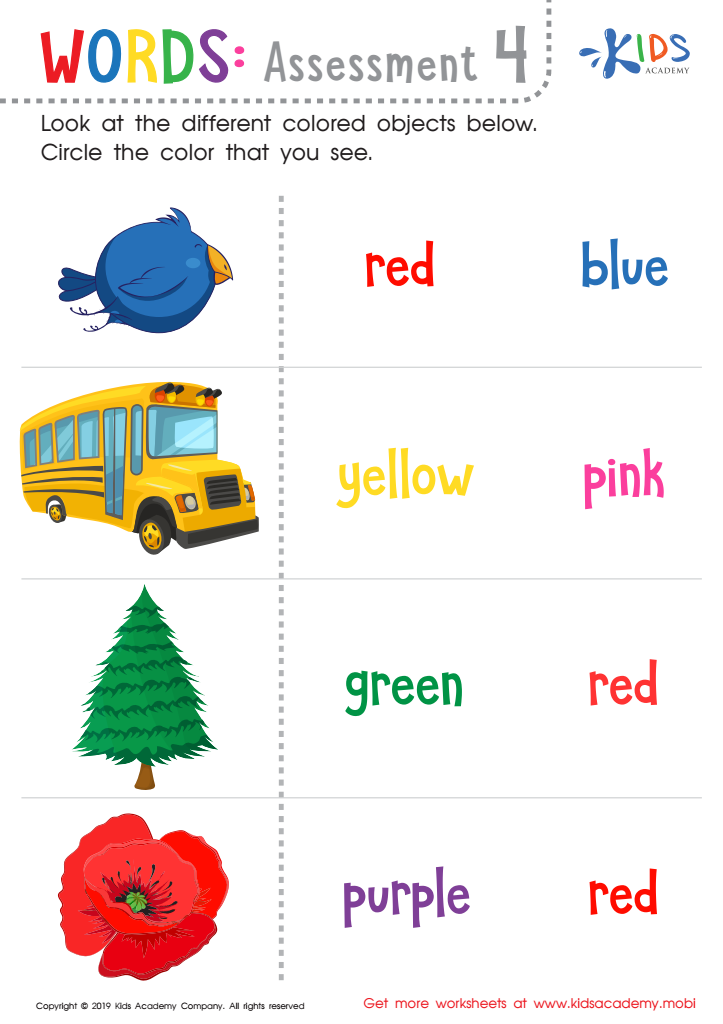
Words: Assessment 4 Worksheet
Look at the pictures and have your child circle the color they see. This free worksheet is great for assessing their knowledge of vocabulary words. It offers familiar images with words for kids to read and match with the colors. Help your child build their reading and understanding skills with this fun activity!
Words: Assessment 4 Worksheet
Worksheet
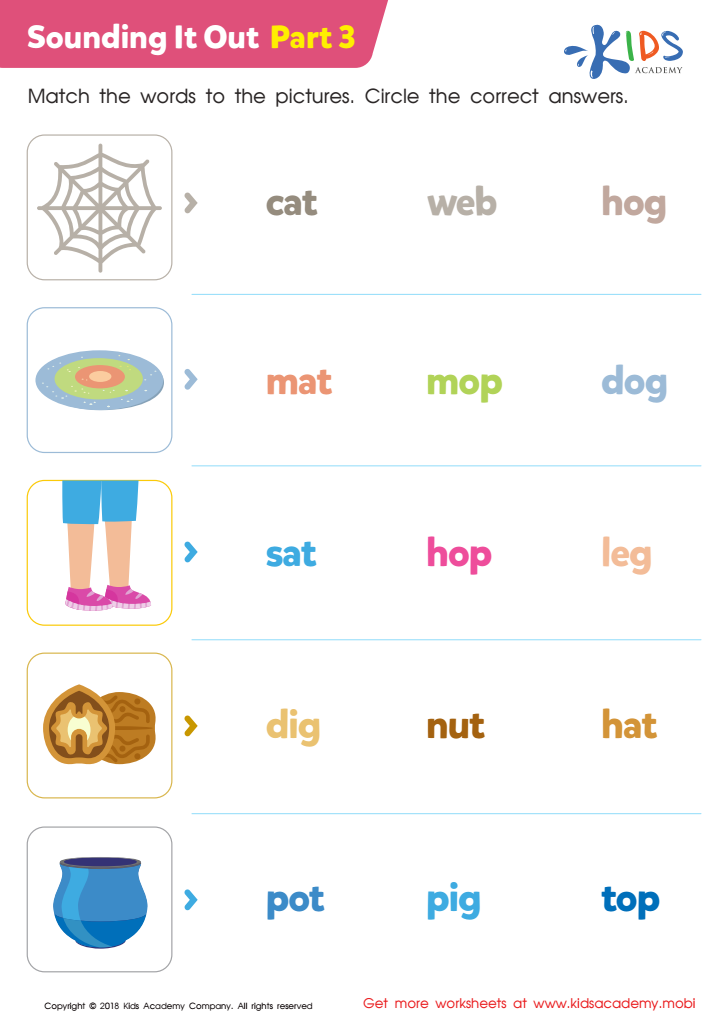
Sounding it Out: Part 3 Worksheet
Once Parts 1 and 2 are complete, this printable phonics worksheet will help kids take their reading skills to the next level! As they gain confidence, give them hints less often and direct their attention to three words in a row. Ask them to read and circle the correct word to complete!
Sounding it Out: Part 3 Worksheet
Worksheet
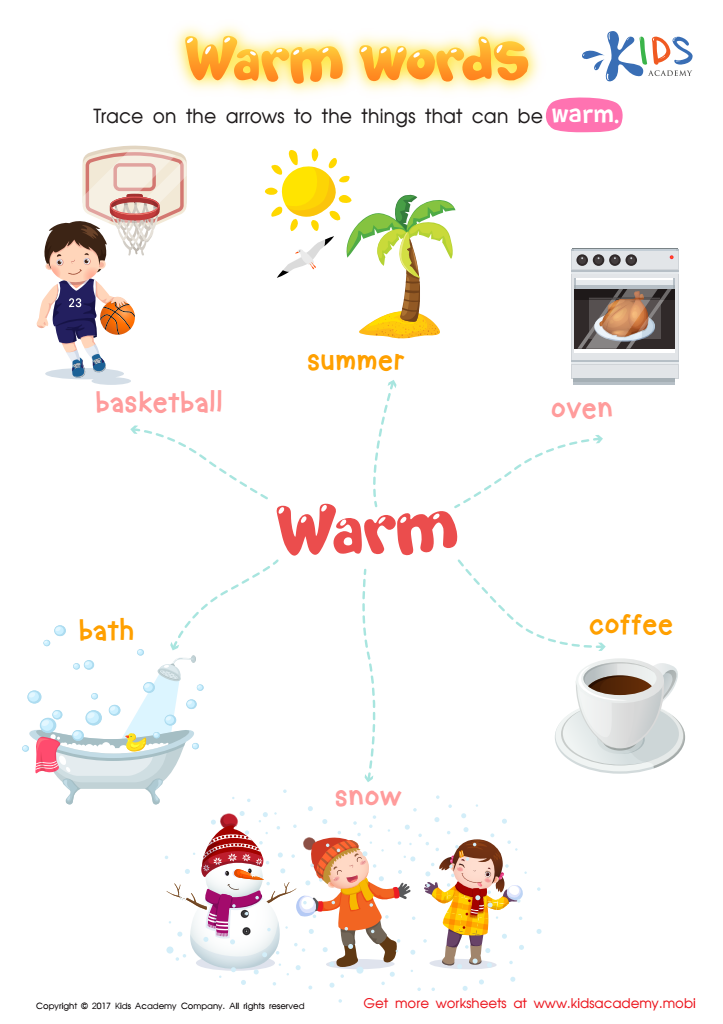
Warm Words Worksheet
Learning with tracing sheets is fun! Ask your child to list some things associated with warm temperatures. Then, trace the arrows on the worksheet with them and explore the items that can be warm. Have fun!
Warm Words Worksheet
Worksheet
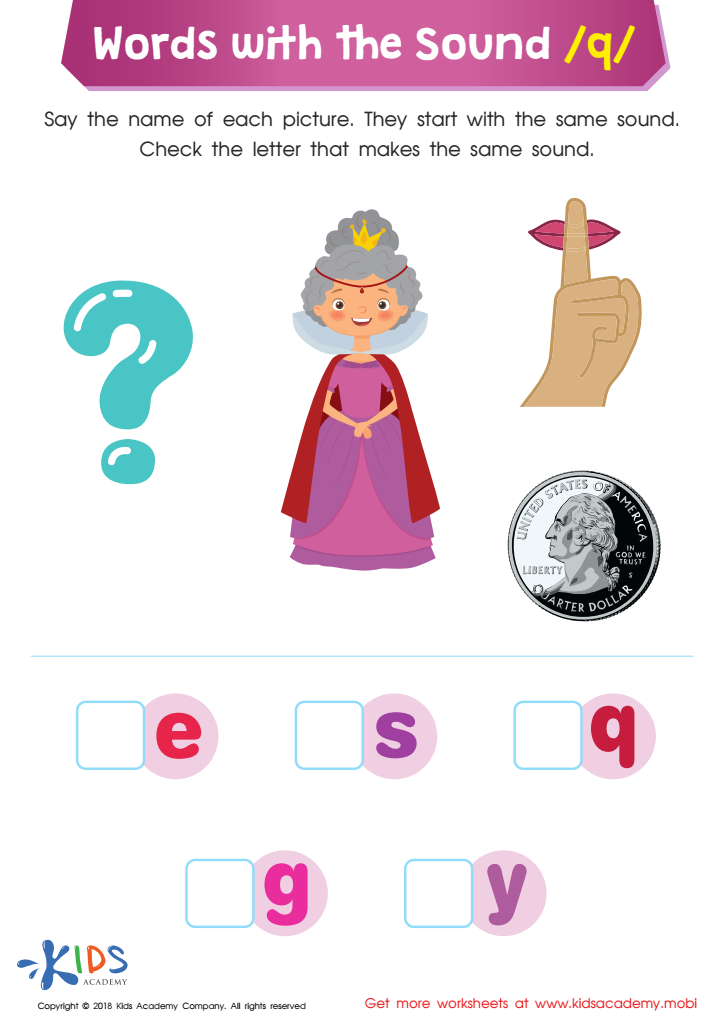
Words with Sound Q Reading Worksheet
Beginning readers will love this free PDF worksheet! Bright colors and familiar pictures make it fun, as they say the name of each image and work on fine motor skills. Letters “q” is featured among others, helping to recognize and isolate its sound, which is often seen with a “u” behind it.
Words with Sound Q Reading Worksheet
Worksheet
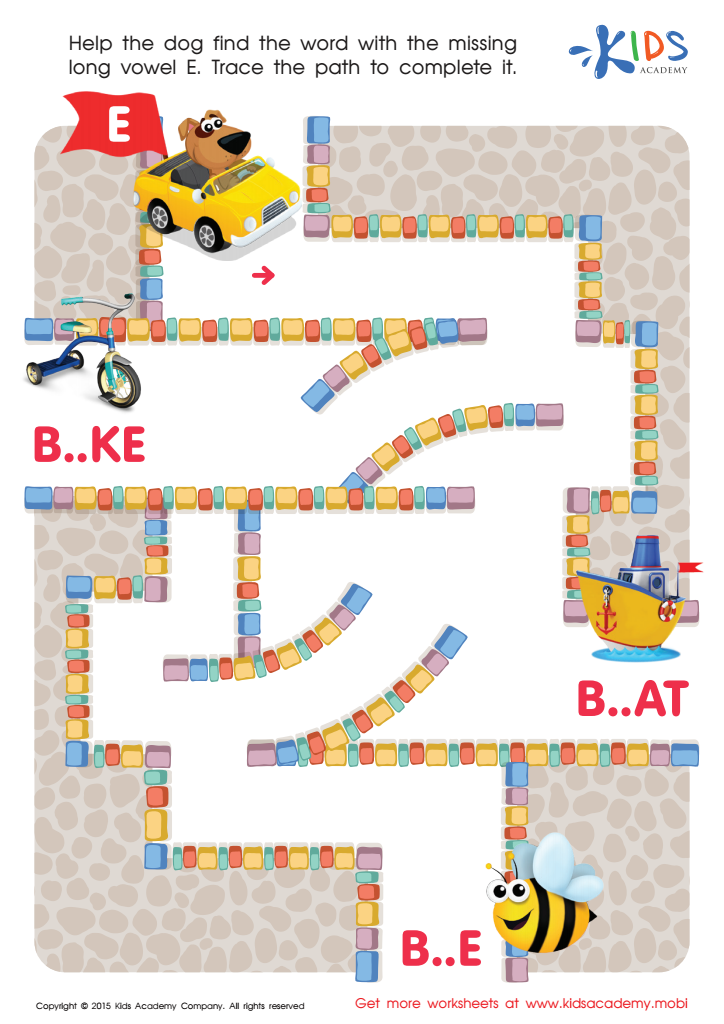
Long Vowel Sound E Worksheet
Practice distinguishing long and short vowel sound E with this free printable! Kids must complete the word “bee” by tracing the maze and adding the missing letter E. Remind them to say the word aloud to help sharpen their phonics ear. Get more phonics fun with the vowel sound E here.
Long Vowel Sound E Worksheet
Worksheet
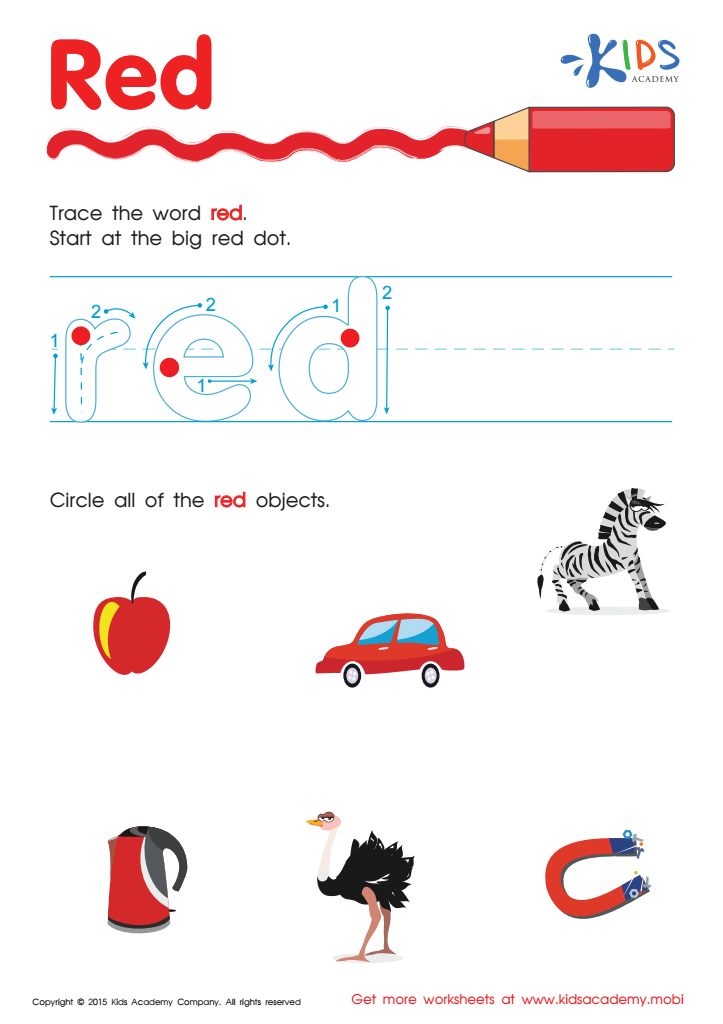
Red Tracing Color Words Printable
Trace red letter by letter, following the arrows and circling all the red objects. Look around your room and find something red. Have fun and become a handwriting master with this worksheet!
Red Tracing Color Words Printable
Worksheet
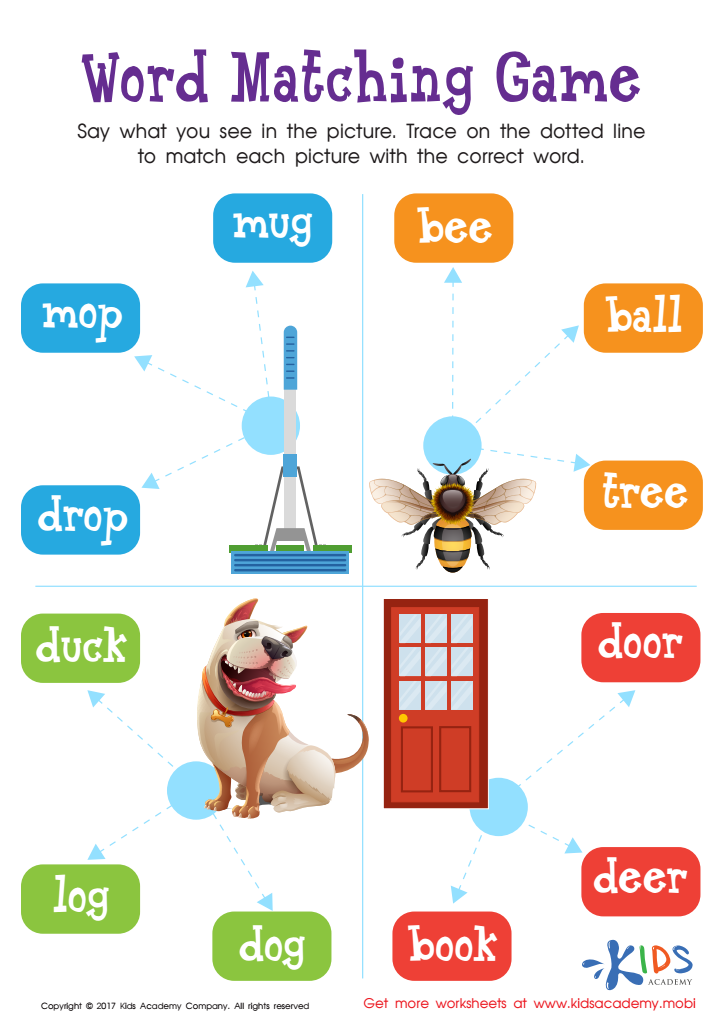
Word Matching Game Worksheet
Help your early reader develop prereading skills with this fun matching worksheet! Visual cues help them learn sight words, decode words in word families, and identify phonetic patterns. They'll practice discerning sounds past initial consonants while saying the name of the picture and finding the matching word - and reading at the same time!
Word Matching Game Worksheet
Worksheet
Join Kids Academy for Free
Who is primarily going to use this learning content?





.jpg)


Spelling practice for 4-year-olds is critical in laying the foundation for literacy development. At this age, children are building the skills needed to understand the connection between letters, sounds, and words. Engaging in spelling activities helps boost phonemic awareness, which is the ability to hear and manipulate sounds in spoken words—a crucial skill for reading and writing.
Furthermore, spelling practice fosters cognitive development by enhancing memory and problem-solving abilities. When children learn to spell, they exercise their memory by recalling specific letter patterns and sequences. This process not only supports reading but also nurtures critical thinking as they learn to recognize and categorize words.
Additionally, early spelling practice promotes confidence in communication. When children are encouraged to spell out words, they become more willing to express themselves, whether through writing or verbal interaction. This encouragement builds their self-esteem and motivation to learn more.
Lastly, involving parents and teachers in spelling practice creates a supportive learning environment. It provides opportunities for collaboration and positive reinforcement, which reinforces the joy of learning. By prioritizing spelling practice, caregivers and educators play a vital role in equipping young children with essential literacy skills for future academic success.








