Syllable identification Worksheets for 4-Year-Olds
3 filtered results
-
From - To
Our Syllable Identification Worksheets for 4-Year-Olds provide a fun and engaging way for preschoolers to enhance their phonological awareness skills. These printables are designed to help young learners identify and count syllables in simple words, building a strong foundation for reading readiness. Featuring vibrant illustrations and easy-to-follow instructions, our worksheets make learning interactive and enjoyable. Perfect for both classroom and home settings, these exercises will develop essential literacy skills, boost confidence, and nurture a love for learning in every child. Download them today to start your little one’s journey toward reading proficiency.
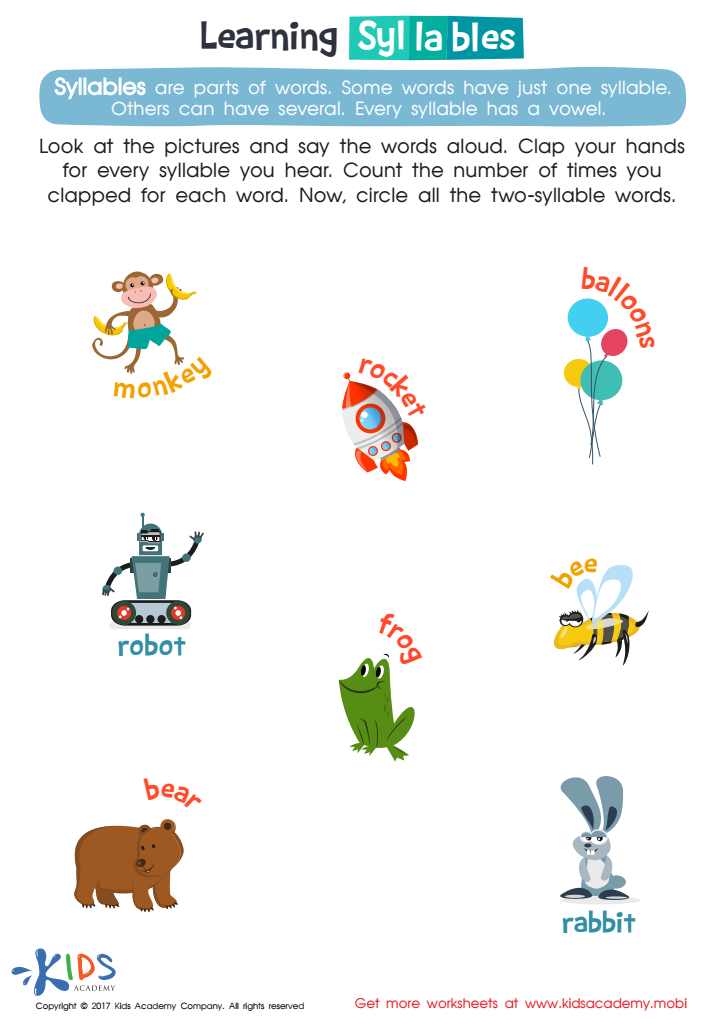
Learning Syllables Word Structure Worksheet
 Assign to My Students
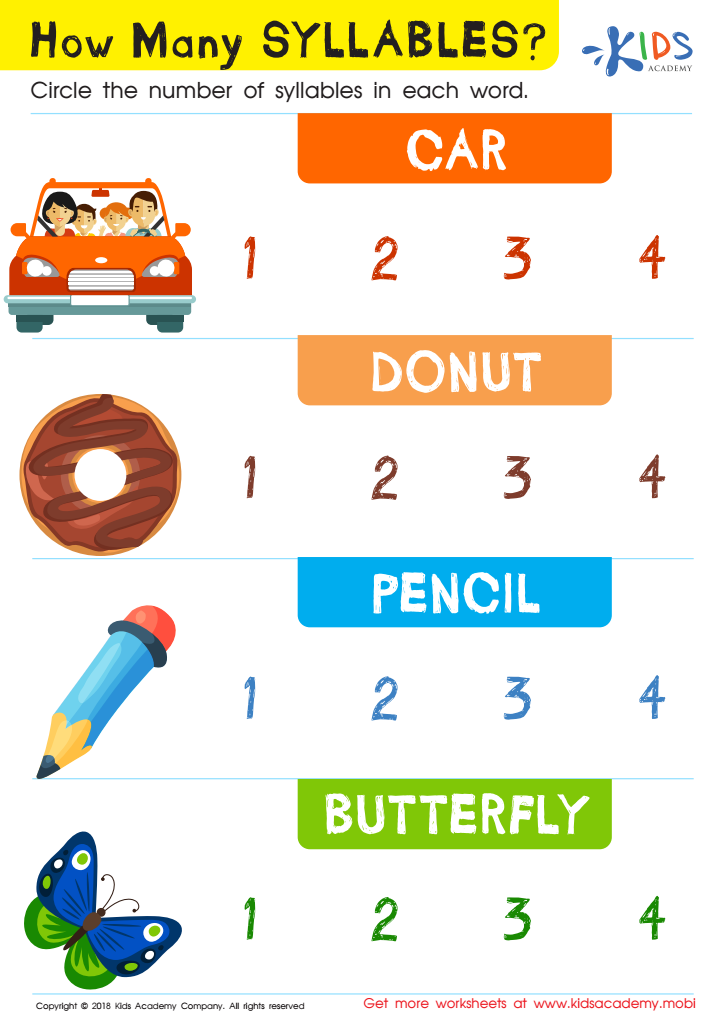
How Many Syllables? Worksheet
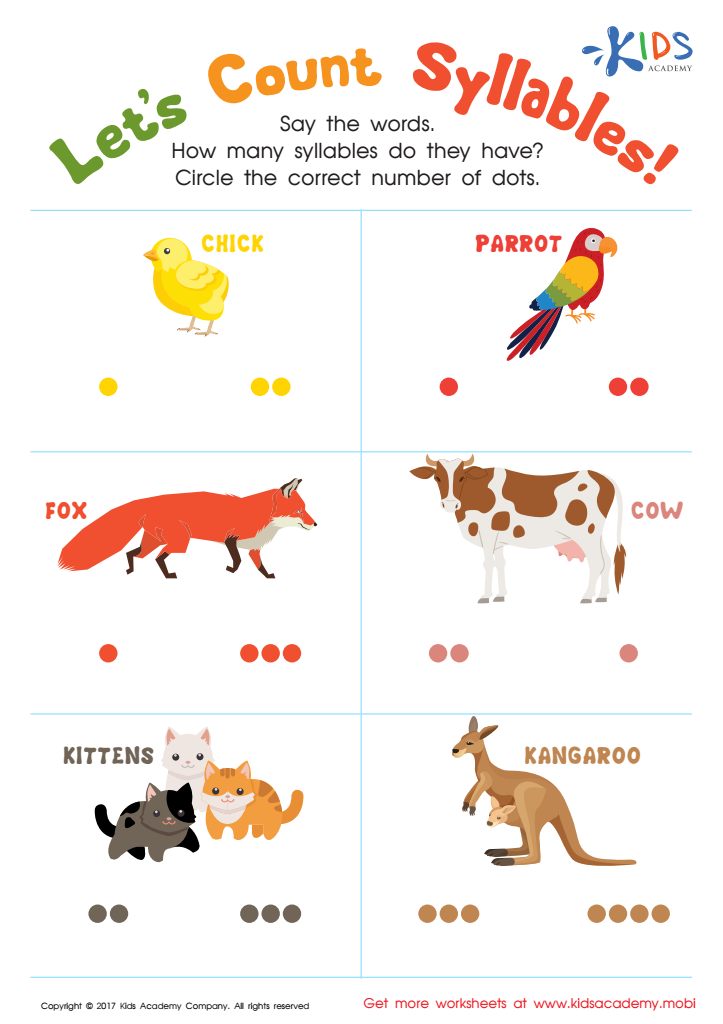
Lets Count Syllables Worksheet







Syllable identification is a foundational skill crucial for language development in young children, and both parents and teachers should pay attention to it for several reasons. First, understanding syllables helps children break words into manageable chunks, facilitating easier and more accurate pronunciation. Recognizing syllables aids in phonemic awareness, the ability to hear, identify, and manipulate individual sounds in spoken words. This skill is a critical precursor to reading.
Moreover, syllable identification enhances vocabulary development. By breaking words into smaller parts, children can more readily learn new words and their meanings. This, in turn, boosts their ability to express themselves clearly and understand more complex language structures.
Additionally, early syllable awareness positively impacts literacy skills. Research shows that early phonological awareness, including syllable identification, is a predictor of later reading success. When children can easily segment words into syllables, they build the confidence and skills needed to tackle the decoding process in reading and writing.
Furthermore, syllable identification can make learning more enjoyable. Activities like clapping hands or tapping feet to the beat of syllables can be both fun and educational, engaging young learners in the process.
In sum, focusing on syllable identification for 4-year-olds lays the groundwork for essential language and literacy skills, making it a vital element of early childhood education.








