Critical Thinking Geometry Worksheets for 4-Year-Olds
5 filtered results
-
From - To
Enhance your child's natural curiosity and problem-solving skills with our engaging Critical Thinking Geometry Worksheets for 4-year-olds! Designed to spark creativity and critical reasoning, these worksheets introduce young learners to fundamental geometric concepts through fun activities and challenges. Each worksheet encourages children to analyze shapes, explore spatial relationships, and develop essential cognitive skills while enjoying colorful illustrations and interactive problems. Perfect for home and classroom use, our resources foster a love for mathematics and build a strong foundation for future learning. Empower your child to think critically about geometry while having fun! Download your worksheets today and watch them thrive!
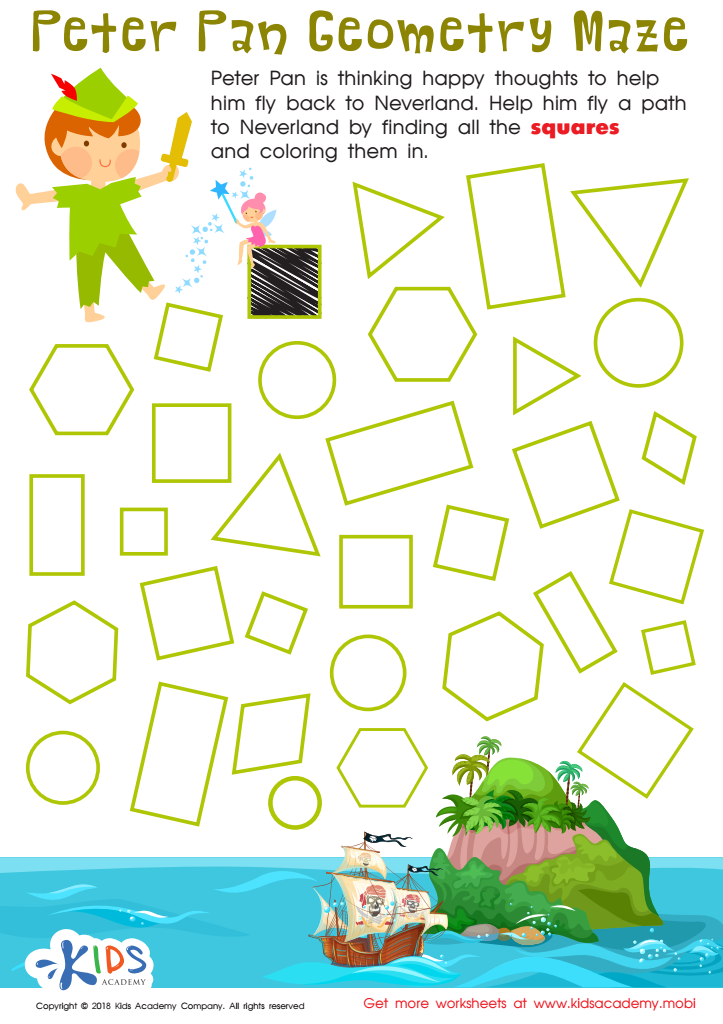
Peter Pan Worksheet
 Assign to My Students











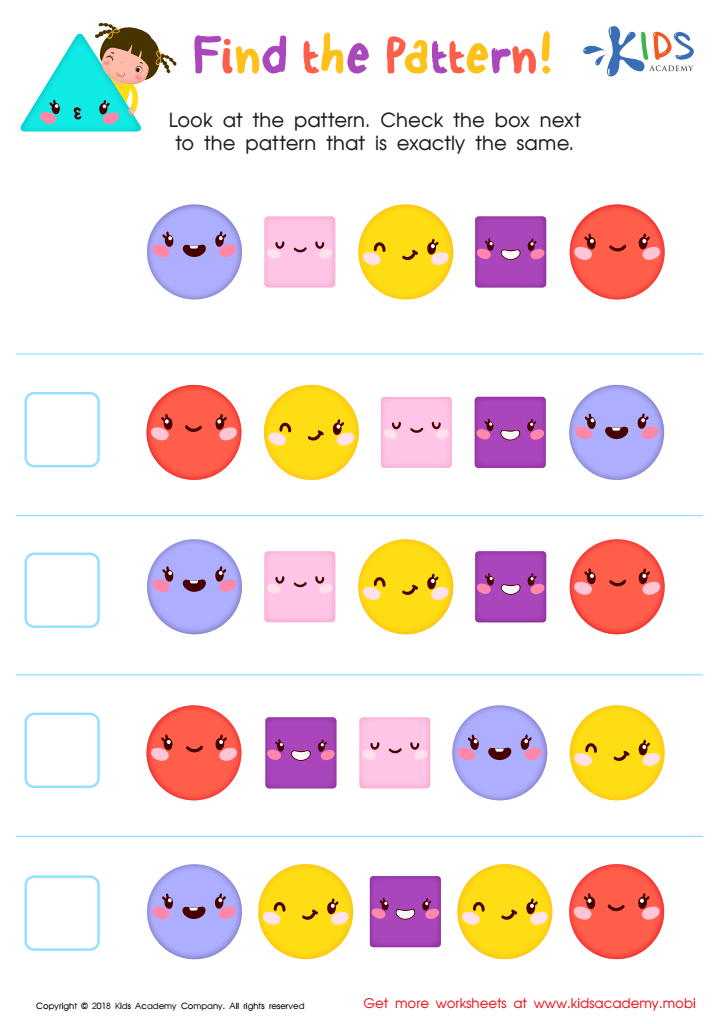
Find the Pattern Worksheet
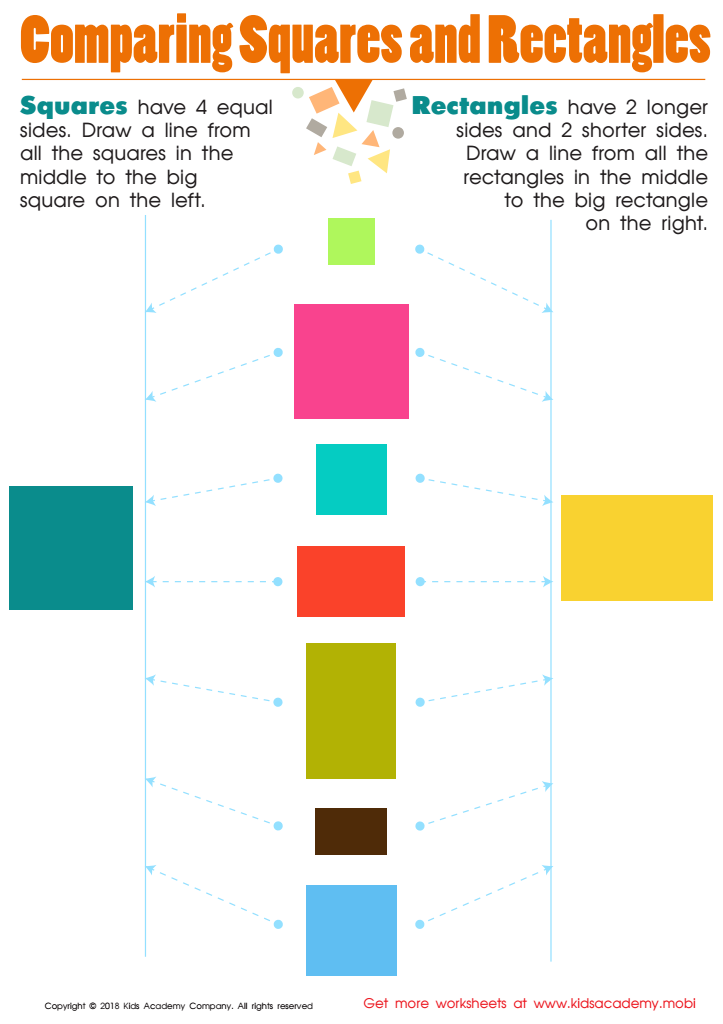
Comparing Squares Rectangles Worksheet
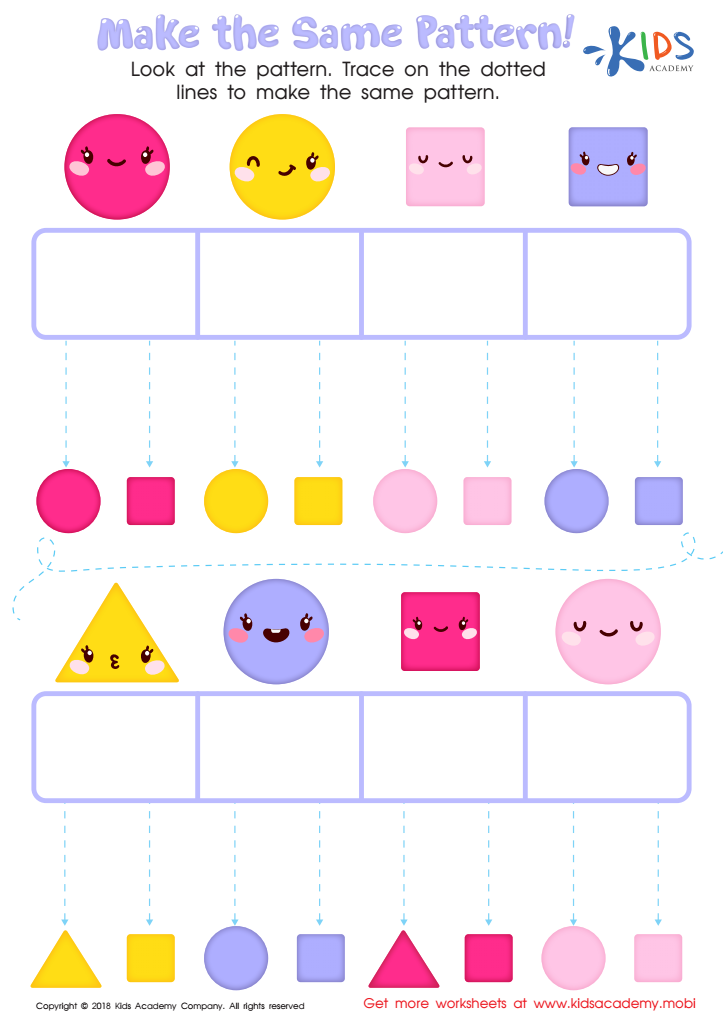
Make the Same Pattern Worksheet
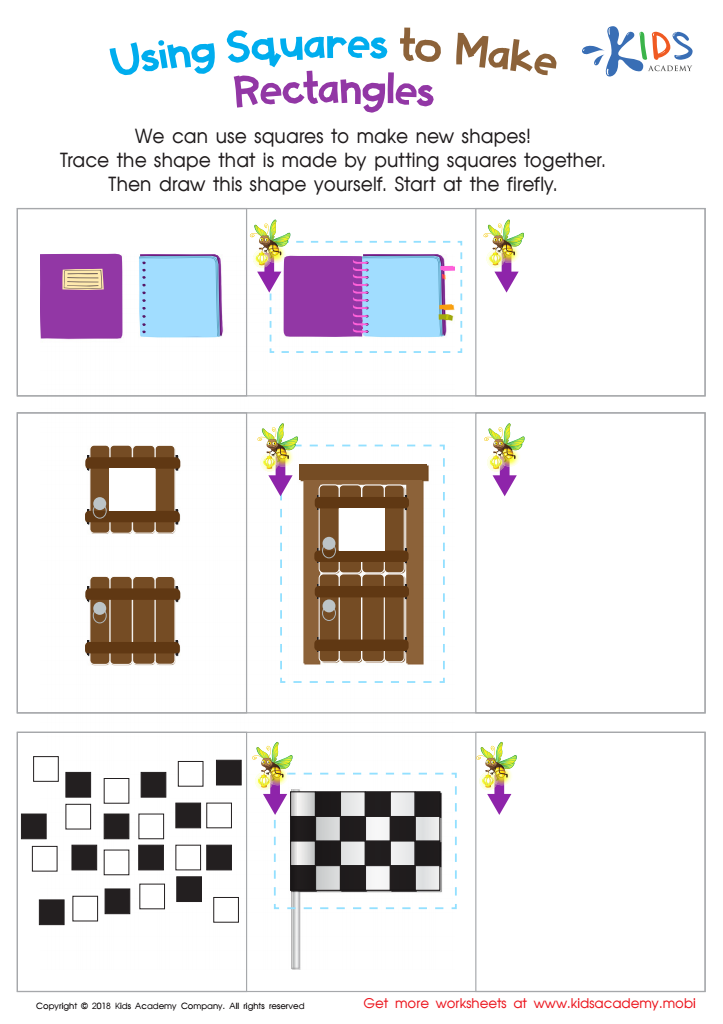
Using Squares to Make Rectangles Worksheet








Parents and teachers should care about Critical Thinking Geometry for 4-year-olds because it lays a foundation for essential cognitive and analytical skills at a crucial stage of development. Introducing young learners to geometric concepts helps them understand shapes, sizes, and spatial relationships, which are fundamental components of critical thinking. This early exposure enhances observational skills, enabling children to describe and categorize their environment more effectively.
Engaging in geometry through play-based activities promotes problem-solving abilities and encourages children to ask questions and explore different solutions. Fostered curiosity and discovery lead to a more profound understanding of mathematical concepts later in life. Moreover, incorporating geometry into activities such as building, drawing, and sorting shapes enhances fine motor skills and creativity, making learning enjoyable and meaningful.
By cultivating a strong foundation in geometry, children are not just learning about shapes; they are developing logical reasoning abilities that extend to various subjects and real-life situations. Ultimately, critical thinking in geometry fosters a love for learning and helps shape a future generation of innovative problem solvers, equipping them with skills necessary for tackling complex challenges in an ever-evolving world. Thus, parents and teachers play a vital role in nurturing these skills through early educational experiences.








