Reading comprehension Geometry Worksheets for 4-Year-Olds
4 filtered results
-
From - To
Discover our engaging "Reading Comprehension Geometry Worksheets for 4-Year-Olds"! Designed specifically for young learners, these worksheets combine the fundamentals of geometry with essential reading comprehension skills. Each activity encourages children to identify shapes, understand spatial relationships, and apply reading skills to solve age-appropriate problems. Our worksheets feature colorful illustrations and interactive questions that make learning accessible and fun. By integrating geometry concepts with reading comprehension exercises, children develop critical thinking skills while enjoying the learning process. Ideal for early grade teachers and parents, these worksheets provide a solid foundation for young minds in math and literacy. Start your child's educational journey today!
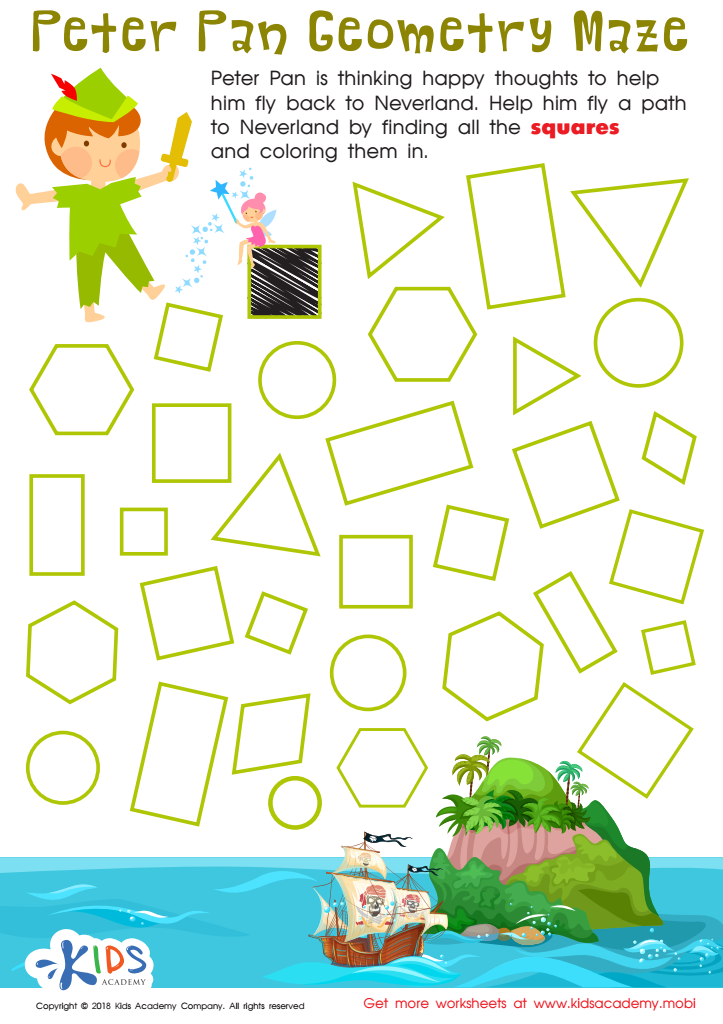
Peter Pan Worksheet
 Assign to My Students











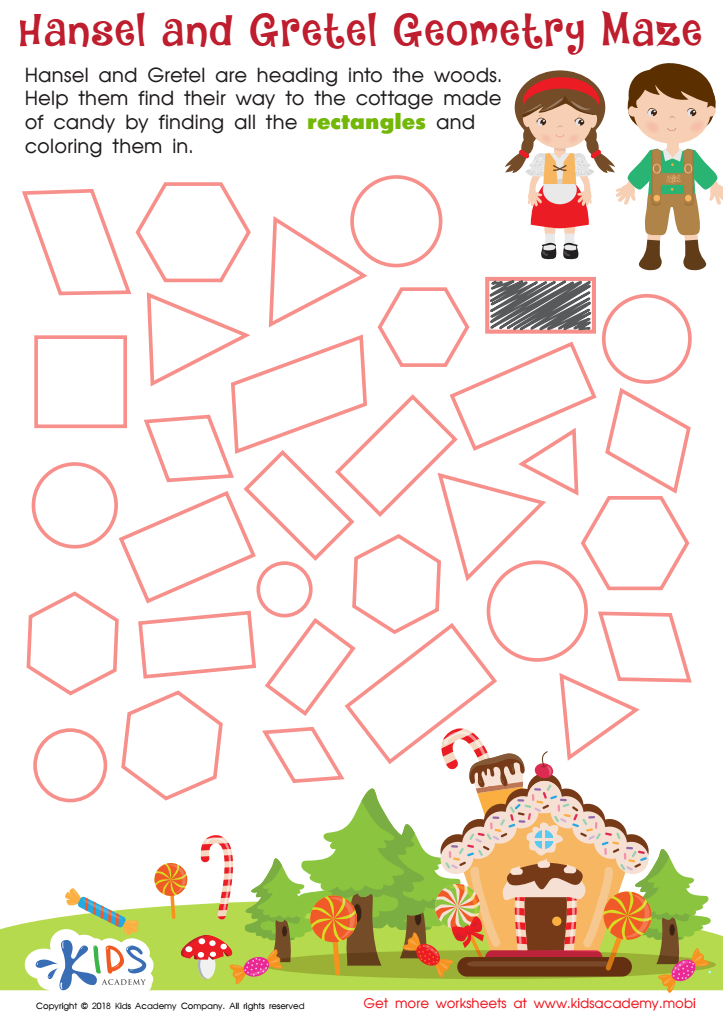
Hansel and Gretel Geometry Maze Worksheet
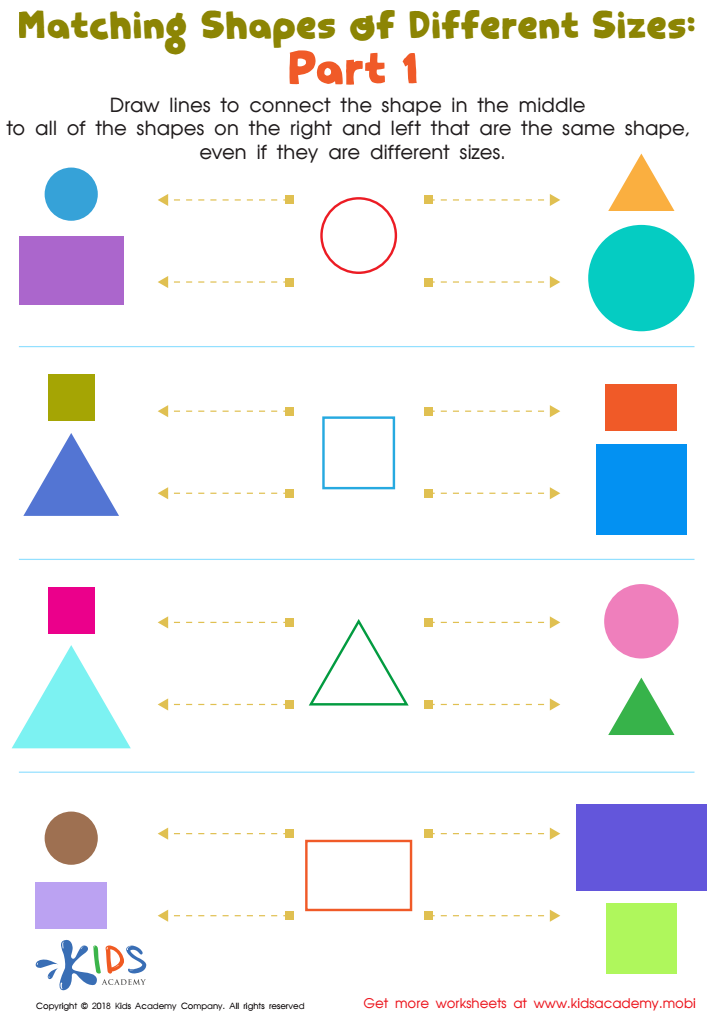
Geometry: part 1 Worksheet
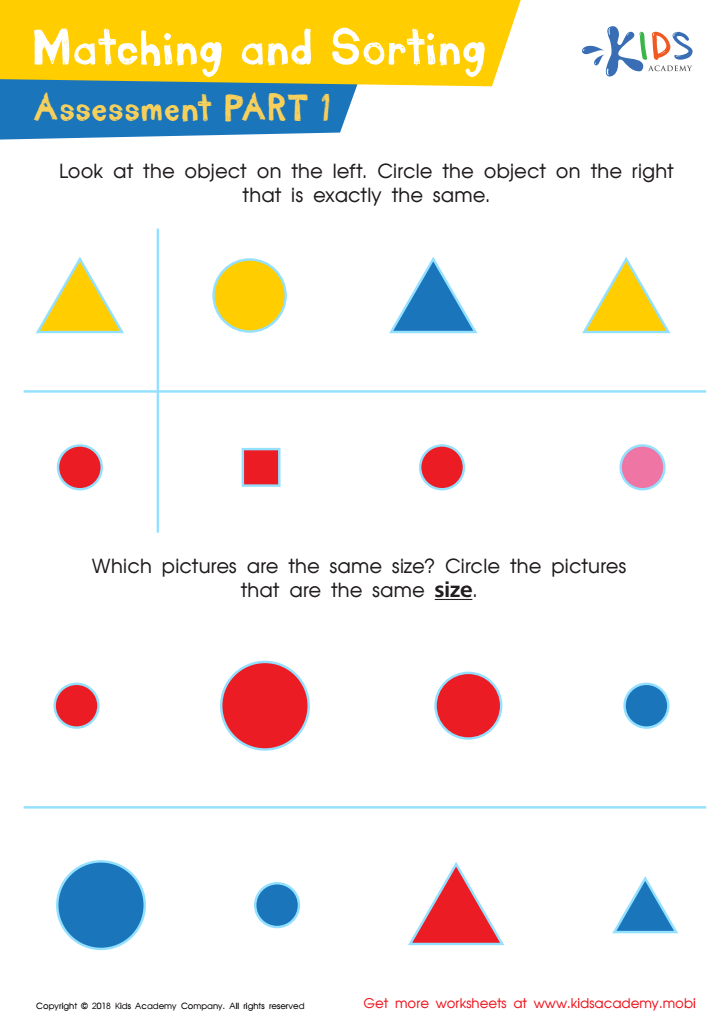
Matching and Sorting for Kindergarten: Assessment 1 Worksheet








Reading comprehension and geometry for 4-year-olds are crucial as they lay the foundation for a child’s cognitive development and lifelong learning. At this age, children are not only enhancing their vocabulary and narrative skills through stories, but they are also beginning to understand and identify shapes, spaces, and patterns in their environment.
For parents and teachers, fostering reading comprehension skills equips children with the ability to process and understand the information they consume—whether from books or visual stimuli. This directly relates to their curiosity about the world. Incorporating geometry concepts, such as recognizing shapes and understanding simple spatial relationships, enriches their problem-solving skills and critical thinking.
When these two areas are combined, children learn to make connections between text and visual information, enhancing their ability to conceptualize ideas. Playing with shapes in the context of a story allows young learners to engage critically and creatively. Structured activities that link reading with geometric play also promote fine motor skills and encourage social interaction.
By emphasizing reading comprehension and geometry at this early stage, parents and teachers are not only preparing children for future academic success but also nurturing their natural curiosity and love for learning.








