
Matching skills Numbers Worksheets for 4-Year-Olds
5 filtered results
Difficulty Level
Grade
Age
-
From - To
Subject
Activity
Standards
Our "Matching Skills Numbers Worksheets for 4-Year-Olds" are designed to make learning fun and engaging for your little ones. These printable activities help young children develop essential number recognition and matching skills while igniting their curiosity through playful, hands-on learning. Each worksheet is created with colorful and child-friendly illustrations to ensure your child stays motivated and interested. As they match numbers and pictures, kids can build a strong foundation in math and boost their critical thinking abilities, preparing them for future academic success. Perfect for both classroom use and home practice, these worksheets provide a fantastic educational experience!
Favorites
With answer key
Interactive
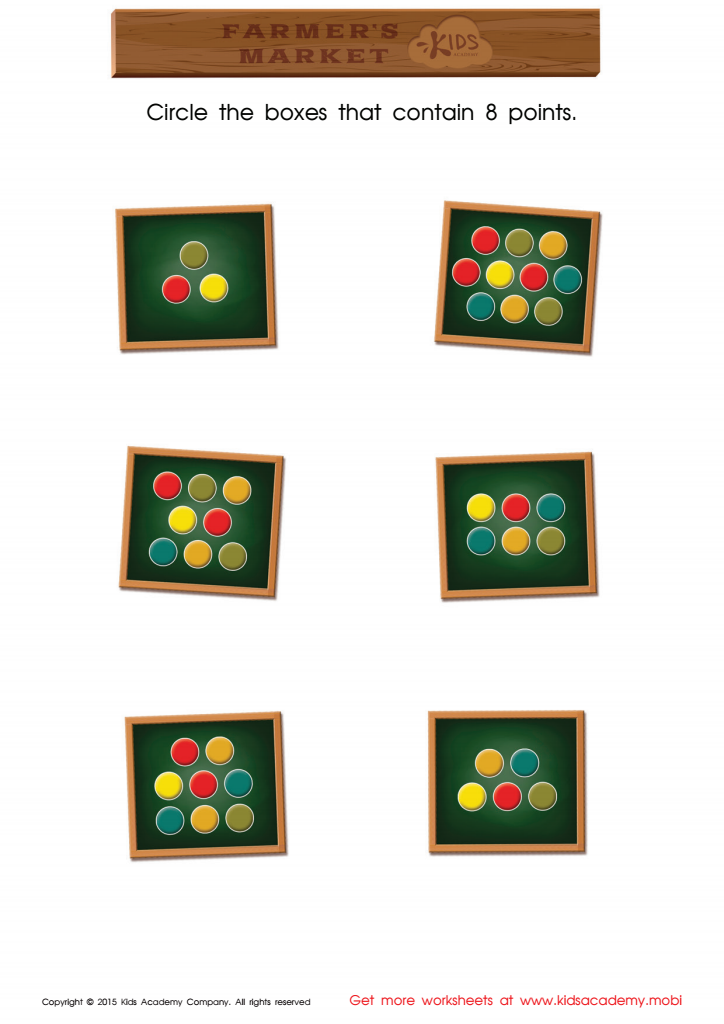
Count and Match Points 8 Math Worksheet
This free PDF helps children develop their number skills by counting the points in the boxes. Each box contains a total of 9 points, making it a fun and colorful activity. Parents can encourage their young ones by guiding them if they need help counting. By the end of the worksheet, children should have a better understanding of numbers.
 Assign to My Students
Count and Match Points 8 Math Worksheet
Worksheet
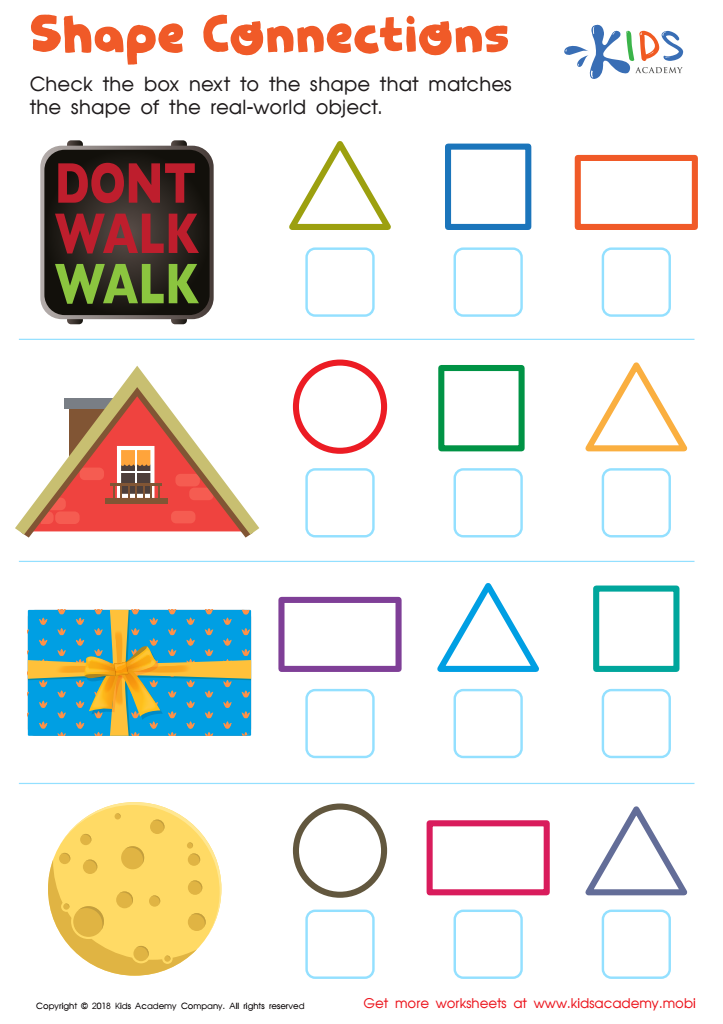
Shape Connections Worksheet
Geometric shapes are all around us and this fun worksheet brings it to life. Kids will match real-world pictures with the corresponding basic shapes, connecting how math is used in various aspects of daily life. A great way to reinforce these concepts!
Shape Connections Worksheet
Worksheet
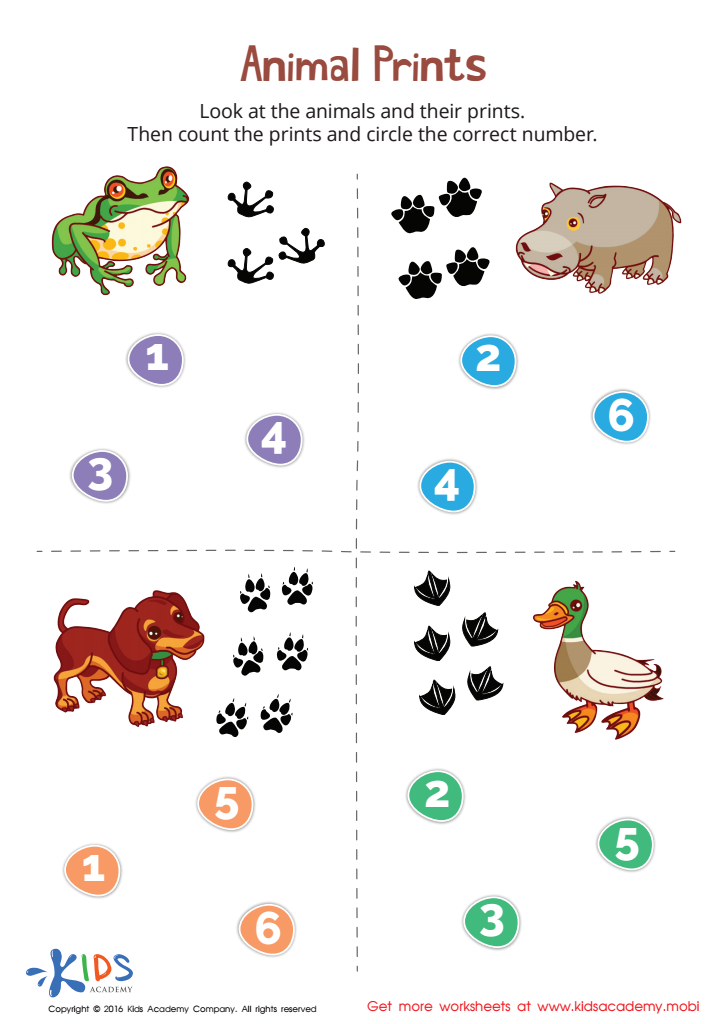
Animal Prints Match-Up Worksheet
Help your little learner build early math skills with this fun animal paw prints worksheet. With it, they'll count, recognize numbers, and learn about the animals that make the paw prints. Talk to them about the prints and ask them to count. They'll love exploring and learning about the different animals, all while sharpening essential math skills!
Animal Prints Match-Up Worksheet
Worksheet
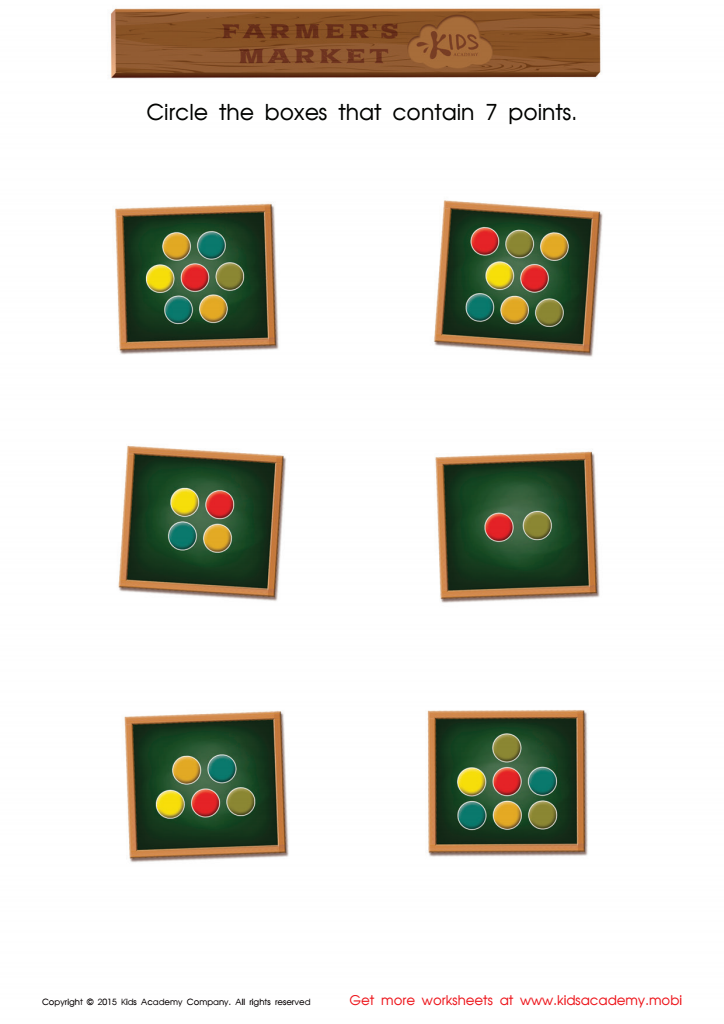
Count and Match Points 7 Math Worksheet
Help your child count and recognize similar numbers by using this fun, colorful worksheet. Guide them to count the dots in each box, then circle those with a total of 7. It's a great way for your child to see how different arrangements lead to the same number.
Count and Match Points 7 Math Worksheet
Worksheet
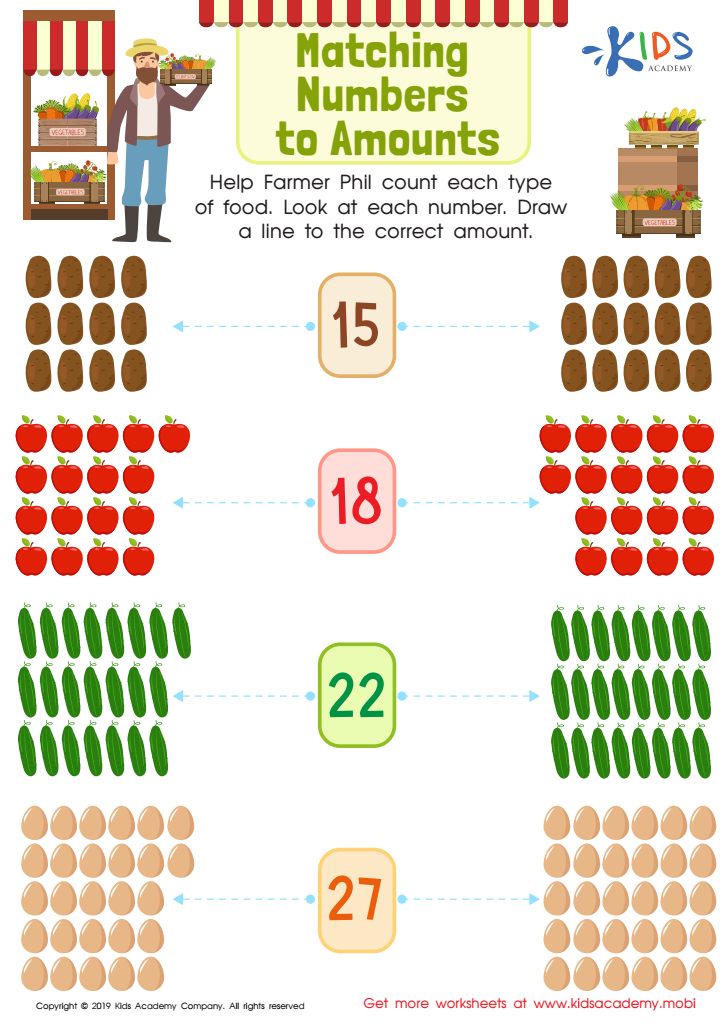
Matching Numbers to Amounts Worksheet
Farmer Phil needs your kid's help! Ensure they know the basics of math such as counting, adding and subtracting. Before beginning, help your child identify and count the different foods in the picture. Then, draw a line to the correct amount.
Matching Numbers to Amounts Worksheet
Worksheet
Join Kids Academy for Free
Who is primarily going to use this learning content?







It is important for parents and teachers to care about matching skills and numbers for 4-year-olds as these skills lay the foundation for early mathematical understanding and cognitive development. Matching numbers with objects helps children comprehend the concept of quantity and number sense, which is crucial for more advanced mathematical operations they will encounter in the future. When children learn to correctly match numbers with corresponding sets of items, it enhances their ability to recognize patterns, make comparisons, and understand relationships.
Moreover, engaging in these activities bolsters a child's fine motor skills, attention to detail, and problem-solving abilities. These activities can improve memory retention and enhance visual discrimination, aiding overall brain development. From a social-emotional perspective, success in matching exercises builds confidence and fosters a love for learning. Early accomplishments in math-related activities can also boost a child's enthusiasm and positive attitude towards future educational subjects.
Additionally, these skills support language development as children often discuss their actions and thoughts during such activities. They learn new vocabulary and improve their ability to follow instructions, communicate ideas, and work both independently and cooperatively. Thus, investing time in developing matching skills and numbers is integral to fostering well-rounded, intellectually curious, and capable young learners.








