Money counting skills Math Worksheets for 4-Year-Olds
3 filtered results
-
From - To
Introducing our engaging Money Counting Skills Math Worksheets tailored specifically for 4-year-olds! These interactive resources provide young learners with a fun and foundational introduction to money concepts. Packed with vibrant illustrations and playful activities, our worksheets help children recognize coins, understand their values, and practice counting with real-life scenarios. Designed to promote early numeracy, these worksheets foster cognitive development and enhance fine motor skills through hands-on tasks. Perfect for home or classroom use, they ensure an enjoyable learning experience that builds confidence in young mathematicians. Start your child’s journey to financial literacy today with our comprehensive and cheerful money counting worksheets!
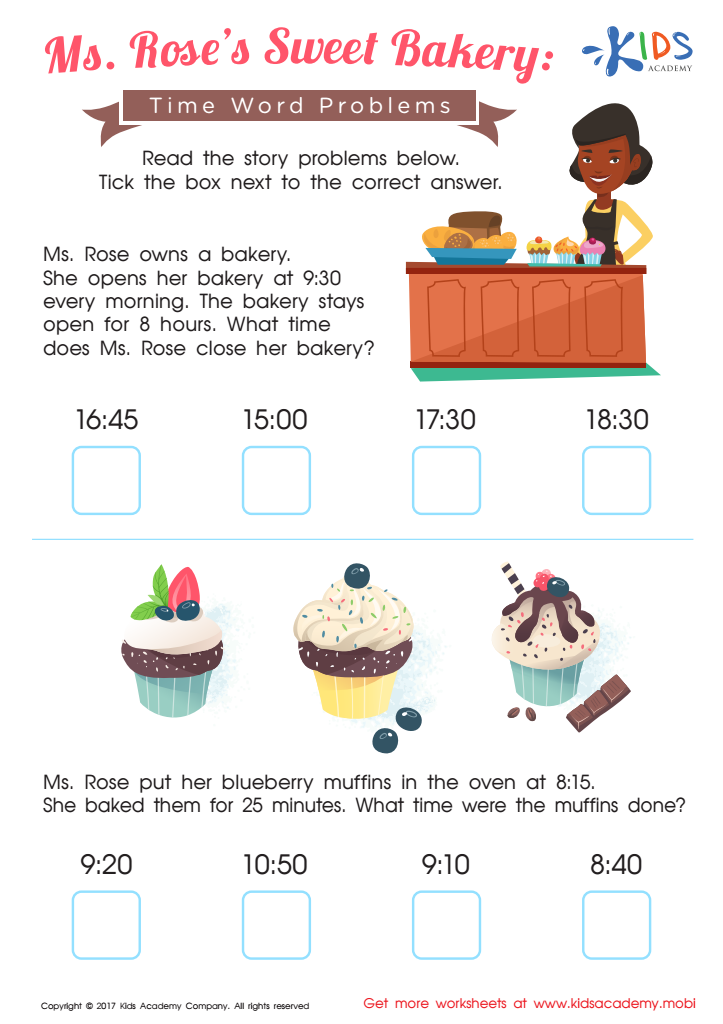
Ms. Roseв's Sweet Bakery Time Worksheet
 Assign to My Students
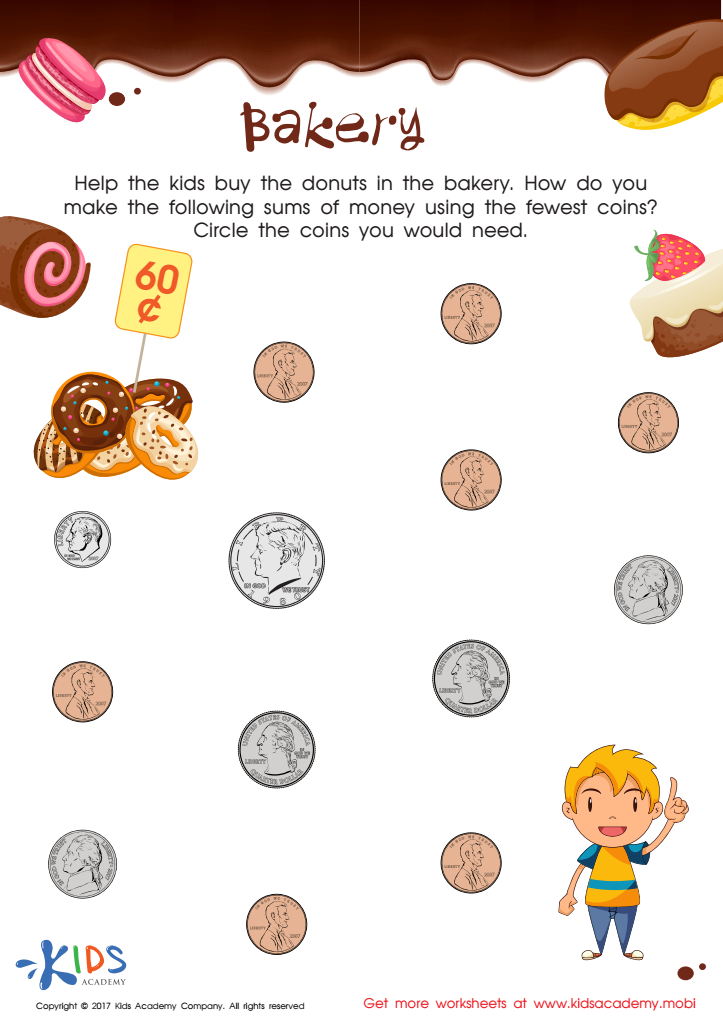
Counting Coins Worksheet
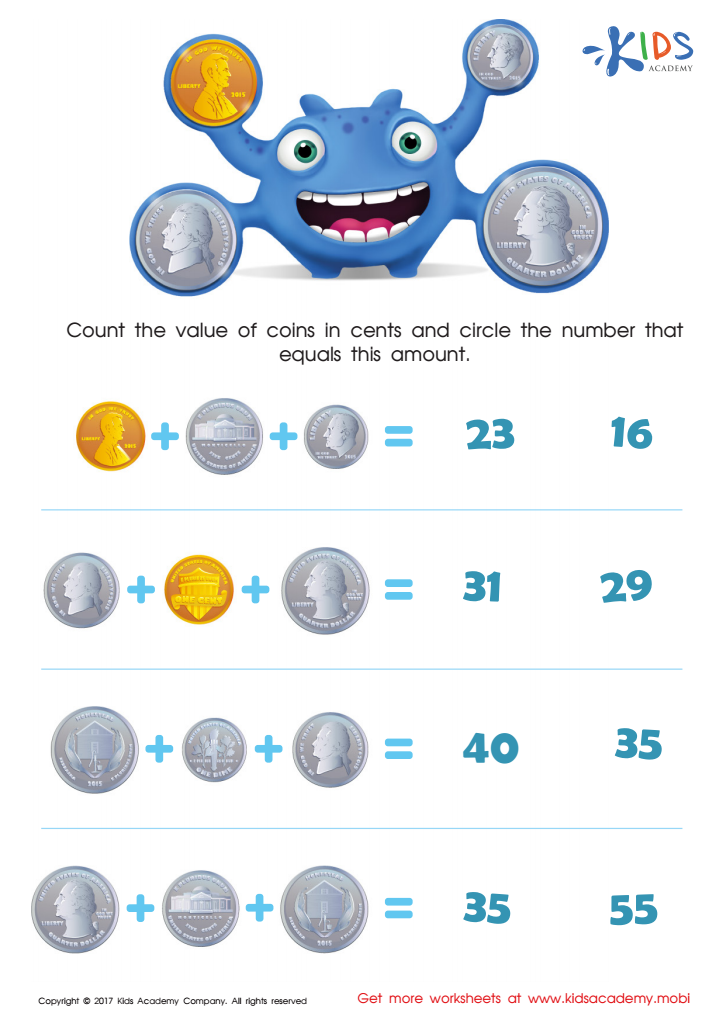
Counting the Coins Money Worksheet







Money counting skills are crucial for 4-year-olds for several reasons. First, these skills introduce foundational math concepts in a fun and practical way. Children learn to recognize coins and their values, providing a clear link between numbers and real-world applications. This early exposure helps develop numerical literacy, which is essential for future math proficiency.
Moreover, money counting fosters critical thinking and problem-solving skills. As children engage in counting and sorting coins, they practice pattern recognition and basic addition, encouraging cognitive development. These activities can enhance fine motor skills through handling coins, integrating physical and mental learning.
Additionally, understanding money promotes independence and responsibility. As kids learn the value of money, they gain insights into budgeting and saving, vital life skills as they grow. Raising financially savvy individuals starts with simple lessons in counting money.
Finally, incorporating money-related activities in playtime can strengthen the bond between parents and children, turning learning into a shared adventure. By emphasizing money counting skills early on, parents and teachers lay a solid foundation for children's future math abilities, while instilling practical life lessons that extend beyond the classroom. This holistic approach supports both academic success and lifelong skills.








