Critical Thinking Matching Worksheets for 4-Year-Olds
4 filtered results
-
From - To
Enhance your child's critical thinking skills with our engaging Critical Thinking Matching Worksheets for 4-year-olds! Designed to spark creativity and develop essential cognitive abilities, these interactive worksheets encourage young learners to make connections and recognize relationships. Children will enjoy matching pictures, patterns, and concepts, promoting problem-solving and analytical thinking in a fun, playful manner. Our age-appropriate worksheets offer a perfect blend of education and entertainment, fostering a deeper understanding of their surroundings while building confidence. Ideal for home or classroom use, these printable resources provide valuable practice for early learners, setting a strong foundation for future success in school. Download now to inspire critical thinking today!
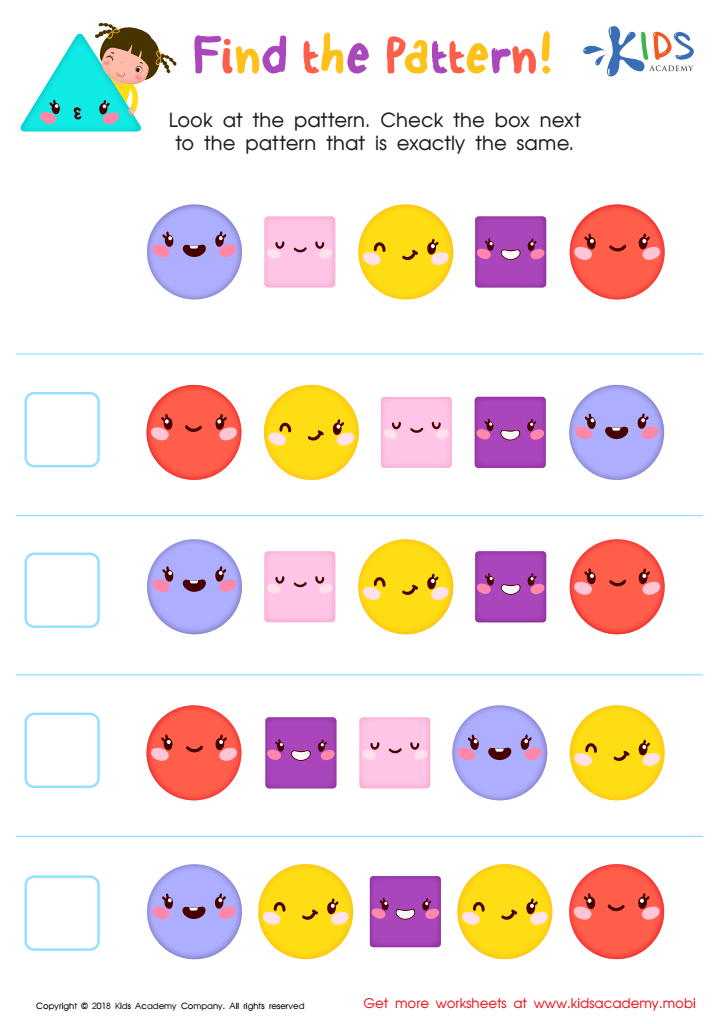
Find the Pattern Worksheet
 Assign to My Students

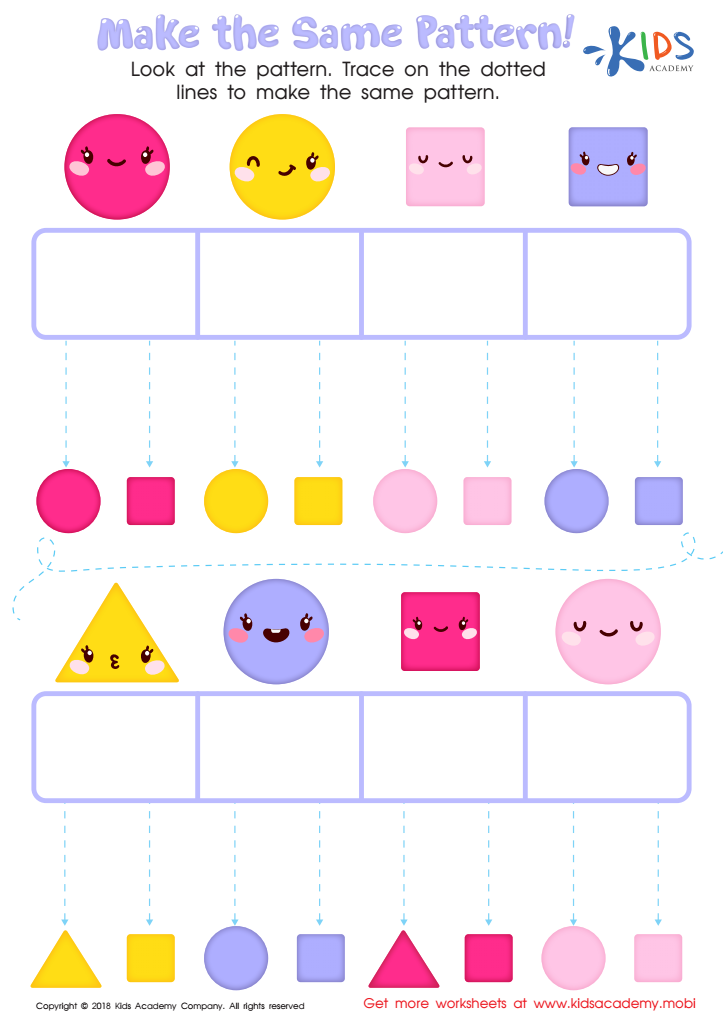
Make the Same Pattern Worksheet

The Four Seasons Worksheet








Critical thinking skills are foundational for children's lifelong learning and problem-solving abilities. For 4-year-olds, engaging in Critical Thinking Matching activities can be particularly beneficial as it fosters cognitive development and enhances their ability to understand and interact with the world around them.
When parents and teachers prioritize critical thinking, they create an environment where children learn to analyze, evaluate, and differentiate information. Matching activities, which often involve pairing items based on attributes or concepts, encourage young learners to make connections, recognize patterns, and develop reasoning skills. These skills are essential as children begin to navigate more complex ideas in school and life.
Moreover, promoting critical thinking encourages curiosity and independence. Children learn to ask questions and seek solutions, laying the groundwork for collaborative problem-solving and innovative thinking as they grow older. This foundational skill set empowers them to approach challenges with confidence and resilience.
Incorporating Critical Thinking Matching into daily learning can also strengthen communication and social skills, as children collaborate, discuss their choices, and explain their thought processes with peers and adults. Ultimately, fostering critical thinking at an early age ensures that children are better prepared to face academic challenges and make informed decisions as they continue their educational journey.








