Fine Motor Skills Tracing Shapes Worksheets for 4-Year-Olds
7 filtered results
Difficulty Level
Grade
Age
-
From - To
Subject
Activity
Standards
Enhance your 4-year-old's fine motor skills with our engaging tracing shapes worksheets! These specially designed activities allow young learners to practice drawing, promote hand-eye coordination, and boost their confidence with early writing skills. With colorful, eye-catching shapes to trace, children will develop crucial dexterity while enjoying the fun. Our worksheets offer a playful approach to learning, making it easy for parents and educators to incorporate these exercises into daily routines. Perfect for home or classroom use, our tracing shapes worksheets are the ideal resource for nurturing your child’s foundational skills. Start the adventure of learning through playful tracing today!
Favorites
With answer key
Interactive
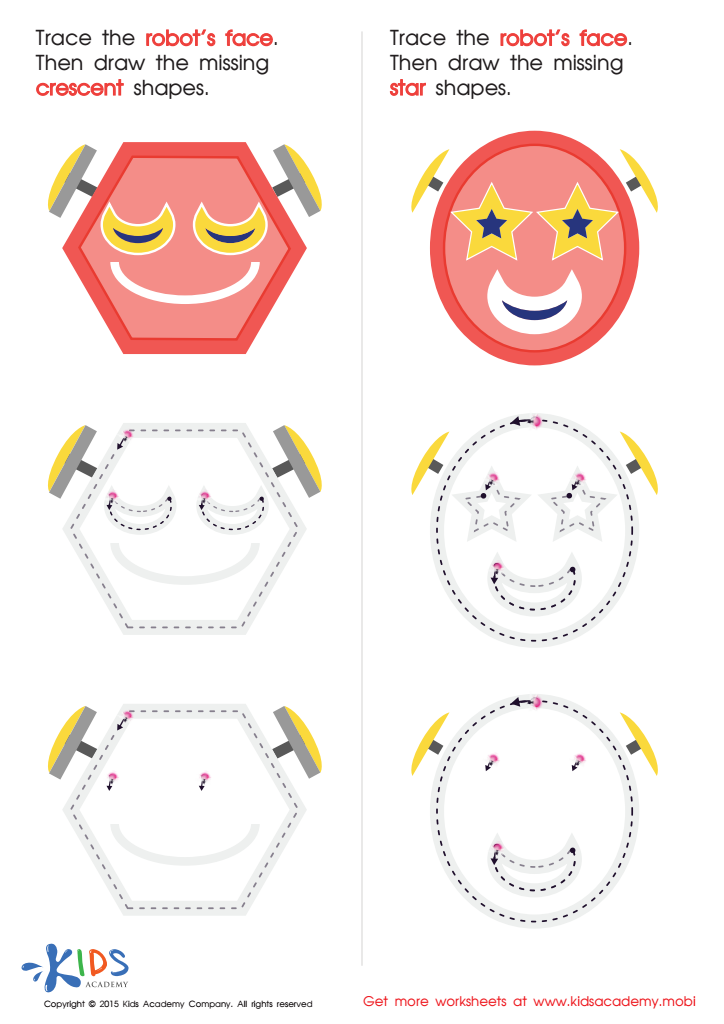
Composing a Robot's Face of Crescents And Stars Worksheet
Get free math geometry worksheets at Kids Academy! Help your child learn by practicing together - trace the robot's face and draw the missing crescent and star shapes. Be sure to remember their names! Have fun and learn with shapes for kids.
 Assign to My Students
Composing a Robot's Face of Crescents And Stars Worksheet
Worksheet
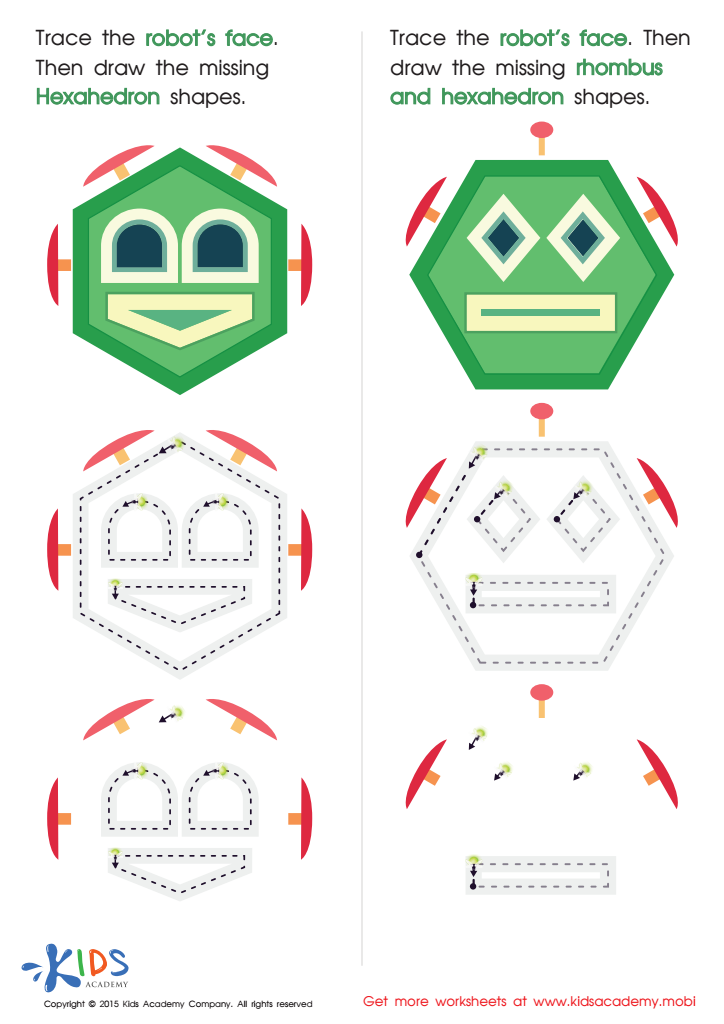
Practice Drawing Hexahedrons And a Rhombus Worksheet
Trace the Robot's face, draw hexahedron and rhombus shapes, then trace again. Our tracing shapes worksheets make it easy for kids to learn geometry. Get more materials from Kids Academy to practice all the shapes.
Practice Drawing Hexahedrons And a Rhombus Worksheet
Worksheet
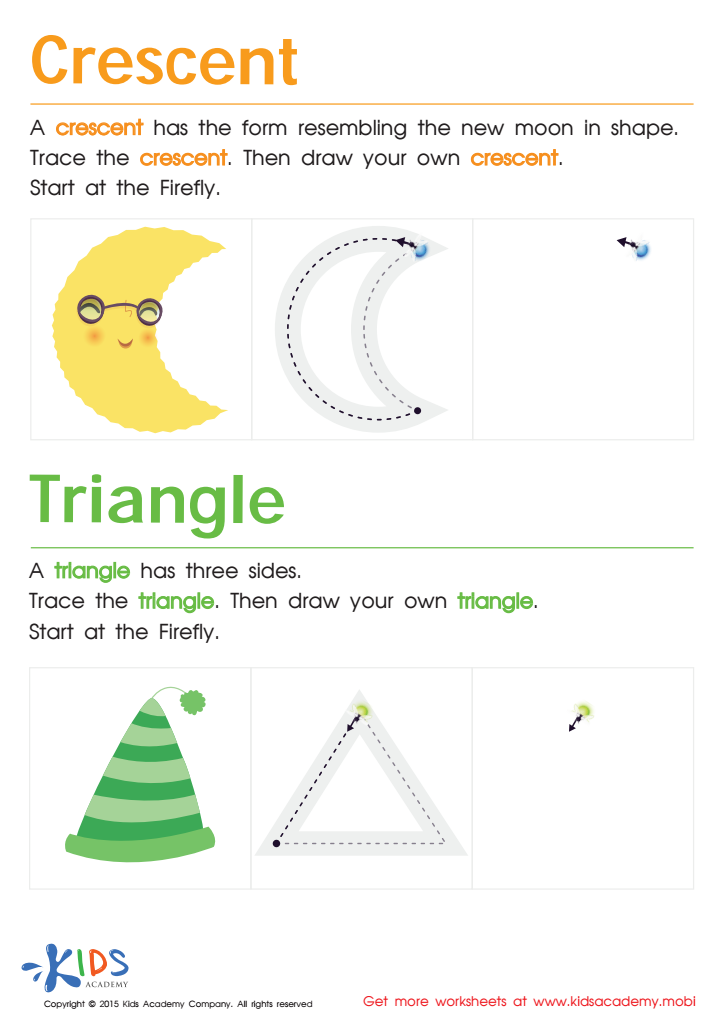
Learning to Draw Crescents And Triangles Worksheet
Help your kids draw a crescent and triangle with this free printable worksheet! Start by tracing a crescent in the form of the new moon, and then teach them that a triangle has three sides and looks like a hat. Find more geometry practice worksheets at Kids Academy!
Learning to Draw Crescents And Triangles Worksheet
Worksheet
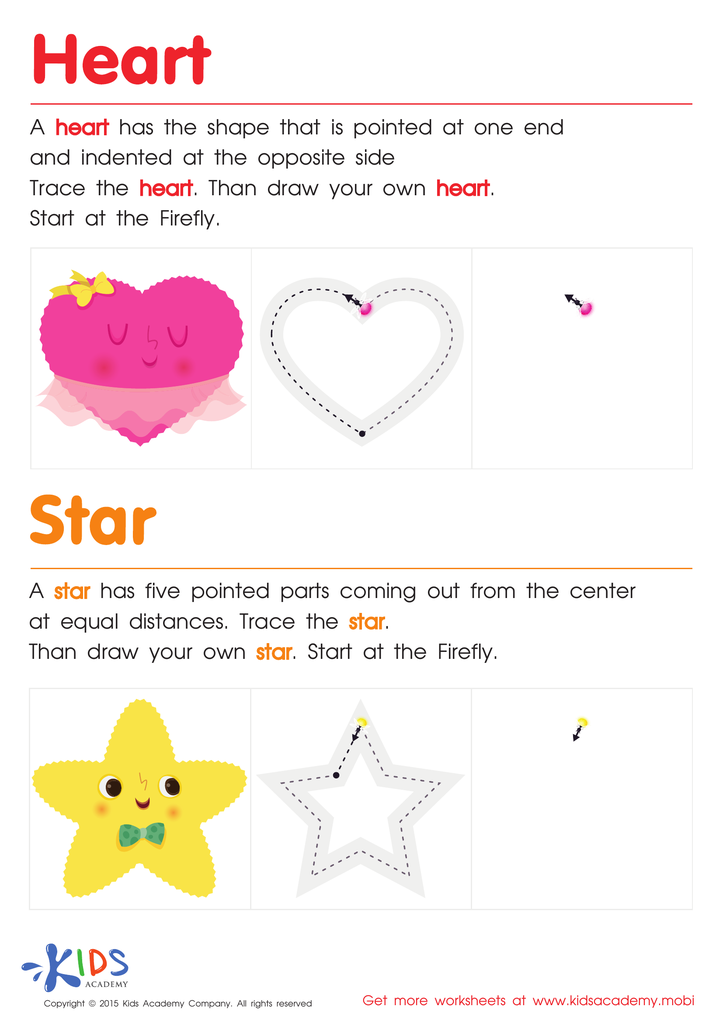
Let's Learn to Draw Hearts And Stars Printable
Trace and draw hearts and stars, learn their names and use them in your drawings. Start with the firefly and be creative!
Let's Learn to Draw Hearts And Stars Printable
Worksheet
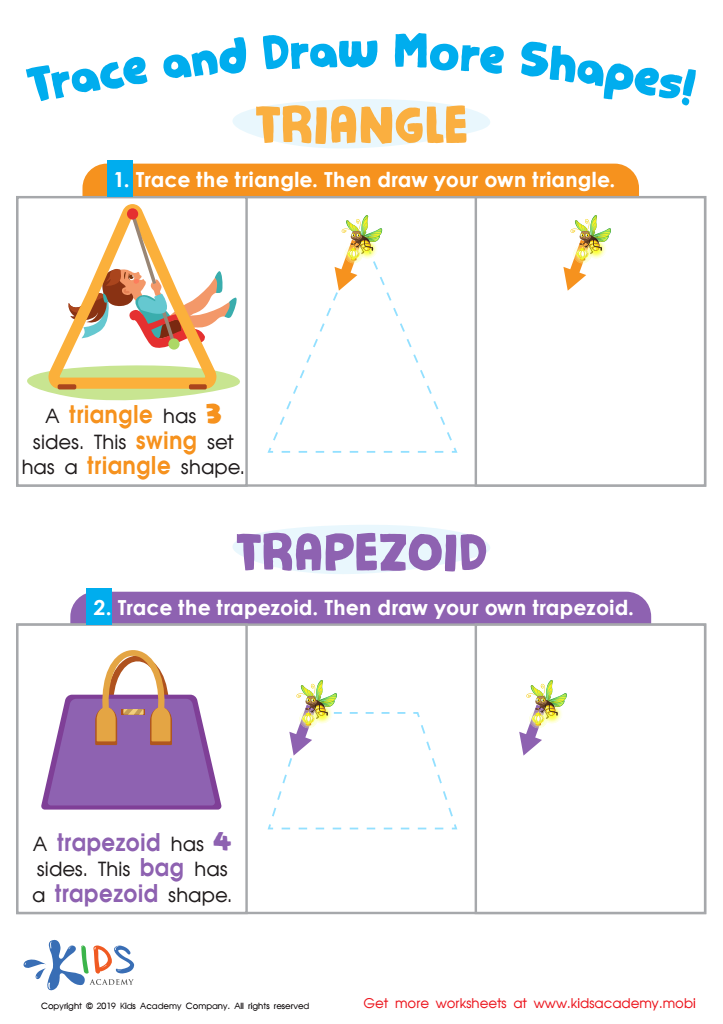
Trace and Draw More Shapes Worksheet
Help your kids with more learning! Look at images in the worksheet, read facts about the shapes, then help your kids trace and draw. This reinforces that learning is never done; use this simple worksheet to help your kids with school homework and more!
Trace and Draw More Shapes Worksheet
Worksheet
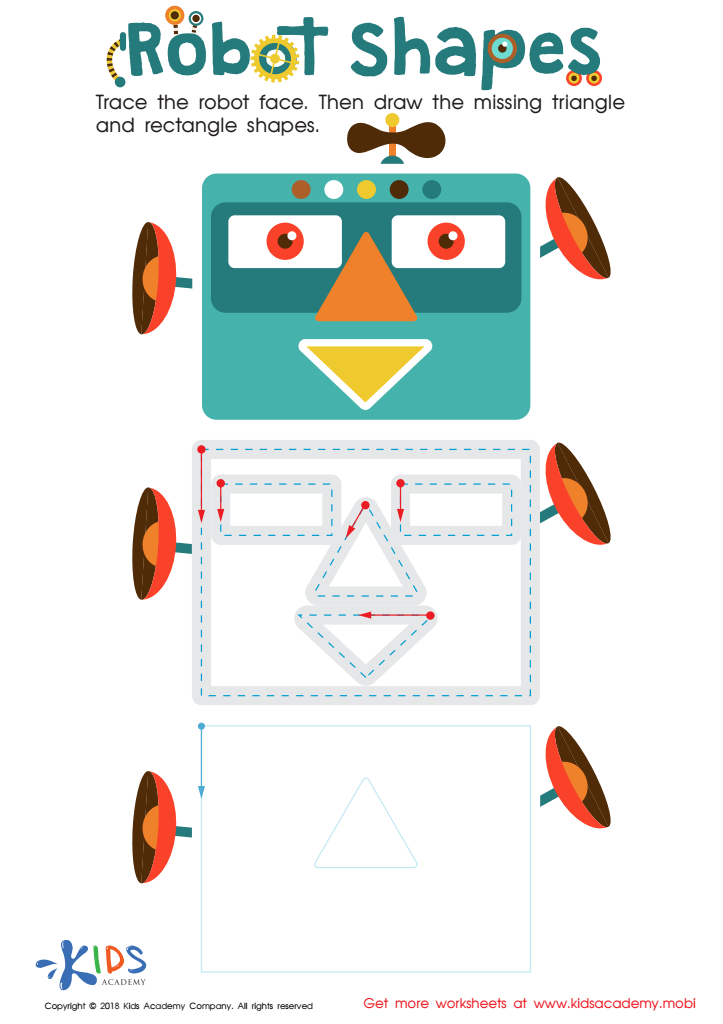
Robot Shapes Worksheet
Help your preschooler get started with math skills while having fun with this shape tracing worksheet featuring a cute robot! Ask them to study the first image, trace the dotted lines to draw the shapes in the second, and color the third. With this activity, they'll learn shapes while enjoying the funny robot pictures!
Robot Shapes Worksheet
Worksheet
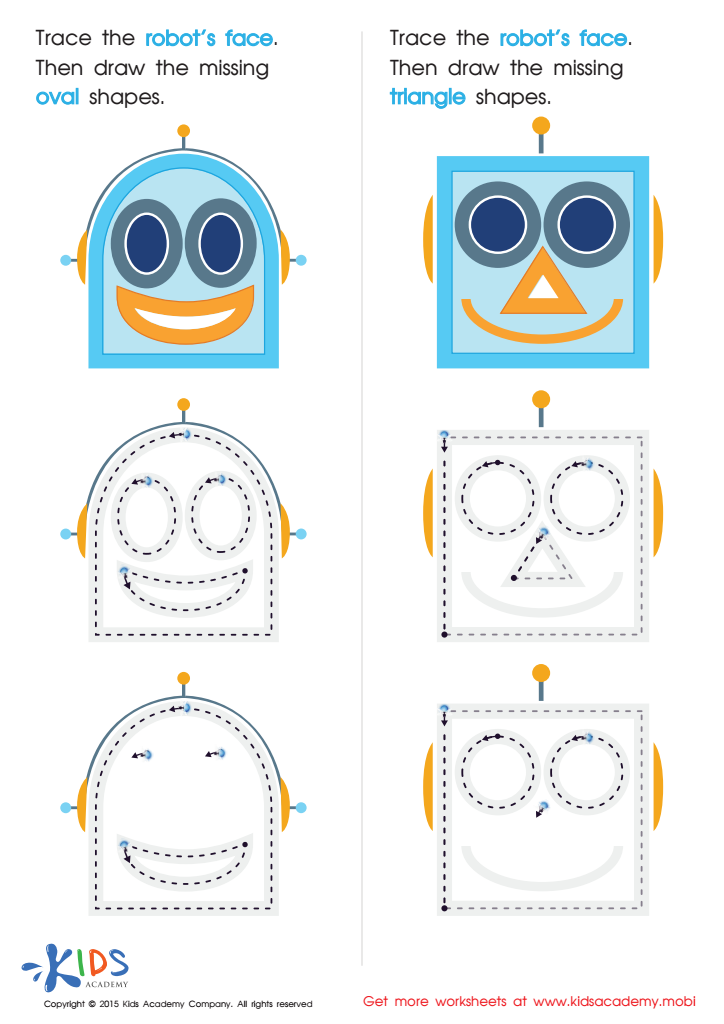
Drawing Ovals And Triangles with Fun Printable
Trace the face and draw missing ovals and triangles. Test your memory and recall shapes' names. Check if you remember how to draw them!
Drawing Ovals And Triangles with Fun Printable
Worksheet
Join Kids Academy for Free
Who is primarily going to use this learning content?








Fine motor skills are crucial for a child's overall development, particularly for 4-year-olds, who are at a pivotal stage of learning and growth. Tracing shapes is an effective way to enhance these skills. It involves various hand movements and coordination, promoting dexterity and control that children will need for everyday tasks, such as writing, buttoning clothes, and handling utensils.
Parents and teachers should care about this activity because fine motor skills contribute to cognitive development, emotional regulation, and social interactions. Mastering activities like tracing shapes not only boosts confidence but also encourages a sense of accomplishment in young learners. These skills lay the foundation for future academic success, especially in literacy and mathematics, as writing and drawing are foundational elements in these subjects.
Additionally, tracing shapes can foster concentration and patience, qualities that are invaluable as children start formal schooling. Engaging children in this activity together can also strengthen the parent-teacher bond, create opportunities for positive reinforcement, and facilitate purposeful play. By supporting fine motor skill development through tracing and similar activities, caregivers help prepare children for a successful transition into later educational stages and everyday life challenges.