
Word association skills Reading Worksheets for 4-Year-Olds
3 filtered results
Difficulty Level
Grade
Age
-
From - To
Subject
Activity
Standards
Enhance your 4-year-old's reading development with our engaging Word Association Skills Worksheets! Designed to foster early literacy, these printable resources encourage children to connect words and expand their vocabulary through fun activities. Each worksheet supports cognitive growth, helping young learners recognize relationships between words, fostering critical thinking, and improving language skills. Perfect for home or classroom use, these worksheets incorporate colorful illustrations and interactive tasks that keep children motivated. Encourage your child's love for reading while building essential word association skills. Explore our collection of worksheets for a fun and effective way to support your child's early learning journey!
Favorites
With answer key
Interactive
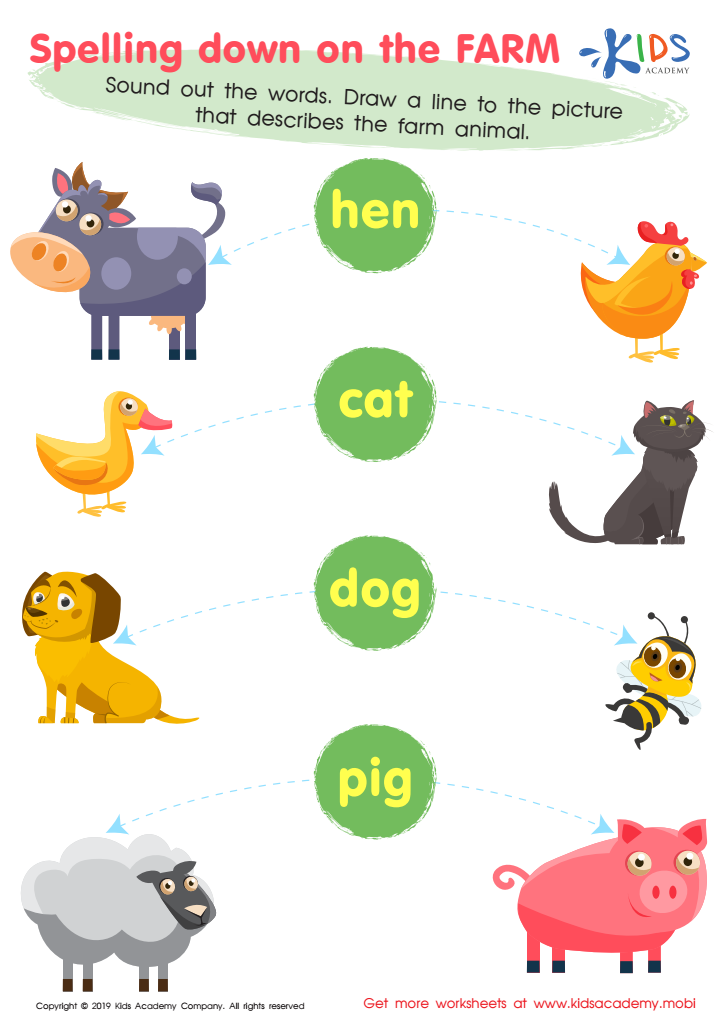
Spelling Down on the Farm Worksheet
Want to help your kids nail their spelling? Introduce them to this farm animal worksheet! Get them to look at the animals in the tracing sheet, name them and then sound out the words. Have them draw a line to the picture that describes it. You'll be surprised at how quickly their skills improve.
 Assign to My Students
Spelling Down on the Farm Worksheet
Worksheet
Join Kids Academy for Free
Who is primarily going to use this learning content?








Word association skills are crucial for 4-year-olds as they form the foundation for language development and literacy. At this age, children are highly curious and eager to explore language through play and interaction. Encouraging word association helps enhance their vocabulary and promotes comprehension, making it easier for them to understand stories and communicate effectively.
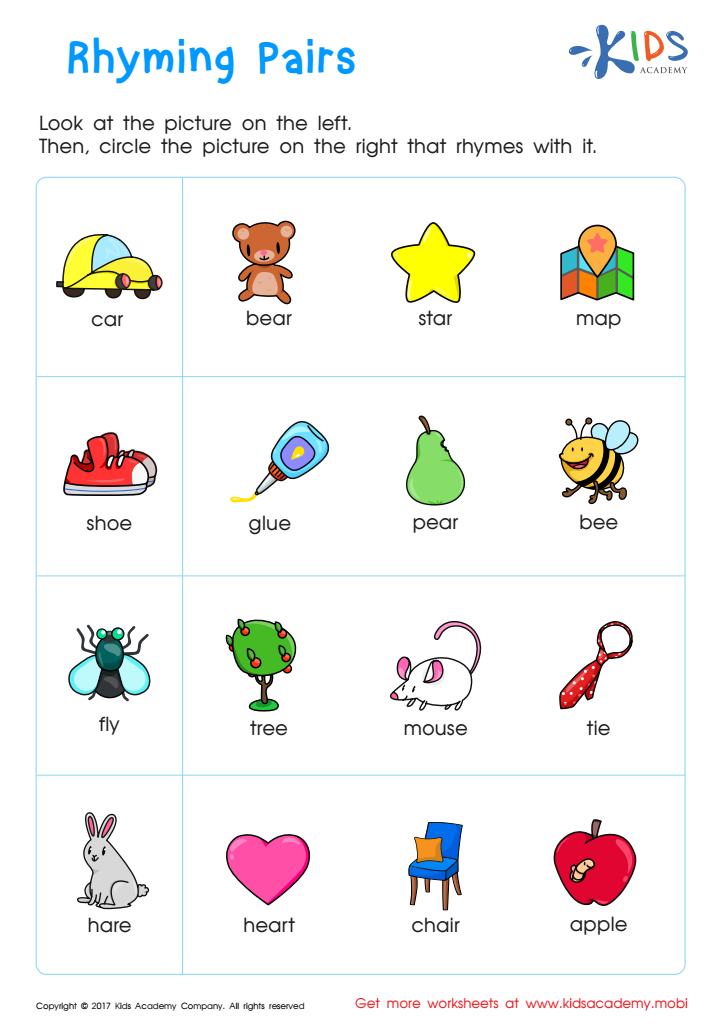
When parents and teachers engage children in word association activities—such as rhyming games, matching words with pictures, or creating simple stories—they stimulate critical thinking and cognitive flexibility. This early literacy skill also aids in phonemic awareness, which is vital for learning to read and write in later years.
Furthermore, word association fosters social skills. When kids share words and engage in conversations, they learn to express themselves and listen to others, paving the way for effective communication.
In other words, nurturing word association in young learners nourishes their cognitive growth and literacy, ultimately influencing their long-term academic success. Thus, parents and teachers should prioritize these skills through playful and engaging activities, ensuring that children are well-equipped for reading and learning in the future. Supporting word association skills today lays a strong foundation for a love of reading and lifelong learning.








