Enhancing observation skills Science Worksheets for 4-Year-Olds
6 filtered results
-
From - To
Enhance your 4-year-old's observation skills with our engaging Science Worksheets! Designed specifically for young learners, these printable activities encourage exploration and critical thinking while introducing basic scientific concepts. Through interactive tasks, children will practice observing details, identifying patterns, and working on their cognitive abilities. Our worksheets promote curiosity about the world around them, allowing kids to make connections and discover how things work. Ideal for at-home learning or classroom use, these resources foster a fun and educational environment. Explore the joy of science and help your little ones become keen observers as they embark on exciting learning adventures!
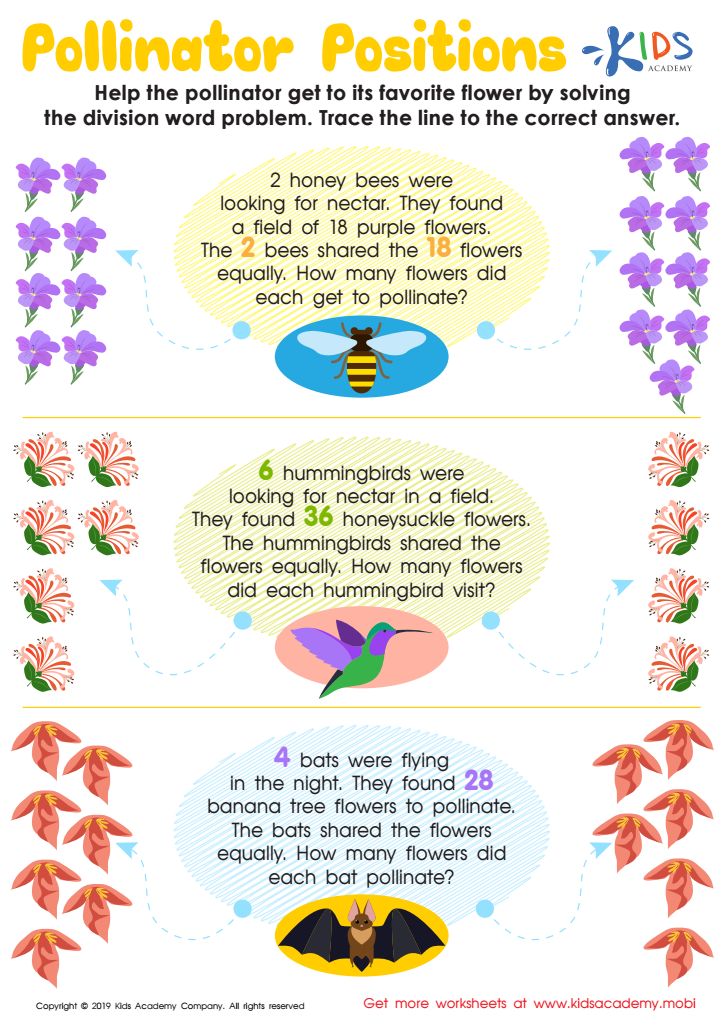
Pollinator Positions Worksheet
 Assign to My Students
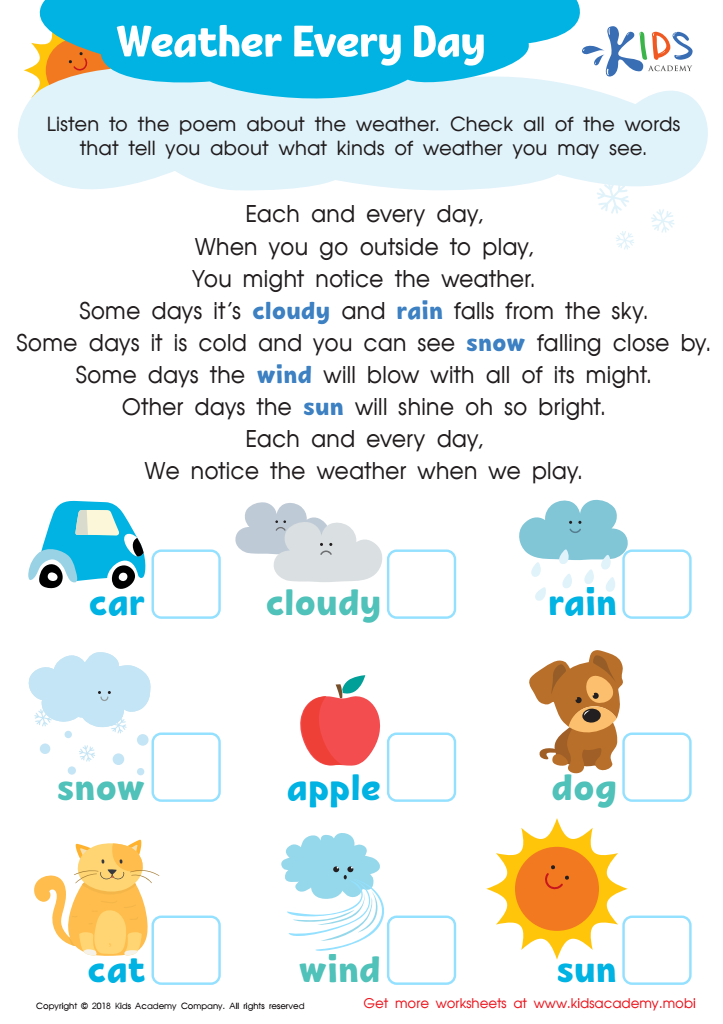
Weather Every Day Worksheet
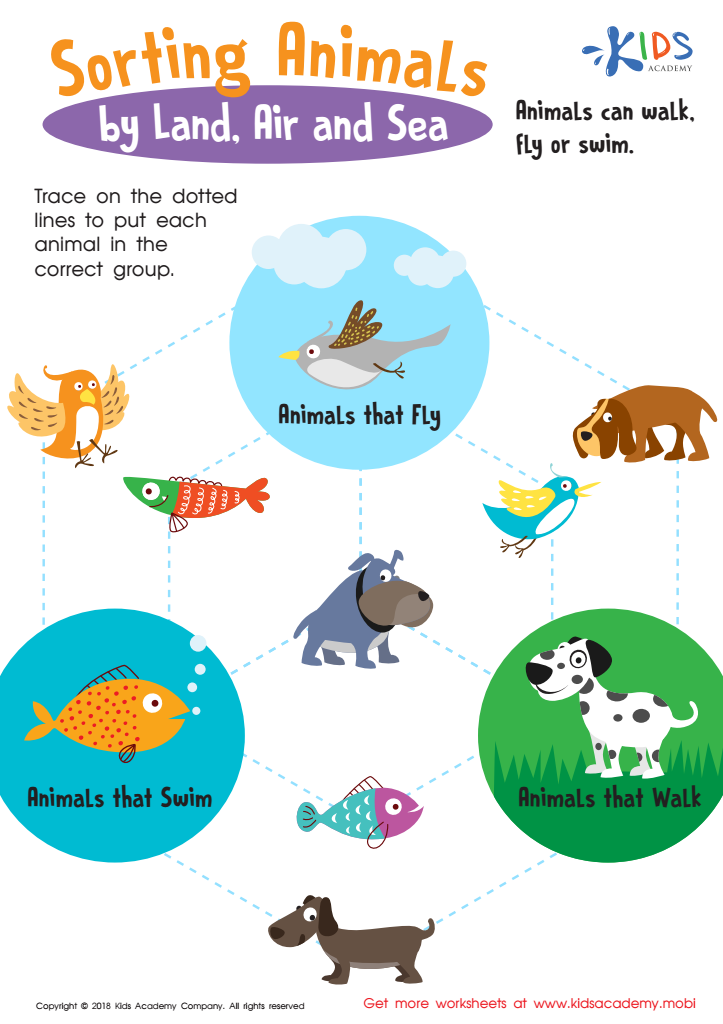
Sorting Animals by Land, Air and Sea Worksheet
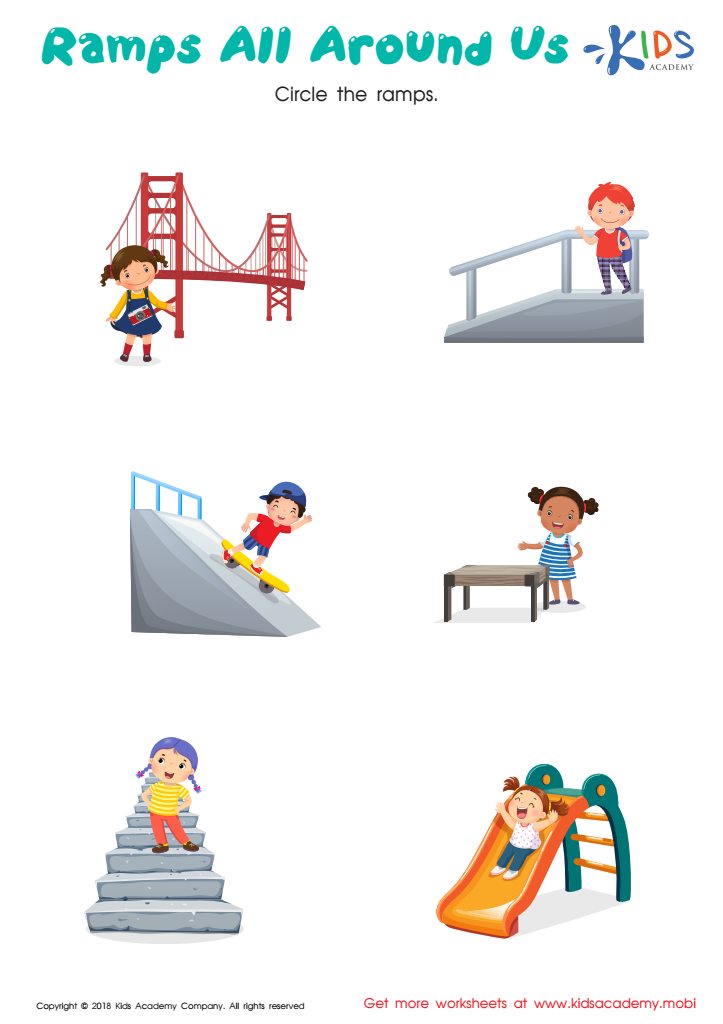
Ramps All Around us Worksheet
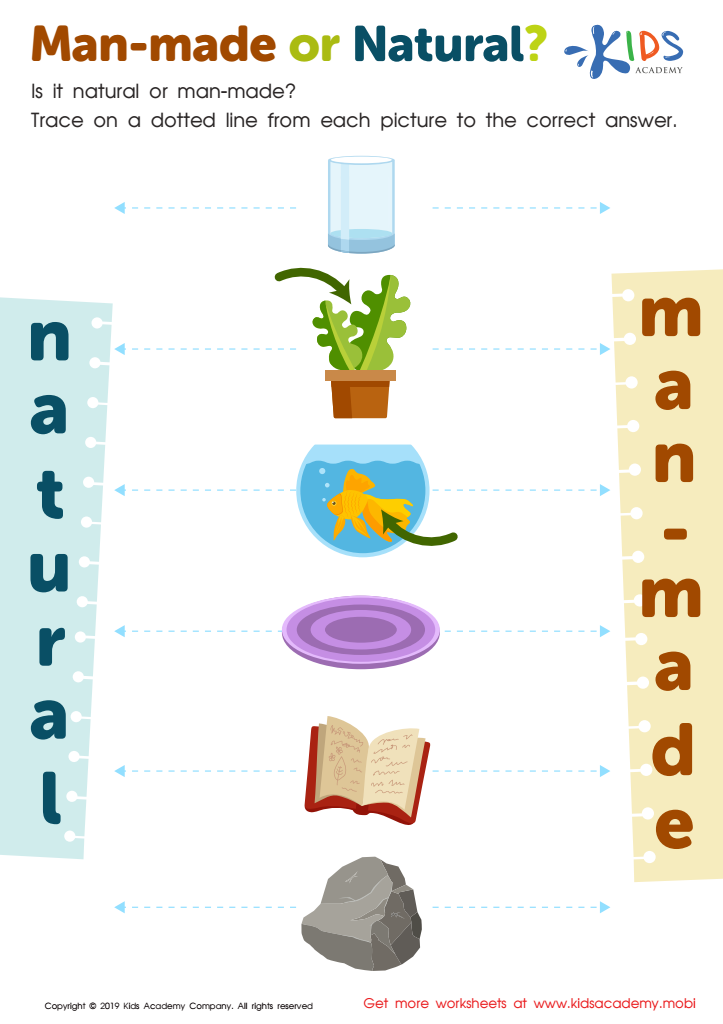
Man-Made or Natural? Worksheet
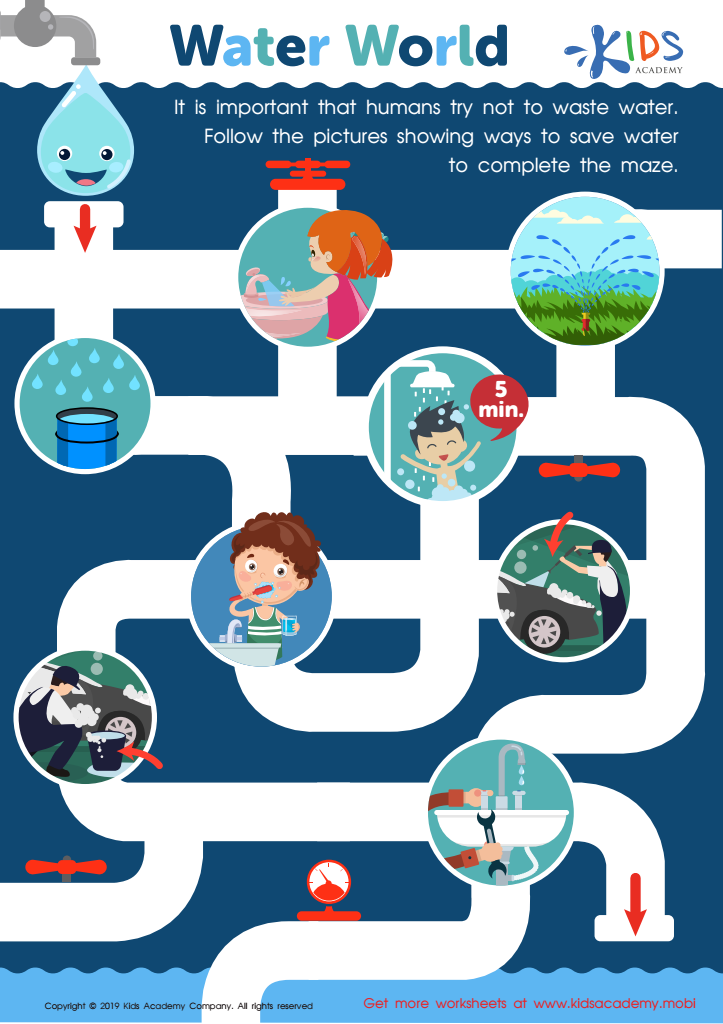
Water World Worksheet







Enhancing observation skills in science for 4-year-olds is crucial for their cognitive and social development. At this age, children are naturally curious, and nurturing this trait fosters a love for learning. Observation skills are foundational for scientific inquiry, allowing young learners to engage with the world around them and to explore concepts like cause and effect, patterns, and changes in their environment.
Encouraging observation also promotes critical thinking and problem-solving abilities. When children learn to notice details and ask questions, they become active participants in their learning journey. This skill is not only beneficial for scientific understanding but also translates to improved language development, as children learn to articulate their observations and engage in discussions.
Additionally, enhancing observation skills helps with emotional and social intelligence. As children observe other people, they learn empathy and perspective-taking—vital aspects of interpersonal relationships. Teachers and parents play a key role in this process by creating a supportive environment filled with exploration opportunities. Engaging children in hands-on activities, fostering discussions, and allowing time for independent observation can significantly enhance their observational capabilities, making learning both effective and enjoyable. Prioritizing this skill equips children with essential tools for lifelong learning and curiosity.







