Understanding directions Science Worksheets for 4-Year-Olds
3 filtered results
-
From - To
Explore an engaging collection of "Understanding Directions Science Worksheets" tailored for 4-year-olds! These worksheets are designed to help young learners grasp essential skills such as following directions and developing spatial awareness. Through fun activities and playful exercises, children will enhance their comprehension by identifying various science concepts while learning to interpret and execute instructions. Perfect for both classroom settings and home learning, these worksheets aim to create a solid foundation for future academic success. Ignite your child's curiosity about the world around them while fostering their ability to understand and follow directions effectively. Start their learning journey today!
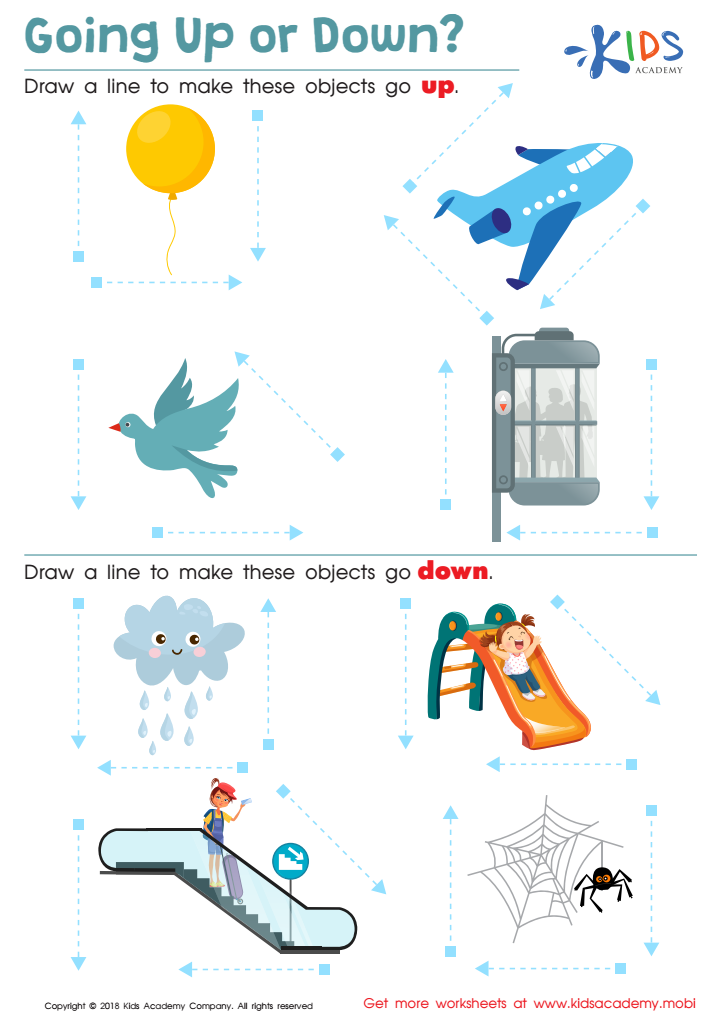
Going up or Down? Worksheet
 Assign to My Students
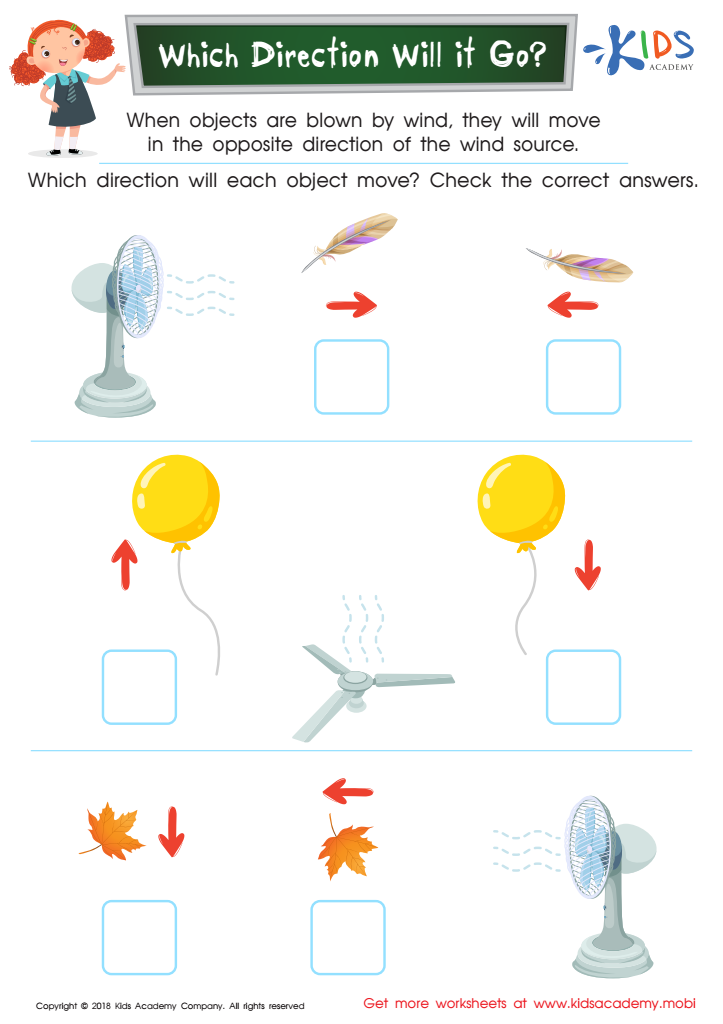
Which Direction Will it Go? Worksheet
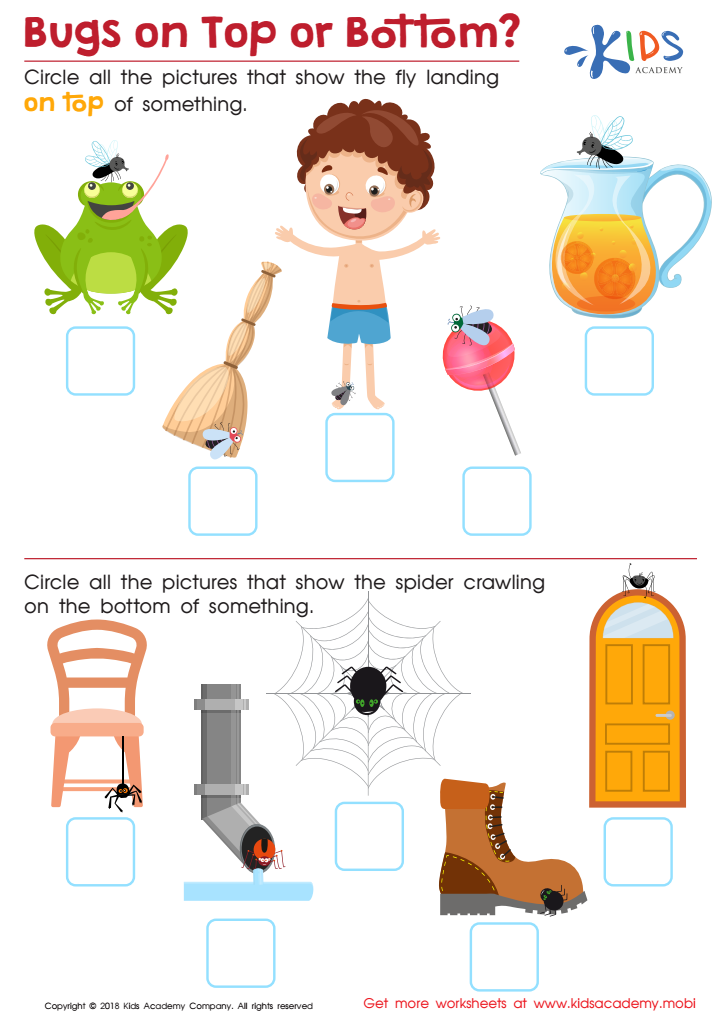
Bugs on Top or Bottom? Worksheet


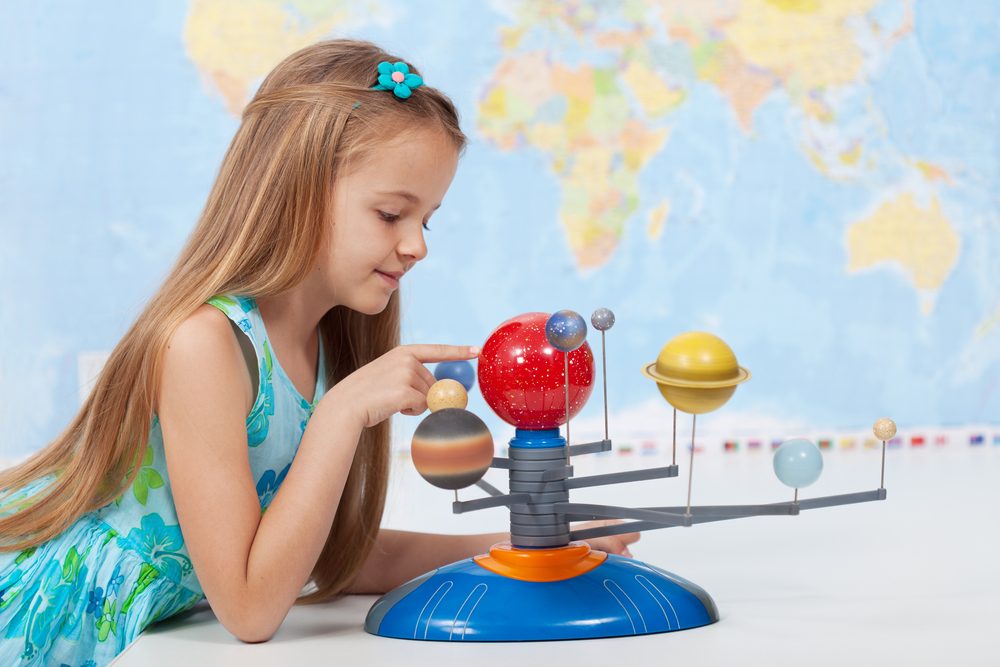

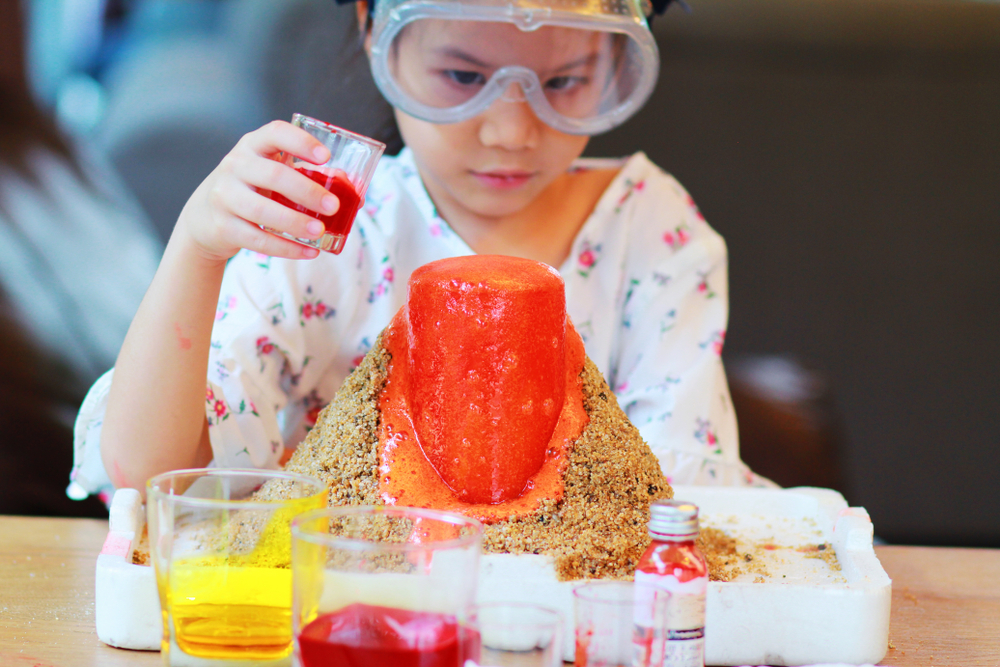



Understanding directions in science for 4-year-olds is essential for several compelling reasons. First, this foundational knowledge stimulates curiosity and encourages exploratory learning. At this age, children are naturally inquisitive, and introducing scientific concepts through directions enhances their ability to ask questions and seek answers through observation and experimentation.
Additionally, fostering an understanding of directions in scientific contexts aids in the development of critical thinking and problem-solving skills. Young learners begin to recognize cause and effect, learn sequencing, and understand concepts such as space and order, which lay the groundwork for future scientific literacy.
Moreover, engaging children in scientific exploration boosts their language development. As they learn to follow directions, they enhance their vocabulary and comprehension skills. This interaction supports cognitive development by linking practical activities with the language of science.
Lastly, nurturing an interest in science at an early age promotes a lifelong love of learning. Establishing positive associations with science exploration can lead to enthusiasm in subjects that are vital for their future education and careers. Therefore, parents and teachers have a crucial role in guiding young learners in understanding directions, fostering both their intellectual growth and enthusiasm for discovery.







