
Plant identification Plants and Animals Worksheets for 4-Year-Olds
3 filtered results
Difficulty Level
Grade
Age
-
From - To
Subject
Activity
Standards
Discover the wonder of nature with our "Plant Identification Plants and Animals Worksheets for 4-Year-Olds!" These engaging worksheets are designed to spark curiosity and enhance observational skills in young learners. Each activity introduces children to a range of plants and animals, fostering an appreciation for the natural world. Our thoughtfully crafted resources include colorful visuals and simple prompts, perfect for capturing the attention of little explorers. Ideal for at-home learning or classroom activities, these worksheets encourage children to identify and classify different plants, while boosting their fine motor skills and cognitive development. Start your child’s adventure in learning about nature today!
Favorites
With answer key
Interactive
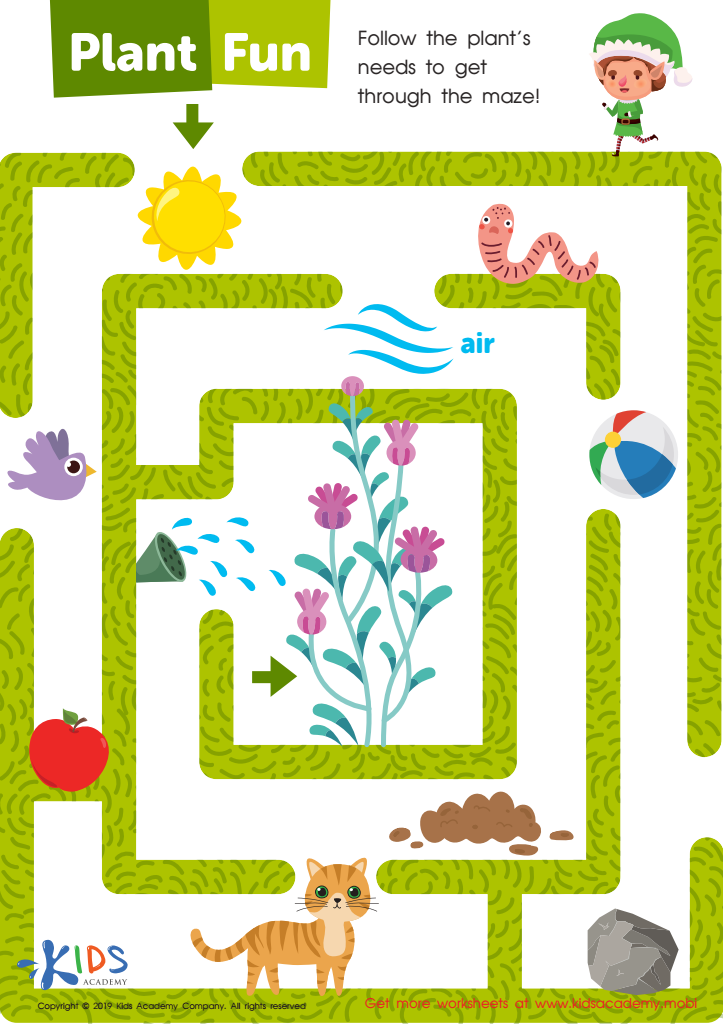
Plant Fun Worksheet
Engage your kid's mind by playing a learning maze! Ask them what plants do for us and what we need to do for the plants to help them grow. Then, help them find their way out of the maze while following the things that plants need.
Plant Fun Worksheet
Worksheet











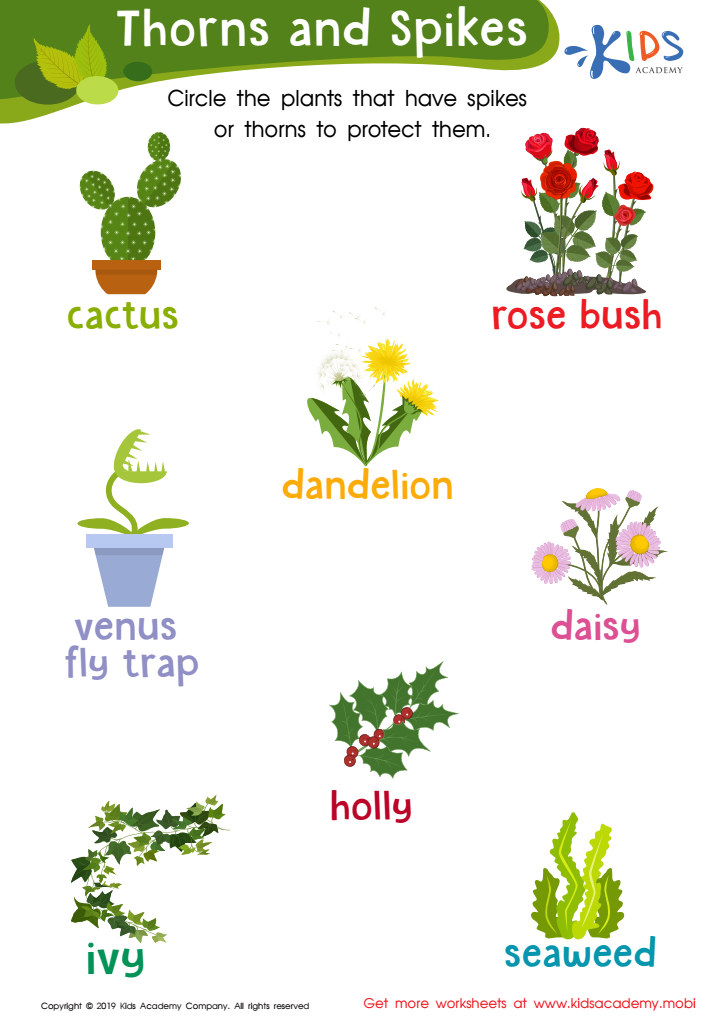
Thorns and Spikes Worksheet
Can your students name and identify the plants and flowers in this worksheet? Ask them to read out the names and circle the ones with spikes or thorns. Help them appreciate nature's beauty and understand how plants protect themselves.
Thorns and Spikes Worksheet
Worksheet
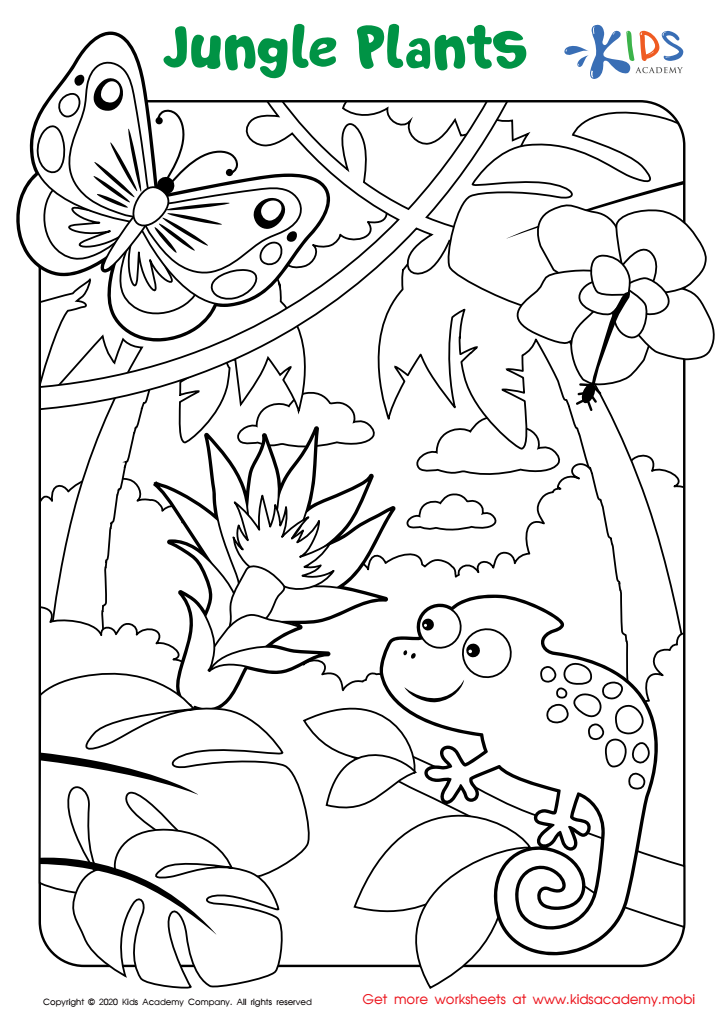
Jungle Plants Worksheet
Coloring pages can be fun and educational for kids! Print this adorable jungle worksheet with plants, a butterfly, and a lizard. Ask preschoolers to choose colors to bring the scene to life, while discussing rainforest plants and animals.
Download (PDF)
 Assign to My Students
Assign to My Students
Jungle Plants Worksheet
Worksheet
Join Kids Academy for Free
Who is primarily going to use this learning content?








Plant identification is a vital component of early childhood education that can profoundly impact a child's development. For parents and teachers of 4-year-olds, understanding plants and animals fosters curiosity, creativity, and cognitive skills. It opens a window to natural sciences, laying a foundation for future learning.
Introducing children to local plant species encourages outdoor exploration and promotes a sense of wonder about the environment. As children identify different plants, they enhance their observational skills and develop vocabulary, which aids in cognitive development and communication. Additionally, learning about plants' roles in ecosystems teaches invaluable lessons about interconnectivity and sustainability.
Moreover, familiarizing young learners with plant life supports emotional growth; caring for plants cultivates responsibilities and nurtures empathy toward living things. Engaging in activities like nature walks or gardening can strengthen the bond between children and caregivers.
In summary, caring about plant identification for young children enriches their educational journey while fostering a proactive attitude towards nature and its conservation. This not only broadens their knowledge but also instills appreciation for the world around them, setting the stage for lifelong learning and a commitment to caring for the environment.








